In his 1979 book The Question of Palestine, Edward Said, the Palestinian writer and academic, frames the relationship between Palestinians and Zionists as a “contest between an affirmation and a denial.” Making sense of it requires us to “understand what the instruments of this contest were, and how they shaped subsequent history so that this history now appears to confirm the validity of the Zionist claims to Palestine, thereby denigrating the Palestinian claim. In other words, we must understand the struggle between Palestinians and Zionism as a struggle between a presence and an interpretation, the former constantly appearing to be overpowered and eradicated by the latter.”
… %!s()
To criticize the popular interpretation of Zionism, to frame Israel as a settler-colonial project and to recognize the humanity and history of Palestinians was — and, unfortunately in the Western world, often remains — a radical thesis.
Edward Said: Between Worlds
The Bottom Line
A fine intro to an important intellectual.
Venue: Toronto International Film Festival (TIFF Docs), New York Film Festival (Spotlight) Director: Maiken Baird
1 hour 48 minutes
In the new documentary Edward Said: Between Worlds, Danish filmmaker and producer Maiken Baird explores, among other things, how the publication of this book and Said’s consistent advocacy for Palestinian self-determination made him both a model of intellectual integrity and an enemy of the United States. The doc carries the legacy of other Said film projects, including Mike Dobbs’ Edward Said: The Last Interview, released in 2004, but Between Worlds still offers a useful political education. Through impressive archival footage (interviews and lectures, home videos and family photos), Baird, who executive produced Icarus and Orwell: 2+2=5, revives the voice of a crucial public figure and indicts the U.S. and its mainstream media outlets for the role they have played — and continue to play — in abetting the annihilation of Palestinians. She wraps these major themes in a poignant narrative about how Said, exiled from Palestine and alienated from his Arab identity, eventually found his way back to both.
Between Worlds, still seeking distribution following well-received showings at the Toronto and New York film festivals, opens with an audio compilation of news anchors describing Said. They refer to him as a Palestinian activist, and remark on his eloquence in a subtle nod to the way he defies the expectations of a public taught to dehumanize Arabs. In one early clip, Said says he would “like to be identified as a professor of literature at Columbia University.” A voice off-camera repeats the title, with an interrogative intonation, and Said responds with humorous exasperation: “That’s right. I mean that’s what I do for a living.” This moment captures a tension that Said faced in battling assumptions that deep political engagement somehow foreclosed the possibility of other interests.
The beginning of Between Worlds functions as a kind of prelude, offering a straightforward primer on Said. Using the scholar’s own words, Baird lays out Said’s role in public life and defines one of his principle intellectual projects. “Whenever there is a Palestinian effort to tell a story, to put in a dramatic and realizable way the story of Palestine, it’s been assaulted and stopped,” he says in voiceover. “So we appear as if we are orphans, as if we have no origins, we have no narrative as a people. We are being told in a certain sense that we don’t really exist.”
A violent estrangement from land, history and culture defined Said’s early years. Between Worlds smartly shapes itself around Said’s intellectual ideas without giving up the ease of a chronological timeline. After the intro, Baird introduces Said’s interest in memory and who gets to define history, focusing on the scholar’s early years. Said was born into a middle-class family in Jerusalem, Palestine, in 1935. In 1947, he and his family moved to Cairo, ahead of the 1948 mass expulsion of Palestinians from Israel widely known as the Nakba. Through archival interviews, Said explains how his parents rarely talked about their home country except when vaguely citing what they lost. As a result, Said grew up rather politically disengaged and with no real connection to his identity.
Despite not having the language for it, the young Palestinian understood his position as a marginalized person very early on. In school, he identified with stories of indigenous Americans and Black people in America, and noticed how much of his education was filled with historical elisions of the harm done to them. Said’s teaching style was informed by this keenness, as he encouraged his students to approach their studies with healthy skepticism and to question historical silences.
When he was further into adolescence, Said was sent to the United States for boarding school, where the severance from his Arab identity was reinforced. He went on to study at Princeton and then Harvard before landing a teaching job at Columbia University. It’s at this institution that Said would go on to formulate his most enduring theses about Arab identity in relation to the West (Orientalism, 1978); Palestinian history and self-determination (The Question of Palestine, 1979); and the afterlives of imperialism (Culture and Imperialism, 1993). It’s ironic that today the university that served as Said’s intellectual home is at the forefront of sanctioning students and faculty advocating for Palestinians.
The most emotionally poignant parts of the film focus on how the intellectual rebuilt his relationship to his Palestinian identity. After he married Mariam, a Lebanese writer and activist, Said traveled to Beirut with her, connected with people involved in the liberation of Palestine, and embarked on an intensive study of Arabic. Through this re-engagement, he began to notice how the Western media participated in disseminating anti-Arab propaganda, and these observations would go on to inspire many of his books.
There’s substantial attention paid as well to Said’s intellectual development after his early writings, notably how he became disappointed with and estranged from Palestinian comrades like Yasser Arafat, who he believed harmfully capitulated to American and Israeli demands. While Between Worlds touches on Said’s evolving politics, particularly his later advocacy for a nation where Israelis and Palestinians could live in equality, it leaves the viewer wanting additional context.
One of the most jarring elements of Baird’s documentary — as with most nonfiction projects about Palestinians released in the last few years — is how much of the language featured in the film echoes the contemporary moment. It can feel uncanny to watch Said, interviewed throughout the 80s, 90s and early 2000s, argue the same issues that are being litigated today. And it’s striking to see how being asked repeatedly to defend Palestinian self-determination wears on the scholar, who also had other intellectual interests. He was a talented pianist, a prolific literary critic and a founder of what we now call postcolonial studies, a multidisciplinary field that examines the cultural, economic and political afterlife of imperialism.
I first learned about Said as an undergraduate studying English literature at Princeton, our shared alma mater. His debut book Orientalism offered me, as well as many others, a renewed understanding of the violent legacy of colonization and reinvigorated my understanding of identity as fluid and relational. If there’s one tension in Between Worlds, it’s the constant reminder that there’s so much more to learn about its subject. %!s()
‘East of Eden’ Boss Zoe Kazan on That Devastating Ending, Why Florence Pugh’s Cathy Is Both a ‘Murderer’ and ‘Survivor’ and Making Lee a Central Character
…
Courtesy of Netflix
SPOILER ALERT:This interview contains major spoilers from “East of Eden,” now streaming on Netflix.
Zoe Kazan has spent much of her life thinking about family legacy on and off screen. More than 62 years after her grandfather Elia Kazan famously directed James Dean in an adaptation of the fourth and final part of John Steinbeck’s novel “East of Eden,” the younger Kazan has taken on the Herculean task of tackling the full literary epic in a sweeping new Netflix miniseries, which premiered on Oct. 1.
But rather than focusing strictly on the men of the Trask and Hamilton families, this adaptation shifts the spotlight to Cathy Ames (played by Florence Pugh, also an executive producer). Instead of being depicted merely as the amoral villain who shoots her husband Adam Trask (Christopher Abbott) and abandons her newborn twins to return to a life of prostitution, Cathy is reframed as a complex antihero whose choices ripple through generations of the Trask family.
This shift also required trimming other major characters in this adaptation. Mike Faist, who plays Adam’s brother Charles, and Ciarán Hinds, who plays patriarch Samuel Hamilton, take on reduced roles compared to the novel. By tightening those subplots, the series focuses more by design on exploring the inner lives of Cathy, Adam and Lee (Hoon Lee) — the Trask’s cook and housekeeper who becomes a second parent of sorts to Charles’ twin boys, Cal and Aron.
Courtesy of Netflix
“Part of what the book is deeply about is: What do we do with the terrible things that have happened to us, or that we have done, or that have come before us?” Kazan tells Variety. “I was really interested in including Cathy in that narrative.”
In the wide-ranging conversation below, Kazan opens up about using Steinbeck’s work to craft a distinctly personal take on “East of Eden,” fighting to expand the story of Lee despite budget constraints, and why she is relieved to bring far less familial baggage to her next adaptation of “Lonesome Dove.”
In “East of Eden,” both you and Steinbeck grapple with a shared question of whether these men can escape the shadow of their family history and forge their own paths, or whether they are bound to that legacy. What intrigued you about telling this multi-generational — and ultimately tragic — love story between fathers, sons and brothers?
I read this book when I was 15, and I do ask myself: Did this book hit me hard because I was already thinking about these questions of what you carry from your family’s past, and what you do with that going forward? Or did I read this book and learn how to think about those things from it? This is one of the books that made me who I am. It’s not like my other work, but across a lot of my work, I’m thinking about families and the way people hurt each other by loving each other, or hurt each other in the name of love, and how terrible it is to be put in a box by someone’s conception of you and how you break out of that box.
The reason for me to do this was to tell that intergenerational story. Cathy bounced off the page at me, but I don’t know that I would’ve raised my hand and been like, “I have to do this with six years of my life,” if it had just been for Cathy. We interviewed a lot of directors for this, and one female director I talked to really objected to me putting as much emphasis on the boys as I did. She was like, “If you were a real feminist, you would’ve made this whole thing about Cathy.”
Wow.
It was a really clarifying meeting to have, because it made me understand even more deeply why these men’s stories speak to me so loudly, which is to say that I do not think of my own relationship to feminism as being a relationship that excludes men. I’m only interested in a version of gender parity that celebrates cis men, cis women, trans men, trans women, nonbinary people. I’m not interested in a small slice of humanity. The humanity of all of these characters — and getting to chart that over time and see how change happens, or doesn’t happen, in the family — is what drew me in.
Ciarán Hinds
Courtesy of Netflix
Steinbeck’s novel is largely centered around the Hamiltons (who emigrate from Ireland to the author’s beloved Salinas Valley) and the Trasks (who move to California from the East Coast). Why did you choose to cut down the Hamiltons’ storyline and center your adaptation instead around Cathy?
It became clear to me pretty early that if I was going to keep it at eight episodes or fewer, I was not going to have enough real estate for the Hamiltons. It was really important to me that this didn’t turn into a survey course of American history. I really wanted to go deep with these characters. A lot of the Hamilton stuff is quite emotional and deeply meaningful to the greater themes of the book. Tom Hamilton is probably my favorite character in the whole thing. But at a plot level, it’s really episodic. It doesn’t build in a dramatic narrative sense; it doesn’t go someplace the same way that the Trask storyline does. So by the time I got to the fifth episode, I knew that I was going to have to sacrifice that.
There are novels that are all just poetry and emotion and themes, in which nothing happens. I think while an art film can do that, that’s not really what television is for. Even though I was trying to make something really timeless and that maybe stood out from the medium, I was also trying to make a piece of entertainment. One of the things that’s really important to me about the book is that it’s not “high art.” It was a piece of populist entertainment that he was writing, and I really wanted to preserve that.
I know that we’ve talked in the press about this new emphasis on Cathy Ames. That was more in response to the 1965 film, which really sidelines her, than the actual book, which I think is fascinated by her. Cathy is the plot engine of this book. She is the troublemaker. She fascinated me from the start. I’m so curious about her — and I think Steinbeck was too — so I don’t see it as being quite as revisionist as maybe some of the articles have been framing my take as.
Florence Pugh and Christopher Abbott
Courtesy of Netflix
While Steinbeck explicitly frames Cathy as someone “born a monster” devoid of a moral soul, your adaptation reimagines her as an antihero driven by self-preservation and autonomy. How did you come to understand her underlying motivations, and what did you want this series to reveal about what truly makes her tick?
Even though I’ve never done any of the terrible things that Cathy does, reading this book for the first time, my identification was with Cathy. She’s unbelievably mysterious — and she’s not one thing. She is a liar, and she’s incredibly honest. She is a murderer, and she is a person who is trying to survive. There are things that Steinbeck describes in the book that I read slightly differently than he maybe intended them.
Steinbeck posits that she, as a child, staged a rape with multiple little boys, and the description of that is incredibly upsetting. It says that she couldn’t speak afterwards — that when she did speak, no one believed her. It is impossible for me, as a person who grew up in a body that was sexualized and targeted from my earliest memories, not to read that as maybe not what Steinbeck intended. I think that there’s a ton of textual evidence for it. Very late in the book, she describes her memories of being a child and being frightened and alone, and how in those moments she would pretend that she was shrinking down with “Alice in Wonderland” and disappearing into Wonderland where nobody could hurt her. What I saw was a portrait of disassociation, and I profoundly understood that.
The combination of your writing and Florence’s performance makes your interpretation of Cathy particularly hard to pin down, because she is so mercurial by nature, especially toward the final years of her life as this madam of a brothel. How did you think about scripting Cathy’s descent into madness?
Steinbeck kept a journal while he was writing this book. He wrote longhand on these big ledger books. He wrote his pages for the day on the right-hand side, and he would write letters to his friend and editor, Pascal Covici, on the left-hand side. Those letters were published, and I weirdly had read them already when I started adapting this, but I used those letters as a real North Star for me in understanding Steinbeck’s intentions. One of the things that’s really clear to me is that his viewpoint of her changed as he wrote. He goes from saying, “Oh, I’m going to write a monster unlike any you’ve ever seen,” to saying, “I think we all have a little monster blood in us, and people will hate her not because she is foreign, but because she is familiar.”
I don’t have any proof for this, but I think he didn’t know what to do with that empathy. I think it surprised him — maybe it crept up on him. One of the things I see in the second half of the book is that he starts to really punish her. It’s like he doesn’t know what to do with her, really. He starts being really mean about her physical appearance, which I get is a manifestation of her evil. But because he’s filled with empathy and understanding for her by this point in the book, it felt to me a little bit underdeveloped. I was curious about: What’s the more fully embodied version of what happens to Cathy? Why does she kill herself? How do we get there?
One of the things that really struck me was that this character is operating from the viewpoint that the world is full of folly and evil. This is a person who’s really isolated herself, who has run from love, who has thought of love as a trap, and who has done everything in her power not to be trapped. And here she is in her 30s, and she has no one she can trust because of how she’s built her life. In the book, she builds a little gray room with no windows that she can go in and close the door. For budget reasons, I had to not have her build this little room, but I tried to turn her whole bedroom into that room for herself. I thought about a world in which this person is carrying trauma and has had no access to anyone helping her with her mental health. I was also thinking about the morphine use that is implied in the story — she carries this little bottle of morphine around her neck — and I stepped off from there.
Courtesy of KIRSTY GRIFFIN/NETFLIX
Cathy starts losing her mind in Episode 6, when she begins to hear Charles’ voice in her head. What do you think is the significance of him haunting her towards the end of her life?
The tools of a novelist are totally different than the tools of a dramatist. As a novelist, you can just tell us what she’s thinking about. When you’re trying to put it on film, voiceover is an option. But other than that, you need to give characters someone to talk to. There’s a chapter in this book where she’s walking through her house at night, and she starts to imagine that Charles is with her. She starts to feel that he’s watching her, and she thinks to herself, “He’s maybe the only person I could have loved.” It really struck me as this very strange and youthful idea.
I was riffing off of this thought about “Alice in Wonderland” and her having this imaginary friend, and I thought, “OK, well, I can give her this imaginary friend in Charles.” I had thought of her voiceover from the top of the show as being her talking to herself, and I thought, “I wonder if I can use Charles as a conduit for her talking to herself.” And then she starts to have to confront the fact that she’s not actually talking to Charles, but rather she’s been talking to herself.
Christopher Abbott and Hoon Lee
Courtesy of Netflix
You originally wrote eight episodes, but you were reportedly only able to make seven episodes for budgetary reasons. The episode you unfortunately had to cut centered around Lee’s trip to San Francisco, and you had to reduce that storyline to only a handful of scenes.
No matter how many resources we were given, I can’t imagine a number that would’ve been enough for us to do all the things that we originally wanted to do. It’s just a very ambitious project — so many locations, so many actors, spanning over 50 years, it’s period. There’s a lot that made this very expensive. So I cut about 10 pages out of every episode, and then on top of that, it became clear that we did not have the budget to build San Francisco in 1912. Because it was a standalone episode, there were so many locations that we were never going to use again, and it would’ve scaled up our budget by a third.
One of the biggest unanswered questions of Steinbeck’s novel is what happened to Lee in San Francisco. Your version shows that he left the Trasks to pursue his long-held dream of opening a bookstore, but the societal barriers and hardships — including racism — he experienced made him realize that his true home was with the Trask men. For that storyline, how did you settle on what actually made it into the final cut?
There’s so many things about Steinbeck’s portrayal of Lee that are so humanist, and then there are moments in the book where I feel like the racism of the time period in which he was writing really came through. His seeming lack of curiosity about what happened to Lee in San Francisco felt to me like the product of mid-century white America. I thought, “I’m going to hire an Asian American writer to imagine this with me.” I had just read Alexander Chee’s book, “Edinburgh,” which I highly recommend. That book portrays a really lonely character. I saw some correlation between that character and Lee, and I thought, “OK, he’s the right person. I’ll put a novelist’s imagination on this. We’ll figure this out together.” He had never really written a script before, so I knew I would end up writing it with him.
Once I knew I was going to have to cut that episode out, what it really boiled down to me was that it was important that all of our protagonists have a journey that is somewhere in relation to this idea of timshel and this idea of choosing. I wanted to know more about Lee’s choice to abandon his dream of this bookstore, and even more importantly, his choice to come back and really become a parent to these children. Once I used that as a rubric, then some of the plot that Alex had invented and some of the themes that I had written just seemed less important. I was like, “We can let go of those things.” But lines that felt really important remained — like this line that Alex wrote, “It sounds like you were someone else’s imaginary wife.”
I truly believe that Lee’s storyline is stronger for being integrated with the rest of this story and not siloed into its own episode. I thought more deeply about how he is woven into the fabric of the story. I just want to say that the person that I really tip my hat to in all of this is Hoon Lee, who came in with so many questions, so much of his own lived experience. If we have done our job of giving Lee a bigger life here, it is really because of the gentle and confident hands that this role was in.
Courtesy of Netflix
I heard through the grapevine that you and Alex chose to make Lee gay in this adaptation, although his sexuality isn’t actually addressed in the final cut. Is that true?
When I read the book, I ask myself that question about Lee’s sexuality — and I ask it with a lot of trepidation because I know Asian American men in Western media have a history with a lot of damaging feminization, and I don’t want to participate in that. But I think that this sort of “platonic marriage” that he and Adam are in is fascinating. There are things about this character that I feel like are very private, even from its author. I asked myself those questions, and I brought those questions to Alex. That said, I don’t presume to know what Hoon was thinking — I never talked to Hoon about that — and none of those discussions that Alex and I had made it into the finished product.
The devastating climax of the story occurs when Cal Trask (Joseph Zada) takes his idealist twin Aron (Joe Anders) to see their mother’s brothel, driving Aron to join the army and then get killed in WWI. Lee convinces Adam to give Cal his blessing on Adam’s deathbed, essentially absolving Cal of the lifelong guilt that he will feel over his brother’s death. What was your approach to writing that final scene, and where do you think we leave the surviving characters after the screen cuts to black?
What’s in the book created such a clear map. Man, Steinbeck really killed it with that last scene. I knew that I was writing towards that the whole time. Knowing that that scene was coming actually was a North Star for me in how I wrote the rest of the series: “I know I need to have Samuel Hamilton and Lee tell the story of Cain and Abel, so how do I make that palatable to a contemporary audience?”
I don’t know where we leave them. Steinbeck’s original conception of the book would’ve gone through another generation. I, for one, don’t know if I could have taken another tragic Trask generation of men, so I’m glad he decided to cut it off where he did. One of the beautiful things about books that sing across time is that these characters can feel so real to so many of us. There are certain scenes in this show — like the scene where Cathy gets beat up by Mr. Edwards, or the last scene of the series where Lee asks Adam to give his son his blessing — that I wrote once and basically never touched again, because they were so upsetting to write and think about deeply.
Joseph Zada
Courtesy of Netflix
You and Jeb Stuart are reteaming with Netflix on an adaptation of “Lonesome Dove.” What kind of prior relationship did you have with that book prior to signing on to adapt it, and what intrigues you about the prospect of reimagining that story for a contemporary audience?
I couldn’t have a more different relationship with this book, and that feels like a relief. This has been six years of my life, but it was a good 20 years of thinking about this book before that. I don’t know that I could have bled out for another series, at least not right now.
I had never read any Larry McMurtry. We would be standing around on set at two in the morning trying to stay awake, and Jeb would talk to me about his love for Larry McMurtry and “Lonesome Dove” and why I should read it. I felt like, “That looks like a book for boys. That’s not for me.” And when I got back to the States [from New Zealand], I started reading “Lonesome Dove,” and it totally blew my mind. I think like all great Westerns, it’s a rumination on death and how we make meaning of our lives in the face of our certain mortality. I’m also just really drawn to these stories of a moment in time when everything is changing, the way that it was at the turn of the century here, and the way that it was in the West in the 1870s.
The process of getting to know this book has been totally joyful. The original miniseries is incredible, obviously, and I don’t think anyone would presume that we are going to do better than Robert Duvall as Gus. That’s a performance for the ages. But I do think that these stories can be told again and again by different people. There’s so much that was unexplored in that version of the miniseries. Every reader comes to a book with their own life experience, and between Jeb and me, we have a lot of really interesting life experience to bring to bear here.
This interview has been edited and condensed.%!s()
Tomas Franzese is the Weekend News Editor at Polygon, following and reporting on the latest goings-on in the gaming and entertainment spaces. During the week, you can find him working on Remastered, his newsletter about video game history and retro gaming, or contributing to GameSpot and other publications. Previously, Tomas was the Gaming Segment Lead at XDA and a Staff Writer at Digital Trends.
… %!s()
Digger did not do very well in theaters during its opening weekend
Image: Warner Bros.
Sign in to your Polygon.com account
For the past twenty years, Tom Cruise has typically done very well at the box office, with 2022's Top Gun: Maverick being a particular highlight. The movie star's latest film, Digger, did not do nearly as well during its first weekend in theaters, marking the lowest opening weekend for a Cruise movie since 2007's Lions for Lambs.
According to Deadline, Digger made just $8 million at the domestic box office this weekend, which is only slightly above the $6.7 million Lions for Lambs brought in nearly two decades ago. Digger was an expensive production, reportedly costing upwards of $160 million, and it clearly didn't get the Tom Cruise box-office bump Warner Bros. was likely hoping for. Digger is only the fifth highest-grossing movie of the weekend, with the top spot going to the newly released Verity.
It's not too surprising that Digger didn't set the box office ablaze, as the Alejandro G. Iñárritu-directed flick is also proving quite divisive among critics and audiences. Without spoiling, Digger is a subversive movie with multiple big twists and no real pre-existing analogs. Cruise's latest was never going to have the mass appeal of something like Top Gun: Maverick, and it may take a week or two of discourse before people really understand what it's about and go to see it.
Even Polygon's own review admits, "Digger probably won't succeed by any of the financial or critical standards that capitalism has decided matter for a movie like this one, but that's probably for the best when Iñárritu seems determined to reject all those things as vehemently as possible." Digger shows that not every movie from a lauded director and lead actor can pull off what The Odyssey did in July. But when a movie is as original and quirky as Digger is, should we really expect it to?
What were the highest-grossing films of the weekend?
Since Digger wasn't one of the weekend's biggest successes, you're probably wondering which movies grossed more than it. Per Deadline, these were the top ten highest-grossing films of the weekend:
“Behemoth!,” Tony Gilroy’s first feature as a director since “The Bourne Legacy” in 2012, world-premiered on Friday night at Alice Tully Hall as the centerpiece selection of the New York Film Festival. Pascal plays Alex Serian, a former child prodigy from a family of Los Angeles studio musicians who returns home after 20 years on tour to record Hollywood film scores.
… %!s()
Pascal offers a beautiful, internalized performance that ranks among his best work on film. More than that, it’s the first time a director has built a movie on the merit of what happens across Pascal’s face when nobody is talking.
Pascal did not get his fame from the movies. He was almost 40 when his “Game of Thrones” character Oberyn Martell became one of the most beloved — and most egregiously short-lived — characters In TV history. Then came more series work on “Narcos,” “The Mandalorian” and “The Last of Us.” On that ascent, Pascal became an internet boyfriend (“Daddy,” as many have called him). You can’t blame me for worrying about audiences focusing on his depth and talent amid the thirst.
It is, perhaps, why his scene-stealing performance in the 2022 action-comedy “The Unbearable Weight of Massive Talent” went suspiciously ignored. He played Javi, the billionaire superfan of Nicolas Cage (and maybe a cartel kingpin), who went toe-to-toe with one of the most gloriously unhinged actors of his generation. Pascal stole every frame.
Pedro Almodóvar’s short “Strange Way of Life,” Celine Song’s “Materialists” and Ari Aster’s “Eddington” gave Pascal latitude. Gilroy and “Behemoth!” make him undeniable.
Pedro Pascal in “Behemoth!”
Courtesy of Searchlight Pictures
Gilroy structures the movie around flashbacks. Each time Pascal’s Alex sits down to play the opening cue of a different movie score, the music sends him back to the people and circumstances that made him flee. Pascal doesn’t overtly articulate those memories. We feel them in looks, pauses and slight changes in his posture. The performance rises in those moments.
Pascal’s work recalls Jude Law in “Cold Mountain,” which is still my go-to example of a reserved performance surviving an Oscar season that typically rewards outsized performances. In that film, Law’s wounded soldier Inman barely speaks during his long walk home from the Civil War, yet voters noticed him anyway. There isn’t a war for Pascal to walk through unless you count the one in his mind — concerning his father (Hank Azaria) or his brother (Will Arnett).
And then there’s Olivia Wilde. Somehow, her knockout year directing and starring in “The Invite,” and reminding us all of her command and delicious appeal in “I Want Your Sex,” gets better. She devours every frame in “Behemoth!” as the ex Pascal can’t quite shake. She’s channeling a little Cameron Diaz in “Vanilla Sky,” harboring obsession with a scary fuse. Noteworthy: Diaz received a Golden Globe and a SAG nomination for that performance, but the Academy passed. This doesn’t deserve that same fate.
Nonetheless, the real star of “Behemoth!” is the music itself.
Gilroy recruited nine composers, each scoring a different fictional film within the film. The result is a soundtrack that moves across eras and genres in the same way Alex’s memory does. The team includes Michael Abels (“Get Out”) along with pianist and composer Emily Bear, Lukas Frank, Michael Giacchino (“Up”), James Newton Howard (“Michael Clayton”), Henry Jackman (“Captain America: The Winter Soldier”), Nami Melumad (Pixar’s “Dream Productions”), Brandon Roberts (“Andor”) and Alan Silvestri (“Forrest Gump”).
There’s a bit of irony for anyone who follows the score race. Giacchino already has the statuette, winning for “Up” in 2010. James Newton Howard, who scored Gilroy’s “Michael Clayton,” is one of the Academy’s great bridesmaids, with multiple nominations and no wins. Silvestri, whose noms and credits include “Forrest Gump” and “Back to the Future,” has never won either.
The title refers to the giant fake movie the story builds toward. Gilroy created a tribute to the Los Angeles scoring community he believes is disappearing. Following the film academy’s 2024 rule change, as many as three composers can receive individual statuettes for original score. However, nine still don’t fit, unless they enter as a “group” and share the nom (meaning a lone Oscar statuette). A movie about musicians, ironically, could be shut out or disqualified from the category built for them, if the music branch chooses ego over artistic merit.
Admittedly, the film won’t be for everyone. “Behemoth!” is very “Tár”-coded. It focuses on a protagonist whose gift and damage come from the same place. Some will find the fake-movie conceit too clever, and others may think the climax goes too small.
Underneath it all is a simple, aching idea about love and what we think we’re entitled to. That’s Gilroy’s brilliant screenplay at work.
“Behemoth!” premiered in the middle of Hispanic Heritage Month, and for the Latinos who have been rooting for Pascal since Oberyn, this has been a long time coming.
Look at who came before him.
José Ferrer, a Puerto Rican, won for “Cyrano de Bergerac” and became the first Latino actor to take home a best actor Oscar. Seventy-five years later, he is still the only one. Mexican Anthony Quinn, who won two supporting Oscars, received lead nominations for “Wild Is the Wind” and “Zorba the Greek” but never took home the top prize. Then came Edward James Olmos for “Stand and Deliver,” Demián Bichir for “A Better Life,” Colman Domingo for “Rustin” and “Sing Sing” and most recently, Wagner Moura, who last season became the first Brazilian ever nominated in the category, for “The Secret Agent.”
And Pascal may not be the only Latino celebrating at the upcoming 99th Academy Awards.
John Leguizamo, who received the Career Achievement Award at the Critics Choice Celebracion ceremony the same day as the “Behemoth” premiere, has been grinding for four decades. As Eumaeus, the swineherd who remains loyal, he’s the heartbeat of Christopher Nolan’s “The Odyssey.” He has never been nominated for an Oscar but that also looks to change this year.
“Dawson’s Creek” creator Kevin Williamson remembered the show’s late star Jame Van Der Beek on Saturday night while being honored with a Hero Award at the Barbara Berlanti Heroes Gala, Greg Berlanti’s annual F Cancer benefit.
… %!s()
Williams explained that the show, about a small-town high school student dreaming of becoming a Hollywood director, was inspired by his own life.
“So when I was casting the role, I was basically looking for me, but I was looking for the good-looking, handsome, camera-ready, great jawline version of myself, someone people would actually want to see,” Williamson said, adding, “He became that person. James Van Der Beek gave voice to my childhood. He was the soul of the show. He was the ultimate upgrade.”
Van Der Beek died in February, two years after being diagnosed with colorectal cancer in 2023.
“I saw him go from a young kid to an extraordinary man, a husband, a father and a friend. James had a full character arc. He started out as a brat,” Williamson cracked. “He would get a script and he would call me, and he would be like, ‘Why do I have to say this word? Nobody knows what this word means.’ And I would say, ‘Well, don’t worry about it, the way you mumble nobody is going to hear it anyway.’ That was that was our relationship — Dawson talking to Dawson.”
MORE: James Van Der Beek’s Career in Photos, From ‘Dawson’s Creek’ to ‘Pose’
In September 2025, a “Dawson’s Creek” reunion was held in New York to raise funds for F Cancer and Van Der Beek’s treatment and support. Williamson, Michelle Williams, Katie Holmes, Joshua Jackson, Mary Beth Peil, John Wesley Shipp, Mary-Margaret Humes, Nina Repeta, Kerr Smith, Meredith Monroe and Busy Philipps took the stage at the Richard Rodgers Theater to read the 1998 pilot episode. Lin-Manuel Miranda stepped in for Van Der Beek because he was unable to attend due to illness.
“Losing James earlier this year really knocked me over,” Williamson said, adding, “To lose the man who gave life to your own youth, I’m still unpacking that one. He handled his cancer with such grace and courage.”
Williamson also talked about his mom, who died of lung cancer. “She was so outraged that Joey picked Pacey over Dawson,” he said. “I never heard the end of it.”
The gala, held at the Santa Monica Barker Hangar, also honored “The Pitt” star Katherine LaNasa and the late NBA player Jason Collins.
See photos from the Barbara Berlanti Heroes Gala below.
Joshua Jackson, Julie Plec and Kevin Williamson
Jesse Grant


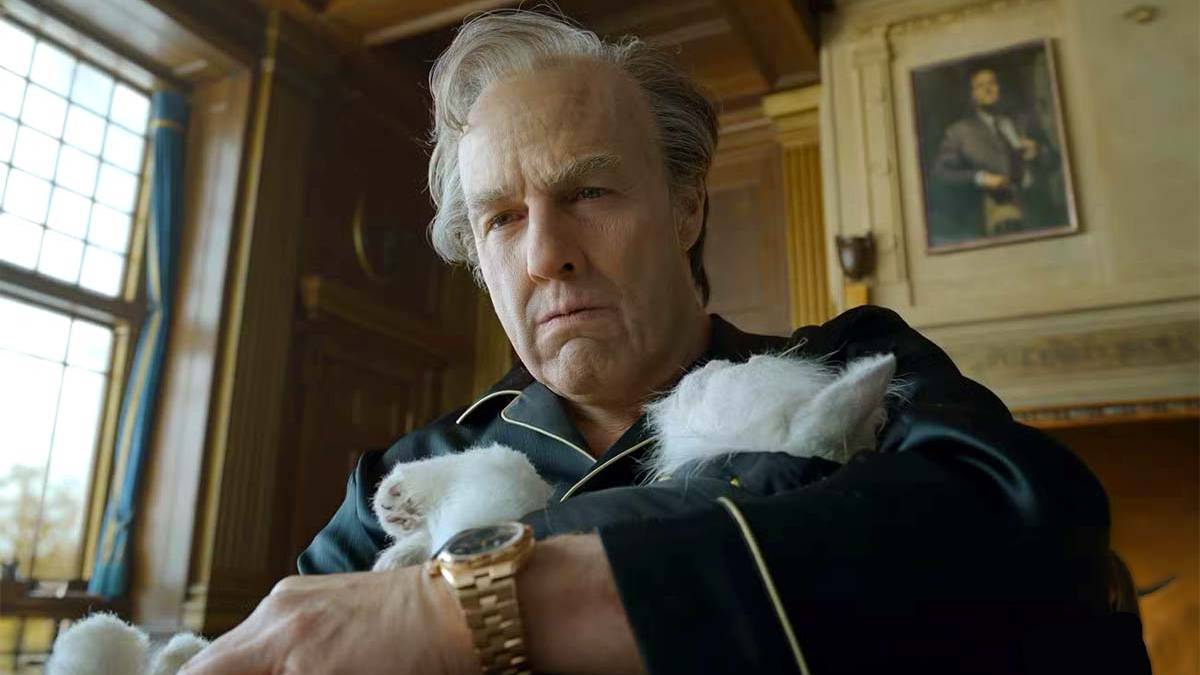 Image: Warner Bros.


