Marnus Labuschagne scored a speedy, and timely, century in Australia's sole warm-up match before the three-Test series in South Africa from Friday, live on Sky Sports Cricket.
Labuschagne struck 111 from 89 balls, reaching three figures from 76 deliveries and hitting 19 fours, before retiring out against a Cricket South Africa Invitation XI in Potchefstroom.
… %!s()
The 32-year-old will hope to carry that form into the Test arena, starting in Durban this week, having gone 43 innings and over three years without a hundred in the format.
Scorecard: CSA Invitation XI vs Australia, Potchefstroom
After Labuschagne - who is averaging 25.43 since the 2023 Ashes - made scores of one, 31 and four in the recent 1-1 series draw at home to Bangladesh, ex-Australia captain Ricky Ponting told Sky Sports that the batter's spot in the XI had become "untenable".
However, the Baggy Greens have kept faith with the South Africa-born player and he seems set to line up in his usual No 3 berth at Kingsmead as Australia begin their first Test series in the country since the 2018 ball-tampering scandal.
Image:
Steve Smith will play Test cricket in South Africa for the first time since the 2018 ball-tampering scandal
Smith scores half-century in Test tune-up
Steve Smith - who along with David Warner and Cameron Bancroft received a ban for the role he played in using sandpaper to alter the condition of the ball - Josh Hazlewood, Pat Cummins, Mitchell Starc, Nathan Lyon and Matt Renshaw are the survivors from that contest eight years ago.
Smith, who followed Labuschagne in retiring out, and Renshaw scored 61 and 32 respectively on the second and final day of the tune-up for this month's Tests, while Alex Carey made 57 as Australia replied to the hosts' 318-7 with 368-6.
On day one, Australia used 11 bowlers in order to manage workload with seven taking a wicket apiece and none of the seamers getting through more than 10 overs.
Image:
Josh Hazlewood was one of a plethora of bowlers used by Australia on day one of the tune-up fixture
All-rounder Cameron Green did not feature after picking up an abdominal injury in the final ODI against South Africa last week and appears a doubt for the first Test.
After the series opener in Durban, the teams will meet in Gqeberha from October 18 and then Cape Town from October 27.
South Africa also host Bangladesh and England in Test cricket this winter, with the series against Joe Root's men starting at Wanderers in Johannesburg on December 17.
Watch the first Test between South Africa and Australia live on Sky Sports Cricket from Friday (7.30am on air, 8.30am first ball).%!s()
Aimee Hart is an Entertainment and Gaming staff writer here at Polygon. After watching the original trilogy at five, she decided to make Star Wars her entire personality and hasn't let go of the franchise since. Aimee also has a great love for Dungeons & Dragons and everything Critical Role. She has been a games, entertainment, tech, and culture reporter and critic for 10 years, with bylines at Inverse, Fanbyte, Rolling Stone, and many more.
… %!s()
'Pain is proof that you're alive'
Image: Intelligent Systems/Nintendo via Polygon
Those still playing Fire Emblem: Fortune’s Weave—which, given the latest entry’s heft, is most of us—know choosing a first route matters. Cai seems the intended starting point, with opening chapters full of explanations. Hedonic Dietrich is ideal for Three Houses fans seeking more Fódlan lore; Theodora offers insight into the cultures of Dagda and Saramis; and Leda is driven by vengeance after her father’s death.
Of the four, Leda stands out like a sore thumb. Her route has little to do with the overarching story of Fortune’s Weave and more to do with her personal vendetta. Yet, as someone who firmly believes in supporting women’s wrongs, I eagerly jumped to her route first anyhow. I don’t regret it, because seeing a woman allowed to be angry and make mistakes while pursuing her goal was so, so refreshing. I could think of only one other game that allowed that: Tales of Berseria, a painfully underrated RPG released in 2017.
Leda fans, meet Velvet Crowe
Image: Bandai Namco
Developed and published by Bandai Namco, Tales of Berseria follows Velvet Crowe, who witnesses her brother-in-law, Artorius Collbrande, killing her younger brother, Laphicet. She vows to keep fighting until she’s avenged Laphicet by slaying Artorius.
The parallels between Leda and Velvet are clear. They are both witnesses to the deaths of the people they loved most, and are forever changed by it. Unlike Leda, however, Velvet is utterly alone for the first few years afterward, forced into a stinking pit full of monsters in a basement cell.
When Leda and Velvet finally see an opportunity to get close to the men who ruined their lives—Leda through the Heroic Games, Velvet during her prison break—they seize it with both hands.
Image: Intelligent Systems/Nintendo
Because both the Tales and Fire Emblem series are character-focused and feature diverse, expansive casts, both women are accompanied by a group of companions. Leda's group is relatively normal by RPG standards, whereas Velvet’s includes demons, angels, and an endearingly annoying witch. But the one thing their groups do have in common is their loyalty to Leda and Velvet.
Said loyalty doesn't necessarily work out great for either party at first. After years of stewing in her prison cell, Velvet has plenty of rage and resentment, and anyone getting in her way is guaranteed to get hurt, whether friend or foe. The same goes for Leda, whose desire for vengeance leads her to threaten and blackmail other contestants out of the games and shrug off any concerns her friends might have.
Image: Bandai Namco
The more they give in to their base desires, the more Leda and Velvet isolate themselves. This spiral of despair is exacerbated by their curses: Velvet with a malevolence-sucking demon arm that devours people (hot), and Leda with her guitar-like vihuela, which urges her to kill and destroy those around her the more she plays. The further they inch toward fulfilling their quests for revenge, the more the two women deteriorate emotionally and mentally.
While some may argue that this single-minded vengeance makes both characters unlikeable, Leda’s path and Velvet’s story aren’t meant to glamorize their actions. Both Intelligent Systems and Bandai Namco depict their rage as putting them at odds with the people around them, without ultimately vilifying them. After all, Leda and Velvet’s inevitable breakdowns stem from the same place: deep grief and mourning for the ones they’ve loved and lost. This doesn’t negate the harm they’ve caused, but it does provide context for why Leda and Velvet are the way they are.
Free sign-up
Get Polygon’s Wishlister newsletter
A weekly cheat sheet to what you’ll eventually love to play. No buying, no
commitment — just saving for later.
Sign up free
Free. Unsubscribe anytime.
Without venturing into spoiler territory, Leda and Velvet’s paths eventually diverge in their goals of vengeance. Still, both Fire Emblem: Fortune’s Weave and Tales of Berseria are thrilling for anyone who giggles and kicks their feet at the thought of seeing women with blood on their faces and hatred in their hearts. Yes, they may have murdered millions, but they made me very happy while playing. And really, isn’t that what’s most important? %!s()
Some stories refuse to stay on the page. The Hollywood Reporter’s Beyond the Book column explores what happens when books make the leap to screen and beyond — unpacking what stayed, changed, how it was done and why it matters with the creatives who made it.
… %!s()
***
When Zoe Kazan was working on adapting John Steinbeck’s acclaimed novel East of Eden, she recalls being asked the same question: Why not begin with Cathy?
Cathy Ames, the novel’s most intriguing and menacing figure, would seem like the obvious hook for the Netflix series. But Kazan, who created and wrote the seven-episode adaptation, says the answer didn’t come to her until the edit.
“She interrupts this love story,” Kazan tells The Hollywood Reporter, “and if we don’t establish that love story to start between these two brothers, we don’t understand the stakes of her interrupting it.”
That realization became one of many while crafting a series on a book that spans 50 years and stretches across the country but that Kazan insists is built on the characters, rather than spectacle. She told every department head, from costumes to hair, that the work of their show would succeed only if audiences left talking about the characters.
“If people walk away from this talking about the costumes and the wigs, we haven’t done our job,” she tells THR. “We need people to walk away from us talking about these people, like they know them as if they are their own families.”
She credits her cast, including stars Christopher Abbott, Mike Faist and Florence Pugh, with helping her see even more to these novel‘s characters. “By watching Chris and Mike interact, I understood how much these characters loved each other,” she says.
From left: Christopher Abbott as Adam Trask and Mike Faist as Charles Trask in episode one.
Kirsty Griffin/Netflix
Steinbeck’s East of Eden has been a personal staple in Kazan’s life. She first read the book at 15, immediately impacted by the story and characters. “There are just certain books that hit you so hard,” she says, also naming Jane Eyre and The Great Gatsby as others that did the same.
The most obvious personal connection to the story is Kazan‘s own grandfather, Elia Kazan, who directed the 1955 film adaptation that starred James Dean, Raymond Massey, Richard Davalo, Jo Van Fleet and Julie Harris.
“In the process of bringing this family saga to life, the resonance of my own familial connection to the material has not been lost on me,” Kazan said in a statement when the series was announced. “But it is Steinbeck’s writing — personal, shocking, profound and free — that has kept me enthralled to East of Eden since I first read the book as a young teen.“
When she watched the film, Kazan admits to THR she felt the things she loved from the novel were missing: Cathy Ames, the “intergenerational aspect of the story,” the story’s exploration of “how patterns recur and chains get broken, why change is possible in a family and why it’s so hard,” as well as characters Lee and Samuel Hamilton.
“None of that was in the 1955 film. If it had been, I never would have made this,” she tells THR. “Even at 15, long before I thought I could be the person to do it, I felt that somebody had to put onscreen the thing I see in my head.”
For 20 years, Kazan says she “walked around with that feeling” of wanting to tell the story again. Things changed when she became a young mother. “I had to face the fact that if I wanted to keep writing, I was going to have to pay someone to watch my child. I asked myself what was worth that money, that person’s time and being away from my child? So I wrote to my agents and said, ‘I know this is embarrassing, but if the rights to East of Eden ever come up, please put me forward as a writer. I think I know what I would do with it.'”
A year and a half later, Kazan says she got a text: “Do you want to go in and pitch?”
In a departure from her grandfather, Kazan says she was only interested in pursuing adapting the novel as a series, though acknowledging even with seven episodes, not everything from the book could be covered.
“The film takes on a small part of the story for very good reasons. The story is so big that even with seven episodes, seven hours, half of the book isn’t in our series,” she explains.
Her intent on the adaptation, which she describes as something that showcases an “advanced form of reading,” was to offer “a more novelistic approach.” The goal was to give a “dive deep into these characters, spend time with the different parts of the book, explore their humanity and tell the story over time.”
“You could only do that in a series,” she says. She compares her focus on characters to how she played as a child: “I would do two weeks of pre-production,” she says, planning who her Barbies were and how they were connected. “That is what is dreamy about writing a series. You get to spend a lot of time with character, and characters are the engine of the plot.”
As for the characters, who Kazan says are real people to her, she gained new perspectives on them years after being introduced to them through the novel.
Florence Pugh as Cathy Ames in episode two.
Courtesy of Netflix
Cathy Ames may have been Kazan’s entry point to the book, but she says it was one of the biggest surprises. In writing her for the series, Kazan realized Cathy, despite her deceptions, is almost always telling the truth.
“She is absolutely deceptive in so many ways, but she is almost always saying something that is true,” she says of Cathy, who is portrayed by Florence Pugh. “I felt like I had never read anyone like her.“
That insight shaped how Kazan read the novel’s passages about Cathy’s childhood and her own experience informed her reading. “I grew up in a body that was sexualized and targeted from a very young age,” she says, “and I cannot help but read that differently than I think he intended.” She describes the Alice in Wonderland imagery Steinbeck uses for Cathy as a child as “a portrait of dissociation,” and she says she took those passages as context for the character rather than as a simple backstory. “That paired with this description of this rape that she is described as not speaking afterwards, and then when she accuses these boys, her parents don’t believe her. That was all context, and especially paired with this realization that I had, that Cathy is so often telling the truth.“
“I understand that not everybody is going to read it like that,” she adds, “but given my own life experience, I cannot help but read it like that.”
Series co-showrunner and executive producer Jeb Stuart told THR, “Worldwide, you look at headlines: Women’s rights are always under attack. Do women have any more agency now than they did at Cathy’s time? These are debatable things. I have two adult daughters. This is something I grew up thinking about, worrying about, so I would think of Cathy as being sort of a bellwether, not necessarily as a role model but as somebody you look at and you say I understand why that’s going on.“
Kazan praises Pugh’s performance as “extraordinary.” “That’s why you cast an actor like that,” she adds.
“Each role that I come to, it’s the same process. I need to get to know the character. I need to fall in love with her. And I need to figure out why she is the way that she is,“ Pugh said of her approach to taking on the role of Cathy.
Abbott’s Adam Trask was a character that was “mysterious” to her when first reading the book, but one she gained a new understanding of. “It took me a long time to realize his passivity is a choice. He’s trying to hold on to a dream of perfection, a dream of what would make his life happy. If he doesn’t move on from Cathy, he can perpetuate that dream and his process of accepting reality is the journey of his life,” she says.
“I’ve never gotten to age that much in a character before,“ Abbott told THR at the East of Eden premiere. “It was cool to take those steps and play a whole life lived. I’ve never gotten to do that in this way before. You embody a character in a different way when you do that.“
Other characters that took on new meaning for Kazan while writing included Lee (portrayed by Hoon Lee) and Aron (Joe Anders).
“Lee was a character I had enormous curiosity about,” she reflects. “He has a privacy, and I felt he was keeping secrets even from Steinbeck. I wanted to respect that privacy but also open the door a little further. My understanding of Lee increased a thousandfold when I became a parent. He became a point of identification for me: This man shows up to parent these boys every single day, and now that I’m a mother I understand the cost and the labor of that.”
From left: Joseph Zada as Cal Trask, Joe Anders as Aaron Trask in episode seven.
Courtesy of Netflix
The first time Kazan read Steinbeck’s novel she thought the character Aron was “really annoying” but someone she grew to love. “As I wrote him, I thought, I know what it’s like to be a person who feels they have to be perfect in order to be loved. I started to understand the burden on him, and I wanted to bring that empathy to bear. None of this is revolutionary. It’s the reason most dramatists want to be dramatists: to explore human nature. I find all these characters incredibly rich.”
Zoe Phillips’ Abra is someone who didn’t get to have “as much real estate as she gets in the book,” Kazan says. “But I love our actress, who brought a real sensuality to her, which I loved.”
Zoe Phillips as Abra Bacon in episode seven.
Courtesy of Netflix
Steinbeck’s novel may have been published in 1952 but the story is one that transcends generations. However, reframing the values of the time was also important.
“I was always trying to come from fidelity to the book and curiosity about Steinbeck’s intention, and then go a little further in places where I felt he was mired in the politics or values of his time in a way that wasn’t helpful to telling the story,” Kazan says.
“There’s so much in the novel that feels shockingly contemporary,” she says. She points to the novel’s code-switching scene between Lee and Sam Hamilton, which the actor who plays Lee read at his audition. He told her he thought she had made it up. “I thought this was a 2020s perspective,” she recalls him saying. But moments like that, she notes, sit alongside “incredibly racist descriptions of Lee’s face.”
As for what the book can highlight for modern times, Kazan notes how Lee says that “even Cain, with his filth and his murder of his brother, still has a choice.”
Hoon Lee as Lee in episode three.
Courtesy of Netflix
She adds, “That’s an important idea for us to take up and hold onto, not just as individuals but as a society, and to use as permission to reexamine our own actions and histories. There’s a beautiful, generous invitation in this material: You don’t have to be cowed by shame over what you’ve done or what people have done to you or what your country or family has done. And at the same time, you must contend with that past, or you cannot change. That’s such a beautiful idea and really worthwhile for today.”
Stuart told THR, “I think these are things that are just as relevant today as they are in the 19th century. I don’t think you have to look very far. One of the things that Zoe and I talked about is we wanted people to go away from this thinking not how great somebody’s hairdo is and it looks so authentic for the 19th century but that could be my sister. That could be my brother. I know who that person is. It’s very relatable. We hope that’s what audiences take away from a period piece like this: not how accurate we were but how relatable we are.“
“Zoe is clearly very interested in re-lensing this story through a modern context and all of the things that we have come to know more deeply about human psychology and the dynamics of people who are subject to discrimination, whether that be subject to gender, race, heredity, birth, all of these issues live in the book,“ Lee told THR at the East of Eden premiere. “I do feel like it would be a very dangerous trap to try to recreate a 1950 world in this story. We run the risk of it feeling irrelevant to us or immediately dated, etc. When you’re in the world of a book, each individual reader is creating that world and they will create a world that’s as rich or as spare as they want to create it. So when the obligation with a show is to choose the perspective that we’re going to present and to do that with strength and with boldness and I think that’s exactly what she’s done.“
Kazan’s East of Eden series, which premiered on Netflix on Oct. 1, is another classic novel to get the adaptation treatment this year with other works including Sense and Sensibility, The Odyssey, Wuthering Heights and A Tale of Two Cities.
Though the creator prefaces that it’s important to “keep telling new stories,” there is “a beautiful continuum between us and the past“ which is perhaps why these stories keep returning.
“Looking backward and forward at the same time is a profound part of what makes us human. Tony Kushner put it at the end of Harper’s last speech in Angels in America: Perestroika: ‘In this world, there is a kind of painful progress, longing for what we’ve left behind and dreaming ahead.’“
“I carry that with me,“ she says.
Ultimately, Kazan hopes that viewers who engage with her series feel inspired to return to Steinbeck’s original pages and find a love and appreciation for it the way she did at a young age.
“I truly believe there’s something in this book for everyone,” she notes. “I couldn’t fit it all into our adaptation, so there’s so much treasure left for a reader to explore on their own. If people’s takeaway from this series is ‘I want more,’ and they go to the book, I’ll feel so good.”
From left: Mike Faist, Christopher Abbott and Florence Pugh.
Courtesy of Netflix
Republic of Ireland head coach Heimir Hallgrimsson said he felt Israel were "trying to intimidate" his team amid allegations of spitting during Sunday's tense Uefa Nations League draw.
The teams clashed at half-time in the 1-1 draw, played behind closed doors in Serbia, with the Irish Times, external reporting that Republic of Ireland head of athletic performance Damien Doyle alleged he had been spat at by an Israel player.
… %!s()
On television pictures, a voice can be heard saying "he spat on me" as the players made their way down the tunnel at TSC Arena.
"I don't want to get involved in that, but it's been like this these two games. It's tense, it's a lot of emotions," Hallgrimsson told Off The Ball, external when asked about the incident.
"[It] was an accusation of spitting on someone but I didn't see it. No, we don't want to talk about this. This will be reviewed, probably like everything else that's happened between the two teams.
"I felt like they were trying to intimidate us from kick-off but I give a lot of credit to the players to stay calm. It could have been a game of yellow and red cards but we were composed, the players were composed, they did well in controlling emotions."
Asked about the half-time incident, Israel head coach Ran Ben-Shimon said he "didn't see anything".
"[At] half-time I was in the dressing room, my room, with my staff," he said.
"I didn't see anything. When I get the chance to check I will get back to you."
Asked if his players targeted Molumby following the Irish player's complaint last week, Ben-Shimon said "it was nothing personal against" the West Brom midfielder.
"Come on, come on. We don't do it. We just don't do it, we are not men like this," he added.
"It's very difficult to believe us but I will never say to a player to play aggressive against him (an opposing player). Sometimes I don't like this but I say to my players sometimes this is the best way to play the clearest football as you can, but be aggressive.
"I never say to them to injure someone. This is not our way, we are human beings."
The fixtures, both played at neutral venues, have been embroiled in controversy since February when the two teams were drawn to play each other in Group B3.
The Republic of Ireland players have faced persistent calls to withdraw from the games because of the ongoing Israel-Gaza war with the "Stop The Game" campaign - organised by the pressure group Irish Sport for Palestine - staging protests before and during Thursday's game against Austria in Dublin.
However, while goalkeeper Gavin Bazunu said it would be "wrong" for him to participate in the games as he made himself unavailable, the FAI decided to fulfil both fixtures.
The teams did not engage in pre-match formalities in either match, while the Irish players bowed their heads during Israel's national anthem. %!s()
Republic of Ireland manager Heimir Hallgrimsson could only say he was "delighted" this most trying of international windows is over and hopes "no national team to go through what we have gone through over the last two weeks".
… %!s()
With four games played - just one on Irish soil - and about 5,000 miles travelled, Sunday's behind-closed-doors 1-1 draw against Israel in the Serbian town of Backa Topola brought the curtain down on two weeks that have taken their toll.
That his side took the field against Israel this week, and in last week's 3-0 victory in Debrecen, came under scrutiny and fire with the pressure group Irish Sport for Palestine's 'Stop The Game' campaign for a boycott because of the Israel-Gaza war.
That pressure ramped up before last Sunday's victory in Hungary with goalkeeper Gavin Bazunu making himself unavailable for those fixtures because he felt "it would be wrong to participate". A vote held between the remaining players on whether to procced with the Israel games featured on a chaotic day.
On the eve of Sunday's match, Hallgrimsson's news conference was cut short when an Israeli reporter made accusations that some Irish players made racist comments in their victory last week.
Those claims have been strenuously denied by the Football Association of Ireland, which had launched its own investigation into racist abuse directed towards their own players by some Israel fans in Debrecen.
Hallgrimsson wore a tired expression as he faced the media one more time, agreeing he has "been fresher" but has "learnt a lot in these two weeks".
"I'm absolutely delighted this is finished," he said following Sunday's draw which left his side with five points out of a possible 12.
"It has taken a toll on us all. The players have been absolutely amazing in tough times."
While Bazunu withdrew from the Israel games, midfielder Finn Azaz did not play in either game, but for different reasons.
The 26-year-old has family links to Israel on his mother's side, which the Irish manager felt put him in a tough spot because of the squad's decision to wear black armbands and bow their heads during the Israel anthem in both games.
Azaz produced a fine display in Thursday's 2-2 draw at home to Austria, but when weighing it all up, Hallgrimsson concluded: "I didn't feel he was ready for the [Israel] game.
"Finn played 90 minutes against Austria and got a little knock, but also, this has been tough on him mentally and I just didn't feel he was ready for playing.
"It is probably the most difficult situation for him of all of us. He deserves a lot of credit for being in the squad and showed desire to be a part of this team.
"It was tough for him that we were wearing black armbands and tough for him that we looked down when the [Israeli] national anthem was sung.
"It tested him more than all of us, so I felt it was better to leave him out than play him."
Despite those difficulties for Azaz, when the subject of Southampton midfielder continuing his international career was raised, the Irish boss could only "hope so".
"Nothing points to him quitting and just being here proves it to me that he wants to be with us and wants to be with us in the Euro finals in 2028.
"He's shown his quality and worth on the pitch to us." %!s()
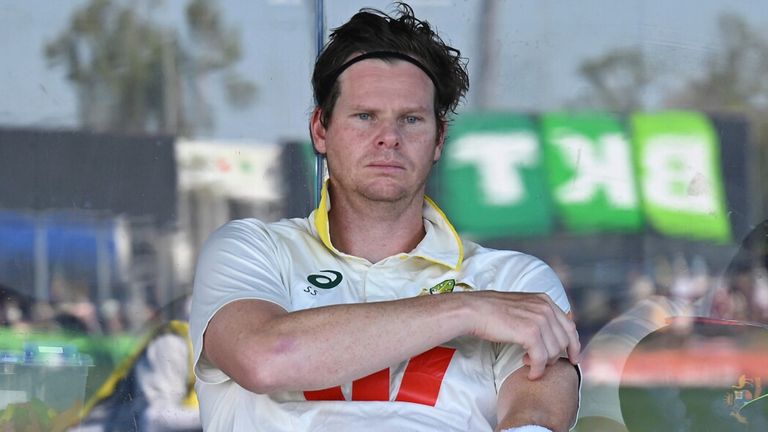


 Image: Intelligent Systems/Nintendo via Polygon
 Image: Bandai Namco
 Image: Intelligent Systems/Nintendo
 Image: Bandai Namco
 Free sign-up


