Netflix co-CEOs Ted Sarandos and Greg Peters nodded to slowdown in U.S. viewing and ad sales that spurred the radical shake-up of the streamer’s content leadership during Tuesday’s conversation with Wall Street analysts after its third-quarter earnings release.
… %!s()
Sarandos and Peters had to address the situation that led to the dramatic decision to oust chief content officer Bela Bajaria and film chief Dan Lin. Former Fox and Disney executive Peter Rice was appointed Oct. 15 as Bajaria’s successor, starting next week.
Peters sought to assure analysts that while Netflix is going through a soft period in the U.S., its underlying fundamentals are strong. As ever, when the going gets tough in pay TV, executives point to positive signs when it comes to churn — or the lack thereof. Peters emphasized that the churn rate of subscribers moving on and off the platform was better than expected in the U.S. and elsewhere for the quarter, especially after the streamer initiated a price hike.
Peters emphasized that “the quality, quantity and variety of viewing remains healthy and it drives our business model. And the best evidence that we’ve got that we’re delivering that value is churn. We’ve got healthy retention in every region,” he said. For the quarter ended Sept. 30, the level of churn improved on a global basis and in the U.S.
“The ultimate determinant of are we delivering that value is the reaction to price changes. And those recent price changes that we did, including in the United States, have gone well. We’ve seen results that are consistent with past changes,” Peters said.
Most of the regions outside the U.S. delivered strong viewing and engagement, he added.
“Our local titles from those regions are driving engagement and they’re driving business growth. And you can see how our business model works here. We specifically highlighted India, which had a strong slate with a couple titles really, really performing. And as a result, view hours in Q3 in India grew 24% on an absolute basis,” Peters said. “They were also up on a per-member basis, all of which drives membership.”
As the dust settles on the management shake-up, Sarandos told analysts that they are laser-focused on nurturing shows to stand out as hits.
“We had some really solid doubles and triples this year, but the other territories count on some of those titles being home runs so that they’ll travel around the world. We’re focusing on that execution,” Sarandos said. “India is a great example, but that success is also happening in Korea and Japan. And when you look to [Europe, the Middle East and Africa], when we look to the Nordics, which is a very mature market for us, that content slate is killing it there. And it’s proof that when we have the right focus, make the right choices and deliver creatively, we can drive outsize impact on the business around the world.”
Rice, Sarandos added, “brings expertise in both art and commerce, television and film. It’s that exact skill set that will help guide us through our next chapter.”
Spencer Neumann, Netflix’s chief financial officer, chimed in with his observation that while Netflix does need big, noisy hits, it is not overly dependent on any one genre or format of content.
“Even with modest view-hour growth that we’re delivering, we’re delivering that increasing value to our members across quality, quantity and variety viewing with a steady drumbeat of big hits in most regions,” Neumann said. “That’s really the great thing about our model — the stability of our growth engine. We’re not overly dependent on any kind of one title, nor outsized performance by any one region to deliver healthy growth.”
(Pictured: Netflix co-CEOs Greg Peters and Ted Sarandos)%!s()
Musanze, Rwanda – Jean Claude Hategekimana feared that returning to Rwanda could cost him his life. After years with the Democratic Forces for the Liberation of Rwanda (FDLR), he decided to leave the armed group and return home. At Rwanda’s Mutobo Demobilisation and Reintegration Centre, he began preparing for civilian life.
… %!s()
Born in 1996 in Rutsiro District, in western Rwanda, Hategekimana moved to the Democratic Republic of the Congo (DRC) with his parents and grew up in an area controlled by the FDLR. He joined the group in 2018, underwent military training and eventually reached the rank of captain.
“I arrived at the Mutobo Centre after fighting to defend Goma. Following our defeat, I fled to Masisi. After realising that I was fighting for nothing, I decided to return to Rwanda. I came back on February 24,” he told Al Jazeera.
Captain Jean-Claude Hategekimana, a former FDLR fighter who returned to Rwanda in February 2026 and entered the Mutobo Demobilisation and Reintegration Centre [Layth Mushtaq/Al Jazeera]
Hategekimana said FDLR members had been taught that anyone who returned to Rwanda would be killed.
“Upon arriving in Rwanda, I realised that the FDLR had been lying to us. For me, returning home felt like embarking on a suicide mission,” he said.
His experience illustrates the challenge of reintegrating former fighters whose beliefs and fears have been shaped by years in an armed group.
Rebuilding civilian life
Francis Musoni, secretary-general of the Rwanda Demobilisation and Reintegration Commission, said the Mutobo centre, located in Musanze in Rwanda’s Northern Province, was established in 2001 to receive members of the FDLR and other Rwandan armed groups returning from the DRC.
The FDLR emerged in the aftermath of the 1994 genocide against the Tutsis. After the genocide, members of the former Rwandan armed forces and militia groups fled to what was then Zaire, now the DRC. The Rwandan government accuses the FDLR of carrying out attacks against Rwanda and contributing to cross-border insecurity.
At Mutobo, the rehabilitation programme includes medical care, psychosocial support, civic education and assistance with reconnecting with families. Returnees can also contact relatives and friends through a telephone service, Musoni said.
“We help them to build confidence among themselves, build trust, and empower them to go back into the community and contribute to the development of the country together with their families,” he said.
Children play on playground equipment at the Mutobo Demobilisation and Reintegration Centre in northern Rwanda [Layth Mushtaq/Al Jazeera]
The centre also allows visitors and media representatives to meet returnees. Musoni said those undergoing rehabilitation can visit their communities for short periods to help rebuild their confidence in returning home.
“They can travel to their communities [during rehabilitation]. They are given written permission for a week or two, and we even facilitate transport,” he said.
Different journeys home
For the former commanders interviewed by Al Jazeera at Mutobo, the decision to leave the FDLR was shaped by family ties, disillusionment and concerns about personal safety.
Major-General Anastase Munyaneza served in the former Rwandan armed forces in Kigali’s Kicukiro District during the 1994 genocide. He said he left Rwanda after the genocide and later joined the FDLR, eventually commanding its South Kivu sector.
Although he had come to accept the group’s beliefs, Munyaneza remained in contact with his family in Rwanda. News of their lives made him question his own circumstances.
“I was the only one who had fled to the DRC. I regularly received news about them. I knew they were still alive, attending school, working for the government and improving their lives. I began asking myself what I was doing in the forest,” he said.
He added that seeing other members return safely encouraged him to consider going home.
Munyaneza said he contacted personnel from the United Nations Organisation Stabilisation Mission in the Democratic Republic of the Congo (MONUSCO), who transported him from South Kivu to Bukavu and then to the Congolese-Rwandan border. He subsequently proceeded to Mutobo.
Lieutenant-Colonel Idrissa Bizimana, who was responsible for ideology, propaganda and recruitment within the FDLR, said his decision to return followed a change in his convictions.
“I no longer believed in the ideology I had been promoting. After receiving verified information about what was happening in Rwanda, I decided to return home,” he said.
Bizimana said he had been in contact with a MONUSCO general who had offered to help him return. Using a satellite phone equipped with GPS, he sent his location and the date. A helicopter was then dispatched to retrieve him, he said.
Lieutenant-Colonel Emilien Mpakaniye, who joined the FDLR in 1998 and was responsible for economic affairs at its headquarters, said he began questioning the organisation after becoming disillusioned with what he described as its lies.
Colonel Emilien Mpakaniye, a former FDLR intelligence commander who returned to Rwanda in 2022 and underwent rehabilitation at the Mutobo Demobilisation and Reintegration Centre [Layth Mushtaq/Al Jazeera]
Colonel Augustin Nshimiyimana, a former FDLR intelligence commander, returned to Rwanda in 2022 and underwent rehabilitation at Mutobo. He said he decided to leave after another commander accused him of working with Rwanda following a disagreement over a mission in Bujumbura.
Nshimiyimana said the accusation made him fear for his life.
“When they accuse you of working with Rwanda, it means they consider you a Tutsi, and the next step is to kill you,” he said.
Preparing for a new life
At Mutobo, former fighters receive education and practical support to prepare for life after discharge.
Febronie Mukankiko, a teacher at the centre, said teaching people who grew up in the forest required a different approach.
“Our students are different from ordinary students. They are adults who grew up in the forest, so teaching them requires special skills. We undergo additional training to ensure that we can teach them effectively,” she said.
Febronie Mukankiko, a teacher at Rwanda’s Mutobo Demobilisation and Reintegration Centre, where she teaches adult former fighters who grew up in the forest [Layth Mushtaq/Al Jazeera]
She added that completing their studies could be a significant achievement for those with limited access to formal education.
“When they graduate and receive their certificates, they are very happy,” she said.
Musoni said the average stay at the centre was five months, after which returnees completed a formal discharge process. He said assistance could include financial support, vocational training, formal education and help establishing income-generating activities. The commission also follows up with former residents to assess how they are adjusting to life in their communities.
For those who have spent years away from Rwanda, leaving Mutobo marks the start of another transition: finding work, reconnecting with family and adjusting to civilian society.
For Mpakaniye, disillusionment came partly from the contrast between the lives of senior commanders’ families and those of ordinary fighters.
“First, their family members live in Rwanda and in Europe, while ours are in the forest,” he said. %!s()
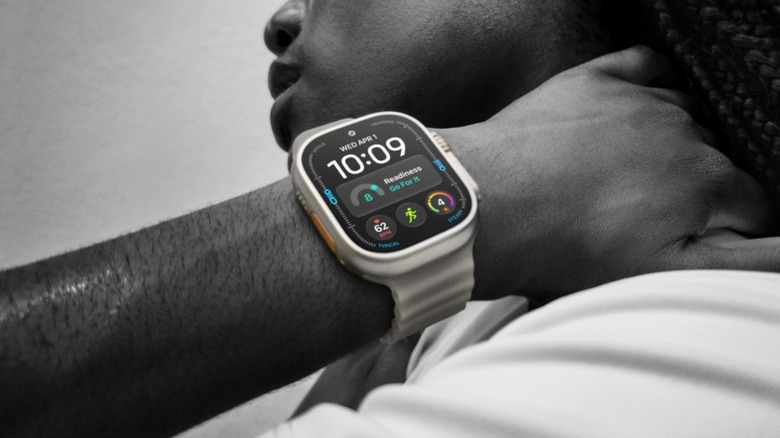
That little orange button can do a lot more than start your next workout.
Apple
If you're serious about running, hiking, weightlifting or other high-energy activities, the Apple Watch Ultra 4 is easy to recommend. At $800, it is a commitment — but that's surprisingly reasonable compared to other fitness and adventure watches, and the benefits over a regular Apple Watch aren't trivial. It's bigger, tougher and lasts up to 50 hours on a charge, whereas a Series 12 has to be topped up every day. Combined with its satellite features and GPS accuracy, it might legitimately save your life on a wilderness trek.
… %!s()
An Ultra difference that Apple tends to downplay these days is the action button. It's an orange button next to the speaker grille, used as a quick shortcut for commands that other Watch owners have to tap through menus or complications to reach. It can also activate the watch's emergency siren, which helps attract attention if you're lost or injured. It's such an obvious, low-cost feature that it's almost insulting that it's not on Series devices, too.
There's a broad range of commands you can assign to the button. You can only assign one at a time, but if you know what you're doing, it can be immensely useful for anything that's a daily habit. All the more so if you take advantage of the automation upgrades in watchOS 27 and iOS 27.
The action button arsenal on your wrist
Apple
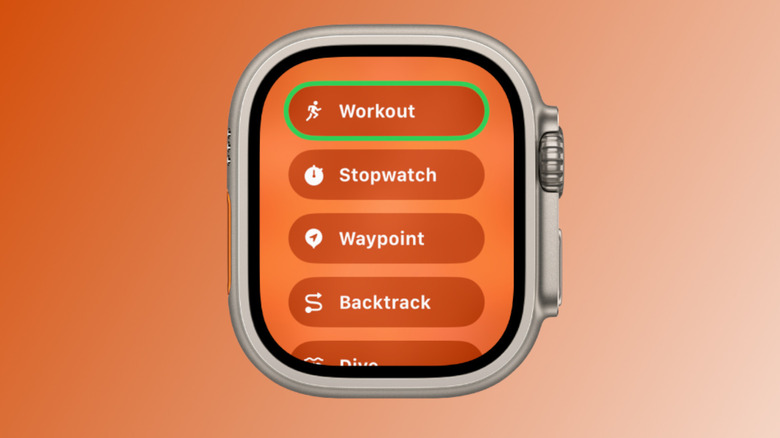
If you hold down the action button briefly, you'll see the Quick Switch menu appear. This lets you swap the button's single-tap function on the fly, which can be vital for some activities, particularly outdoor navigation. You'll see what we mean in a moment.
The most straightforward options are Flashlight, Voice Memo, Translate and Recognize Music. With these, you just hit the button once to start the function and again to stop it. As a side note, Recognize Music should be nearly instant on an Ultra 4, thanks to Apple's new Audio Intelligence capabilities, which also support automatic Shazam detection.
Slightly more complex are Workout, Stopwatch and Dive. With Stopwatch, pressing the button once starts timing, and pressing it again marks a lap. Press the action and side buttons simultaneously to pause. With Dive, a regular press begins your aquatic adventures, while pressing action and side simultaneously launches an app-specific secondary function.
Similarly, Workout will either open the Workout app or immediately launch into a particular activity. You can change this by going to Settings > Action Button. Mid-session, tapping the button performs a secondary function, such as marking a segment. To pause, press action and side together.
Special attention is due to the two navigation options, Waypoint and Backtrack. The first drops waypoints visible in the Compass app and the Waypoint watchface, although some waypoints are added automatically, such as your parked car and the last available cell signal. Backtrack is also linked to the Compass app, but tapping once starts recording a precise route you can retrace later. Hitting the action and side buttons simultaneously flips between the Record and Retrace modes.
The showstoppers: Accessibility and Shortcuts
sdx15/Shutterstock
For some users, assigning the button to Accessibility might be unavoidable. This lets you trigger things like AssistiveTouch, VoiceOver and even control nearby devices. There may be a reason to use this if you're fully able-bodied, too, so check it out.
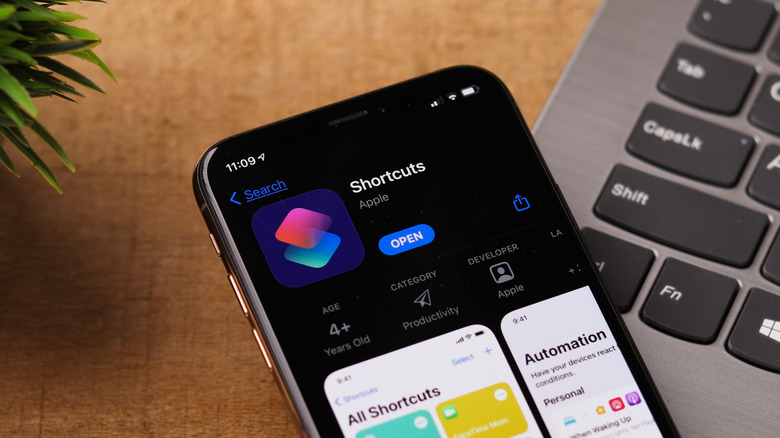
Arguably, though, the single most powerful action is Shortcut. This is configured like Accessibility, but lets you trigger any automation you've built in the iPhone's Shortcuts app. Given that these automations can stretch across multiple platforms and even control smart home accessories, there's virtually unlimited potential. A single tap might, for example, turn on your lights, adjust your thermostat and even start playing local news on your HomePod.
The Shortcuts app can be unwieldy at times. Thankfully, a big change in iOS 27 on iPhones with Apple Intelligence is the ability to build shortcuts simply by describing what you want them to do. This greatly simplifies the process, although it's important to double-check the results. You don't want an "I'm driving home" routine to accidentally send an ETA to your mother-in-law instead of your partner. %!s()
From software limitations to the pre-sale deals, here's what you need to know ahead of the iPhone Duo launch.
Benjamin Fanjoy/Getty Images
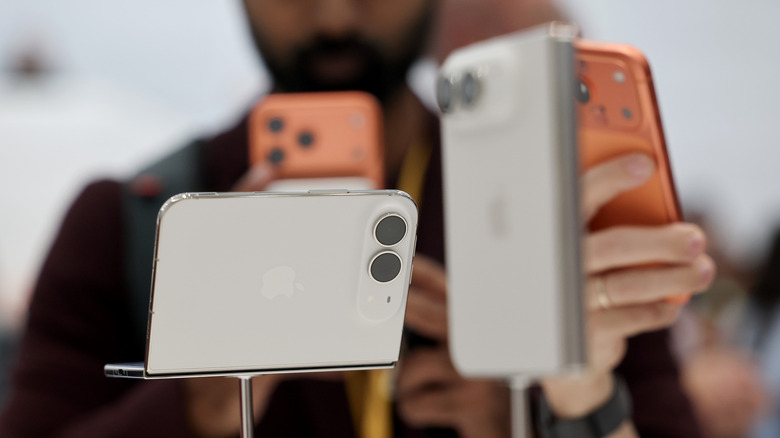
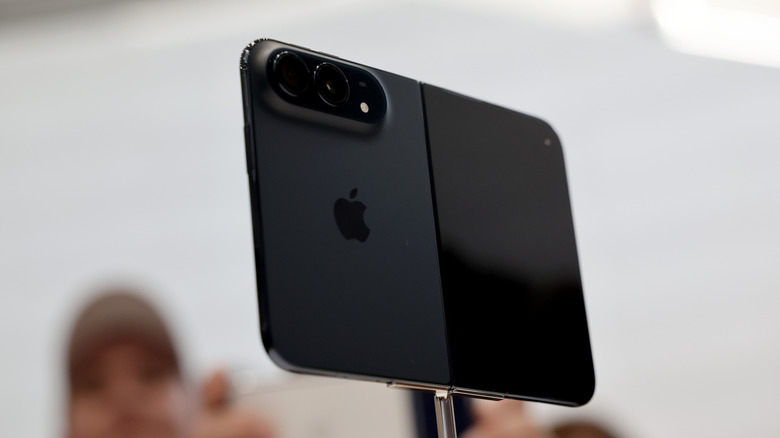
Pre-orders for the iPhone Duo begin this Friday, and the first units will be shipped to buyers on October 23. And there's a lot of hype around the Duo, since it's the first foldable iPhone ever — and represents the most radical change to the iPhone in a while. It's also the most expensive iPhone yet, starting at $1,999. Despite the price, the device comes with some trade-offs that we've already covered in detail. It lacks some popular features and the cameras aren't the best on an iPhone. Even so, many people are eager to buy one.
… %!s()
But before you go ahead with your pre-order on Friday, it's worth going over all these limitations and deciding whether the iPhone Duo is really for you. Plus, there are some deals worth checking out, a few accessories to consider and reviews of competing products that you should definitely read before buying an iPhone Duo.
What you give up compared to a regular iPhone
Benjamin Fanjoy/Getty Images
Yes, the iPhone Duo is the most expensive iPhone in the lineup today — but that doesn't mean it has the best hardware in every respect. As we've previously covered, one of its biggest drawbacks is its cameras. Like midrange iPhones, the Duo has two rear cameras and no dedicated telephoto lens. You can still get a 2x "optical-quality" zoom thanks to a digital crop of the main 48-megapixel sensor, but it's nowhere near the quality of the zoom lens found on the iPhone 18 Pro. The front-facing camera also has a lower resolution compared to the latest iPhones, with only 12 megapixels instead of 18 megapixels. There's no variable aperture on the main lens either — that feature remains exclusive to the iPhone 18 Pro models.
Unlocking the iPhone Duo is also different, because it relies on Touch ID on the side button instead of Face ID. It's not exactly a problem, but it might take some time to get used to. The Action Button is gone, too, so you'll be limited to silencing your phone or accessing quick controls through the Control Center. Camera Control is still there, though, so you can still quickly open your favorite camera app with just a click.
Then there's the issue of apps. Apple has optimized iOS 27 to take advantage of the new foldable form factor, and apps can do the same. This means that menus and apps can automatically snap to fit two halves of the screen when you bend the hinge, for instance. However, when it comes to third-party apps, developers will have to update them so they, too, fill the entire screen of the iPhone Duo. Some popular apps, such as Netflix, Zoom and Slack, will already have updates available for the iPhone Duo on launch day, but most developers still have work to do. Expect some of your apps to look a little odd on the iPhone Duo for a while — some may appear stretched, while others may have black bars.
How the iPhone Duo compares to other foldables
Framesira/Shutterstock
It's hard not to compare the iPhone Duo to other foldable phones on the market, especially since there are so many of them out there. The Galaxy Z Fold 8 is likely one of the main competitors, since they're both quite similar in terms of design. However, the Z Fold 8 starts at $1,899 — $100 less than the Duo — and is notably lighter and thinner. It weighs 201 grams (7.09 ounces) and measures 9.7mm (0.38 inches) when closed, compared to the iPhone Duo's 254 grams (8.9 ounces) and 11.3mm (0.44 inches).
Google's Pixel 11 Pro Fold also starts at $1,899 and includes a telephoto lens with 5x optical zoom, which, according to our review, makes it one of the best camera systems on a foldable phone.
These comparisons are academic, of course. When it comes to getting one for yourself, you should think about the ecosystem. If you're already locked into the Apple ecosystem, the iPhone Duo is a strong choice. But if you're open to trying something different, it's definitely worth checking out the competition, too. Our comparisons of the Duo versus the Galaxy Z Fold 8 and the Duo versus the Pixel 11 Pro Fold go further into the details.
The deals available
Wongsakorn 2468/Shutterstock
Carriers and Apple itself are already offering some deals for those who want to pre-order the iPhone Duo this Friday. Apple's trade-in program alone offers up to $885 off, depending on the phone you trade in, which helps offset the full price. Or you can pay in installments with your Apple Card, interest-free, with prices starting at $83.29 per month for 24 months on the base model. There's also Apple Upgrade, a financing program in partnership with Klarna, with prices starting at $57.99 per month for 24 months. At the end of the contract, you can either return the device, pay off the remaining balance or upgrade to a new iPhone.
Carriers are also going big on deals for the iPhone Duo, with AT&T offering up to $1,200 in trade-in credit for eligible devices. T-Mobile, on the other hand, offers up to $1,000 in trade-in credit for Xfinity Mobile Plus customers. Even if you don't trade in your old phone, Mobile Plus customers can get a $400 discount when pre-ordering an iPhone Duo. With prices exceeding $2,000, any discount is more than welcome.
Accessories worth considering
People love buying accessories for their new phones, and it won't be any different with the iPhone Duo. Apple has introduced its own range of new accessories designed specifically for its first foldable phone, and you prefer a first-party option. The company's iPhone Duo Case costs $79 and covers all sides of the phone. The case is made of plastic and is ideal for those looking for better protection against accidental drops. It's only available in two colors, though: Navy Blue and Sand, to match the blue and silver iPhones.
Also from Apple is the Duo Folio case, which features a built-in kickstand on the back. This cover is much more elegant and attaches magnetically to the iPhone, making it much thinner and easier to put on and take off. It costs $129 and helps protect the iPhone Duo's front and back screens from scratches. This one also comes in just two colors: Navy Blue and Taupe.
The Duo is also the first iPhone compatible with the Apple Pencil for drawing and note-taking. However, support for it won't arrive until later this year via a software update, so there's no rush to buy one. It's worth noting that it only works with the USB-C Apple Pencil designed for the iPad — so if you already have an Apple Pencil 2 or Apple Pencil Pro, you'll need to buy a new one to use with your iPhone Duo. And of course, the iPhone Duo doesn't come with a power adapter in the box, so you might want to buy Apple's new 40W Dynamic Power Adapter with 60W Max, too. It enables fast charging on the Duo, reaching a 50 percent charge in 20 minutes.
iPhone Duo reviews aren't up yet
Benjamin Fanjoy/Getty Images
Some people like to wait for the first reviews before buying a new phone. However, the iPhone Duo reviews aren't up yet, and probably won't be until next week. That means eager buyers will have to place their orders without first checking out the results of independent testing. For now, you can only find some hands-on impressions like the one we have here. The thing is, a quick hands-on isn't enough to test things like performance and battery life in real-world scenarios.
Many of these questions can only be answered after using the phone in the real world for a while, and there's a lot we still don't know. Apple hasn't disclosed the resolution of the iPhone Duo's front-facing camera, for instance, and we also don't know if the hinge and the crease will hold up over time. Luckily, Apple has a 14-day return policy, so there's a bit of leeway if you end up not liking the iPhone Duo. %!s()
Project Helix could break the bank due to high part costs and shortages.
Xbox
Fortune published a lengthy profile of new Xbox CEO Asha Sharma that included some snippets of information about the company's upcoming plans. The much-discussed Project Helix, Xbox's a next-gen gaming console that will also play PC games, got some mentions, including potential pricing and release timing. The next hardware release from Xbox is reportedly a handheld device that's slated to arrive for the 2027 holiday season, with the full console to come in the same time period during 2028.
… %!s()
In a different interview in August, Sharma hinted that Project Helix would be a "family" of gaming devices, so the news of multiple releases isn't a surprise. The more shocking development is around price. Fortune reported that the Project Helix console is currently projected to cost between $1,200 and $1,800 unless Microsoft opts to subsidize the hardware.
If that does turn out to be the going rate, and it definitely could be given the ongoing explosion in prices for RAM and other components driven by AI development, it might be a major roadblock for Sharma's goal of seeing Xbox reach more than 1 billion people daily.
A lot could still change in the next two years. It's possible this high figure is being teased so that when the actual price is lower, Microsoft and Xbox might appear more benevolent toward customers. Or the price really will be that eye-poppingly high, and Xbox will face a steep climb to grow from its current reported level of 100 million daily active users. It's hard to imagine people shelling out that much for hardware from the beleaguered brand when they could opt for the currently cheaper Steam Machine.
Another detail shared with Fortune includes a potential overhaul of Xbox's Game Pass to have a la carte pricing with add-ons for "console-only games, cloud gaming, and multiplayer," according to unnamed insiders. The next rounds of layoffs in Xbox's ongoing downsizing effort are also expected to come this month, followed by additional cuts planned for November and January. %!s()