The Pentagon updated its official war casualty database over the weekend, adding more than 140 wounded service members. The Defense Casualty Analysis System (DCAS) also introduced a new casualty category labeled “Overseas Operations” for personnel killed and wounded “starting July 7”.
… %!s()
According to the updated database, the official toll for the earlier phase of the US-Iran war, known as Operation Epic Fury, now stands at 14 service members killed and more than 400 wounded in action.
These figures have been the point of contention after the Pentagon previously reduced the totals from 18 deaths and 482 wounded that had been recorded just days earlier.
The dispute comes after the collapse of the ceasefire with Iran and the resumption of near-daily airstrikes beginning on 6 July. Analysts and officials have questioned whether casualties from the renewed fighting should be counted separately from Operation Epic Fury, a move that would be unprecedented.
The Trump administration is seeking to classify the renewed military campaign as separate from Operation Epic Fury, the US military’s official name for the Iran conflict.
The change is tied to the War Powers Act of 1973, which requires the president to end military operations within 60 days unless Congress authorizes an extension. The Trump administration has argued that the April ceasefire with Iran paused the clock on 1 May for the conflict’s initial period. The separate casualty count beginning on 7 July follows that interpretation.
The shift became apparent earlier this week when the Pentagon’s official online list of service members killed in the ongoing Iran war did not include the four soldiers who died during renewed fighting over the weekend. Their names, however, were included in a Pentagon press release announcing the formal transfer of their remains back to the US on Wednesday.
Reporters raise their hands to ask questions during a briefing on the Iran war with Pete Hegseth at the Pentagon in Washington DC on 16 April. Photograph: Nathan Howard/Reuters
Combined with the updated Operation Epic Fury totals, the new Pentagon figures show that 18 US troops have been killed and 624 wounded since the US launched its war against Iran on 28 February.
Lawmakers from both parties have challenged the administration’s interpretation of the War Powers Act timeline.
Thomas Massie, a Republican House member from Kentucky, responded to the updated numbers in an X post, writing: “Let me explain this absurd ruse: The Pentagon is pretending there have been two Iran wars separated by a brief cease-fire.
“The reality: By going more than 90 days without congressional authorization,” the defense secretary, Pete Hegseth, “IS BREAKING THE LAW and must be held accountable”. %!s()
Jaismine Lamboria is one of India's strongest boxing gold-medal prospects at the Glasgow Games
ByAnnesha Ghosh
Sports writer
The reigning 57kg world champion boxer Jaismine Lamboria from India throws punches for a living, but when it comes to handling pressure, she looks to one of her country's most celebrated cricketing legends for inspiration.
"I really admire MS Dhoni's mindset," says the soft-spoken Lamboria of the former Indian captain. "He is known as 'Captain Cool' for a reason, and I want to be calm like him."
That composure will be particularly valuable for Lamboria over the coming days.
The 24-year-old is one of India's strongest boxing gold-medal prospects at the Glasgow Commonwealth Games, looking to improve on the bronze she won at Birmingham 2022.
Coming off a breakout 2025 during which she won World Cup golds in Astana and Delhi before becoming world champion in Liverpool, Lamboria is in Glasgow with an uncomplicated ambition.
"I aim to change the colour of that medal to gold," she says. "That's what I've been training and preparing towards."
At 5ft 8½in, Lamboria is tall by Indian boxing standards. Her Olympic debut in Paris ended in a first-round defeat to Tokyo silver medallist Nesthy Petecio of the Philippines.
But the setback came in the weight class she had only recently returned to. After spending nearly three years boxing at 60kg, Lamboria dropped back to 57kg during the Paris qualification campaign - a move that ultimately paid off when she won the world title by defeating Paris Olympic silver medallist Julia Atena Szeremeta of Poland.
Image source, AFP via Getty Images
Image caption,
Lamboria (left) is the the first female boxer inducted into the Indian Army
"That Paris 2024 Olympics exit was disappointing but it was an eye-opener," says Lamboria. "It prompted several changes in me - physically and mentally. And a significant part of it has come about at the Army Sports Institute (ASI) in Pune, which is where I train."
Lamboria credits her ASI coaches for improving his physical strength and a motivational coach and sports psychologist for sharpening her mental game.
The Indian Army, however, has provided the wider institutional framework around much of her development.
After winning bronze at the 2022 Commonwealth Games, Lamboria became the first female boxer inducted into the army, joining the Corps of Military Police. She now trains under its Mission Olympics Wing.
"It's a great honour they wanted to begin with me, but I also see it as an opportunity to become a role model for female athletes," says Lamboria of joining a system that has produced Olympians and Paralympians, including Olympic javelin champion Neeraj Chopra.
In early 2024, the Indian Army launched the Girls Sports Company to train girls aged 12 to 16 in four Olympic sports, including boxing, creating a pathway to elite competition and army recruitment.
"These girl athletes are doing very well too," says Lamboria. "One boxer has already won Asian Championships gold, which makes me really happy. I may have been the first female boxer in the Indian Army, but I won't be the last."
Lamboria's relationship with boxing, however, began long before the army entered her story.
Image source, Getty Images
Image caption,
Lamboria (right) began boxing seriously when she was around 14 years old
Born in the northern state of Haryana, she grew up in Bhiwani, a city synonymous with Indian boxing and widely nicknamed the country's 'Mini Cuba'.
Her great-grandfather Hawa Singh was one of Indian boxing's early giants. A heavyweight, he won successive Asian Games gold medals in 1966 and 1970 and was among those who established the famed Bhiwani Boxing Club, which would later produce boxers including Olympic medallist Vijender Singh.
Even so, it is not Hawa's medals that feature most prominently in the stories Lamboria remembers hearing about him at home. "He was powerful, but there was also so much humility in him," she says.
Her earliest boxing influences were her uncles, Sandeep Singh and Parvinder Singh. "I grew up watching them compete," she says. "They were the ones who got me started."
Lamboria began boxing seriously around the age of 14, training first at an academy run by Hawa's son, Sanjay Sheoran, before continuing under her uncles.
Though the sport ran through her extended family, Lamboria grew up in a household of modest means. Her father, Jaiveer, works as a home guard, while her mother, Joginder, is a homemaker.
"Their support has been a big reason why I was the first girl in my immediate family to take up sport seriously," she says, "not least as the youngest among the girls in the family."
Her inspirations, meanwhile, extend well beyond her own family.
Image source, Getty Images for Commonwealth Sport
Image caption,
Lamboria wants to win the gold at the Glasgow games
Lamboria grew up idolising Olympic medallists MC Mary Kom and Vijender Singh. Later, she looked up to Indian Army boxers Amit Panghal and Manish Kaushik, Olympic champion Neeraj Chopra, American swimming great Michael Phelps and Indian sprinting legend Milkha Singh.
Closer to home, she credits senior Indian boxers Nikhat Zareen, Lovlina Borgohain and Pooja Rani, not just for their medals but for the encouragement they offer younger athletes.
"When you look at them, you naturally feel that you want to do what they have done," she says.
Now, Lamboria is beginning to occupy that role herself.
"For a long time, boxing has been seen as a male-dominated sport," she says. "Being a woman boxer and an Army athlete, it means a lot to compete on the world stage, prove myself and inspire others through my performances."
That change is reflected in the Commonwealth Games too. Boxing has been part of the event since 1930, but women's competition was introduced only in 2014. In Glasgow, bouts begin on 24 July, with the finals on 31 July and 1 August.
After winning bronze in Birmingham four years ago, Lamboria hopes to leave Glasgow with gold.
"When you're competing overseas and the national anthem plays, it's a completely different feeling," she says.
"I experienced that at the World Championships in Liverpool last year. That's the moment I want to recreate here." %!s()
EQS-Ad-hoc: Kapsch TrafficCom AG / Key word(s): Capital Reorganisation
Kapsch TrafficCom reaches agreement with its major financial creditors on key terms of a restructuring.
26-Jul-2026 / 19:12 CET/CEST
Disclosure of an inside information acc. to Article 17 MAR of the Regulation (EU) No 596/2014, transmitted by EQS News - a service of EQS Group.
The issuer is solely responsible for the content of this announcement.
…%!s()
Kapsch TrafficCom reaches agreement with its major financial creditors on key terms of a restructuring.
Vienna, July 26, 2026 – Kapsch TrafficCom AG (ISIN: AT000KAPSCH9; the “Company”) has concluded a standstill agreement and a binding term sheet with its major financial creditors (lenders and promissory note creditors) as the basis for a comprehensive restructuring agreement with a term ending on March 31, 2028.
The financing terms have been tightened, and a suspension of ongoing principal repayments through March 31, 2028, has been agreed upon; in addition to conditions precedent customary in restructuring agreements, the Company has committed to early repayments from excess cash (cash sweep) and from extraordinary inflows, as well as to forgoing dividend distributions. The Company’s dividend policy therefore remains suspended.
Furthermore, the Company will continue to implement comprehensive cost-saving and efficiency-enhancing measures. In addition, the Company plans to divest assets from its business portfolio and is also exploring ways to strengthen its capital base.
To support the restructuring, the Company plans to appoint Mr. Markus Richter as Chief Financial Officer; as a proven expert, he is expected to play a key role in overseeing the implementation of the restructuring process.
Contact: Doris Gstatter
Investor Relations Officer
Kapsch TrafficCom AG
Am Europlatz 2
1120 Vienna, Austria
P +43 50 811 1122 [email protected]
For more information about Kapsch TrafficCom: https://www.kapsch.net %!s()
Six twentysomethings in East London have built what they say is the anti-San Francisco hacker house. The goal is a “holistic improvement in life,” rather than “12 weeks, Demo Day is coming,” Rowan Aldean, 26, explained.
… %!s()
Intrigued, I spent an afternoon visiting the house, meeting its residents, and doing a vibe check. I arrived after Aldean escorted me through the clean sidewalks of a new East London development to where the six-story building stood facing the water.
The house is called the London Island Founder House — or “Lift House” — and Aldean and his wife, Zahraa, 22, an upcoming pharmaceutical research PhD candidate, have lived there since May, just a few months after it officially launched in March. Aldean sold his previous company last year for millions, he said, and now runs an “applied AI” startup that helps companies learn how to deploy agents.
Like all hacker houses, Lift House is part startup workspace, part co-living space. The house is named after both its lift — that is, its elevator — and its mission to uplift tech founders, Aldean said. It’s one of the very few co-living hacker houses to exist in London (compared to San Francisco, where dozens — if not hundreds — are scattered around the city at any given time).
Lift House is a bet that U.K. founders can build successful companies without mimicking the over-the-top hustle culture of Silicon Valley.
Founders have described stories of San Francisco hacker houses illegally running in warehouses, throwing full-on galas, or setting up in a tent or espousing punishing, 72-hour sprints typical of the “996” work culture.
“I don’t expect the performative and over-the-top events will be a thing here,” Aldean said, and pointed to one of London’s most successful AI companies, DeepMind. “They’ve won Nobel prizes and built frontier innovation without any song and dance.”
Instead, Lift House is part of a trend called “Londonmaxxing,” in which founders attempt to optimize everything the London tech scene offers. The London ecosystem feels less showy and less startup bro-y than San Francisco, but its founders share similar ambitions: success, wealth, and market domination.
London AI startups have raised $12 billion so far in 2026, out of $14.7 billion raised by all London startups, according to Dealroom. Six companies have raised more than $500 million: Wayve, Superintelligence, ElevenLabs, Recursive, Ineffable Intelligence, and Isomorphic Labs, the latter three of which were founded by DeepMind alumni.
The excitement from AI has boosted the morale of the U.K. tech scene, inspiring a new generation of founders, like those in the Lift House, to take big swings.
L-R; Luke, Zahraa, rowan, varun, david, presence, and wan. Varun is the only one who doesn’t live in the Lift House. Image Credits:TechCrunch
Journaling vs. demo day
The timeline for living on Lift House is flexible — some people have stayed for a month; others intend to stay for at least six months. They buy their own groceries, Aldean said, although they often cook together and share ingredients. Cleaning is split among the group. Everyone declined to share information about the rent they pay.
The residents of Lift House aim for a balanced approach toward ambition, each one of them tells me — an almost unheard-of idea by San Francisco startup standards.
On Sundays, the group will journal together, a practice introduced by David Amor, 28, who runs a brain coaching and training company, helping founders and business leaders understand more about their brain and how it can help optimize business performance. The idea of journaling is to help everyone track how much time they spent in nature that week, how well they ate, and how much they moved their bodies.
“I’m eating healthier, working out more, and sleeping more,” Luke, 27, who runs an AI-marketing company, said about living in the house. “I always make sure to have lunch now, which is something that is simple, but I wasn’t doing before I lived here.” (Luke asked that his last name be withheld.)
Tuesdays evenings are for volleyball, where the founders play on the house team in a local league.
After dinner on other evenings, Wan Ying L, 25, who just left an AI startup and is working on a new idea, might play the piano in the living room. Sometimes the group plays Catan or visits art exhibitions together.
Presence Plumb, 25, is a tech strategist. She likes to host rooftop dinner parties, serving dishes that reflect the different nationalities in the house — from Iraqi to Spanish — while invited founders, researchers, investors, and operators chat about tech trends and investments.
“It’s a bit calmer, balanced, authentic in a way,” she said of people in the London ecosystem. “They don’t want too much of that only startup tech bro vibe. They want a bit of balance.”
Each founder follows their own schedules for a typical workday. Amor, for example, is up by 8 a.m. and gives himself exactly 30 seconds after waking up before jumping into his morning work. “I have a clear objective of ‘this is what I want to do in the first half of the day, when there’s no distractions.’” After his morning work routine, he takes a cold shower, “because it increases your dopamine by 250% and that gives me that motivation, that spark,” he said.
Wan playing the pianoImage Credits:TechCrunch
Luke, meanwhile, is up at around 8:30. His co-founder, Varun, 27 (who asked that his last name be withheld), typically travels to the Lift House to co-work, and the duo starts work at around 9 a.m. with a team call.
Aldean rarely wakes before 10 a.m. unless something big is happening, like a “crazy angel [investor] call,” he said.
When asked what makes this house uniquely British rather than a wellness-focused Silicon Valley founder house, Aldean joked: “Well, we drink tea together like Brits, and in SF folks just drink filtered coffee.”
More seriously, he spoke of how British founders face a different kind of pressure than those in the U.S. They must navigate a cultural aversion to risk, an inclination toward humility, and a shame associated with failure. Instead of forgoing sleep for hustle and grind, they deal with what they call the “tall poppy syndrome,” when the media builds one up only to ruthlessly tear them down should they become too successful, investors and founders say. It makes some founders in the ecosystem wary of displaying too many wins.
Still, Luke said London is a strong choice for an early-stage founder: There’s a good network, ample early capital opportunities, and an option for a life outside of tech. In many ways, it is much more like New York culturally for founders than in San Francisco.
“London is so diverse that if you look properly enough, you’ll always find something fun to get involved with,” Amor added, “whether that’s a founder-run club, wellness events, [or going] to jazz nights.”
Luke and Varun write marketing terms on the whiteboard. They stand for top of funnel (TOFU), middle of funnel (MOFU), and bottom of funnel (BOFU).Image Credits:TechCrunch
Luke and Varun largely avoided venture capital funding by taking advantage of the U.K. government’s SEIS/EIS, which is supposed to help attract more angel investments into local startups. “There’s people who will pay basically the same rate of tax if they give us the money versus if they pay income tax,” Luke explained as another reason he liked starting out in London.
Aldean also feels the London ecosystem is less cutthroat than the Valley. He recalls his days living in a hacker house in the Bay — everyone’s desk had to face the wall, and it was heads-down, product-building. He felt the ecosystem, at times, was too willing to gossip, which is apparently done quite differently in the U.K.
“There’s nothing like ‘oh my god did you hear that the CTO just, like, did this,’” Aldean said. “It’s like you’re always worried,” he said, that someone would spread negative stories, especially if it benefited them.
Aldean also thinks London startups, more than Silicon Valley ones, sell into slow-moving large corporations rather than to each other, meaning one could build without having to kiss up or posture to get their peers to like them.
To the selling point, Varun and Luke mentioned another difference between the U.S. and U.K. ecosystem. “It’s a relatively fleeting market,” Varun said of the U.S. “You get quick wins. Here, it’s hard to close a customer, but if they close, they stay with you longer.”
Coming to America
Eventually, though, the road for many U.K. startups goes straight to the U.S.
In the U.K., founders have access to affordable top talent from universities like Oxbridge and a time zone that makes it easier to work with the rest of Europe, the Middle East, Asia, and parts of North America. In the U.S., however, they have access to the world’s largest economy and, most importantly, a lot of investors willing to write large checks, from pre-seed to growth stages.
“It’s almost like a factory line in a way,” Varun said. “You start here, and then you expand there or vice versa.”
American investors are also playing a role in luring British talent away from the country. I told the Lift House residents about one startup founder who said a top investor wouldn’t even back the company unless she relocated to the U.S. She ended up doing so, though decided to keep her family based in the U.K. to raise her children.
“We had an investor in Miami who said the same thing,” Luke said of an investor trying to get him and Varun to move to the U.S. “It’s quite a common practice.” He and Varun have already begun their U.S. expansion, and despite loving London, the duo hasn’t ruled out moving to the U.S. to be closer to their customers.
David, who has a brain coaching startup, is the one who introduced journaling into the household. Image Credits:TechCrunch
That’s the tension bubbling beneath not just the U.K.’s tech ecosystem but most of Europe’s. “I work with a lot of people trying to support the European ecosystem more,” Plumb said.
Yet, founders “talk about London; everyone is bullish on the country until they get the opportunity to leave,” Aldean added.
The Lift House lease has about a year left, and there is sentiment in the house to keep it going for as long as they can. After all, there aren’t too many in London, though the city sees many short-term gatherings, like the Solana Hacker House meet-up series. Some of the more public co-living hacker houses are part of a global chain, like the San Francisco-based network The Residency, which expanded into London last year, and BaseJump, which is announcing a London version of its hacker house program soon.
In 2024, two founders tried the opposite version of the Lift House called “The London Founder House,” which Sifted covered under the headline “The people here don’t want work-life balance.” That home is noted as London’s first-ever hacker house, and though it wound down last year, it left an influence through its concept, events, and connected players around the ecosystem. To even be considered for the London Founder House, one had to have raised at least half a million dollars.
For Lift House, prospective residents need to show a hobby outside their companies and an interest in fitness. It’s the same pitch many in the Londonmaxxing ecosystem are using to keep people from leaving: That here one can have it all.
“The culture is to build something that lasts,” Aldean said, “not necessarily burn out chasing a flash.”
When you purchase through links in our articles, we may earn a small commission. This doesn’t affect our editorial independence.%!s()
Like it or loathe it—and for the record, I am firmly in the latter camp–generative AI has continued to seep into every aspect of game development. What felt like the odd shovelware AI thumbnail here or generated texture there has transformed into "developers" parading around entirely vibe-coded videogames as if it's something to be celebrated, rather than looked upon with sheer horror at the willing dismantling of human creativity and spirit.
… %!s()
Critical Hit
(Image credit: Future)
Welcome to Critical Hit, where I (or someone else on the PC Gamer team) celebrate and lament all things videogame music, audio design, and the ways our favourite games make our ears tingle.
While videogame music has still largely held off from falling to generative AI, that doesn't mean it's not happening. YouTube has already become plagued with so-called "rearrangements" of beloved videogame scores that are, unsurprisingly, concocted entirely by a LLM. Spotify has been under intense scrutiny for the immense flooding of AI music across the platform—as well as fielding accusations that it's been planting AI-generated music it owns in its official playlists as a way to pay real artists less money.
I'll have a little more on that in a future column, but right now I want to know where you stand on it. Would knowing a game you're playing has AI-generated music change your opinion on it? Is it something you would even notice in the first place? Or does it simply not bother you, as long as you're enjoying playing the game?
As someone who has been shaped (and continues to be shaped) by videogame music, something that makes me love it so much is knowing the composer's intention behind every melody, instrument, every layer that might peel away or add on to adapt to the situation you're facing in-game. That kind of nuance you simply do not get from something pieced together by a computer, which is simply scanning and regurgitating whatever it's collected elsewhere.
For me, any generative AI ultimately cheapens a product. But when music is something I hold so dearly to me, surrendering that art to something artificial sounds like my absolute worst nightmare. But hey, maybe you feel differently. So make sure to drop a comment and let me know where you stand on this issue.
Keep up to date with the most important stories and the best deals, as picked by the PC Gamer team.
Mollie spent her early childhood deeply invested in games like Killer Instinct, Toontown and Audition Online, which continue to form the pillars of her personality today. She joined PC Gamer in 2020 as a news writer and now lends her expertise to write a wealth of features, guides and reviews with a dash of chaos. She can often be found causing mischief in Final Fantasy 14, using those experiences to write neat things about her favourite MMO. When she's not staring at her bunny girl she can be found sweating out rhythm games, pretending to be good at fighting games or spending far too much money at her local arcade. %!s()

 Image source, Getty Images
 Image source, AFP via Getty Images
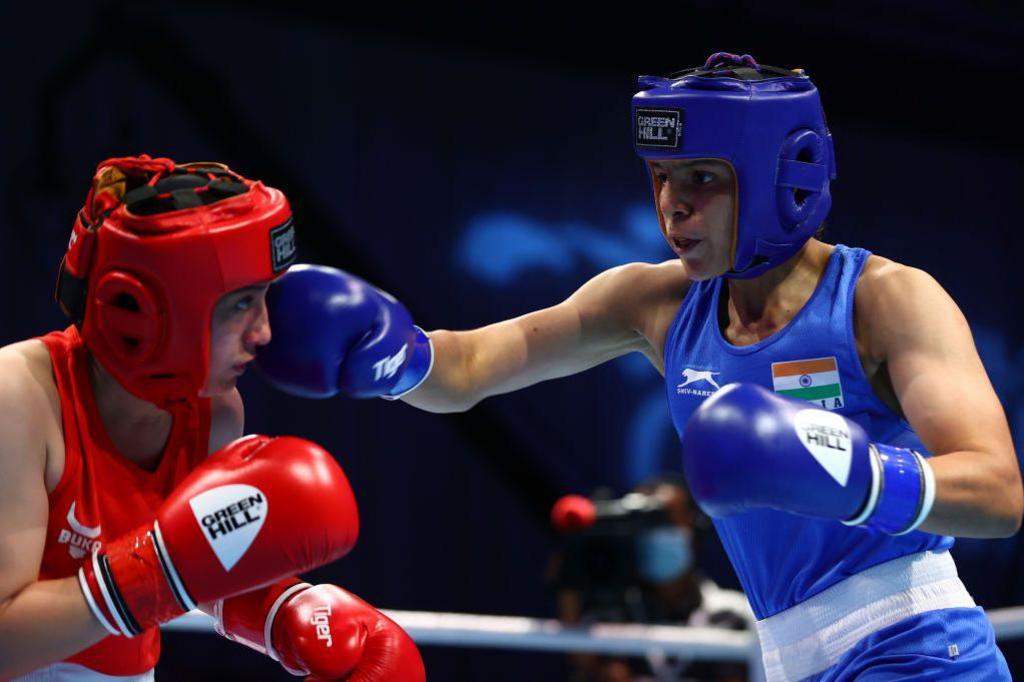 Image source, Getty Images
 Image source, Getty Images for Commonwealth Sport