WASHINGTON, DC - JUNE 14: A detailed view of a championship belt in the UFC interim heavyweight championship fight during the UFC Freedom 250 event on the South Lawn at the White House on June 14, 2026 in Washington, DC. (Photo by Jeff Bottari/Zuffa LLC)
… %!s()
Zuffa LLC
Cody Garbrandt still has two really big problems: his striking defense is nearly non-existent and his chin is still suspect. Both snakes bit him on Saturday night at UFC 329 at T-Mobile Arena in Las Vegas. Let's talk MMA.
Key Facts At A Glance
Result: Adrian Yanez def. Cody Garbrandt by TKO (punches), Round 1, 2:47
Records: Garbrandt falls to 15-8; Yanez improves to 18-6-1
What Happened In Cody Garbrandt's Loss To Adrian Yanez?
Garbrandt had his moment early, catching Yanez in a wild opening exchange that briefly turned the fight. It did not last.
Yanez settled, started countering with right hands in the middle of the chaos, and the accuracy gap showed immediately. He dropped Garbrandt and followed with punches until Herb Dean waved it off at 2:47 of the first round, a finish that closed the book on the former champion's night.
MORE FOR YOU
The defense was the story. Garbrandt walked into the same counters that have ended his last several bad nights, and Yanez, who fights with his own reckless disregard for return fire, simply landed first and landed cleaner.
Why Is Herb Dean Under Scrutiny Again?
This stoppage wasn’t too bad. Dean's name in a stoppage headline carries weight it did not carry a year ago. The veteran official has spent 2026 fielding criticism, and his last month has been rough.
At UFC Baku in late June, Dean repeatedly warned Shara Magomedov for hair-pulling and an eye poke against Michel Pereira without ever taking a point, a non-call that plausibly swung a unanimous decision. That came weeks after Alex Pereira accused him of allowing Ciryl Gane to land shots to the back of his head at UFC Freedom 250. I broke down why the criticism keeps finding him after the Baku card.
To be fair to Dean, this one looked clean. Garbrandt was hurt, the follow-up shots were landing flush, and the wave-off came before real damage accumulated. There is history here too, since Dean also worked Garbrandt’s March win over Xiao Long, deducting points twice for low blows. Garbrandt didn’t really complain after Dean’s decision, and that’s a major indicator of the validity of the ref’s decision.
How Far Has Cody Garbrandt Fallen Since He Was Champion?
It’s been a steep drop over the past 10 years. The 2016 version of Garbrandt was a monster. He outclassed Dominick Cruz to win the bantamweight title, running his record to 11-0 with the kind of hand speed that made him look like the division's future.
Nearly a decade later, he is 15-8 and has been finished in most of his losses. The March win over Xiao Long, an ugly decision he only survived because of repeated point deductions against a foul-happy opponent, was supposed to be a stylistic layup and instead exposed how much is gone. Saturday confirmed it in under three minutes.
What's Next For Cody Garbrandt?
At 34, with a chin that has been cracked repeatedly and a defensive game that has never been fixed, the honest question is whether there is a next. Quite honestly, I wouldn’t be surprised if Garbrandt walked away from the sport after this loss. The UFC has kept faith with former champions before, but the roster math is unforgiving. Garbrandt has a solid following, but if we’re being real, he’s not going to suddenly rise into contention. It’s also tough to see what real money fight he’d be able to draw.
Yanez, meanwhile, walks away with the biggest scalp of his career and real momentum after a lost 2025. The rest of the UFC 329 results roll on toward Conor McGregor’s return, but the prelims delivered the night’s clearest verdict. Garbrandt’s problems probably are not fixable by a new camp or a better game plan. %!s()
Sometimes you can't believe how we got here. And by here, we mean to a moment in time, when the entire informational ecosystem lies at your fingertips, and we even have artificial intelligence — and a law from 1958 is somehow still telling us how much a new car is supposed to cost. See, the reason we have a Manufacturer's Suggested Retail Price (MSRP) on cars, and not, say, a giant sticker price on a box of cereal, is that cereal manufacturers haven't been classed as unscrupulous.
… %!s()
Sellers of deliciously addictive cookie-flavored treats? Sure. Nefarious as hell. But car manufacturers and dealers were singled out by Congress in the mid-1950s, when an Oklahoma Democrat (we know, times sure have changed), Senator Almer Stillwell Monroney, spearheaded legislation called the Automobile Information Disclosure Act of 1958.
Thereafter, that window sticker was dubbed a "Monroney." In accordance with federal law, they are still used today and are affixed to either the windshield or a side window of the car. They include crucial details, namely, and most importantly, the MSRP. The letter S in that acronym stands for "suggested," and, by law, it is the amount the manufacturer suggests the car should sell for. But MSRP includes padding for the dealer, i.e., their profit. They pay a dealer invoice price, and when you shop, you're trying to squirm below the MSRP and above their invoice price. Squirming is the trick. And it's why we just love car dealers, right?
You can't know the invoice, but you can get close to what that car is worth
Acilo/Getty Images
Car dealers don't want to tell you what they paid for their inventory, any more than the grocer wants to tell you the price they paid for the T-bone. Because you would never want to pay more than what that steak costs them. So you're unlikely to know the invoice price, but that's okay, because there are tools to tell you what the car model you're after is actually selling for.
One handy source is Truecar.com, a transaction-based database that provides a live index of what cars are actually selling for. Yes, we know, TrueCar isn't a charity. They're in the business of helping car dealers sell their wares. And their network of 13,000 franchises represents about 35% of the nation's dealers. So even if you don't buy through them, this gives you a decently-sized snapshot, sorted for your zip code, so you could bring it to your dealer as an argument for what others are paying compared to the MSRP. In the case of this Ford Mustang Mach-E, we found a savings of $2,361 off the $39,840 MSRP.
TrueCar says its data reflects about two months of sales, and that its transaction prices run within $20 of the nationwide average. They also saytheir TrueCar Price Graph is weighted by similarly configured vehicles, and that's important. It should make it easier to ballpark, say, the car optioned with heated seats and the upgraded sound system, without having to know if that's the XLE or the LX or whatever packaging that lives in the dealer's head — but probably not yours.
You can use similar tools for used-car shopping
Anna Barclay/Getty Images
TrueCar is hardly the only tool in the game. Edmunds shows what it calls the Edmunds Suggested Price, and like TrueCar's Price Graph, it's a measure of what other shoppers are paying in your area. Yep, Edmunds is in the business of selling cars, and they're owned by CarMax. They use CarMax and other dealer data to determine the Edmunds Suggested Price. Even so, when we faux shopped for the 2026 sales champion, the Honda CR-V in the Los Angeles area, their $35,915 suggested price was $1,493 below the $37,080 MSRP.
If you're shopping used, CarGurus offers a ballpark of the average selling price of most models. This is based on what they call Instant Market Value, which works much like the tools on TrueCar and Edmunds and grades sale prices for listings in your area on a scale of Great, Good, Fair, High, or Overpriced. CarGurus says they track data at a granular level, including factors such as mileage and trim.
One downside of CarGurus is that it only tracks used-car dealer pricing, not private used-car sales. Even so, their network of over 40,000 dealers should give you a good idea of the going rate for a specific model, and that data will come in handy when negotiating with a private seller.
And used- and new-car transactions are more alike than you think, because MSRP is a mythical figure that isn't what most people pay. The statistic that matters is the average price at which any car is actually selling for. And knowing that number is a far better baseline for getting the price you want. %!s()
Joyce declines to guarantee One Nation policies will be costed before next election
Dan Jervis-Bardy
One Nation MP Barnaby Joyce has failed to guarantee the party will cost all of its policies ahead of the election after the Coalition claimed the rightwing party’s agenda would destroy the budget and drive up interest rates.
… %!s()
The opposition leader, Angus Taylor, last week used a major speech to argue Hanson’s platform would cost more than $1tn over a decade, force the Reserve Bank to lift rates and even risk a sovereign debt crisis.
Appearing on Sky News, Joyce – who is now One Nation’s treasury spokesperson – brushed off Taylor’s attack.
Sky News host Andrew Clennell asked Joyce if the party would submit all of its policies to the Parliamentary Budget Office (PBO) for costings, to which he replied:
double quotation markWe will do it to the best of our ability.
Pressed for a guarantee, Joyce said:
double quotation markI’m not going to give a sort of guarantee like that, Andrew, because that means I have the resources to do it.
And if I get the promise that we’re going to have the resources to do it, it certainly makes it a lot easier.
It is important to note that One Nation’s staffing numbers should have no bearing on its capacity to submit costings to the PBO. The budget office is available to all MPs – including independents – to provide independent analysis of their proposals.
Asked by Clennell if One Nation would be prepared to fund additional staff itself, Joyce said:
double quotation markWe’ll have to.
Key events
1h ago
Joyce declines to guarantee One Nation policies will be costed before next election
1h ago
Queensland man charged with DV murder after remains found believed to be those of missing mother
In some more from that Pat Conroy Insidersinterview, the minister defended a new deal with India allowing it to buy Australian uranium despite not being a signatory to the international nuclear non-proliferation treaty.
During the week, with the Indian prime minister, Narendra Modi, visiting Australia, the two countries announced a a new uranium deal which Anthony Albanese said would enable uranium exports to flow to India for “peaceful purposes” – mainly, energy production.
Australia had previously struck a deal with India to sell uranium to the country in 2014, but regular shipments have not occurred due to concerns it could be used for weapons.
Conroy told the ABC:
double quotation markGovernments of both persuasions, both the liberal, previous government and our government have been working towards putting in place safeguards, so that we are confident that the uranium will only be used for their domestic energy production.
We’re satisfied that the systems are in place for that. And that’s why we’ve been in the position to reach the agreement that we’ve been.
Conroy did not detail the new “safeguards” to stop India from using the uranium to make nuclear weapons, and said:
double quotation markWe’re responsible for what our uranium is used for.
What India does with its uranium is a question for them.
Defence industry minister says Pacific in “arms race” after Chinese missile test
Labor MP Pat Conrory, the minister for defence industry and pacific island affairs, says China’s recent missile test has both hurt its standing in the region and contributed to an “arms race”.
Conroy has been interviewed on ABC’s Insiders program this morning, six days after a People’s Liberation Army Navy submarine test fired a ballistic missile into the South Pacific nuclear-free zone.
The missile test - China’s second in the region in less than two years – prompted swift condemnation from leaders including the US, Australia and New Zealand, who accused Beijing of “destabilising” the region.
Conroy told the ABC:
double quotation markWhat we’re seeing in the region is the biggest arms race, the biggest buildup of military since 1945 and concerningly, that is occurring without any transparency or strategic reassurance.
This is a race where we need to make sure that the Ausrtalian Defence Force has the best possible equipment, and that’s why we’re providing the biggest peacetime increase in defence funding ever.
Conroy said the government bringing forward “critical air defence”, though he dodged questions about whether Australia would be able to defend an attack from a missile like the one China used, were one to occur right now.
He said conflict in the Pacific would be the “nightmare scenario” and that:
double quotation markWe’re prepared for a conflict in our region. Everyone is working very hard to avoid it.
My colleagues overseas have written this helpful explainer about the missile test, which you can read here:
Joyce declines to guarantee One Nation policies will be costed before next election
Dan Jervis-Bardy
One Nation MP Barnaby Joyce has failed to guarantee the party will cost all of its policies ahead of the election after the Coalition claimed the rightwing party’s agenda would destroy the budget and drive up interest rates.
The opposition leader, Angus Taylor, last week used a major speech to argue Hanson’s platform would cost more than $1tn over a decade, force the Reserve Bank to lift rates and even risk a sovereign debt crisis.
Appearing on Sky News, Joyce – who is now One Nation’s treasury spokesperson – brushed off Taylor’s attack.
Sky News host Andrew Clennell asked Joyce if the party would submit all of its policies to the Parliamentary Budget Office (PBO) for costings, to which he replied:
double quotation markWe will do it to the best of our ability.
Pressed for a guarantee, Joyce said:
double quotation markI’m not going to give a sort of guarantee like that, Andrew, because that means I have the resources to do it.
And if I get the promise that we’re going to have the resources to do it, it certainly makes it a lot easier.
It is important to note that One Nation’s staffing numbers should have no bearing on its capacity to submit costings to the PBO. The budget office is available to all MPs – including independents – to provide independent analysis of their proposals.
Asked by Clennell if One Nation would be prepared to fund additional staff itself, Joyce said:
double quotation markWe’ll have to.
Queensland man charged with DV murder after remains found believed to be those of missing mother
Queensland police say they have charged a 48-year-old man with domestic violence murder after finding a body believed to be missing mother Jana Armstrong.
Police said human remains were found overnight in bushland off Esk Hampton Road in Redbank Creek, northeast of Toowoomba, and they have declared the area a crime scene.
While the remains were yet be formally identified as of 7.30am this morning, police said believed they they were Armstrong’s and that they were in contact with her family.
Armstrong had been reported missing from Newtown after she was last seen on 7 July.
Police said Darling Downs district detectives arrested a 48-year-old man using a search warrant at a property on West St in nearby Harristown, and charged him with one count of murder (domestic violence offence).
The man is due to appear at the Toowoomba Magistrates Court tomorrow, police said.
As part of their ongoing investigation, police have asked anyone with information, or relevant CCTV, dashcam or other vision to contact them.
Police say investigators are particularly interested in dashcam or CCTV vision between Toowoomba and Esk, along Esk Hampton Road and the New England Highway, taken between 10.30pm on 7 July and 1.30am on 8 July.
Catie McLeod
Welcome
Hello, I hope you’re having a nice weekend. I’m Catie McLeod and I’ll take you through today’s breaking news.
A man has been charged with murder after the discovery of remains believed to be a missing Queensland woman. Details on that shortly. %!s()
The average life span for Americans hovered around 40 years for the first 100 years of the nation's existence. But after 1880, breakthroughs in modern medicine and public health resulted in a dramatic rise in life expectancy. By 1930, the average American could expect to enjoy an additional 20 years of life.
… %!s()
Today, of course, most Americans live considerably longer, around 79 years on average.
"It's an extraordinary thing that we can now expect to live long lives—unless we're extremely unlucky—and more than that, to be relatively high functioning," said Yale Law School's Samuel Moyn. "I'm interested in, let's say, the dark side of that. What are the unexpected consequences of having longer lives?
The answers to that question are the basis for his new book, "Gerontocracy in America: How the Old Are Hoarding Power and Wealth—and What to Do About It."
What Moyn calls "the great aging" has, he says, transformed America into a society in which older people control a disproportionate amount of political power and wealth and "hoard" jobs and housing, depriving the young of opportunity and political say.
Some of the statistics Moyn cites: The median age of congresspeople is more than 60. The median age of voters is 52; in some campaigns, donor ages average as high as 70. Workers over the age of 55 now comprise nearly a quarter of the workforce, compared to 10% in 1990.
Wealth is increasingly concentrated among the old, as is homeownership.
"If Americans deserve a society that is oriented to innovation and problem-solving, and equips and launches the young into the prime of life, the country is heading the wrong direction," Moyn writes.
His book prescribes a host of possible strategies for wresting control from the aged, from making voting mandatory and boosting public funding of elections to reevaluating age-related tax breaks and bringing back mandatory retirements. Finally, he suggests that a more socialistic model of elder care in America would help reduce the angst around aging that compels older workers to cling to jobs and wealth.
Moyn (who—it's worth noting—is in his mid-fifties) is the Kent Professor of Law and History at YLS and in Yale's Faculty of Arts and Sciences, and head of Grace Hopper College at Yale. His previous books include "Humane: How the United States Abandoned Peace and Reinvented War" (2021), "Not Enough: Human Rights in an Unequal World" (2018), and "The Last Utopia" (2010).
He sat down with Yale News to talk about how the gerontocracy has alienated younger voters, why he supports abolishing the U.S. Senate, and his own plans for retirement.
You say that older people are 'hoarding' jobs and wealth. One of the examples you devote considerable attention to is the concentration of political power in the older generation—including who is in elected office, who is funding those campaigns, and who votes. What are the ramifications of this?
I'm trying to shift the conversation a little beyond the very real and—I think—widely appreciated problem of the elderliness of our political class to also consider the age of the electorate. It wouldn't change much to just have younger politicians because the electorate is so old and the money going into campaigns is so old.
The ramifications are that as we age, there are things that we are likely to want more than we did before, and things we are less likely to want, such as addressing long-term crises like climate change or national debt. Of course, there are going to be exceptions—I'm not saying that all younger people are Democrats and all older people are Republicans. My bigger claim is that younger people are less conservative with a small c, and older people are likely to be more backward-oriented than future-oriented, more set on preservation than renovation. I'm most concerned about those general patterns.
You hold special disdain for the U.S. Senate, in which the median age of members is currently around 64. You would like to see it abolished. Why?
I argue that our founders really did have a conscious agenda of giving power to old people, adopting a Council of Elders like the one that ruled in Sparta, in which all members had to be 60 or over. My beef with the Senate is that in the name of stability it actually impedes progress and reform. And I'm upset that it's kind of a holdover from our archaic past, which is about having old people in power.
One way to deal with the impact of the lopsided proportion of older voters, you suggest, is to reduce the weight of the elder vote in elections. Peoples' votes would count for less the older they get. Why not a concerted effort to mobilize more young candidates and young voters instead?
I'm for all of the above. The spirit of the book is to tote up all the different solutions one might consider. In the electoral domain, I also have more modest ones, like relaxing voter registration requirements to avoid punishing mobility, or mandatory elections, or giving everyone the power to leave work to vote. We could also consider correlating our votes with our stake in the election, which in my opinion is greater when you have a longer time to live under the policies being chosen. Take climate change, for example. We have documented that the older you are, the less you care about it, for the very understandable reason that you'll be less affected by it.
I don't doubt that there could be a conjuncture in which youth get excited about politics again. But I think we should start with the observation of how alienated they are under gerontocracy.
You must have these conversations with your students. What do you hear from them?
I have two college-aged daughters, and they are alienated and resigned from the political system. I think that's true of GenZ and those younger. I reference the John Mayer song "Waiting on the World to Change," about disaffection and the indignity of being forced to wait your turn to wield power and then getting criticized for abstention. I'm all for shaming the youth—everyone can be more civically-minded. But there's a striking lack of empathy for how clear it is to them that they don't have a big part in the country's democracy. They're not wrong to think our system is broken. The question is whether we just say the only remedy is for them to do better. What about the rest of us?
One of your suggestions for getting more older people to retire, thereby freeing up jobs for younger people, is bringing back mandatory retirement provisions. Not across the board, but in some professions. Could that be considered a form of ageism?
No, I think we first have to determine what's fair for all. If it's fair, it can't be discriminatory. I'm concerned about ageism where it's discriminatory. I'm not concerned about undoing privilege when it's real and unfair.
You make the association between age and wealth—as of 2019, Americans over the age of 54 held nearly 72% of the country's wealth. Some of the reviewers of your book have argued that that wealth inequity is less generational than oligarchical, that wealth among the old is greatly concentrated among a minority. What's your response?
I don't think we can choose between taking oligarchy seriously and taking age seriously because the oligarchy is old. You have to combine both factors. I wouldn't be caught dead saying, "Men make more money than women, but that's not on account of sex or patriarchy. It's because of oligarchy." That's insane. Oligarchy and patriarchy go together and always have. Gerontocracy is a new phenomenon, but it explains the kind of oligarchy we have, which is older.
My response to those kinds of claims are that they don't really understand what class is. It's affected by gender and race as well as age. And we acknowledge that freely when it comes to gender and race. I'm interested in why there is this resistance to doing so with age when the evidence is so powerful that age helps constitute class ascendency or oligarchic power.
You end the book with a vision of a future in which seniors don't feel so nervous about letting go of their jobs and their wealth because there is a better social safety net for them. Would you talk about that?
Absolutely. I think that as a matter of moral principle, our welfare state is scandalous. Older people are not given enough benefits, especially when they're not oligarchs and they're poor. I emphasize throughout the book that among the worst victims of gerontocracy are older people who are not wealthy. We need to increase care, including the long-term care that is now excluded from our Medicare program. I envision a kind of grand bargain where we accept the stages in our lives, and in our last one, we're given not just care, but the chance to reinvent ourselves one last time. In exchange, we relinquish our power, including the forms of wealth that we've accumulated.
At what age will you retire?
I've had conversations with colleagues about this in response to my book. I would be very happy to retire any time once I get my kids through college. I'm hoping to retire before 70.
I'm sure the book is sparking lively conversations in many corners.
I hope there are some useful conversations in the mix. It's a consciousness-raising book: "Here are the grim but undeniable facts. Here are some proposals." If we don't take age seriously as a factor in politics, we really can't reform the country in the ways that are needed.
More information
Samuel Moyn, Gerontocracy in America: How the Old Are Hoarding Power and Wealth—and What to Do About It (2026)
Master's in physics with research experience. Long-time science news enthusiast. Plays key role in Science X's editorial success.
Full profile →
Citation:
Q&A: Unforeseen consequences of the 'great aging' of America (2026, July 11)
retrieved 11 July 2026
from https://phys.org/news/2026-07-qa-unforeseen-consequences-great-aging.html
This document is subject to copyright. Apart from any fair dealing for the purpose of private study or research, no
part may be reproduced without the written permission. The content is provided for information purposes only.
%!s()
In 1997, Sotheby's hosted its first natural history auction selling fossils and other wonders of our prehistoric world.
It was a niche event mostly attended by the world's museums looking for specimens to add to their collections.
On the books that day was a Tyrannosaurus Rex called Sue - she was eventually sold for $8m (£6m) to the Field Museum in Chicago.
Nearly 30 years later, on Tuesday, another T. rex will make an appearance at the annual auction - one of the most complete specimens of this kind ever found.
And this time it is not just scientists who are dinosaur-hunting but also the super-rich.
The new specimen, known as Gus, has already been valued at $30m but it could fetch more, possibly even becoming the most expensive dinosaur ever sold.
It adds to a growing debate in the natural history world – should specimens of such scientific importance be reserved for museums and their scientists?
Or - as auctioneers would argue - should fossil hunters be rewarded for their discovery of dinosaurs lost to science and saving them from a second extinction?
Cassandra Hatton, global head of natural history at Sotheby's, knows very well the lengths some fossil scientists - palaeontologists - are willing to go to in the search for these creatures.
"People die on excavations," she says.
And for many of these hunters, the ultimate prize is the Tyrannosaurus Rex.
This dinosaur that lived millions of years ago hardly needs describing, having been immortalised in our culture by appearances in films like King Kong and Jurassic Park, and as the namesake of an English rock band.
Image source, Sotheby's
Image caption,
Gus the T. rex was discovered in Badlands country in South Dakota and named after the late owner of the land
"The people that look for these fossils will spend months out in the field with tents and their food in their backpacks and they're camping out in the middle of nowhere with the rattlesnakes and the bugs and the mountain lions," she explains.
This is South Dakota - Badlands country - where Gus was eventually discovered 67 million years after roaming our planet.
But finding it is almost the easy part, explains Dr Fiann Smithwick, an independent palaeontologist who has been collecting and preserving fossils for the past 20 years.
"Suddenly when they're out of the ground, they're out of equilibrium, and that normally means they start to decay, fall apart."
Thomas Heitkamp and the team that discovered Gus - named after the late Gary "Gus" Licking, a cattle rancher whose land it was found on - spent three years carefully excavating.
"But it's not the full year," Cassandra Hatton explains. "You can only dig during the field season. So you have to wait till the ground has thawed. And then you are furiously digging until the ground freezes again [in September]."
In 2023, the dig was complete, but the team was only halfway through the recovery process. They then spent a further three years documenting and reconstructing the T. rex back in the lab.
Image source, Fiann Smithwick
Image caption,
Dr Fiann Smithwick explained how coming across the fossils is the start of a careful and ardous process of excavation
Tuesday's auction will be a payday that has been a long time coming for the team, and could be the biggest yet.
Gus has the highest pre-sale valuation at $30m.
The record for a dinosaur auction is currently held by Apex, a Stegosaurus sold by Sotheby's in 2024 for $44.6m - but that was 11 times what it had originally been valued at going into the auction.
If you are inclined to put a bid in this time, your starting offer cannot be lower than $19m.
For some of the oldest and largest museums in the world dealing in fossils, even this is out of reach.
"We're already priced out of having access to many, many specimens," explains Prof Susannah Maidment, dinosaur researcher at London's Natural History Museum (NHM).
The five most expensive dinosaurs sold at auction have all been since 2020, including Stan a T. rex sold for $31.8m in 2020 - the guide price had been $6-8m.
And this, she says, is "really problematic".
"There's no substitute for having the real fossil. If we're going to do any sort of study, the number one thing is we need to understand the anatomy. We need to know what's real," Prof Maidment explains.
And she said palaeobiology - the study of past life on the planet - has never been more important.
"We are in what is probably a mass extinction right now, we're changing our environment very, very, very rapidly. The past is really the only kind of empirical data we have to tell us about what is going on right now and in the future," she says.
That is just the impact on the scientists. Prof Maidment says that for the public, being able to see the real bones of a dinosaur in a museum "helps them engage with the natural world".
She says that dinosaur specimens are no longer being seen for their scientific value "but like we might view art" as something to collect by wealthy individuals, which has driven the price up.
'A huge bite mark on the skull'
Image source, Matthew Sherman
Image caption,
It took three years to fully excavate the fossils, and a further three years to document and reconstruct
Cassandra Hatton argues that the price of Gus is a reflection of how important a specimen he is.
"Gus is one of the largest and most complete T. rex ever found, 61% of the bones has been identified - in general you find half of the skeleton that's a major scientific find," she says.
The condition of the bones also provides deep insight into the kind of life this creature would have had.
"There's a huge bite mark on the top of the skull, which could have been sustained during a battle. You've got broken bones - some of the ribs, you see huge lumps where they broke and they healed."
Cassandra Hatton says she has reached out to museums all over the world for months to get them to take part in the auction. She wants "something that's scientifically important to get it into the public trust".
But she said the price has to reflect the time, skill, expense and risks with recovering dinosaurs. "For a lot of excavators, some of these people are living hand to mouth. They're not wealthy people.
"They have to invest their own money. It's not billionaires digging them up."
But it is billionaires buying them.
Apex, the Stegosaurus, was auctioned to Kenneth Griffin, founder and CEO of the hedge fund Citadel. Griffin has since loaned Apex to the American Natural History Museum for four years.
Museums have for a long time relied on wealthy individuals bequeathing, loaning or donating artefacts to build their science and art collections, explains Dr Smithwick, who recovers and sells fossils professionally.
But unlike pieces of art, there is a big stumbling block to relying on the philanthropy of private estates when it comes to the study of fossils.
The most respected scientific journals will not accept any study done on a specimen in a private collection. It is almost as if it does not exist to the scientific world.
The argument is that scientists need to be able to revisit the fossil over many years - to agree and disagree, to check their findings as other specimens emerge.
"What happens [if] that person gets bored of them, dies, gets divorced. And there have been many cases where specimens have been in private collections, and there's been a scientific description of them and [that has] gone in the skip," says Prof Maidment from NHM.
"So it's actually just not science anymore."
The second extinction of dinosaurs
Image source, Sotheby's
Image caption,
The team documented the recovery process and the fossils they found, including one of Gus's claws (left) and a metatarsal (right)
Smithwick says the potential for losing specimens is also a risk with museums.
One of the most prolific early collectors of fossils was Mary Anning. In 1829, she discovered the first Squaloraja fossil - known as the fish with the "curling iron eyes" - it was an ancient creature which bridged the gap between sharks and rays. Its body was donated to the Bristol Institute but over a century later it was destroyed in a WWII bombing raid.
But they all agree - the fossil collector, the museum scientist, the auctioneer - that without the work and skill of these professional hunters, there would be no specimens to argue over and far fewer scientific discoveries.
"They're saving the dinosaurs from the second extinction," says Sotheby's Cassandra Hatton.
And Smithwick knows too well the race against time to save fossils in his hunting ground on the Jurassic coast of England.
"I've found a rock with the perfect impression of what was a fish an hour before, and now it's gone. If you imagine a wave coming in, splitting that rock open, the next wave comes along, just wipes out the fish.
"The sea has broken it into 10,000 pieces, and that is it. It is lost forever."
For fossils that are recovered in time, most will never make it to an auction house like Sotheby's.
They are smaller, less culturally revered, but he argues they can hold much greater value - to museums and the public.
"There are countless other specimens that will be scientifically more important in the grand scheme of palaeontology," says Dr Smithwick. "And you have got people selling ammonites to kids on the beach and that is inspiring curiosity in the outside world."




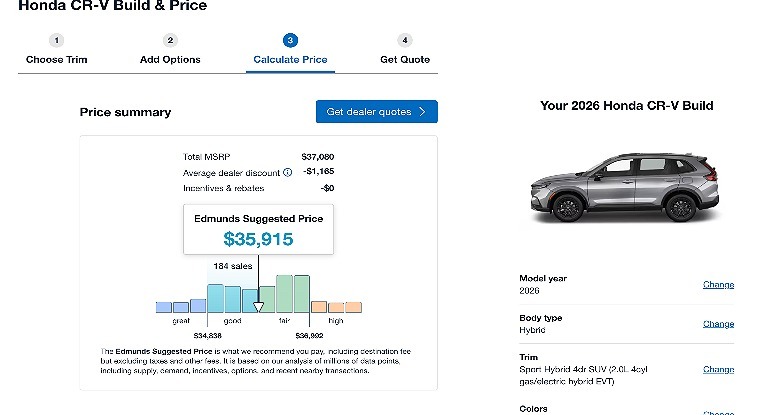




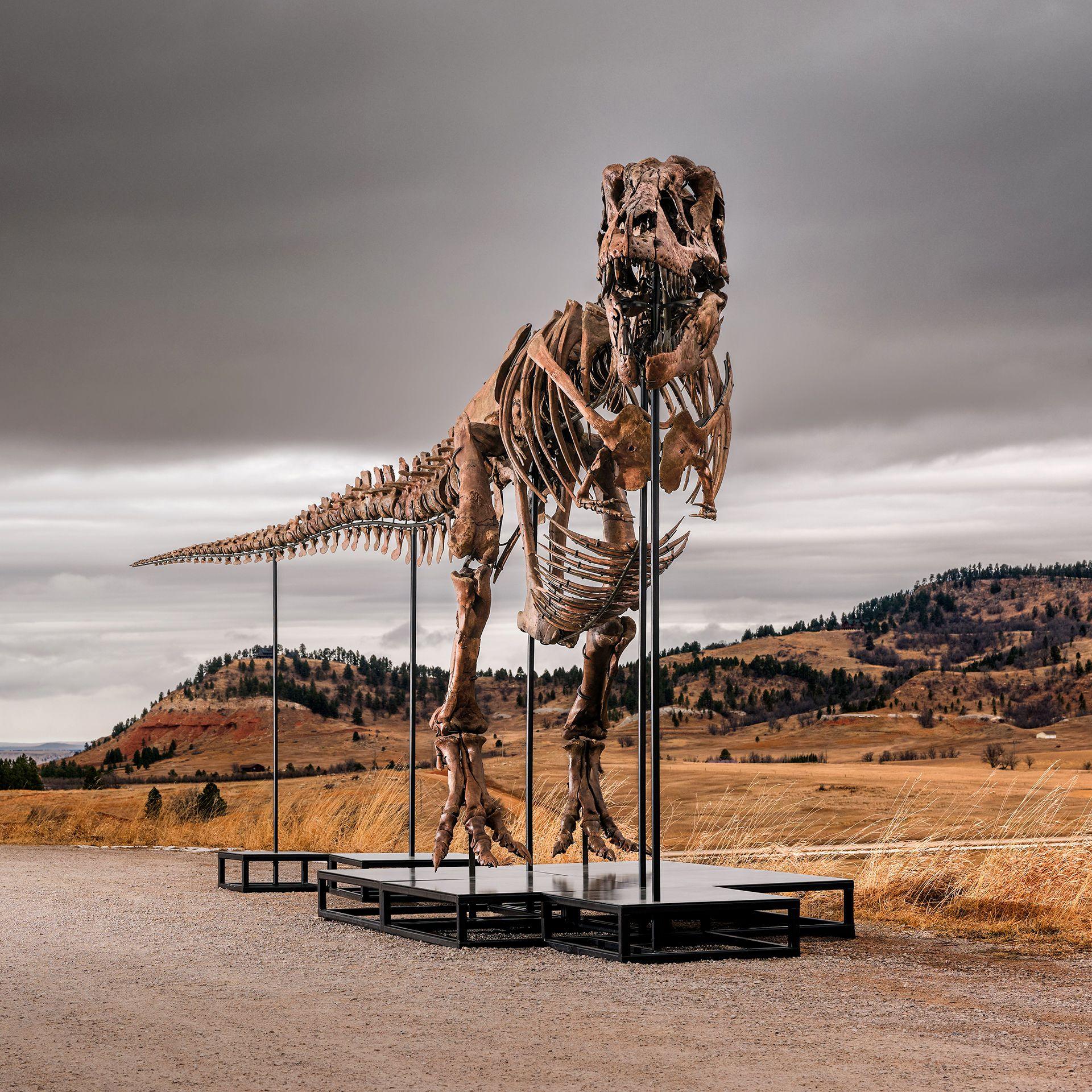 Image source, Matthew Sherman
 Image source, Sotheby's
 Image source, Fiann Smithwick
 Image source, Matthew Sherman
 Image source, Sotheby's