Agriculture covers more than 40% of Earth's habitable land and plays a central role in both climate change and biodiversity loss. Yet the impact of agriculture is far from evenly distributed across space.
… %!s()
In a new study published in Nature Food, Baoxiao Liu and her colleagues from Leiden's Institute of Environmental Sciences (CML) mapped where agriculture causes the greatest damage worldwide.
Maps show where agriculture causes the greatest damage
Liu and her colleagues combined data on agricultural land, biodiversity and carbon storage with information on different food products. This allowed them to create global maps showing where agriculture places the greatest pressure on climate and nature.
The maps reveal that the impact is highly concentrated: Around two-thirds of biodiversity loss and the loss of natural carbon storage occur on just one-third of agricultural land.
The largest hotspots are found in Mexico and Central America, parts of Brazil, West Africa, India, China and Southeast Asia. "These are mainly regions where agriculture is either very intensive or takes place in ecosystems that naturally store large amounts of carbon and are rich in biodiversity, such as tropical forests," Liu explains. "When these areas are converted into farmland, both values are lost at the same time."
Cattle farming causes the most damage
The researchers not only mapped where the damage occurs but also which food products contribute most to these impacts. Products from cattle farming, such as beef and milk, are among the largest contributors to environmental damage worldwide.
Together, beef and milk account for 41% of biodiversity loss and 29% of the loss of carbon storage caused by food production. "Animal-based products, and especially products from cattle, have a disproportionately large impact," Liu says. "Cattle require large amounts of agricultural land, both for grazing and for growing feed crops."
Targeted measures can deliver major benefits
Previous studies often examined either carbon loss or biodiversity loss, usually at a much coarser spatial scale. This study is the first to map both types of environmental loss simultaneously at a global scale, with detailed resolution and linked to different food products.
"If we target a relatively small share of agricultural land, this can already deliver major benefits for climate and nature," Liu says. Because the greatest losses are concentrated in specific areas and products, targeted measures can have a substantial impact. These could include improving agricultural practices, protecting vulnerable areas and changing food consumption patterns so that less land is needed for food production, allowing areas to recover as natural ecosystems where possible.
"The losses we see also represent potential gains," Liu says. "Agriculture can therefore not only be part of the problem but also offer major opportunities to address both crises."
Publication details
Baoxiao Liu et al, High-resolution carbon and biodiversity mapping shows correlated losses across space and agricultural products, Nature Food (2026). DOI: 10.1038/s43016-026-01387-0
Swati Mestri holds a bachelor's degree in Electronics Engineering and has worked as a content editor since 2019. She has experience editing research documents across technology, health care, and materials science, and has a particular interest in technology and space.
Full profile →
Bachelor's in mathematical biology, Master's in creative writing. Well-traveled with unique perspectives on science and language.
Full profile →
Citation:
One-third of agricultural land accounts for two-thirds of global impact, study reveals (2026, August 6)
retrieved 6 August 2026
from https://phys.org/news/2026-08-agricultural-accounts-thirds-global-impact.html
This document is subject to copyright. Apart from any fair dealing for the purpose of private study or research, no
part may be reproduced without the written permission. The content is provided for information purposes only.
%!s()
The Automakers and Tech Companies Pushing Autonomous Driving Forward
The Role of AI in Autonomous Driving
The Future of Self-Driving Cars
Frequently Asked Questions (FAQs)
A close up of a woman in an autonomous car and holding a cup. A self driving car is broadly defined as having technology that senses the conditions around it and can self-adjust.
… %!s()
getty
An autonomous vehicle is broadly defined as one equipped with technology that senses the conditions around it, including traffic, pedestrians and physical hazards and can adjust its course and speed without a human at the controls. The terms “autonomous” and “self driving cars” are often used interchangeably.
However, as defined by the SAE, formerly known as the Society of Automotive Engineers (now SAE International), there are six levels of automated driving ranging from full control of a vehicle by a physical driver, assisted by advanced safety technology, to a vehicle that can operate without any on-board human input. Only that top level represents a driverless, or fully autonomous vehicle.
What Is An Autonomous Vehicle?
An autonomous vehicle is defined by the University of Michigan Center for Sustainable Systems as one that uses “technology to partially or entirely replace the human driver in navigating a vehicle from an origin to a destination while avoiding road hazards and responding to traffic conditions.”
The SAE’s six levels of what it terms “automated” driving ranges from the first three levels (which start with zero), where a driver is behind the wheel and in control, but is aided by various automated warnings or safety features such as blind spot warning and automatic emergency braking.
Levels 3 and 4 represent technology in which the vehicle is self-driving under certain circumstances but may require a human driver to take over.
Finally, level 5 is a fully autonomous, or self-driving, vehicle that does not require a human to operate the controls. This is the only level at which a vehicle is considered fully autonomous.
MORE FROM
FORBES ADVISOR
SAE chart showing six levels of automated driving.
SAE International
How Do Self-Driving Cars Work?
Self-driving cars see what’s going on around them using three main electronic “eyes”—radar, cameras and laser-based LiDar, which stands for light detection and ranging, along with artificial intelligence. They all feed data into on-board processors, using sophisticated software, algorithms and machine learning to send signals to the vehicle’s actuators to trigger appropriate actions such as braking, steering and acceleration.
The array of sensors can detect a wide variety of road features and obstacles such as lane markings, curbs, pedestrians, cyclists or other vehicles. This is done either visually, through cameras, or by bouncing light impulses or radar signals off of surrounding objects. While self-driving automation technologies help improve safety, they are not 100% infallible, and their effectiveness can be diminished when sensors or lane markings are covered by snow or other heavy precipitation.
The Pros and Cons of Driverless Cars
Self-driving vehicles where there is either what’s known as a “safety driver” on board or no driver at all are currently in use, mainly by fleets that include warehouse yard trucks that transport goods from one contained location to another. Companies such as Kodiak Robotics and Aurora now operate self-driving trucks with no safety driver aboard, but may have engineers riding to monitor vehicle performance.
Commercial delivery company Gatik also operates autonomous trucks to bring stock from warehouses to points of sale.
Cab of Kodiak Robotics sixth-generation driverless ready autonomous semi-truck.
Kodiak Robotics Inc.
While Kodiak, Aurora and Gatik run their trucks with no human on board, taxi services such as Waymo and the now-defunct Cruise are examples of when self-driving technology goes awry. Cruise, a former subsidiary of General Motors Co., was forced to shut down its robotaxi service after one of its cars was involved in an accident that injured a pedestrian. In 2018, a driverless Uber robotaxi with a safety driver aboard struck and killed a bicyclist in Tempe, Arizona.
Advantages of Self-Driving Cars
Self-driving cars offer a number of advantages over vehicles requiring hands-on drivers including convenience, access to mobility, efficiency, cost-savings and traffic congestion.
For those incapable of driving due to age or disabilities or without access to conventional methods of public transportation, self-driving taxis and other transit vehicles are seen as a way to provide mobility to get to errands, work or medical appointments. Commercial operators see self-driving vehicles as boosting cost-savings and efficiency because they can run for longer hours without having to stop for meals or breaks, and they require fewer employees.
Cars and trucks with self-driving safety technology called automated driver assistance systems, or ADAS, are already reducing traffic congestion and accidents. A report by the National High Traffic Safety Administration notes ADAS helps reduce traffic accidents because they “assist a driver by anticipating imminent dangers and working to avoid them.”
The combination of reducing traffic jams due to accidents and potentially decreasing the number of vehicles on the road when self-driving transit becomes more prevalent provides promising environmental benefits. A University of Michigan study concluded that when “savings from the driving efficiencies associated with self-driving vehicles are factored into the equation, the net result is a reduction in lifetime energy use and associated greenhouse gas emissions of up to 9% compared to the conventional vehicles.”
Challenges of Self-Driving Cars
The notion of widely available fully autonomous cars relieving travelers from any of the duties and stresses of driving remains fraught with challenges that range from cost to safety concerns. No matter how well any of the technology works, none of it so far emulates human thought, logic or instincts to make split second decisions.
However, taking the human element out of the equation also eliminates distractions or emotions from affecting the vehicle’s operation. For that reason, fully self-driving cars are viewed as potentially safer since the technology is designed to operate the vehicle safely and logically by detecting and reacting to traffic conditions and the route it’s programmed to follow.
That brings up a question of ethics. Since self-driving cars are basically robots programmed to react a certain way in a given situation, they cannot make an ethical decision, for instance, to avoid a collision. Should the car take action to prevent it from striking a person or a group of people? Germany passed a law prioritizing saving human lives over animals.
Serious accidents such as those in California and Arizona have contributed to fear and concern on the part of many communities that would just as soon not have driverless vehicles plying their streets.
Other challenges to wider adoption of self-driving cars include weather, where sensors and road markings could be obscured by snow, sleet or a hard rain. Overall cost remains a major obstacle to private ownership of fully automated vehicles as well. A 2023 study by McKinsey and Company predicts “By 2030, 12% of new passenger cars are sold with L3+ autonomous technologies and 37 percent have advanced AD technologies in 2035.”
The Automakers and Tech Companies Pushing Autonomous Driving Forward
GM's Super Cruise system can temporarily take over driving on certain roads and during certain conditions. The service is offered on a subscription basis.
Frenak/Cadillac
Right now the highest level of automation available to consumers are systems such as GM’s Super Cruise, Ford Motor Co.’s BlueCruise, BMW’s Motorway Assistant and Tesla’s Full Self Driving—all Level 2. With those systems a driver can temporarily engage the systems to operate the car under certain conditions.
There are several companies building or operating self-driving vehicles for commercial deliveries and robo transit services.
Waymo operates robotaxi service in several U.S. markets.
Getty Images
One of the most successful is Waymo. It operates robotaxi service in 11 markets around the U.S. with plans to expand to 21 more cities including London, UK and Tokyo, Japan.
Partnering with Amazon, Zoox operates robotaxi service in Las Vegas and San Francisco with plans to expand to Miami, Florida and Austin, Texas.
Michigan-based May Mobility operates its self-driving Toyota Sienna minivans with no backup driver aboard in 15 locations in the U.S. and Japan.
Gatik operates autonomous trucks that deliver goods from distribution points to retail locations, while Kodiak Robotics adds its autonomous technology to semi-trucks running long-haul and local routes for such companies as Kroger and Ikea. Swedish tech company Einride’s autonomous electric pods deliver goods in Europe and North America. Pods are driven by remote operators and have no cabs for human drivers.
The Role of AI in Autonomous Driving
Artificial intelligence is playing an increasingly important role in making self-driving vehicles “smarter” and safer.
Through deep learning and computer vision, AI enables cars to better understand their environment and predict the behavior of other road users, according to automotive supplier Valeo, which declared AI “a key driver of mobility transformation.”
Indeed, generative AI has “significantly accelerated the progress of ADAS and AD technologies,” according to a report published June 9 by McKinsey and Co.
The Future of Self-Driving Cars
Consumer appetite for leaving the driving to technology is growing and they’re willing to pay for it, leading automakers to boost ADAS and other automation offerings, perhaps paving the way for fully self-driving cars and trucks to one day be available and affordable for individuals.
Based on consumer interest in automated driving features and commercial solutions available on the market today, in its report, McKinsey predicted ADAS and AD could generate between $300 billion and $400 billion in the passenger car market by 2035.
The world will likely be affected in five key ways, according to artificial intelligence company Allerin: fewer traffic accidents, reduced car ownership, automated logistics including deliveries, improved livability due less noise and air pollution from fewer vehicles on the road and no parking or traffic tickets since autonomous vehicles can pick up and drop off passengers then go on their way.
It’s not certain if all cars will eventually operate without a human behind the wheel and at least partially in control. According to McKinsey, any transition will be at a snail’s pace, projecting that in 2030, only 4% of new passenger cars sold will be installed with level 3 or higher automation functions, increasing to just 17% in 2035.
Don’t discard your favorite driving cap yet. While automakers are rapidly offering more sophisticated automated driver assist technologies, full, self-driving vehicles are likely to remain primarily in the realm of fleets and commercial operators for the foreseeable future. %!s()
Let’s cut to the chase: Starting today, you can take an additional $100 off of our current $300 discount for your founder, investor, or attendee TechCrunch Disrupt 2026 pass, which is a nice bonus on top of our current discounted pricing.
… %!s()
This flash sale will run for just one more full day, until tomorrow, August 7 at 11:59 p.m. PT. This discount will mark your last chance at a bonus deal before our next pricing tier kicks in on August 21.
Register with this link to lock in your extra $100 off.
If you need to learn more before locking in your plans, Disrupt takes over Moscone West from October 13–15, bringing more than 10,000 founders, VCs, tech industry innovators, and builders for three days built around one thing: creating momentum for future success.
This isn’t a passive conference you simply watch — it’s a curated itinerary of speakers, workshops, network opportunities and post-event excitement for those actively building, investing, and looking for what’s next.
The Disrupt Stage: The conversations everyone will be talking about
The Disrupt Stage is our flagship programming, and we just revealed the initial lineup. We’ll dig into the biggest shifts in tech right now, whether it’s a post-smartphone future with Amazon’s SVP of Devices and Services Panos Panay; the real implications of a world in which everyone can develop their own software, with Replit founder and CEO Amjad Masad; and much, much more.
But that’s just one stage. Disrupt 2026 also features the:
AI Stage, covering the security gaps and business model shifts AI is forcing on every SaaS company.
New Smart Money Stage, tackling stablecoins, instant payments, and AI’s role in financial trust.
New Smart Systems Stage, with a perspective on fusion breakthroughs and grid strain powering AI’s next decade.
Builders Stage, the long-standing favorite stage where founders and investors get tactical about raising, hiring, and scaling.
Image Credits:Slava Blazer Photography
Beyond the stages
Most Disrupt passes also unlock Startup Battlefield, where 200 startups will compete live for the Battlefield Cup. You’ll also get access to networking opportunities driven by your needs as a founder, investor, or learner, plus our Expo Hall, where hundreds of startups showcase their work.
This flash sale ends Friday
After 11:59 p.m. PT on Friday, August 7, this extra $100 savings goes away. Regular discounted pricing ends on August 21. If Disrupt is on your radar for this year, this is the best deal you’ll get between now and the event.
Save an extra $100 before Friday.
We’ll see you October 13–15 at Moscone West in San Francisco!
When you purchase through links in our articles, we may earn a small commission. This doesn’t affect our editorial independence.%!s()
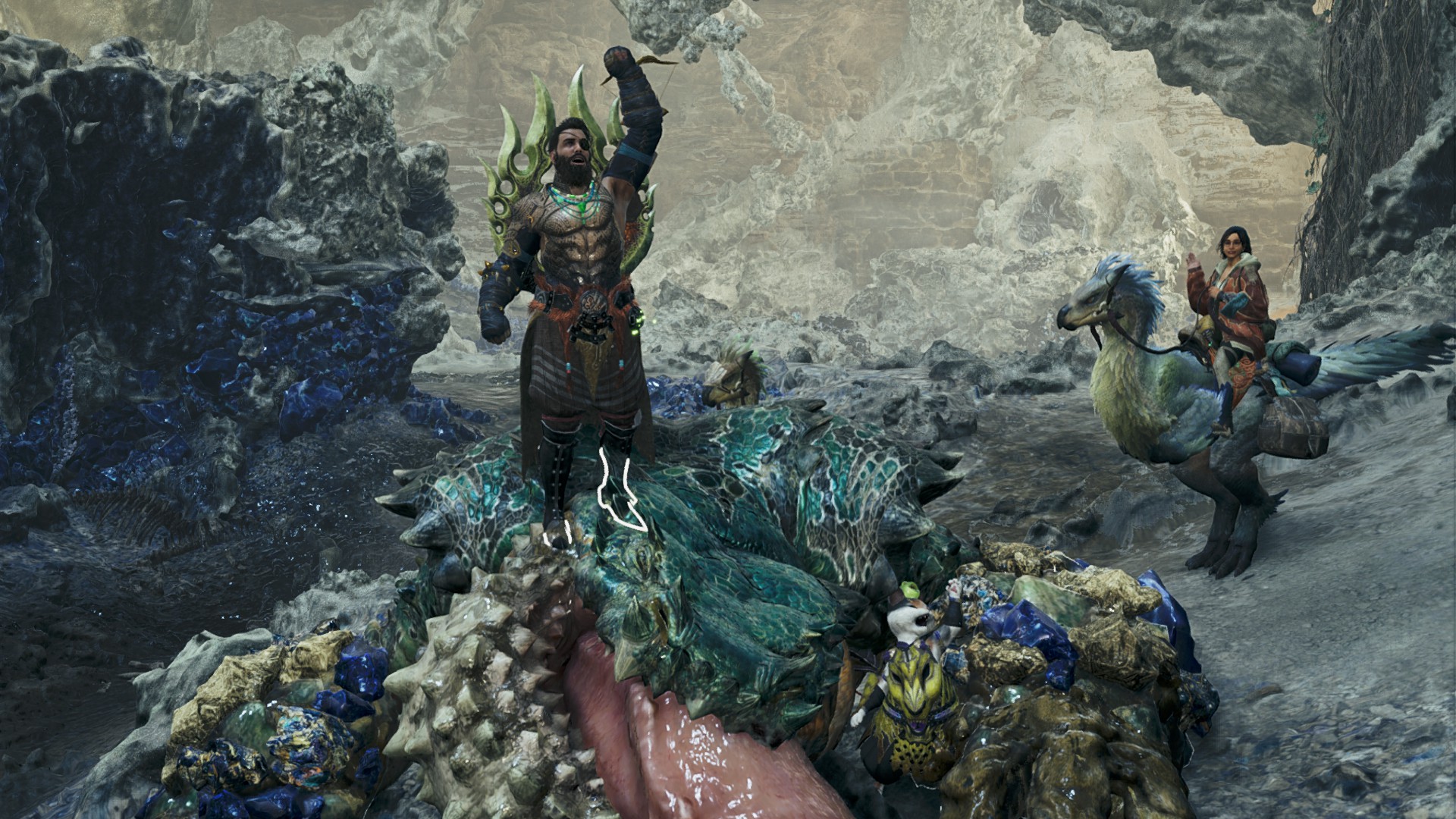
Despite a record-breaking launch in February 2025, the sales of Monster Hunter Wilds haven't been stellar since. In its second sales quarter, the newest MonHun—which was widely dinged by fans for optimization issues and creative missteps—stalled severely, and by the time 2025 ended it was getting outsold by earlier entries in the series.
… %!s()
In its latest investor Q&A, however, Capcom said it still has high hopes for Wilds: The company wants to not only improve its sales, but to eventually have Wilds surpass Monster Hunter: World as Capcom's best-selling game of all time.
(Image credit: Capcom)
Capcom told its investors that it's already seen an improvement in Wilds sales following long-awaited performance fixes in early 2026. Additionally, the company claims that it has "seen a response to" the reveal of the upcoming Ascendance expansion and the recent Wilds price drop.
"We plan to continue improving the game’s technical performance as we aim to drive its total unit sales beyond those of Monster Hunter: World over the medium to long term," Capcom said.
It's an ambitious goal, because Wilds will need to cover a wide—and still widening—sales gap to get there. According to its latest quarterly report, Monster Hunter: World has sold over 30 million units since launch, and still managed to sell over 780,000 copies in the last quarter despite being over eight years old.
(Image credit: Capcom)
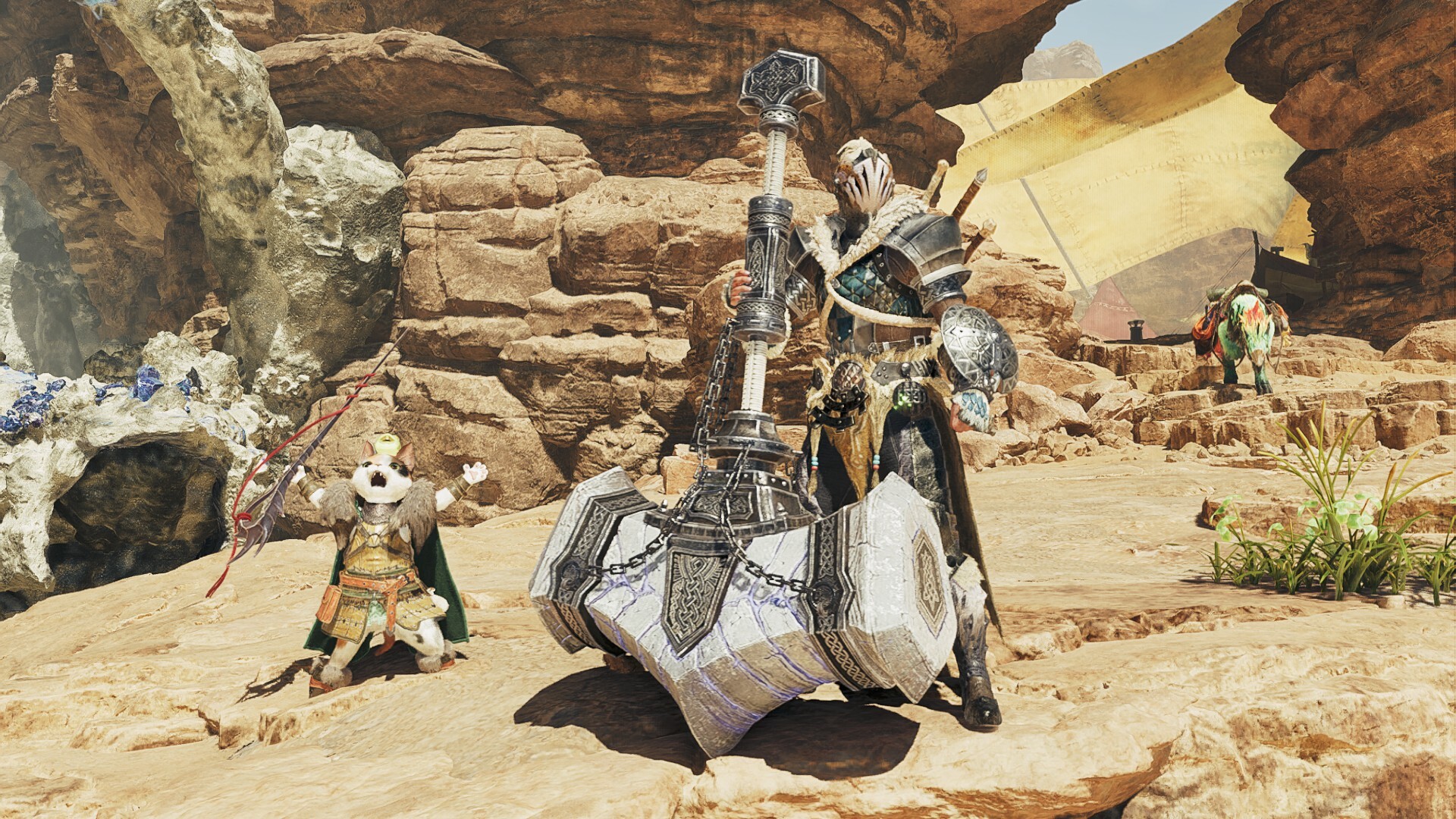
While Wilds' impressive launch has given it a nice headstart on its total sales figures—as of March 31, 2026, it's sold 11.4 million units—its rate of sales has plummeted so dramatically that, unlike World, it's not even represented on Capcom's best-seller ranking for the last quarter. Even with Wilds in a sound(er) technical state, the eight-year-old World is still seen as the best entry point into the series—it remains the only Monster Hunter on our Top 100 list.
That said, there are factors that could work in Wilds' favor. Its upcoming Switch 2 port could be a big deal for folks who only game with Nintendo, and if Ascendance is anywhere near as good as World's Iceborne and Rise's Sunbreak, it could secure Wilds' long-term reputation like those earlier expansions did for their respective Monster Hunter entries.
Still, a disparity of 19 million sales makes for a pretty big if.
Keep up to date with the most important stories and the best deals, as picked by the PC Gamer team.
Lincoln has been writing about games for 12 years—unless you include the essays about procedural storytelling in Dwarf Fortress he convinced his college professors to accept. Leveraging the brainworms from a youth spent in World of Warcraft to write for sites like Waypoint, Polygon, and Fanbyte, Lincoln spent three years freelancing for PC Gamer before joining on as a full-time News Writer in 2024, bringing an expertise in Caves of Qud bird diplomacy, getting sons killed in Crusader Kings, and hitting dinosaurs with hammers in Monster Hunter. %!s()
When the nominations for the 78th Primetime Emmy Awards landed July 8, most of the focus went to the giants — “The Pitt” and “Hacks,” which both led the field. But scattered across the acting categories is a quieter story with seven performers who are the only Emmy nominees their show could claim.
… %!s()
We call them the solo nominees: Riz Ahmed (“Bait”), Richard Gadd (“Half Man”), Steve Carell (“Rooster”), Yahya Abdul-Mateen II (“Wonder Man”), Colman Domingo (“The Four Seasons”), Billy Crudup (“The Morning Show”) and Chase Infiniti (“The Testaments”). Each carries a series that drew a single Emmy bid, and it’s the largest such class since 2015, when 11 performers stood alone for their shows.
Can any of them win?
History says yes, but it’s rare and never easy.
Across the annals of the Emmys, 71 performers have won an acting trophy while serving as their show’s lone nominee. The most recent was Mark Ruffalo, who took lead actor in a limited series for HBO’s “I Know This Much Is True” in 2020. Others, like Regina King (“Seven Seconds,” 2018) and Louie Anderson (“Baskets,” 2016), also belong to the same club. But of those 71, there have been only 12 such wins since 2000.
The breakdown reveals a pattern.
Five categories have had the most solo winners in Emmy history with seven solo winners each: lead comedy actress, lead drama actress, supporting drama actress, supporting drama actor and supporting actress in a limited series.
The tally skews heavily toward women and supporting roles. The lowest counts belong to the male lead categories, where winners tend to emerge from heavily nominated prestige series rather than one-off showcases.
What also makes the solo wins remarkable is who these winners had to beat.
Of the 71, a full 61 (86%) defeated at least one rival from a show that was nominated for its genre’s top series prize. And 30 of them — or 42% — beat an actor from the show that went on to win drama, comedy or limited series.
Some notable recent upsets include Ruffalo’s win over Jeremy Irons of “Watchmen,” that year’s limited-series champion. A beloved comedian like Anderson toppled Tony Hale and Matt Walsh of “Veep” the year the political satire ruled comedy. Even Lisa Kudrow’s Phoebe Buffay from “Friends” beat “Frasier’s” Jane Leeves in 1998 as “Frasier” claimed the top comedy prize.
This brings us back to this year’s seven.
The steepest climbs belong to the comedy leads. Carell and Abdul-Mateen II must both get past Matthew Rhys (“Widow’s Bay”) and Martin Short (“Only Murders in the Building”), each from a comedy-series nominee.
Riz Ahmed in “Bait”
Courtesy of Amazon Prime Video
Ahmed — already a winner in his category for “The Night Of ” in 2017 — faces a limited-actor field stacked with series muscle: Oscar Isaac from “Beef,” which pulled 16 nominations, and Rhys again for “The Beast in Me.”
Infiniti may have the hardest road of all. Her lead drama actress category includes Carrie Coon (“The Gilded Age”), Keri Russell (“The Diplomat”) and two-time winner Zendaya (“Euphoria”) — all three star are on drama series nominees — with Rhea Seehorn a heavy favorite for Apple TV’s “Pluribus.”
For a first-time nominee, the seat at the table may be the reward.
Domingo, a double nominee this year thanks to a second nod for “Euphoria,” at least arrives with momentum. Gadd, fresh off “Baby Reindeer,” and Crudup, a past winner for “The Morning Show,” round out a pedigreed group that must contend with front-running series to nab gold.
In 2010, seven solo nominees went home empty-handed. So a big solo class does not guarantee a solo winner — but maybe this time, someone’s lucky number will be one.
This week’s updated Emmy winner predictions are below.
Drama Series: “The Pitt” (HBO Max) Comedy Series: “Widow’s Bay” (Apple TV) Limited or Anthology Series: “Beef” (Netflix) Outstanding Movie: “Remarkably Bright Creatures” (Netflix) Lead Actor (Drama): Noah Wyle, “The Pitt” (HBO Max) Lead Actor (Comedy): Matthew Rhys, “Widow’s Bay” (Apple TV) Lead Actor (Limited/Movie): Oscar Isaac, “Beef” (Netflix) Lead Actress (Drama): Rhea Seehorn, “Pluribus” (Apple TV) Lead Actress (Comedy): Jean Smart, “Hacks” (HBO Max) Lead Actress (Limited/Movie): Carey Mulligan, “Beef” (Netflix) Supporting Actor (Drama): Tom Pelphrey, “Task” (HBO Max) Supporting Actor (Comedy): Stephen Root, “Widow’s Bay” (Apple TV) Supporting Actor (Limited/Movie): David Harbour, “DTF St. Louis” (HBO Max) Supporting Actress (Drama): Katherine LaNasa, “The Pitt” (HBO Max) Supporting Actress (Comedy): Kate O’Flynn, “Widow’s Bay” (Apple TV) Supporting Actress (Limited/Movie): Dakota Fanning, “All Her Fault” (Peacock) Guest Actor (Drama): Colman Domingo, “Euphoria” (HBO Max) Guest Actress (Drama): Brittany Allen, “The Pitt” (HBO Max) Guest Actor (Comedy): Rob Reiner, “The Bear” (FX) Guest Actress (Comedy): Betty Gilpin, “Widow’s Bay” (Apple TV) Variety Series: “The Daily Show” (Comedy Central), “Jimmy Kimmel Live!” (ABC), “Last Week Tonight with John Oliver” (HBO Max) and “The Late Show With Stephen Colbert” (CBS) Variety Special (Live): “The Apple Music Super Bowl LX Halftime Show Starring Bad Bunny” (NBC) Variety Special (Pre-Recorded): “The Muppet Show” (Disney+) Directing (Drama): Vince Gilligan, “Pluribus” (Apple TV) — “We Is Us” Directing (Comedy): Hiro Murai, “Widow’s Bay” (Apple TV) — “Welcome to Widow’s Bay!” Directing (Limited/Movie): Lee Sung Jin, “Beef” (Netflix) — “Oh, the Comfort, the Inexpressible Comfort” Directing (Documentary/Nonfiction): Mariska Hargitay, “My Mom Jayne: A Film by Mariska Hargitay” (HBO Max) Directing (Variety Series): Yvonne De Mare, “The Late Show With Stephen Colbert” (CBS) — “The Late Show with Stephen Colbert Series Finale” Directing (Variety Special): Hamish Hamilton, “The Apple Music Super Bowl LX Halftime Show Starring Bad Bunny” (NBC) Directing (Reality Program): Cian O’Clery, “Love on the Spectrum” (Netflix) — “Episode 1” Writing (Drama): “Task” (HBO Max) — “A Still Small Voice” by Brad Inglesby Writing (Comedy): “Hacks” (HBO Max) — “Hacks (Finale)” by Lucia Aniello, Paul W. Downs and Jen Statsky Writing (Limited/Movie): “DTF St. Louis” (HBO Max) by Steven Conrad Writing (Variety Series): “The Late Show With Stephen Colbert” (CBS) Writing (Variety Special): “The Muppet Show” (Disney+) by Albertina Rizzo, Gabe Liedman, Nedaa Sweiss, Kelly Younger and Andrew Williams Writing (Nonfiction): “The Daily Show Presents: Jordan Klepper Fingers the Pulse: Give the Man a Prize” (Comedy Central) Game Show: “Jeopardy!” (ABC) Host (Reality or Reality Competition): Jeff Probst, “Survivor” (CBS) Host (Game Show): Martin Short, “Match Game” (ABC) Competition Program: “Survivor” (CBS) Structured Reality Program: “Love is Blind” (Netflix) Unstructured Reality Program: “Love on the Spectrum” (Netflix) Documentary or Nonfiction Special: “My Mom Jayne: A Film by Mariska Hargitay” (HBO Max) Documentary or Nonfiction Series: “Sean Combs: The Reckoning” (Netflix) Hosted Nonfiction Series or Special: “My Next Guest Needs No Introduction With David Letterman” (Netflix) Exceptional Merit in Documentary Filmmaking: “The Librarians” (PBS) Animated Program: “South Park” (Comedy Central) — “Sermon on the ‘Mount” %!s()