Honeybees are outcompeting wild pollinators for resources by aggressively bumping into them and chasing them away from flowers, research has shown.
The study, by researchers from Anglia Ruskin University, found that areas where there were higher concentrations of honeybees had fewer wild pollinators, such as bumblebees, solitary bees and hoverflies.
… %!s()
Honeybees were also most likely to instigate, and win, competitive interactions, pushing out rivals to collect more pollen and nectar.
The number of managed bees has risen in the UK, as campaigns to “save the bees” resonate with the public, leading to a boom in hobbyists setting up beehives. The number of registered beekeepers has more than doubled, from 19,000 in 2010 to 47,000 in 2025, according to the National Bee Unit.
However, there are growing concerns that this growth in managed honeybees is harming other, wild, pollinators including bumblebees, by increasing competition for food and passing on diseases, especially in areas where there are fewer flowers or an especially high density of hives.
To better understand the nature of this competition, the study in Cambridgeshire observed pollinators over a two-year period as they foraged on bramble and ivy in areas close to honeybee colonies. The study documented the outcomes of 300 interactions between flower visitors from five groups: honeybees, bumblebees, solitary bees, hoverflies and “other”, which included types of flower-visiting and pollinating flies, butterflies, beetles and wasps.
In each interaction, the study noted where an individual “won”, by gaining access to a resource, “lost”, or if a resource was shared. Honeybees won in most of the encounters across both plant species.
Past research has suggested that honeybees outcompete other pollinators indirectly, by taking up resources. However, the Cambridgeshire study provides evidence that they are posing a more direct form of competition, known as “interference competition”, where a species might attack or chase others away.
“That’s important because, of course, it means that the wild pollinators are facing a challenge from both those types of competition from honeybees,” said Victoria Buckle, lead author of the study and a PhD researcher at Anglia Ruskin University.
Honeybees were actively avoided by other flower visitors in 28.4% of interactions on bramble and 35.6% on ivy.
In competitive interactions won by a honeybee, the honeybee either displaced other flower visitors – for example, by landing on them or pushing them off flowers – or chased them away, in about 20% of cases.
Bumblebees were also observed displacing other pollinators, though Buckle believes this was probably not intentional, and was instead a reflection of their less coordinated movements as they fly through confined spaces.
“They bumble along the patch and then they’ll mistakenly bump into another pollinator and it just falls off a flower,” Buckle said. “With the honeybees, the aggression was more overt. You could tell that they’re specifically trying to move the other one off the flower.”
The reasons for honeybees’ aggressive behaviour is likely to relate to the way in which they organise their social groups, said Buckle, adding: “Some castes of bees can be guard bees, so they have that capacity within them to show threat and aggression, to guard their hives and to look after the brood.”
The only pollinator able to hold its own against honeybees was the ivy bee, which was first recorded in the UK in 2001 and feeds mainly on the nectar of ivy flowers. It was seen displacing and chasing honeybees.
The study also found that higher temperatures led to an increased number of competitive interactions, probably because nectar was drying up and plants were going into heat stress. Given that mean summer temperatures are predicted to rise by up to 4C in the UK by 2080, such competition is likely to become more frequent, said Buckle.
More research is needed to examine how wild pollinators can be better protected, she added.
“A lot of beekeepers are environmentally minded and they want to make sure that they’re not impinging or having an impact on other pollinators,” Buckle said. “This research is important because it helps guide our planning and best practices for conservation.” %!s()
Has every strip for the last 37 years been set in a cat's delusions?
For one week in 1989, Garfield was a horror comic
Image: Project G Productions
In 2012, Randall Munroe introduced the concept of "today's lucky 10,000" in his webcomic xkcd. He posits that any widely-known fact or idea spreads at a rate of roughly 10,000 people per day. There's really no such thing as something that "everyone knows." If someone you know isn’t familiar with something that you think is obvious, that’s not a failure of theirs. It just means they’re one of the people who get to learn about it today.
… %!s()
If you pay attention to online pop culture, especially on social media and microblogging platforms, you can often see some version of Munroe's lucky 10,000 theory in real time, as new audiences constantly rediscover old material.
One of the best examples of this recycling process comes from, of all places, Jim Davis's Garfield. 99% of the time, Garfield is a simple gag-a-day comic that relies on a handful of go-to punchlines: an orange cat that eats too much, a stupid dog, and their weird owner. It’s a strip that deliberately revels in the mundane, with jokes about coffee, laziness, and gluttony. Then there's that remaining 1%.
There are a handful of truly weird comics in the back alleys of what one hesitates to call the "Garfield canon." A useful example is the 1984 graphic novel anthology His 9 Lives, which includes a prose detective story, a science fiction parody, a chase sequence, and a weirdly effective horror short. There’s also the animated special Garfield in the Rough, which ends with an actual fight scene between Garfield and a wild panther.
The single strangest story in the actual newspaper comic, however, might be a G-rated horror arc that’s often nicknamed "Alone."
Missing: fat orange cat
Garfield for October 23, 1989Source: Jim Davis/Paws Inc.
On Oct. 23, 1989, the week before Halloween, readers opened their newspapers to find a distinctly different sort of Garfield. Davis's usual flat 2D layouts were replaced with moody backgrounds and Dutch angles, as Garfield wakes up to find himself alone in an empty house.
Garfield quickly discovers that not only are Jon and Odie gone, but the house looks like it’s been abandoned for years.
Garfield for October 24, 1989Source: Jim Davis/Paws Inc.
No one has lived there for a long time, including Garfield himself. It's as if Jon and Odie simply got up and walked out at some point years ago. Did they deliberately leave Garfield behind? Is Garfield a ghost? Is this a post-apocalyptic Garfield AU? What’s happening?
Garfield for October 25, 1989Source: Jim Davis/Paws Inc.
"After years of taking life for granted," the Oct. 28 strip reads, "Garfield is shaken by a horrifying vision of the inevitable process called 'time.' He has only one weapon... denial."
Garfield for October 28, 1989Source: Jim Davis/Paws Inc.
Garfield proceeds to freak out, at which point he seems to return to the present with Jon and Odie. The end. The moral of the story is that you should prize every moment with your loved ones, just in case you suddenly wake up in a dark future where none of you actually exist. (It is not a widely applicable moral.)
"An imagination is a powerful tool," the strip's narrator says to close out the story arc. "It can tint memories of the past, shade perceptions of the present, or paint a future so vivid that it can entice... or terrify."
The most obvious interpretation is that the "Alone" arc was simply a nightmare of Garfield’s. After this, the strip went back to its usual daily routine and has, for the most part, stayed there for 37 years.
That hasn't stopped fans from speculating, of course. Every time "Alone" comes back up in online discourse, a few more people independently conclude that the arc may never have actually ended. For nearly 40 years, this theory argues, every successive Garfield strip has been an elaborate delusion of Garfield's as he wanders through a cold, abandoned house. If the Internet loves one thing, it's dark interpretations of children's media, so the "Alone" theory of Garfield is likely to be with us for as long as Garfield itself.
Davis's only public comment on the "Alone" arc appears to have been in 1998's 20 Years & Still Kicking, a Garfield anniversary collection. That in itself is almost admirable. Davis simply threw these strips into the world like a live grenade, then let them speak for themselves for a full nine years.
"During a writing session for Halloween, I got the idea for this decidedly different series of strips,” Davis wrote. “I wanted to scare people. And what do people fear most? Why, being alone. We carried out the concept to its logical conclusion and got a lot of responses from readers. Reaction ranged from 'Right on!' to 'This isn't a trend, is it?'"
This isn't that out of character for Davis. While he's always been honest about how Garfield was originally made as a commercial enterprise, Davis has occasionally let some high weirdness into the comic. As noted above, that tendency is usually funneled into "safer" media like original graphic novels, but Garfield can go to some dark places (below).
Garfield for January 21, 1984Source: Jim Davis/Paws Inc.
For almost 40 years, though, the "Alone" arc has, well, stood alone. It's a brief dip into surreal horror that makes Garfield feel like a wholly different strip, and new fans will suddenly discover it every few years until the end of time. Maybe that ought to be the next cartoonists' challenge: make a successful children's comic for 11 years, then for just one week, turn it into the scariest thing you can think of. %!s()
It comes at the end of an episode that, for all intents and purposes, is pure setup. Spike (James Marsters) lounges morosely in his crypt, harmless after having a chip installed in his brain that prevents him from hurting humans. Buffy (Sarah Michelle Gellar) kicks down his door and announces that she’s done with him. She’s killing him once and for all.
… %!s()
“Do it,” Spike says. “End my torment.” It’s standard Spike melodrama. As Buffy gears up to stake him, she holds back, and Spike kisses her. They stare at each other in shock, and Buffy does the unthinkable. She kisses him again and tells him that she wants him. Spike says that he’s in love with her. And then he wakes up, horrified. “Oh God, no. Please, no.” Roll credits.
It’s a dream sequence that foreshadows much of Spike and Buffy’s dynamic, which goes to some of the darkest places in Buffy the Vampire Slayer and rarely runs both ways.
26 years ago, “Out of My Mind” aired on The WB. Written by Rebecca Rand Kirshner and directed by David Grossman, it’s the fourth episode of the fifth season, and it lays the groundwork for many plot threads explored in the coming episodes.
What is “Out of My Mind” about?
Image: The WB
Despite the Spike and Buffy kicker, the episode is about Buffy and Riley (Marc Blucas), her college boyfriend. At the start, Riley interrupts Buffy’s patrolling, recklessly killing vampires as he tries to prove his strength. Spike also crashes the patrol, establishing the trio dynamic at the core of the episode.
Later, Buffy learns that Riley’s at risk for a heart attack due to the drugs he’s been fed by The Initiative, which make him stronger than a regular human. While Buffy tries to find a way to help him, Riley goes into hiding. She reaches out to everyone to help track him down, including Spike, whom she bribes. But Spike, of course, takes the money and kidnaps the doctor who was meant to help Riley. He tries to force the doctor to remove the inhibitor in his brain.
It all leads to a confrontation between Spike, Buffy, and Riley, with Spike learning that his plan failed, and the chip is still in his head. He has no way of sating his desire to kill the Slayer. Meanwhile, the cracks in Buffy and Riley’s relationship start to show.
This is one of Riley’s showcase episodes, and it finds him at his most grating. After searching for Riley for half the episode, Buffy finds him punching rocks in a cave (literally). Their tense exchanges pave the way for their breakup and for Riley’s departure from the show. He tells Buffy that he’s too normal for her. Buffy replies that if she wanted to date a superpowered guy, she would just date Spike (Ha!).
Beyond the kiss, the episode quietly lays out key pieces of the season, among them: Riley’s insecurity, Joyce’s collapse at breakfast that doctors can’t explain, Spike’s slow turn into one of Buffy’s allies, and Willow’s overreliance on magic. But it saves its best for the end, with the series committing to the long-simmering tension between Spike and Buffy, one that writers doled out patiently.
Spike, defanged
Image: 20th Century Fox
In “Out of My Mind,” Spike is at his most lovelorn and pathetic. He’s also at his funniest. "I will know your blood, Slayer. I will make your neck my chalice and drink deep,” he says into the night, only to fall into an open grave. Unable to kill humans, Spike spends his free time watching Dawson’s Creek. (“Oh, Pacey, you blind idiot. Can’t you see she doesn’t love you?”)
Spike becomes a regular in season 5, with this episode introducing his most enduring version. The episode's final twist reveals that Spike’s series-long obsession with Buffy has been more complicated than plain murderous rage. On a 2008 Buffy forum thread, fans recalled their reactions when first watching the kiss, with most describing shock that the show had brought the subtext between Buffy and Spike to the surface.
Series writer David Fury revealed that the moment when Buffy learns of Spike’s feelings 10 episodes later (in “Crush”) developed unexpectedly. In the writers’ room, they simply wanted other characters to learn of Spike’s feelings. “We wound up tipping our hand a little bit. I’d said, ‘This should be the episode where people find out about Spike being in love,’ and it then progressed into Buffy finding out, which was something we were saving for later,” he said in an interview with BBC Cult.
“It turned out to be a good play because we were able to take them to interesting places throughout the rest of the season.”
In hindsight, Spike and Buffy’s first kiss is a good representation of the full arc of their relationship. It’s not a real kiss; it’s a fantasy, one largely projected by Spike. It marked the start of the pair’s complicated dynamic and hinted at where their story would end up: Spike would always love Buffy, but Buffy would always remain emotionally at arm's length. %!s()
The world’s largest glacier is melting much faster and could add twice as much to global sea levels as previously expected over the next century.
New research published this week by a team of glaciologists has found that the Thwaites glacier in West Antarctica is losing mass rapidly because warm seawater is pushing underneath it and melting its core. This could add 1.2 inches (30mm) to water levels even if global warming does not accelerate as predicted.
…
Recommended Stories
list of 4 items
list 1 of 4The Nepal floods question: When the Himalayas collapse, who gets warned?
list 2 of 4India to supply Nepal electricity after floods wrecked hydropower projects
list 3 of 4El Nino reaches super status: Where will it bring rain, drought and heat?
list 4 of 4‘The drought has left its mark’: Slovenia’s potato lovers lament low yields
end of list
The findings, published in the journal Nature Communications, add to a growing body of evidence that shows that the glacier, which has been receding for decades, is now losing mass even faster than scientists thought.
Researchers at the University of California in the United States collaborated with NASA’s Jet Propulsion Laboratory for the study. Here’s what we know about the findings:
This 2022 satellite image from the European Space Agency, annotated by marine geophysicist Robert Larter, shows the positions of research vessels RVIB Nathaniel B Palmer and the RV Araon on ice shelf areas extending from Thwaites glacier in Antarctica. ‘EIS’ indicates the Eastern Ice Shelf, where research was conducted in 2020, and which recently published studies have suggested is likely to break up sometime within the next two decades [File: Robert Larter/British Antarctic Survey, ESA via AP]
What is Thwaites and why is it important?
Nicknamed the “Doomsday Glacier”, Thwaites is the largest glacier on Earth, spanning an area of around 192,000sq km (74,130sq miles) or roughly the size of Senegal – and larger than the US state of Florida.
It is located on the Walgreen Coast of Marie Byrd Land in remote western Antarctica and forms part of the great West Antarctic ice sheet, which includes other glaciers and is 14 times the size of Thwaites.
The glacier was first mapped in 1947 and is named after the late American glaciologist Fredrik T Thwaites, although he never visited it.
In the 1980s, scientists discovered that Thwaites is melting rapidly and have closely monitored its melting process as concerns have grown ever since.
Because it is so big, the glacier’s collapse would sharply raise global sea levels by a catastrophic amount – although researchers don’t project that will happen for many decades, or even a few centuries.
Together, Thwaites and other glaciers such as the Pine Island glacier – an ice stream in West Antarctica which flows into Pine Island Bay in the Amundsen Sea – act as a barrier that holds back the vast and vulnerable West Antarctic ice sheet. If melted, the ice sheet could cause many coastal cities to be submerged around the world.
At present, ice loss from Thwaites contributes around four percent of all global sea-level rise. Studies have calculated that the glacier has lost more than 1,000 billion tonnes of ice since 2000, and continues to lose 50 billion tonnes of ice per year.
Why is the glacier melting?
The main drivers are warm ocean water which is actively melting the Thwaites glacier from underneath it, according to several studies.
Ocean warming is caused by human-induced climate change, in particular from the burning of polluting fossil fuels.
In a 2019 study, the NASA Jet Propulsion Laboratory discovered a giant underwater cavity beneath the Thwaites glacier that spread across an area two-thirds the size of Manhattan, which researchers said was likely speeding up the glacier’s thinning.
Rising temperatures have caused glaciers to lose about five percent of their ice since 2000, according to the European Space Agency.
What has the latest research found?
Thwaites could add as much as 1.2 inches (30mm) – double the current estimates – to sea levels by 2100, even without any additional global warming, the study found.
The researchers said they used new computer models that paint a clearer picture of melting activity under the threatened glacier at its grounding line – the boundary where it transitions from resting entirely on bedrock to spreading out over the sea in the form of ice shelves.
Where other ice sheet models conclude a grounding line is fixed, the scientists said they developed the concept of a broader “grounding zone” instead. In this scenario, seawater lifts and lowers the ice in a “tidal pumping” process that allows warm water to reach “deep underneath the ice sheets and causing vigorous melting,” lead author Mattia Poinelli, a project scientist at UCLA, told media.
That melting process is accelerating the Thwaites’ “unpinning” from the Mouginot Ridge – an important underwater bedrock currently stabilising the glacier from below. The study concluded that there is a 60 percent chance that Thwaites could unpin from the ridge by the end of the century.
However, experts say more studies are needed to accurately predict the volume of Thwaites’ ice loss.
In separate findings, scientists from the British Antarctic Survey concluded that Thwaites will continue losing ice for at least the next 150 years, even under the most extreme ocean cooling conditions imaginable.
The study, which used computer simulation models that examined the melting effects of the ocean over the next century and a half, was published in Geophysical Research Letters in July. %!s()
'Life on the line' for Dubois & Wardley in rematch
Five months after producing one of the most dramatic heavyweight fights of the year, Daniel Dubois and Fabio Wardley will renew their rivalry in London on Saturday.
… %!s()
Dubois, 29, makes the first defence of his WBO world title after climbing off the canvas twice to stop Wardley in the 11th round of their thrilling encounter in Manchester in May.
Ipswich's Wardley, 31, suffered the first defeat of his professional career that night but immediately activated his rematch clause in a bid to reclaim his world title.
With 41 knockouts between them in 43 combined victories, another explosive contest could be in store at the O2 Arena.
Can Dubois repeat his victory or will Wardley gain revenge and become a two-time world champion?
BBC Sport spoke to figures from across the boxing world to get their predictions.
Barry Jones - former super-featherweight world champion
"It's very hard to pick against the winner of the first fight when there's a rematch. Dubois was so composed, even after being knocked down twice. Wardley can knock out any person at any time, that's what took him from no experience on the white-collar scene to a world champion. You know what you will get with him.
"Dubois' issue has never been power, strength or bravery. It's when he has to think and can't find an answer and the panic occurs. If you whack him with big shots, he knows he can whack you back and hurt you.
"When he was knocked down, his corner played a great role to keep him calm and he knew what he had to do - hit Wardley clean and often.
"I think it will be the same result but Dubois might win a lot earlier this time. Wardley might knock him down and it will still be a thrilling fight while it lasts, but I think it will be Dubois inside five rounds."
Prediction - Dubois
Ade Oladipo - DAZN presenter
"Repeat or revenge? I guess you have to go for repeat. Wardley had his moments in the first fight but Dubois was so dominant. Aside from the two knockdowns, Dubois was bullish, strong and aggressive. Getting up from those two knockdowns showed a lot as well.
"So I favour Dubois. We know Wardley has the knockout power but I think Dubois is the best heavyweight in the world - with Oleksandr Usyk on an island by himself and we'll wait to see what he will do next.
"Dubois is number one - with Wardley top five in the world - and I think he will take a lot of confidence knowing a) he is world champion and b) it's a very quick turnaround for Wardley who took a beating in the first fight five months ago.
"If I had to put money on someone, I'm putting all my chips on Dubois getting the stoppage again."
Prediction - Dubois
Johnny Fisher - British heavyweight
"It's a great fight. Credit to Wardley for going back in there after taking some serious, serious damage and still standing - unbelievable tenacity from the man. And he can hurt Dubois - we saw that in the first minute or so of the fight.
"For me, though, the smart money would be on another Dubois victory."
Prediction - Dubois
Richard Riakporhe - British heavyweight champion
"It's a fascinating fight. Dubois has tremendous power and is dangerous at any moment, but I slightly favour Wardley. I think his resilience, work rate and ability to find a way through tough moments could make the difference.
"I'd give Wardley a 60-40 edge, but I wouldn't be surprised either way."
Prediction - Wardley
Figure caption,
Dubois v Wardley: Relive the First Fight
Liam Gough – boxing content creator and BBC Sounds' Punch Perfect host
"I think Daniel Dubois will come into this fight with enormous confidence, particularly after the way he came through two early knockdowns and went on to dominate thereafter. I struggle to see what Fabio Wardley can do differently this time to change the outcome.
"I expect Dubois to be even more aggressive and menacing from the opening bell. His jab will be sharp, but what makes him so dangerous is that he has more than just a big right hand in his arsenal.
"Wardley is a huge puncher himself, but I believe Dubois has more dimensions to his game, with a Plan B and Plan C if things don't go exactly as planned. I don't think we're going to see a long feeling-out process here.
"Dubois will look to impose himself immediately, put Wardley under pressure and take control of the fight early. This could be explosive from the very first exchange, so don't blink - because I don't think this one is going to last very long."
Prediction - Dubois
Carl Frampton - former two-weight world champion
"I think it's going to be a repeat scenario, and it may even end earlier. I'm not trying to be disrespectful to Wardley but when you're involved in those types of fights and are on the end of a beating like he was, sometimes you're not the same when you come back.
"His nose doesn't look like it's recovered. The only way for Wardley to win is to throw the kitchen sink at Dubois for the first three or four rounds. That gives him a chance. But the longer it goes on, Dubois' jab will do damage and Wardley's nose will be damaged again.
"Wardley is extremely tough but that can sometimes be your downfall. We've seen it in the last fight and in his previous fights. He's been in some wars and that takes something away from you.
"I see Dubois winning between rounds seven and 10."
Prediction - Dubois
Emily Eubank - BBC Sounds' Punch Perfect host
"I'd love Fabio to level the score so we get a trilogy, and he certainly can, but it'll be a tough night's work. My head says Daniel will be too confident and too calculated this time around for Fabio to pose much of a threat, and he'll get taken out again. I think Daniel will pick up where he left off, making it an easier and quicker win than the first fight. But let's see!"
Prediction - Dubois
Darren Barker - former middleweight world champion
"The first fight was called 'don't blink' and I think it should be a legal requirement that you do not blink for this rematch either. It has every single component required to be an absolute barnstormer.
"Wardley was second best last time. He had his moments but he is going to have to up his game. Dubois' confidence now will take him into another stratosphere and makes him a very tough man to beat. I feel his jab and his know-how, and the new-found self belief, will be the difference.
"But - and this is a big but - I'm not completely ruling out Wardley."
Prediction - Dubois
Michael 'Venom' Page - former UFC fighter
"It's interesting because Fabio Wardley landed a big shot very early in the first fight and I think weirdly enough that earlier success messed him up. What he ended up doing was button bashing the same shot he landed right at the beginning and Dubois kept anticipating it after that. Wardley didn't adjust and I'm surprised he didn't.
"If he's able to be smarter, land those kind of shots but also find a few other angles, that's a dangerous fight Wardley can win. But Dubois is a beast and will learn really well, I was impressed in that fight he learned while being hurt which is difficult. He's an aggressive person, a big power puncher. Some small adjustments and Wardley can turn it around but I will have to put my money on Dubois."
Prediction - Dubois
Jeamie TKV - British heavyweight
"My prediction for this is a little bit biased because we are in the same gym so I'm Team Wardley no matter what, even though I've known Dubois since he was 15.
"I do believe Wardley has the capability to get the win this time. It should be a great fight and I hope both men put on a great display for everyone to see and go home happy to their families."
Prediction - Wardley
Paul Smith - former world title challenger
"I fancy Dubois between the middle to late rounds. I think Wardley will come out fast and put it on him and that's his best chance. I wouldn't be surprised if he won early, but I think Dubois has his number.
"Wardley took a lot in that fight and that took a lot out of him. I don't see him trying to box Dubois, the only chance he has is to jump him on early. I think Dubois will match him and weather the storm and use his feet like he did last time to nullify whatever Wardley does."
Prediction - Dubois
Nick Peet – journalist and broadcaster
"I've never gotten a Dubois pick wrong. I am on record as saying he would be a world champion long before he achieved it, yet had him losing to Joe Joyce and twice against Oleksandr Usyk. However, I did predict he'd stop both Anthony Joshua and Fabio Wardley back in May.
"He's a much better mover and more agile than he's given credit for and now has a level of experience you can't manufacture, as we saw when he wisely took a knee in the first fight.
"In a battle between a puncher and a boxer (who can also punch), always go with the more accomplished fighter. Dubois by TKO, likely a little earlier than last time - as Wardley's corner won't be so brave second time around."
Prediction - Dubois
"It's the rematch of 2026 after one of the greatest heavyweight fights we've seen on our shores. The first encounter had everything – thrills and spills, blood, brutality and boxing at its very best.
"Will it be repeat or revenge? Dubois is the world champion and favourite going in, but can Wardley find the power to keep Dubois down this time? Or does Dubois' confidence and power carry him through?
"Both are predicting wins within five rounds. I see this as a knockout, but I'm not sure which way."
Prediction – 50-50
Tony Bellew - former cruiserweight world champion
"I'm going to be the difference. I am going to back Fabio Wardley by knockout within six rounds. Yep, I said. I'm going for Fab within six."

 Image: Project G Productions
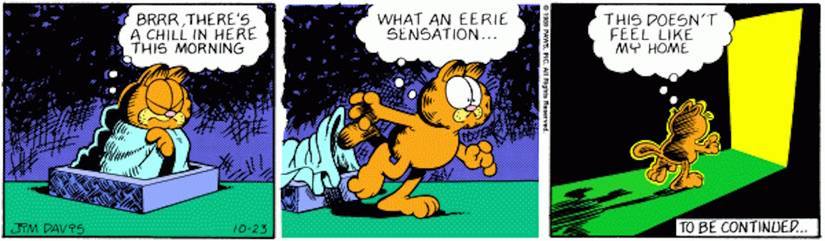


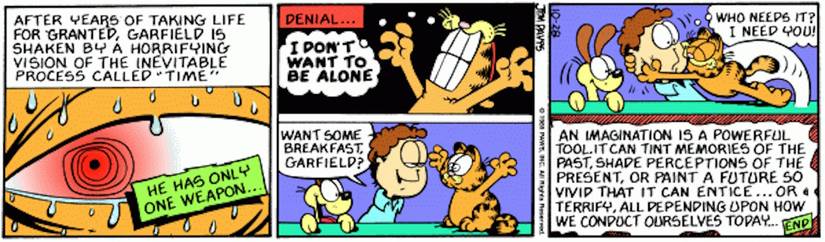
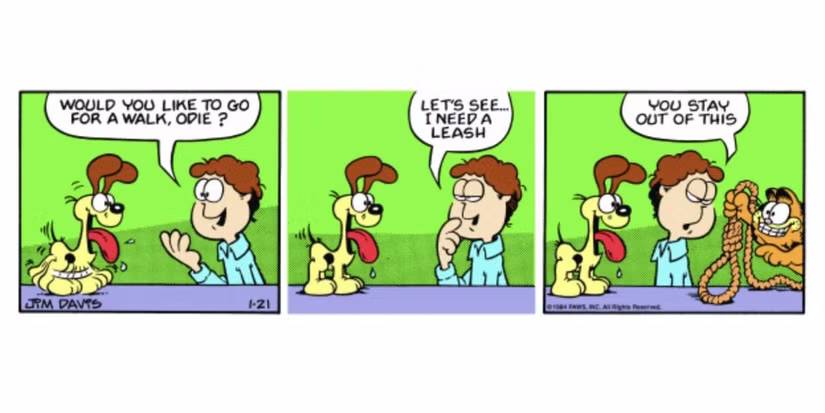
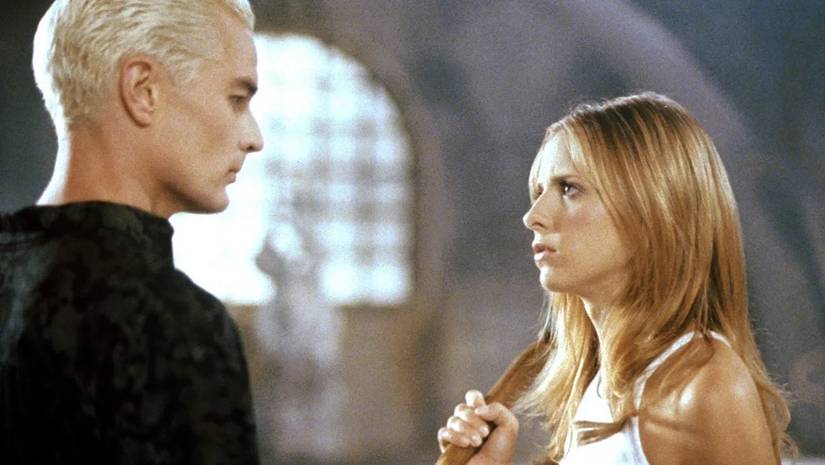 Image: The WB
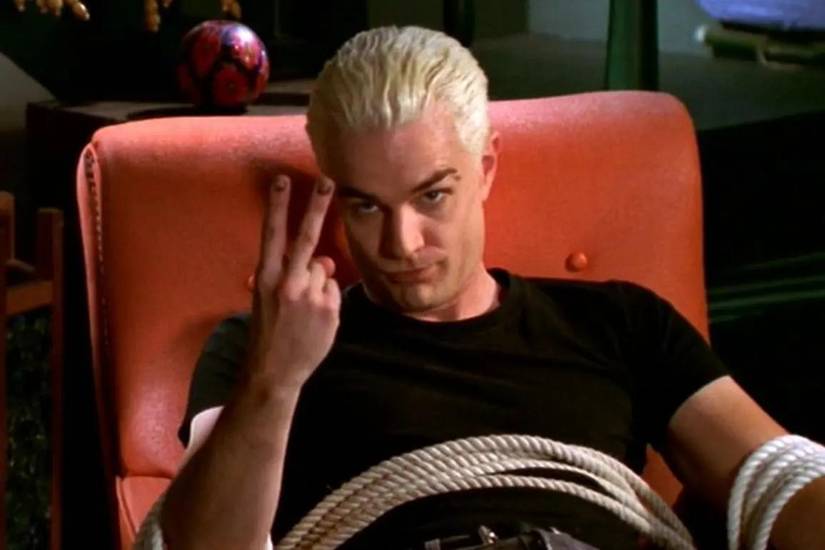 Image: 20th Century Fox
