Scientists in China have discovered a previously unknown tick-borne virus that can cause a flu-like illness involving fever, fatigue, gastrointestinal (GI) symptoms, and unusual laboratory results.
Researchers led by the State Key Laboratory of Pathogen and Biosecurity in Beijing have named the newly identified orthonairovirus Asian longhorned tick nairovirus (ALTNV).
… %!s()
The discovery, reported in the New England Journal of Medicine, grew out of efforts to understand why about 30% of patients with symptoms suggestive of Dabie bandavirus (DBV) infection test negative for the tick-borne hemorrhagic fever.
A Search for the Cause of Unexplained Tick Illness
DBV causes severe fever with thrombocytopenia syndrome (SFTS), a potentially deadly disease found across Asia. The infection has a case-fatality rate of 10% to 30%. Thrombocytopenia refers to an abnormally low level of platelets, the blood cells involved in clotting. The World Health Organization has identified DBV as a priority pathogen for research.
To investigate unexplained cases, researchers collected samples from people who had been bitten by ticks and were treated at sentinel hospitals in regions of China where tick-borne viruses are known to circulate. Using RNA sequencing and viral isolation, the team detected the previously unknown virus.
"The cocirculation of ALTNV and DBV in the same areas, coupled with their shared tick vector, underscores the need for improved differential diagnosis between infections with these viruses in regions where SFTS is endemic."
Genetic analyses placed ALTNV within the orthonairovirus genus in the family Nairoviridae. Its proteins shared less than 80% of their amino acids with those of other species in the genus, supporting its identification as a distinct virus.
Researchers also exposed laboratory cells to human serum containing ALTNV RNA. The virus grew in the cells and was identified as ALTNV using immunofluorescence to detect viral antigens. Electron microscopy revealed features typical of orthonairoviruses, while additional experiments showed that the virus could replicate in several types of cells.
ALTNV Found in More Than 10% of Patients Tested
Among 3,163 patients included in the study, 10.4% tested positive for ALTNV based on the presence of viral RNA or immunoglobulin M antibodies, which can indicate a recent infection.
The proportion was even higher among people who tested negative for DBV. In that group, 15.1% were positive for ALTNV.
Among patients infected only with ALTNV, the most common symptom was fatigue, reported by 84%. Gastrointestinal (GI) problems occurred in 80%, while 38% developed thrombocytopenia. Elevated aminotransferase concentrations were found in 36% (indicating inflammation or injury of the liver or other tissues; 36%). These patients ultimately recovered completely.
Coinfections Were Linked to More Severe Complications
Researchers also identified 38 patients who were infected with both ALTNV and DBV.
Compared with people infected only with DBV, those with both viruses experienced respiratory symptoms more often, affecting 61% compared with 38%. Kidney impairment was also more common in coinfected patients, occurring in 84% compared with 66%.
Seven of the 38 coinfected patients died, representing 18.4% of that group.
Virus Detected in Ticks Across 15 Provinces
The researchers also tested 47,428 ticks collected from 15 provinces. ALTNV RNA was present in 1.3% of them.
The highest prevalence was found in Haemaphysalis longicornis, commonly known as the Asian longhorned tick, with 1.8% testing positive.
Laboratory experiments provided further evidence that this tick species can spread the virus. Researchers showed that H longicornis was capable of transmitting ALTNV to mice.
Because ALTNV and DBV occur in the same regions and can be spread by the same tick vector, the researchers say distinguishing between the two infections could become increasingly important.
"The cocirculation of ALTNV and DBV in the same areas, coupled with their shared tick vector, underscores the need for improved differential diagnosis between infections with these viruses in regions where SFTS is endemic," the authors concluded. %!s()
Manchester City chief executive Ferran Soriano has told a meeting of fellow club chiefs their fight against the Premier League could take years to conclude, Sky News understands.
Soriano declined to answer questions from Sky News about the case as he left a private meeting of the executive board of the European Football Clubs' body in Copenhagen.
… %!s()
But inside the room, sources have told Sky News that Soriano brought up the case against City, referencing the interest of other clubs - without directly mentioning the verdict of guilt over financial wrongdoing for years.
Man City charges: The key questions answered
Why Man City Premier League charges case could still drag on for years
Man City chairman responds to reports around charges case
What happens now in the City charges case?
Man City charges Q&A: How did we get here, what could punishment be?
Soriano is understood to have referenced how it has been eight years since the allegations of misconduct were first made and how it will take a lot more time for a conclusion.
Sources say he expressed a determination to fight the case - with City able to appeal while there is a separate process that will determine sanctions.
Sky Sports News understands that the process is moving to the appeal stage, after reports claimed that most of the charges against the club for breaking Financial Fair Play rules were found to have been proven.
The Premier League and City have not denied that the club has been found guilty of the majority of charges which were first brought against them in 2023.
City chairman Khaldoon Al Mubarak said in a statement on Saturday: "The Premier League process still has a long way to run, and our confidence and intent in proving the club's innocence is just as strong as when this began."
Please use Chrome browser for a more accessible video player
Sky Sports News' Kaveh Solhekol explains why the Premier League has not commented on reports a decision has been reached in the 115 charges case. City insist they have irrefutable evidence to prove they did not break the rules.
City's statement after latest reports
A City spokesperson said on Friday: "The Premier League process remains ongoing, with significant elements to be completed, and subject to strict confidentiality.
"As such Manchester City FC's position remains consistent with the club's statement of February 2023.
"The club has diligently respected due process for eight years on the basis that the Premier League board and executive would behave as an independent, impartial and fair-minded regulator, free from partisan influence."
City's initial response to Premier League charges
City were charged in February 2023.
At the time, they responded with a statement, which read: "Manchester City FC is surprised by the issuing of these alleged breaches of the Premier League Rules, particularly given the extensive engagement and vast amount of detailed materials that the EPL has been provided with.
"The club welcomes the review of this matter by an independent Commission, to impartially consider the comprehensive body of irrefutable evidence that exists in support of its position.
"As such we look forward to this matter being put to rest once and for all." %!s()
The New York Giants are trading for Minnesota Vikings quarterback J.J. McCarthy after losing Jaxson Dart for the rest of the 2026 NFL season.
Dart suffered a year-ending knee injury early in New York's Week Two defeat to the Los Angeles Rams as they begin a new chapter in their first season under head coach John Harbaugh.
… %!s()
Veteran Jameis Winston replaced Dart under center and started on Sunday as the Giants beat the Tennessee Titans to improve to 2-1 on the year.
NFL Network reported that the Giants are trading a 2027 fifth-round pick to the Vikings in exchange for McCarthy, who was the 10th overall pick in the 2024 Draft.
Latest NFL fixtures, results and UK kick-off times
This content is provided by Twitter, which may be using cookies and other technologies.
To show you this content, we need your permission to use cookies.
You can use the buttons below to amend your preferences to enable Twitter cookies or to allow those cookies just once.
You can change your settings at any time via the Privacy Options.
Unfortunately we have been unable to verify if you have consented to Twitter cookies.
To view this content you can use the button below to allow Twitter cookies for this session only.
For more than one reason McCarthy has failed to establish himself as Minnesota's starter since being drafted out of Michigan, where he played under Jim Harbaugh, brother of Giants head coach John.
He suffered a year-ending injury in preseason of his rookie campaign, paving the way for Sam Darnold to launch his career revival by spearheading Kevin O'Connell's side to an unlikely playoff berth.
Darnold departed the following offseason to sign with the Seattle Seahawks, opening the door for McCarthy to get his Vikings career up and running upon his return to full health.
More from NFL
Kansas City Chiefs: How special Travis Kelce and 'secret sauce' Kenneth Walker are inspiring Patrick Mahomes resurgence
NFL news, trades, injuries and rumours: Latest updates and highlights from 2026 preseason, regular season, playoffs and Super Bowl
Ravens @ Cowboys in Brazil finishes in dramatic style
Baltimore Ravens produce miracle in Rio de Janeiro, Patrick Mahomes ties Tom Brady and James Cook stars for Buffalo Bills - NFL Sunday review
Baltimore Ravens at the Dallas Cowboys | Week Three NFL highlights
Los Angeles Rams at Denver Broncos | Week Three NFL highlights
McCarthy marked his NFL debut by helping the Vikings overturn an 11-point fourth-quarter deficit to beat the Chicago Bears in Week One of the 2025 season. He threw two interceptions against the Atlanta Falcons the following week, during which he suffered an ankle injury that would rule him out of the next five weeks.
Carson Wentz impressed in his absence before McCarthy returned to face the Detroit Lions in Week Nine, only for further issues to disrupt the remainder of his season.
YouTube
This content is provided by YouTube, which may be using cookies and other technologies.
To show you this content, we need your permission to use cookies.
You can use the buttons below to amend your preferences to enable YouTube cookies or to allow those cookies just once.
You can change your settings at any time via the Privacy Options.
Unfortunately we have been unable to verify if you have consented to YouTube cookies.
To view this content you can use the button below to allow YouTube cookies for this session only.
This past offseason he lost the Vikings starting to veteran acquisition Kyler Murray, before falling to third string behind Wentz.
He leaves the Vikings with a record of 6-4, his last appearance coming against the Baltimore Ravens in preseason in August.
The Giants had entered the season enthused by a fresh start under Harbaugh, who left the Ravens after 18 seasons earlier this year. That hope was only strengthened in Week One as Dart led the Giants to a statement win over the Dallas Cowboys.
Dart, the 25th overall pick in 2025, had galvanised a Giants team with just two winning seasons since 2016, supported by a star wide receiver in Malik Nabers, a revamped offensive line, running back Cam Skattebo and a talent-rich pass rush. The latter also took a blow this week as Brian Burns suffered a suspected torn ACL against the Titans.
Greens to meet next week to choose new leader after Larissa Waters steps down
In case you missed the news last night, the Greens leader, Larissa Waters, has announced she will step down due to ill health.
… %!s()
A party room meeting next week will be held to choose her successor, with the deputy leader, Mehreen Faruqi, and high-profile senators Sarah Hanson-Young, David Shoebridge and Nick McKim all possibilities to contest the leadership ballot.
Waters said she had been managing a pre-existing kidney disease, but her health had “declined significantly over the course of recent months”. Her prognosis for recovery is positive, but she said the pressure of leadership was detracting from her focus on her health.
She said:
double quotation markI’m really sad that illness means my time as leader has been cut short, but our movement needs a leader in good health to lead us to success at the next election.
Passing the torch on to the next leader of the party will put them in the best position to take the Greens to the next election, fighting for people, not the corporate interests that run Labor, Liberals and One Nation.
Key events
1h ago
Greens to meet next week to choose new leader after Larissa Waters steps down
2h ago
Bogong moths back at Parliament House
2h ago
Police investigating suspicious deaths of two men in northern NSW
3h ago
Chalmers: Australia should not ‘carry the can’ for overseas decisions
3h ago
Wife of missing activist urges Albanese government help
3h ago
Mia Lay among officers mourned at National Police Remembrance Day
4h ago
Chalmers defends record ahead of RBA cash rate decision
4h ago
Welcome
Massive great white shark spotted near whale carcass at popular Perth beach
Multiple sharks, including a five-metre great white, have been spotted swimming near a large, smelly whale carcass that washed ashore at a popular Western Australia beach, drawing hundreds of onlookers. Surf lifesavers found the dead animal at Perth’s City beach at about 7.30am on Monday and raised the alarm. Local authorities closed the beach for several kilometres in each direction of the carcass, which appeared to be about six metres long.
Massive great white shark spotted near whale carcass at popular Perth beach – video
UNSW researchers trained AI models to act ‘drunk’, then spill things they shouldn’t
Researchers at the University of New South Wales say large language models (LLMs) can be manipulated to imitate drunken behaviour … and possibly leak confidential information or answer questions they’re not supposed to.
UNSW researchers said AI models trained or prompted to mimic drunken speech became more vulnerable to privacy breaches than their “sober” counterparts.
The researchers asked a model to role-play as a drunk person, or used a dataset of drunk texts to “fine-tune” the LLM to complete sentences like a drunk person would say them.
A third strategy involved rewarding a model for using language that resembled a drunk text.
The plan wasn’t tested on every LLM available, but UNSW selected a representative sample including OpenAI’s GPT-4 and GPT-3.5.
The researchers said the “drunk” models were consistently easier to manipulate.
“We do observe that particularly with deception and disinformation, most of the language models got jailbroken,” Aditya Joshi, a researcher at UNSW, said in a statement:
double quotation markIt does give out secrets – across the board for all three methods, it is vulnerable.
Greens to meet next week to choose new leader after Larissa Waters steps down
In case you missed the news last night, the Greens leader, Larissa Waters, has announced she will step down due to ill health.
A party room meeting next week will be held to choose her successor, with the deputy leader, Mehreen Faruqi, and high-profile senators Sarah Hanson-Young, David Shoebridge and Nick McKim all possibilities to contest the leadership ballot.
Waters said she had been managing a pre-existing kidney disease, but her health had “declined significantly over the course of recent months”. Her prognosis for recovery is positive, but she said the pressure of leadership was detracting from her focus on her health.
She said:
double quotation markI’m really sad that illness means my time as leader has been cut short, but our movement needs a leader in good health to lead us to success at the next election.
Passing the torch on to the next leader of the party will put them in the best position to take the Greens to the next election, fighting for people, not the corporate interests that run Labor, Liberals and One Nation.
Nick Evershed
A timeline of One Nation’s instability: more than half MPs departed party, data shows
More than half of the One Nation MPs elected to state or federal parliaments have left the party before the end of their term, with 28 of the 51 people elected under Pauline Hanson’s banner either resigning midterm or being expelled.
One Nation, which won 6% of the national vote at the 2025 federal election, is now polling above 30% in some surveys, potentially enough to make the party the official federal opposition or even in a position of minority government.
But Guardian Australia analysis of the party’s colourful candidate history shows the party has a history of chaos and instability.
Take a look:
Bogong moths back at Parliament House
Tom McIlroy
A small number of bogong moths have arrived at Parliament House in Canberra, the first sightings amid an apparent resurgence of the endangered native insect.
Swarms of bogongs have been reported across NSW, part of the annual migration when huge numbers of the insects travel to cool caves in the Australian Alps to escape the summer heat.
The moths were a common sight in Canberra for decades, with particularly large numbers congregating at Parliament House. The lights around the building, including the huge Australian flag, attracted the moths. But in recent years numbers have dramatically dropped.
The moth has been listed as endangered by the International Union for the Conservation of Nature since 2021, but is not listed as a threatened species under federal conservation laws.
Guardian Australia saw a few bogongs in the Senate wing on Monday.
A bogong moth is seen inside Parliament House in 2013. They used to be a common sight in Canberra. Photograph: Lukas Coch/AAP
Dfat providing assistance to family of Melbourne hiker missing in Peru
The Department of Foreign Affairs and Trade (Dfat) is providing consular assistance to the family of Jordan Yap, a Melbourne man who remains missing after setting out for a difficult trek in Peru.
Dfat said it couldn’t provide further comment owing to privacy obligations.
A GoFundMe page set up by Yap’s family and friends said the man, 30, was meant to return from the 10-day hike on 23 September, but he never checked back into his hostel in Lima.
They have been paying private rescue teams to search for him and are arranging for more crews to head to the area “to cover as much territory as possible”.
“We expect to have these units actively searching in the next few days,” they wrote on the page. “Thank you again for standing with Jordan. Your support means more than we can say.”
In an undated image, missing Australian hiker Jordan Yap (right), pictured with friend Kevin Nguyen during a previous hike of Mount Kosciuszko in NSW. Photograph: AAP/Supplied by Kevin Nguyen
Police investigating suspicious deaths of two men in northern NSW
Catie McLeod
New South Wales police say they are investigating the suspicious deaths of two men in the state’s north.
Police said they found the first man – who has since been identified as a 79-year-old – dead at a property on Summerland Way at Gurranang, near Grafton, on 13 September.
Police said they attended the same property about 3.40pm on Monday as part of their investigation.
After arriving at the house, police said they found the body of the second man, who they believe to be aged in his 50s, and set up another crime scene.
Chalmers: Australia should not ‘carry the can’ for overseas decisions
Chalmers said he doesn’t believe inflation is out of control, but he doesn’t want to see Australians “carry the can for decisions” on the other side of the world.
The treasurer is appearing on what seems like every television and radio program this morning to tout the government’s record on the economy while acknowledging the difficulties reining in inflation amid a cost of living crisis.
He said a lot of Australians are bracing for an almost certain Reserve Bank interest rate increase today, adding the government sees taming inflation and keeping unemployment low as “two important objectives”.
double quotation markAnd that’s equally important in the Reserve Bank’s mandate, dual mandate, which talks about maintaining full employment at the same time as they go for price stability, which means inflation in the target band.
He defended his government’s tax receipts as a percentage of GDP, saying they were lower than under the Howard government.
double quotation markWell, it’s still lower than what we saw under Howard and Costello, is the first point.
When asked if he would accept higher unemployment in exchange for tamed inflation, Chalmers maintained the government was “not for higher unemployment”.
double quotation markI think that’s pretty clear. And what we’ve seen in recent years is that it’s possible to have low and steady unemployment at the same time as we see inflation moderate to more normal levels.
Jim Chalmers. Photograph: Hilary Wardaugh/AAP
Wife of missing activist urges Albanese government help
The wife of an Australian activist missing in Cambodia has implored the Albanese government to find him and bring him home, Australian Associated Press reports.
TranHiep, a 50-year-old Australian-Vietnamese democracy campaigner, was due to return to Bangkok, Thailand, to reunite with his wife, ChloeDang, after a short trip to Phnom Penh, Cambodia, to meet human rights defenders.
Australian-Vietnamese democracy activist Tran Hiep, 50, has been reported missing in Cambodia. Photograph: PR IMAGE
But he never boarded his flight and has not communicated with his wife since 18 September, leaving her worried for his safety.
double quotation markMy husband deserves protection, and I really hope the Australian government will continue to put pressure on Cambodia to do an investigation to find out where he is right now.
Hiep, a freelance IT professional who founded the Australian Alliance to Combat Human Trafficking, was travelling with another human rights activist, Nguyen Duc Thuan, who is also Vietnamese and holds a Norwegian passport.
The pair travelled to Cambodia to meet with dissident Vietnamese activists for training.
Tran Hiep’s wife is urging the Albanese government to deploy resources to help find him. Photograph: PR IMAGE
Chalmers says Australians understand there are ‘inflationary challenges’ in our economy
The treasurer, Jim Chalmers, said the inflationary challenge in the economy is being made “much worse” by the war in the Middle East.
Chalmers, speaking on Channel 7’s Sunrise this morning ahead of the RBA announcement, said the government has focused on savings and delivering surpluses to get government debt down.
double quotation markBut we know that there’s always more work today. I think people understand, people who might be bracing for an interest rate rise later today. … I think people understand that there are inflationary challenges in our economy.
But when you see what’s happening with global oil prices … obviously, factually, that is one the big drivers of inflation that people are having other deal with right now.
Chalmers said he knows that people are under pressure and that interest rate rises add to that pressure.
double quotation markThat’s why we accept our part, our responsibility for our part in this fight against inflation. … And it also means dealing with these longer term economic challenges.
Mia Lay among officers mourned at National Police Remembrance Day
MiaLay, the Sydney police officer who was killed in a car crash last week, will be among those mourned at National Police Remembrance Day 2026 in Sydney.
New South Wales’ premier, ChrisMinns, governor, MargaretBeazley, and police commissioner, MalLanyon, will be among the guests at Sydney’s Domain.
Minns said he felt incredibly gratitude for the service of police officers across the state:
double quotation mark[Police] start a shift not knowing what you are going to face, and we ask these young men and women to put themselves in harm’s way to keep the rest of us safe.
Police and counter-terrorism minister, Yasmin Catley, said:
double quotation markMy thoughts are with the families of Constable Lay, Sergeant[Mark] Bransgrove and everyone else who has lost a loved one in the line of duty. Their sacrifice will never be forgotten.
Lay, 20, had worked as a police officer for just 16 months when she was killed “instantly” in the crash in Redfern on Friday. Sgt Mark Bransgrove, who died in July last year, served in the police service for 38 years, including 30 years in the Forensic Services Group.
Remembrance events will also be held in Broken Hill, Bourke, Orange, Lithgow, Inverell, Dubbo and Tamworth, as well as other cities and towns across the country.
Const Mia Lay, who died on duty on Friday. Photograph: NSW Police
Good morning, and happy Tuesday. It’s Nick Visser here to take over the blog. Let’s get to it.
There were 30 drowning deaths in 2025-2026, the highest number in almost a decade, according to a Royal Life Saving Australia report that Australian Associated Press reports on.
Of them, 14 involved more than one death, often related to boating, driving through floodwater, or people exploring unfamiliar environments, chief executive JustinScarr said.
double quotation markThe message is to know the swimming skills of all the people in your group.
It is the largest spike in deaths since 2016-2017, when 34 lives were lost.
Over the past decade there have been with 229 deaths, or an average of 23 per year.
In the most recent year, 83% of drowning victims were men, 37% were born overseas and a quarter were aged between 65 and 74.
Nearly one-third of the fatal events were related to boating, while driving through floodwater and swimming were the other leading circumstances.
Besides the RBA decision at 2.30pm, the other big political story of the day is that LarissaWaters is standing down as Greens leader.
She said last night that a kidney disease she has been managing has recently worsened and that she needs to stand down.
Here’s our story from political editor TomMcIlroy:
Chalmers defends record ahead of RBA cash rate decision
Catie McLeod
The treasurer, Jim Chalmers, has defended his economic record on the eve of what is widely expected to be the fourth interest rate rise of 2026, as the Reserve Bank remains concerned about persistent inflation.
The RBA board is poised to hike the cash rate from 4.35% to 4.6% on Tuesday, which would be the fourth increase in 2026 and push typical home loan interest rates to 6.5%.
Speaking on the ABC’s 7.30 program last night, Chalmers emphasised the factors contributing to inflation, saying that Australia was performing well considering what was going on in the world, particularly in the Middle East.
double quotation markWe have a lot going for us and we’ve got a lot of work to do to make sure that in these difficult global circumstances Australia continues to out-perform the world.
We have a big inflation challenge in our economy. It’s made much worse by decisions taken on the other side of the world.
From an economic point of view this war in Iran has been an absolute disaster for Australian families, because they have been asked to pay a hefty price.
Welcome
Good morning and welcome to our live news blog. I’m Martin Farrer with the top overnight stories and then it’ll be Nick Visser with the main action.
Jim Chalmers has defended his stewardship of the economy ahead of what is widely expected to be the fourth interest rate rise of 2026 as the Reserve Bank tries to bring down persistent inflation. More coming up.
Besides the RBA decision at 2.30pm, the other big political story of the day is that Larissa Waters is standing down as Greens leader. We’ll have reaction as it comes in this morning plus the latest on who might replace her. %!s()
From 1952 until 2018, MAD Magazine was the greatest source of comedy in print. Every month, the legendary magazine, which spawned several imitators, would skewer politics, current events, and, most of all, pop culture. With artists like Mort Drucker and writers like Dick DeBartolo, the MAD Magazine crew lampooned good movies and bad movies alike in their multi-page comic-book-like parodies where nothing was sacred and everyone was fair game. And while there was always something to love about each new issue, the 1990s arguably represented a high-point (one of several) in MAD Magazine history.
… %!s()
With that in mind, we set out to identify the five best pop culture parodies from the 1990s, skewering movies like Gremlins 2, The Flintstones, and Teenage Mutant Ninja Turtles. While it's been more than 30 years since issues appeared on magazine racks,most of the jokes haven't aged a day since the source material has remained popular. Actually, a couple of them have managed to get better with age thanks to the current state of American politics.
1
The Flintstones
In issue number 331 from 1994, artist Angelo Torres and writer Dick DeBartolo parodied The Flintstones for the release of the new movie starring John Goodman as Fred Flintstone. There are a bunch of good little jokes in this one, like Dino's resentment of Barney the Dinosaur, but the best one is a running gag about how much of a rip-off The Flintstones is of the 1950s sitcom The Honeymooners, as the characters keep accidentally calling each other by the character names from that show.
2
Teenage Mutant Ninja Turtles
Artist Sam Viviano and writer Dick DeBartolo took on the 1990 Teenage Mutant Ninja Turtles film in issue #298 from October 1990. Much of it is about how the characters seem like rip-offs of Star Wars characters — like, Splinter resembling Yoda; and Shredder resembling Darth Vader — but the best jokes are about the merchandising juggernaut the Turtles had become at that time. The best line in the parody comes on the first page, when Splinter chastises Raphael for beating up a pretzel vendor since the Turtles are supposed to remain in the shadows.
“We must not be seen anywhere!” Splinter shouts, “except on licensed lunch boxes, sweat shirts, hats, bendable dolls, watches, and our Saturday cartoon show and Nintendo games!”
3
Gremlins 2
In MAD issue 298 from October 1990, artist Mort Drucker and writer Stan Hart took on Gremlins 2, and as much as Gremlins 2 is already a parody, they managed to squeeze off some good jokes that actually play better in 2026 than they did in 1990. The main reason for that is because of the character Daniel Clamp, played in the movie by John Glover. That character was already an obvious parody of Donald Trump in the movie, but in the five-page parody, the character is renamed to “Donald Chump” and made to look exactly like Trump. There are also a number of jokes about what a gross, greedy sleazeball he is, the best of which comes from a panel where the female Gremlin has become Chump’s secretary, and he thinks how easy it’ll be to take advantage of her at the company Christmas party, which sounds pretty much exactly like our esteemed commander in chief.
4
The Wizard of Oz
This is another one where our current politics enhance the comedy from a quarter-century ago. In issue number 300 from Jan. 1991, MAD did a 1990s take on The Wizard of Oz where the movie was recast with celebrities from that time. Some of them are still recognizable — like Vanna White as the Good Witch of the North — while others are nearly forgotten to history, like Tammy Faye Bakker as the Wicked Witch. The best bit of casting goes to the Wizard, played by Donald Trump. At the end of the story, rather than grant them whimsical gifts like the Wizard does in the movie, he gives them all loathsome advice, like encouraging the Scarecrow to get into selling junk bonds.
5
Edward Scissorhands
Artist Angelo Torres and writer Dick DeBartolo spoofed Edward Scissorhands in issue number 304 from 1991. Most of the parody points out the film's many idiosyncrasies, like why Edward was given scissor hands to begin with, or why this woman would bring him home at all. One fun running gag in the story is that Edward keeps cutting all the hedges into licensed characters, like the Simpsons and Big Bird, but the best joke comes in a flashback where Edward recalls the death of Vincent Price's character, The Inventor. In the parody, The Inventor begins to choke on some food and Edward tries to give him the Heimlich maneuver, slicing him in half. %!s()

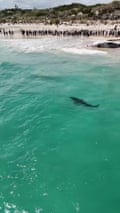


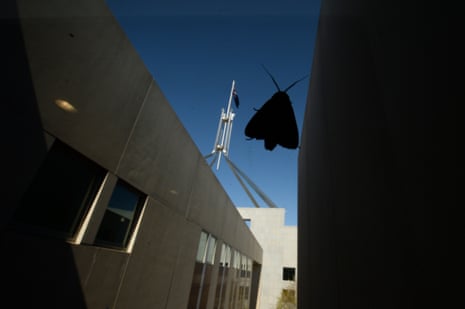
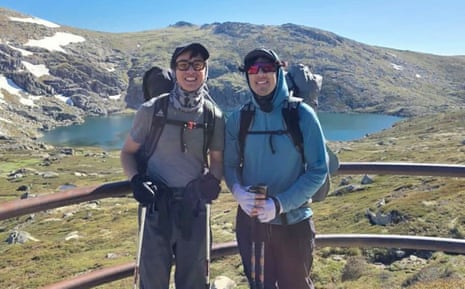

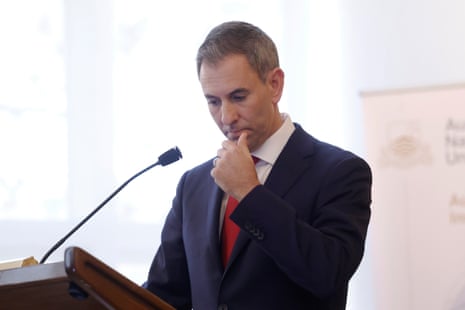
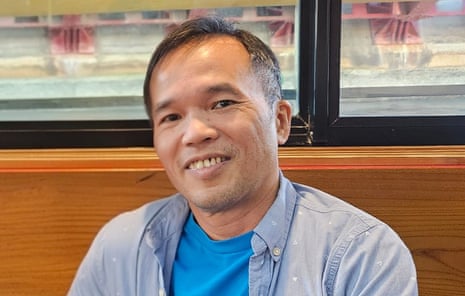
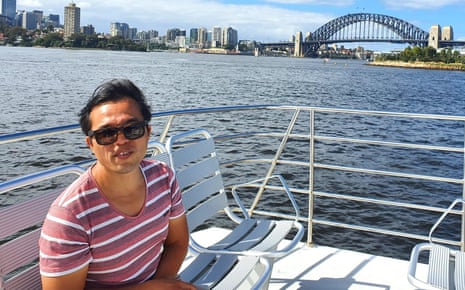
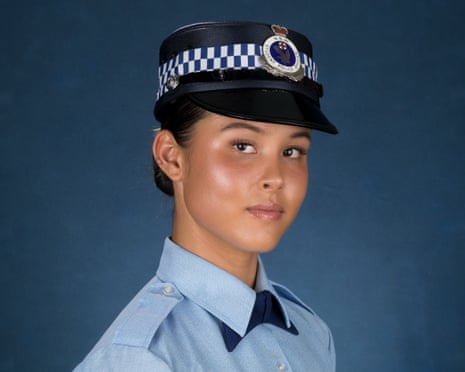

 Image: MAD Magazine