Modelling by Sydney airport’s air traffic control operators predicted elevated fatigue risks for staff at the time of a series of major safety incidents, with a review identifying runway incursions and near misses at 20% above national averages.
… %!s()
Staffing gaps at Sydney airport are being investigated as a key factor in four incidents in July and August this year, according to the investigating authority, the Australian Transport Safety Bureau [ATSB].
Angus Mitchell, the ATSB chief commissioner, released preliminary investigation reports on Wednesday that confirmed staffing levels had “emerged as a recurring area of enquiry”.
Air Services Australia, which operates the tower, had predicted fatigue risks for staff at the time of the incidents as part of roster modelling processes.
While fatigue risk does not necessarily mean individual air traffic controllers are tired at the time of an incident, the effectiveness of measures to manage any risk is being queried.
Investigators will consider whether staff combining operational roles contributed to the incidents, along with routine reliance on overtime to fill shifts and training and supervision being conducted alongside normal duties.
“Nationally, over the decade, reported ground confliction [incident] rates have remained broadly steady,” Mitchell said.
“However, Sydney recorded the highest confliction rate per aircraft movement post-Covid among the major airports, about 20% above the national average.
“This should be viewed in the context of Sydney airport being the most complex in the country.”
The four incidents include a near miss on 27 July, when a Qantas Boeing 737 was cleared by controllers to cross in front of a Qantaslink Dash 8.
The two aircraft came within 120m of each other at the same time as a controller completed a handover to a colleague in order to take a rest break. The report said the break was required to manage the controller’s predicted fatigue risk level, “which was high for their shift”.
The incident was given the most serious safety classification, only the third time the rating has been used since Australian records began.
On 9 August, a Jetstar A320 braked abruptly to avoid colliding with a Qatar Boeing 777 which was being towed. A flight attendant onboard the Jetstar plane fell and fractured her wrist.
On the same day, a Qantas Boeing 737 was cleared to cross a runway in front of a Virgin 737 that had been cleared for takeoff.
On 18 August, a Qantas A321 had to brake when a Qantas Boeing 737 passed in front of it.
Mitchell said in Sydney, ground incidents attributed to air traffic control actions had increased since the Covid period.
skip past newsletter promotion
after newsletter promotion
“Sydney has also recorded twice the annual average number of information and procedural errors compared to other airports,” he said.
“Higher-consequence incidents, including runway incursions, taxiway near-collisions and losses of separation attributed to [air traffic control] have also increased at Sydney post-Covid, driven partly by the July and August peak.”
The transport minister, Catherine King, said she expected Airservices Australia to cooperate fully with the investigations and fix any problems.
She announced the creation of a new independent assurance panel for Sydney air traffic control.
The regulator, the Civil Aviation Safety Authority [CASA], said it believed none of the incidents presented an “immediate safety risk” and air travel was safe in Australia.
A spokesperson said Airservices Australia would review the interim reports and completed investigations.
“The aviation safety system is designed to manage operational risks through multiple safeguards and, based on the information currently available, the recent occurrences do not indicate an immediate safety risk to the travelling public.”
Final reports from the investigations are expected in 2027.
Last month Guardian Australia revealed Sydney air traffic controllers had warned safety regulators of “grave concerns” about changes to airspace rules, likening the situation to the months leading up to a crash in Washington DC in which 67 people died. %!s()
South Korea's military has demanded an apology from North Korea for landmine blasts along their shared border that wounded South Korean soldiers earlier this month.
Three South Korean personnel were injured by explosions in the Demilitarised Zone (DMZ) - a buffer zone separating the two Koreas, on 21 September.
… %!s()
South Korea said on Tuesday that the blasts, which happened on South Korea's side of the DMZ, were "highly likely" from North Korean mines. It vowed to take "corresponding measures" for what it said was a violation of a decades-old armistice.
North Korea has denied responsibility for the blasts, calling Seoul's claims "groundless" and a "farce" to escalate tensions on the peninsula.
Kim Yo Jong, the powerful sister of North Korean leader Kim Jong Un, accused South Korea of "cooking up" the claims for "political and military provocation".
Kim denied suggestions that North Korean had crossed the border to plant the mines, calling it "a deliberate and planned strained assertion to shift the responsibility for escalating tension" to North Korea.
Her statement, published in state media on Wednesday, also warned the South to be "prepared for paying price for the farce of their own making."
South Korea says the mines are believed to have been laid by Pyongyang to fortify its border. In a statement on Wednesday, it called for North Korea to apologise for the blast and put an immediate stop to such fortification activities along the border.
South Korean Defence Minister Kang Shin-chul previously said on Tuesday that the blasts were a "clear" violation of the 1953 armistice, which halted active combat in the Korean War.
That armistice resulted in the creation of the 4km-wide (2.5mi) DMZ, a buffer strip containing the Military Demarcation Line which marks the land border between the two Koreas.
In the decades since, sporadic clashes and mine explosions have broken out in the DMZ.
In 2015, two South Korean soldiers were maimed by landmines while patrolling the area. South Korea said the mines had been secretly planted by North Korean soldiers near a South Korean guard post - a claim that Pyongyang denied.
Kim referenced that 2015 incident in her statement on Wednesday, claiming South Korea had used that as a "pretext" to escalate tensions, and were doing the same thing now.
Ties between Pyongyang and Seoul have only deteriorated since 2015, raising the risk of friction when such incidents happen.
Christopher Green, a senior consultant with Crisis Group, tells the BBC that "The North Koreans have been wilfully attempting to harden the border [and] eliminate inter-Korean relations".
As a result, he adds, the two Koreas no longer have the "same low-level communication" that they shared in 2015.
"Accidental escalation on the Korean Peninsula is always just a few steps away, and it's fewer steps now than it was in 2015," he says.
The United Nations Command, which conducted the on-site investigations into the blasts with the South Korean military, said it would handle the violation of the 1953 armistice "through established Armistice mechanisms".
"UNC remains committed to maintaining and enforcing the Armistice Agreement and fulfilling its responsibilities to preserve stability and prevent escalation on the Korean Peninsula," it said. %!s()
Driving for a living is always going to be stressful. The constant vigilance required when high speeds, human brains and heavy vehicles are involved can wear on a person. If your job is transporting wind turbine blades up windy, narrow mountain roads, a single day at work probably ages you a year from stress.
… %!s()
A video released by CGTN Europe shows the excessive lengths, and heights, truckers in China are willing to go to make wind power work. This treacherous drive through the Nanling Mountain Range in Hunan, China is like threading a needle in a wind storm. This trucker is deftly maneuvering an 80-tonne, 172 feet long windmill blade up the 1,312-foot high Baoding Mountain.
It takes a certain level of concentration and mad skill to navigate some of the world's most remote windy, narrow mountain roads. Lose focus and you could find yourself driving over a several-story drop beyond the non-existent guardrails. This truck driver is definitely a contender for having one of the most stressful jobs in the world. Now you may be wondering, how can a truck even carry something like that?
Slow, tall and steady
To successfully transport something as large as this wind turbine blade, special trucks or trailers are made to the object's specifications. According to YouTube's Trucker Culture, these trailers and haulers are equipped with a special blade lifter system. The root of the blade is mounted to the frame on the carrier, which is equipped with hydraulic lifters. Those lifters are key to helping the little truck that could to navigate narrow roads and paths, as well as get around homes, forests, power lines, bridges and really anything that could be in the way.
The hydraulic lifter can raise the blade upwards of 60 degrees, although in some videos it may look as though some can get close to 90 degrees. This comes especially handy on small turns and hairpins on mountains as the blade can be lifted and help lessen the footprint the truck makes, otherwise one risks the truck and blade hanging off the end of the mountain. No thank you.
The vehicles seen in the video escorting the semi carrying the wind turbine blade are there to not only survey and remove obstacles, but to help guide the truck around precarious situations. Sometimes this is done via radio communications, likely when slight, precise movements are required where the blade or truck have just a few feet of clearance.
Weather can also up a transport's precarious threat level. Wind turbine blades are designed to catch wind, unfortunately even while on the back of a truck. Awind gust, on the top of a mountain like the one in the earlier video is not a good day for anyone. Mother Nature will bring the whole caravan to a standstill until conditions clear, otherwise suffer the wrath and one can find an unintentional but likely faster route back down a mountain. %!s()
If you've been getting the overwhelming feeling recently that you're constantly getting less but always paying more, you're not alone or delusional. Shrinkflation abounds these days, and this affordability crisis has hit American used-car lots with particular verve. According to a recent review conducted by iSeeCars, eight out of every nine three-year-old used cars are now selling for over $20,000, and the average price for such a car is sitting at an astounding $32,651. Compare that to the median average annual income in the US of $87,460 for 2025, and it's easy to see why your average car shopper is having a really bad time.
… %!s()
On average, three-year-old used cars have risen in price by as much as 38.2% since 2019, which, as some may remember, was the last full year before the COVID-19 pandemic absolutely borked the used car market (among many, many other things) for the first time this decade. Here we are a few years later, and not much has changed for the better.
However, just because the average price for a gently used car has increased doesn't mean that the price of every used car on the market has gone to the moon and back. There are still a few good deals out there if you know where to look and what to look for. Sure, the days of $20,000 used lease cars are mostly behind us, but some rides are bucking the price-spike trend. Great used options that have experienced less dramatic price increases than their competition, have dropped in price, or are poised to see their prices drop range from the Hyundai Ioniq 5 and Subaru Crosstrek to the Chevy Malibu and beyond.
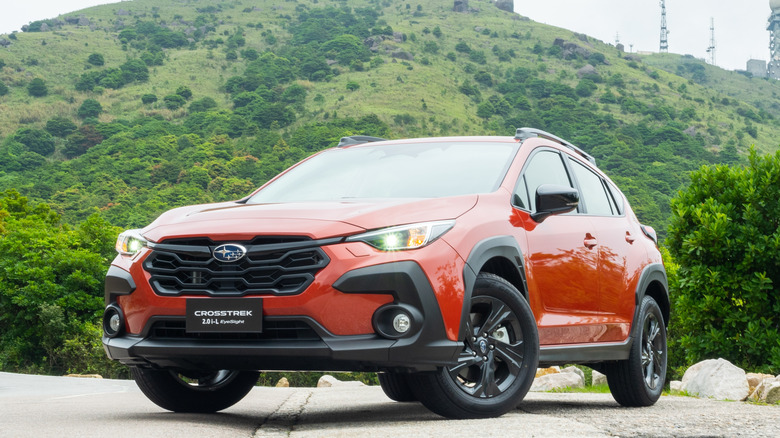
2023 Subaru Crosstrek
Teddy Leung/Shutterstock
While the average used car price has increased by $9,000 since 2019, the price of a 2023 Subaru Crosstrek today is still only about $3,500 higher than a used 2016 Crosstrek would've cost you in 2019, according to iSeeCars. That's an increase of only 16.5% over the last few years and is less than half the average increase across the whole used car market. What makes it even better is that, although there are some issues with older Crosstreks, they still make for excellent daily drivers.
To get more power out of this used Subie, look for a used Sport or Limited trim, both of which come with a slightly larger 2.5-liter boxer-4 and CVT. These versions produce 182 horsepower and get ritzier accoutrements, including synthetic leather upholstery on the Sport and genuine leather on the Limited. This engine allows the Crosstrek to scoot from 0-60 mph in 7.5 seconds according to Car and Driver's testing, making it plenty fast for comfortable highway merging. In times when gas prices are rising, and cars are about to get less efficient, the Crosstrek is pleasantly economical. Depending on the configuration you find, you can expect to get between 25 mpg with the 2.0-liter boxer-4 and 30 mpg with the larger 2.5-liter paired with the CVT in combined city/highway driving.
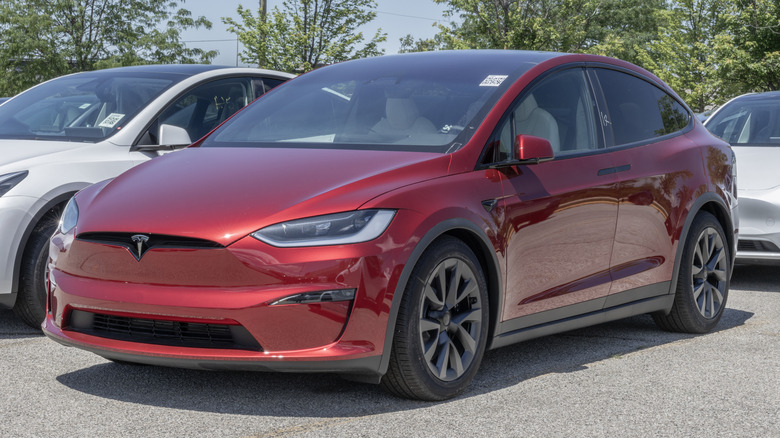
2023 Tesla Model X
Jetcityimage/Getty Images
The last few years have been — let's say — interesting for ol' Tesla. The result is that you can now get some Tesla models for cheaper than ever, but whether you'd want to be caught driving one is another story. It's unique on this list and an oddity among basically every other car on the market in that the average price of a three-year-old Model X has actually dropped over the last seven years — drastically, even.
In 2019, a 2016 Tesla Model X would've run you an average of $75,554, according to the data from iSeeCars. Today, a 2023 Model X runs buyers an average of just $62,689. That nearly $13,000 price drop represents an extraordinary 17% decrease in the average price. There are many potential causes for this nigh-unbelievable loss in value. Tesla's overall brand value has nosedived due to Musk's politics in recent years, and the brand's aging lineup hasn't done much to help the automaker's precarious reputation. By some estimates, Tesla's market valuation has dropped 40% since its peak in 2023.
The state of the Model X may also be to blame for the lineup's depreciation. Between the 2022 and 2025 model years, the Model X received few updates, and its base price decreased. There were two trims for 2023: base and Plaid. Base models feature a 670-hp dual-motor setup and come standard with synthetic leather upholstery, a 17-inch touch screen, ambient interior lighting, heated and ventilated front seats, and 269 EPA-rated miles (or 348 miles in Long Range models). Tri-motor Plaid models have more power, to the tune of 1020 ponies, but they still have a range of about 333 miles. With Tesla retiring the Model X after the 2026 model, it remains to be seen if this EV will continue to plummet.
2023 Hyundai Ioniq 5
Harazaki Ananta Hondro/Shutterstock
If you want to be the proud owner of a solid electric SUV and not get suspicious side-eyes from everyone on the street, it's time to look toward the 2023 Hyundai Ioniq 5. The 2023 model year was the Ioniq 5's second year on the market, so there's less data available for three-year-old Ioniq 5s, but all signs point to this being an excellent value that may only get better going forward. Currently, the national average fair purchase price for a base 2023 Ioniq 5 hovers around $22,000 according to Kelley Blue Book, making it one of the most affordable vehicles on this list.
While there's no 2019 data to compare the Ioniq 5 against, Hyundai is doing its best to make sure that used Ioniq 5s stay affordable by keeping new Ioniq 5s affordable too. For example, in 2025, Hyundai dropped the price of the 2026 Ioniq 5 by almost $10,000 and continued offering a $7,500 cash incentive on 2025 models even after the long-standing EV tax credit was axed by Republicans. Consequently, a new 2027 Hyundai Ioniq 5 starts at just $36,600, compared to $42,785 in 2023.
The Ioniq 5 debuted to much acclaim, and it's only gotten better since then thanks to improved styling, better range estimates, and more features. These upgrades leave the 2023 models all the cheaper. Unfortunately, getting a 2023 Ioniq 5 means you'll need a NACS adapter, as the old models used the CCS charging port. You'll find three trims. The base SE offers a long-range or standard-range battery. Heated front seats, a 12.3-inch touch screen, and traffic-sign recognition are standard. The SEL trim unlocks synthetic leather upholstery and wireless device charging; the range-topping Limited trim gets a surround-view monitor, and all-wheel-drive models have more power.
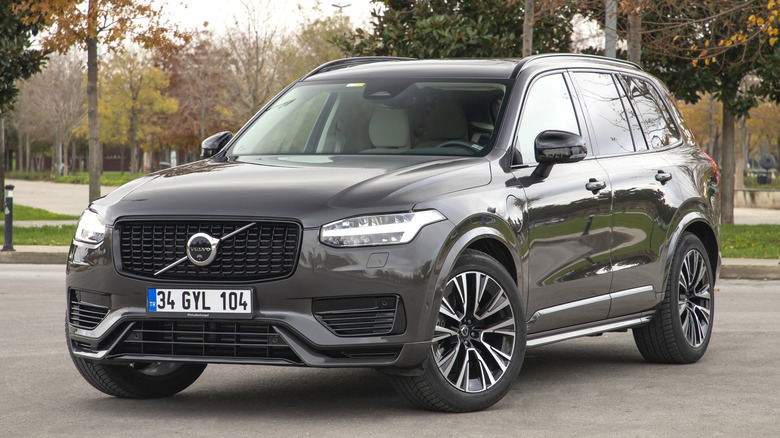
2023 Volvo XC90
Artistic Operations/Getty Images
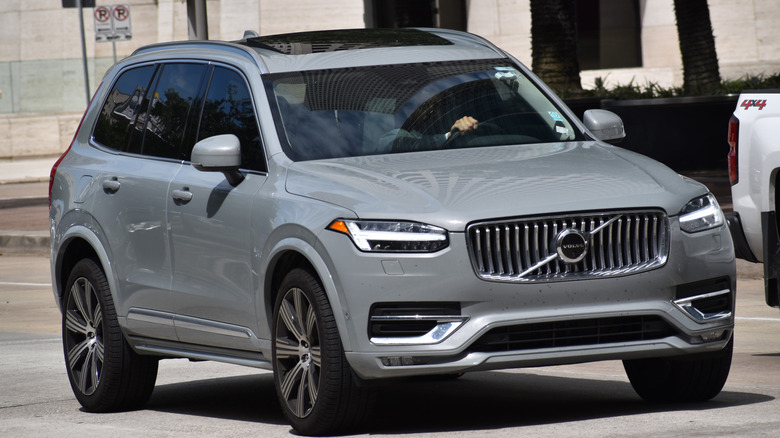
Among the many diverse entries in the luxury SUV market, the 2023 Volvo XC90 is a paragon of hope for those with strained wallets and big dreams. While owning an XC90 hasn't exactly gotten cheaper in the last decade, it hasn't seen the same drastic price hikes as the rest of the market. According to iSeeCars, the average price for a three-year-old XC90 has only increased a merciful 2.8% since the bygone era of 2019, when we were all yet sweet summer children. Back then, you could've expected to pay around $38,710 for a 2016 Volvo XC90, and today you'll be paying to the tune of $39,782. Considering the steep inflation rates of the COVID quarantine years followed by steady inflation rates of about 3% since, the price of an XC90 today is looking pretty sweet.
The 2023 Volvo XC90 is still an impressive machine today. With seats for six or seven, depending on the configuration, the XC90 is a certified people hauler, and it boasts a stylish cabin with plenty of features that still scream "luxury," especially to first-time buyers in the luxury segment. The base trim is equipped with a potent mild-hybrid powertrain that produces a respectable 247 hp and 258 pound-feet of torque. This offers a confident and drama-free driving experience, and the SUV's composed handling is the cherry on top. Inside, you'll find synthetic leather upholstery on the base Core trim, while the Plus trim gets genuine leather upholstery, and the top-tier Ultimate trim gets supple Nappa leather. There are also power-adjustable seats, wireless device charging, a 10-speaker stereo, and automatic climate control with four zones. Watch out for models with 21-inch wheels, which offer an unsettled ride.
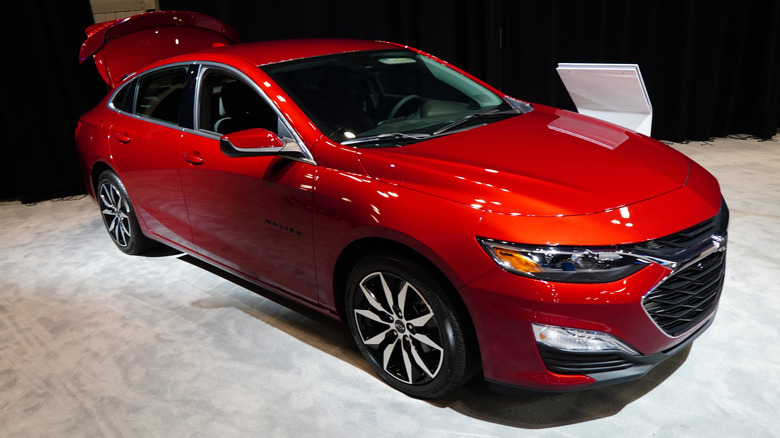
2023 Chevrolet Malibu
quiggyt4/Shutterstock
Ah, the good old Malibu. While this wasn't a particularly impressive sedan for the final few years of its legendary run, it was an affordable cornerstone of the dwindling sedan market, serving as an entry point for budget shoppers. Very few driving enthusiasts will miss the Malibu, but the market is certainly worse off without its balancing presence.
Fortunately, its influence lives on in the used car market, where a three-year-old car costs under $20,000. In fact, you can knock as much as 25% off that number and still probably find a seller willing to work with you. Since 2019, the average three-year-old Malibu price has risen only 7%, from $16,153 to $17,275, according to iSeeCars. That's significantly under the market-wide average of 38.2%, and you'll have a hard time finding any 2023 vehicle cheaper than you'll find a 2023 Malibu.
Driving a Malibu probably isn't anybody's first choice, but that doesn't mean it's a bad one. In an increasingly tumultuous economy, getting a reliable and not-falling-apart daily driver for as cheap as possible is an enterprising choice. The 2023 Malibu will get you a respectable 30 mpg, and with more bad oil news on the daily, that's nothing to shake a stick at. It's not quick, but it's practical, has a comfortable ride, and won't frustrate you with its infotainment system. At the very least, it gets you five functional seats, an 8-inch touch screen, wireless smartphone integration, and a six-speaker stereo. Smooth acceleration is another perk. If you find a good price on a higher trim, you could even walk away with leather upholstery, heated seats, and a Bose stereo. Not too shabby. %!s()
Pro-Palestine protests have spread across several Moroccan cities, with demonstrators demanding an end to diplomatic normalisation with Israel as Rabat deepens ties with Tel Aviv.
The latest mobilisation took place on September 27, at the end of three days of action called by the Moroccan Front for Supporting Palestine and Against Normalisation.
… %!s()
They followed a September 16 announcement that Morocco and Israel would elevate their diplomatic missions to full embassies and appoint ambassadors.
On September 25, the Moroccan Committee for Supporting the Nation’s Causes said it had organised 76 events in 45 cities under the slogan “Friday for Al-Aqsa and against normalisation”.
Moroccan media reported gatherings in cities including Rabat, Casablanca, Marrakesh, Tangier, Fez, Agadir, Oujda, Tetouan, Kenitra and Sale. The 76-event figure was the committee’s own count, with no independent national tally of participants.
In Rabat, protesters gathered outside Parliament, while a demonstration in Marrakesh developed into a march through several main streets, according to Lakome. Moroccan media also reported restrictions and arrests in some cities.
Restrictions and arrests
The mobilisation faced restrictions in some cities.
In Tangier, local authorities issued a decision banning a planned demonstration on September 27. Achkayen later reported that security forces dispersed hundreds of participants and that more than 12 people were detained, citing its own sources.
Lakome reported that authorities also prevented demonstrations in M’diq, while security forces surrounded a gathering in Agadir to prevent it from becoming a march.
Pro-Palestine protesters take part in a demonstration against Morocco’s diplomatic ties with Israel [File: Abdel Majid Bziouat/AFP]
The Moroccan Committee for Supporting the Nation’s Causes subsequently condemned what it described as bans, restrictions and arrests.
The response underscored another dimension of the dispute: Opposition to the relationship with Israel has remained visible on the streets, even as the government has continued to develop official ties.
A relationship under public pressure
Morocco restored diplomatic relations with Israel in December 2020 as part of the US-brokered Abraham Accords framework, alongside Washington’s recognition of Moroccan sovereignty over Western Sahara.
On September 16, Moroccan Foreign Minister Nasser Bourita and Israeli Foreign Minister Gideon Saar met in New York at a trilateral summit hosted by US Ambassador to the United Nations Mike Waltz.
The three countries confirmed plans to elevate the Moroccan and Israeli diplomatic missions to full embassies and exchange ambassadors.
Morocco and Israel also agreed to conclude agreements on investment protection and avoiding double taxation, expand direct flights and organise high-level reciprocal visits.
The move therefore goes beyond maintaining diplomatic relations established in 2020. It sets out a broader programme of institutional, economic and transport links between the two countries.
For opponents of the relationship, the embassy agreement represents another step in a policy they have rejected since 2020.
Public opinion and state policy
Morocco has maintained diplomatic relations with Israel while continuing to publicly support the Palestinian cause and the establishment of a Palestinian state.
For opponents of normalisation, however, the two positions are incompatible, particularly amid Israel’s genocidal war on Gaza.
“What has changed is the political context: Normalisation is being consolidated at a time when the war in Gaza has generated unprecedented public anger and intense images of Palestinian suffering,” Kathya K Berrada, senior programmes manager at the Arab Center for Research, told Al Jazeera.
“What we are seeing in Morocco is a growing disconnect between official diplomacy and public sentiment,” Moroccan activist Mouna Rahiani said, citing the latest Arab Opinion Index, which found that 89 percent of Moroccans surveyed opposed their country recognising Israel, while six percent supported it.
“While the state is moving towards deeper and more formal relations with Israel, Moroccans are still taking to the streets to say that Palestine cannot be treated as separate from our political and moral responsibilities,” she said.
The September agreement has brought an existing tension into sharper focus: public mobilisation against normalisation continues while the state pursues closer institutional ties with Israel.
Berrada said there was an important distinction between official policy and popular opinion, arguing that there is not enough reliable public data to establish how many Moroccans support or oppose normalisation.
Western Sahara adds another layer
The timing also matters for Morocco’s Western Sahara policy. The United Nations Security Council is due to consider the mandate of the UN Mission for the Referendum in Western Sahara (MINURSO) in October. Its current mandate runs until October 31, 2026.
The September 16 trilateral statement came against the backdrop of US recognition of Moroccan sovereignty over Western Sahara and Israel’s support for Morocco’s position on the territory.
For Rabat, the relationship with Israel sits within a wider foreign-policy framework in which ties with Washington and international support for its position on Western Sahara remain important.
For opponents of normalisation, however, that strategic calculation does not resolve their objection to closer ties with Israel, particularly while the Palestinian issue remains highly salient.
Ahmed, a Moroccan sociologist who asked to be identified by one name, said the September 16 move was “a continuation of the trilateral agreement of December 10, 2020”, but that Morocco should make the relationship “comprehensive, not selective or partial”.
The election changes the political backdrop
The protests came days after Morocco held parliamentary elections on September 23.
The final results gave the Authenticity and Modernity Party 97 of the 395 seats, followed by the National Rally of Independents with 66, the Istiqlal Party with 65 and the Party of Justice and Development (PJD) with 54.
The PJD had won 13 seats in 2021. Turnout was 38.08 percent, compared with 50.86 percent in 2021 and 42.27 percent in 2016, according to Morocco’s Ministry of Interior.
It was the PJD in power when Morocco restored relations with Israel in 2020. Then-Prime Minister Saadeddine el-Othmani signed the Morocco-US-Israel joint declaration that December.
The PJD has maintained that opposition to normalisation was a longstanding party position. The party subsequently reaffirmed its rejection of normalisation and relations with Israel, while el-Othmani defended the 2020 decision as a state-level decision.
On September 17, following the announcement of the planned diplomatic upgrade, the PJD’s general secretariat reiterated its opposition to normalisation and to relations and agreements with Israel.
After the election, the PJD’s national council unanimously decided to remain in parliamentary opposition and not participate in the next government.
Pro-Palestine protesters demonstrate against normalisation with Israel, as Morocco moves to deepen diplomatic ties with Tel Aviv [File: Mosa’ab Elshamy/AP]
The PJD’s position has illustrated the limits of using party politics to measure the effect of opposition to normalisation. The party opposed the policy while in government, yet its prime minister signed the 2020 declaration.
Its larger parliamentary presence in 2026 gives the issue a stronger political platform, but does not by itself alter Morocco’s foreign policy.
It has not been established that the Palestine issue or opposition to normalisation was a decisive factor in voting, and neither do the PJD’s gains demonstrate that its position on Israel directly drove its increased representation.
From the streets to politics?
The September demonstrations show that organisations opposed to normalisation retain the ability to mobilise across a wide geographic area. But their effect on government policy is less clear.
“There is an important distinction between state policy and popular opinion. Normalisation is an official state decision, but there is limited reliable public data allowing us to measure the level of popular support for it,” Berrada said.
Moroccan protesters display signs supporting Palestinians during a mobilisation against diplomatic ties with Israel [File: Abdel Majid Bziout/AFP]
“It would therefore be difficult to claim that either a majority or a minority of Moroccans endorse the policy.”
That distinction is important when assessing the significance of the protests. Demonstrations can show the strength and persistence of organised opposition, but they do not by themselves establish the views of the wider population or show that government policy will change.
The PJD now has a larger parliamentary presence than it did after the 2021 election, but it remains in opposition. It will be able to voice its opposition to normalisation in Parliament, but will not have a place in government.
At the same time, the September 16 agreement remains part of a broader Moroccan foreign-policy framework involving the United States, Israel and Western Sahara. The Security Council’s consideration of MINURSO in October will provide another diplomatic setting in which Morocco’s position on the territory is under discussion.
For now, the protests demonstrate that opposition to normalisation remains capable of sustained mobilisation, while the government continues to deepen the relationship. Whether that public opposition translates into sustained political pressure remains less clear. %!s()


![Pro-Palestine protesters demonstrate against normalisation with Israel, as Morocco moves to deepen diplomatic ties with Tel Aviv [Mosa'ab Elshamy/AP]](https://www.aljazeera.com/wp-content/uploads/2024/10/AP24280440675597-1728311115.jpg?w=770&resize=770%2C513&quality=80)
![Moroccan protesters display signs supporting Palestinians during a mobilisation against diplomatic ties with Israel [Abdel Majid BZIOUAT / AFP]](https://www.aljazeera.com/wp-content/uploads/2026/04/000_A8BU6GK-1776617989.jpg?w=770&resize=770%2C513&quality=80)