Signs Your Torque Converter Is About To Quit - Jalopnik
tags: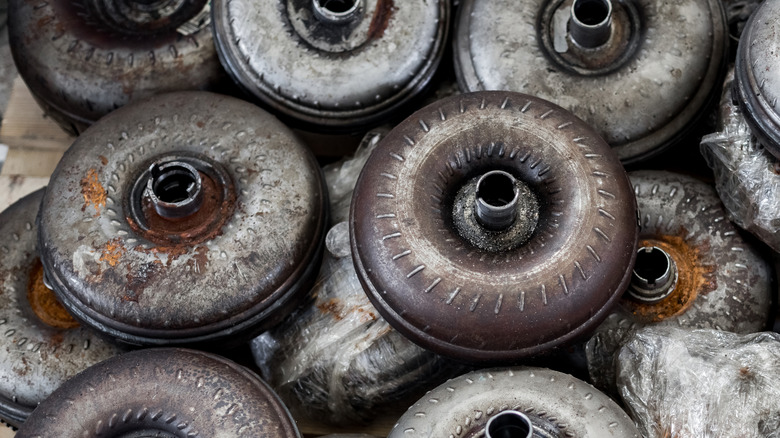
Cat Us/Shutterstock
The torque converter is an integral part of a vehicle's automatic transmission. Manual cars have no torque converters, and instead use a flywheel and a clutch to transfer the engine's power to the transmission. In an automatic car, the torque converter replaces the flywheel, which is why automatic cars have flex plates that bolt directly to the engine's crankshaft. Knowing the basics of how a torque converter works will make it easier to determine if the darn thing is about to quit.
The torque converter has three basic functions. First, it's a fluid coupling that uses automatic transmission fluid (ATF) to transfer power to the transmission. Second, it also drives a pump that distributes ATF to other parts of the transmission. Third, torque converters have a stator between the impeller and turbine to multiply torque output by forcefully routing ATF back to the impeller.
If the torque converter goes bad and is unable to perform any of its intended functions, it will display alarming symptoms. The most common is transmission shuddering or a vibrating sensation at highway speeds. The shuddering could be described as similar to going over rumble strips when accelerating. Torque converter shudder can typically be remedied and prevented by changing the ATF and adhering to the manufacturer's recommended servicing intervals.
Another symptom of a failing torque converter is grinding, rattling, whirring, or faint clicking noises when the car is moving or when shifting to Drive. Meanwhile, delayed shifting, hesitation, or harsh gear changes can be attributed to a bad torque converter. And in cases of severe neglect, a malfunctioning torque converter can cause the ATF to overheat and turn dark over time.
What causes the torque converter to go bad?
Setta Sornnoi/Shutterstock
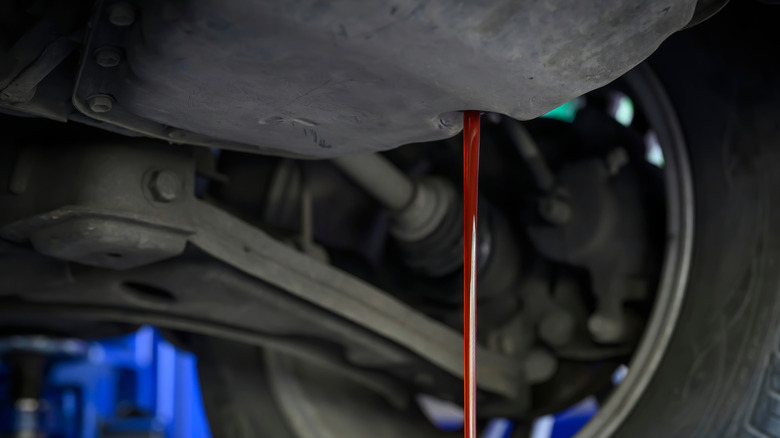
The primary cause of a prematurely failing torque converter is persistently driving with low ATF or contaminated fluid. On vehicles with ATF dipsticks, make it a habit to check the level and fluid condition every 30,000 to 60,000 miles, or whatever is stated in the owner's manual. Fresh ATF is the lifeblood of the torque converter and the entire transmission. Dirty or degraded fluid causes more heat and friction, and neglecting fluid top-ups or ATF flushing will send any automatic transmission to an early grave.
In an ideal scenario, the torque converter and the rest of the transmission should last the life of the car (or make it till the end of the warranty period). However, we don't drive in an ideal world, and wear and tear is inevitable as the transmission ages and undergoes heat cycling. Parts like needle bearings, clutch plates, and seals will inevitably degrade. Combined with infrequent ATF changes, wear particles, metal shavings, and debris in the fluid can cause more damage to the torque converter and other parts.
On the other hand, an overheating transmission can damage the torque converter. Too much heat will kill any machine, and an overheating unit is most likely caused by fluid leaks (leading to insufficient ATF in the transmission) or problems with the car's radiator and cooling system. In case you haven't noticed, most automatic transmission problems are attributable to the level or condition of the ATF.
It's why drivers and car owners should pay as much attention to the ATF as they do to the engine oil. That, and avoiding the mistakes that are destroying your car's automatic transmission, will keep the unit running problem-free for longer.
Is it safe to drive a car with a bad torque converter?
Andrii Khomyshyn/Getty Images
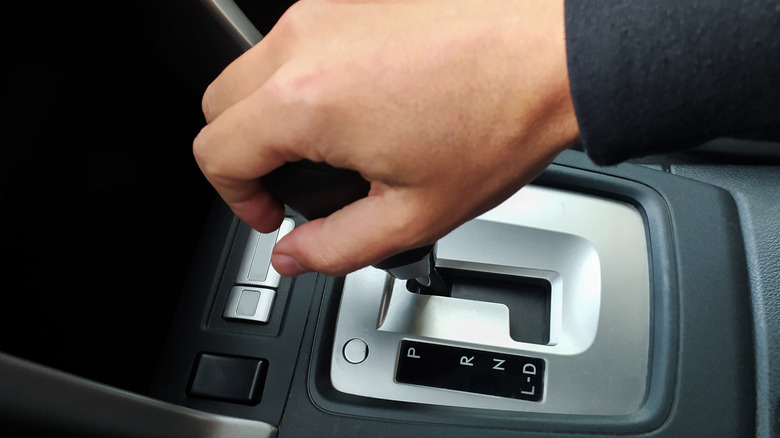
In a word, no. Not only will the shuddering and harsh gear changes cause more severe (and costlier) damage in the long run, but the driving experience won't be as pleasant. A failing torque converter causes jerking, engagement delays, and abrupt gear changes, while incessant slipping will definitely harm the vehicle's fuel economy.
And since a defective torque converter can make any car feel sluggish or down in power, the mediocre acceleration will take the fun out of driving. Unfortunately, fixing a bad torque converter requires professional diagnosis and repair, and it won't be cheap. Replacing a torque converter would cost around $600 to $1,200 for parts and labor, which is still cheaper than a rebuild ($1,800 to $3,500) or a new transmission replacement ($4,000 to $8,000).
In some cases, a problematic torque converter or erring transmission will illuminate the check engine light (or transmission warning light). When the light goes on and the vehicle is shuddering or struggling to hold gears, early diagnosis could save the transmission from complete damage, so it's best to consult a mechanic before the problem gets worse.