Netflix Is About to Lose an Unforgettable Sci-Fi Movie With a Near-Perfect Rotten Tomatoes Score
tags:Follow
Link copied to clipboard

Published Sep 4, 2026, 6:00 AM EDT
Emma Stone turns a disturbing male fantasy into a wildly funny story of self-discovery.
Before it leaves Netflix, watch the sexiest Frankenstein movie of all time
 Image: Searchlight Pictures / Courtesy Everett Collection
Frankenstein stories usually treat resurrection as a tragedy. A brilliant, mad scientist violates the laws of nature, creates an abomination, and discovers that playing God ultimately dooms the monster (and its creator) to a life of misery. The resulting creature, desperate for connection, enters a hostile world only to be rejected and persecuted.
One of the best movies of 2023, however, takes a very different approach: What if the creature loved being alive? What if she greeted every forbidden desire and painful revelation with curiosity rather than shame? And what if, instead of turning against the scientist who created her, she loved the flawed man for giving her the opportunity to experience it all?
This novel take on Mary Shelley’s formula is central to Poor Things, Yorgos Lanthimos’ unforgettable sci-fi fantasy that’s leaving Netflix on Sept. 7. The world of Poor Things resembles a surrealist painting trapped inside an elaborate snow globe, with strange cities with impossible horizons and a dreamy steampunk aesthetic. But it's the very human tale playing out against those stunning backdrops that makes Poor Things an instant classic in the pantheon of Frankenstein stories.
Bella Baxter, played by Emma Stone in the boldest performance of her career, is brought to life by scientist Godwin Baxter (Willem Dafoe). He is at once Frankenstein himself and the monster, riddled with scars and spare body parts attached to machinery that leave him burping curious bubbles. Though she has an adult woman’s body, Bella begins the movie with the developing mind of a child. This gives Stone the opportunity to portray a person who must discover movement, language, food, pleasure, cruelty, poverty, philosophy, and morality from a blank slate. What does that mean when the world still sees her as a beautiful young woman?
Stone makes Bella’s development feel astonishingly organic. Everything from her gait and posture to her vocabulary and facial expressions gradually mature over the course of the movie’s 141-minute runtime. Yet she never feels like a series of disconnected characters. The self-actualized woman at the end, who moves through the world with confidence, still feels connected to the titular “poor thing” who smashes plates because she delights in the crashing sounds they make minutes into the film.
Emma Stone turns a male fantasy into a force of nature
It’s easy to imagine a version of this performance that feels like an Oscar-baity stunt, but Stone is clearly possessed by Bella’s appetite for life and, through her, discovers the entire spectrum of human experience at an accelerated rate. That process becomes deeply uncomfortable once the lawyer Duncan Wedderburn (Mark Ruffalo) sparks Bella’s sexual curiosity and convinces her to run away with him. Because she’s really just a child who doesn’t understand the nature of sexual desire, she does not recognize the perverse, exploitative arrangement she enters. Duncan assumes her naïveté will make her easy to control. He could not be more wrong.
Poor Things deliberately invokes the troubling “born sexy yesterday” trope seen in stories like The Fifth Element, in which an adult woman’s innocence makes her desirable and emotionally dependent on a more experienced man. But Poor Things is more interested in deconstructing that fantasy and punishing the men who fetishize it. For Bella, innocence does not mean obedience. She has the curiosity of a child but the body, and therefore agency, of a woman. That strange collision leaves her free from the shame, jealousy, and romantic conventions Duncan needs to manipulate her.
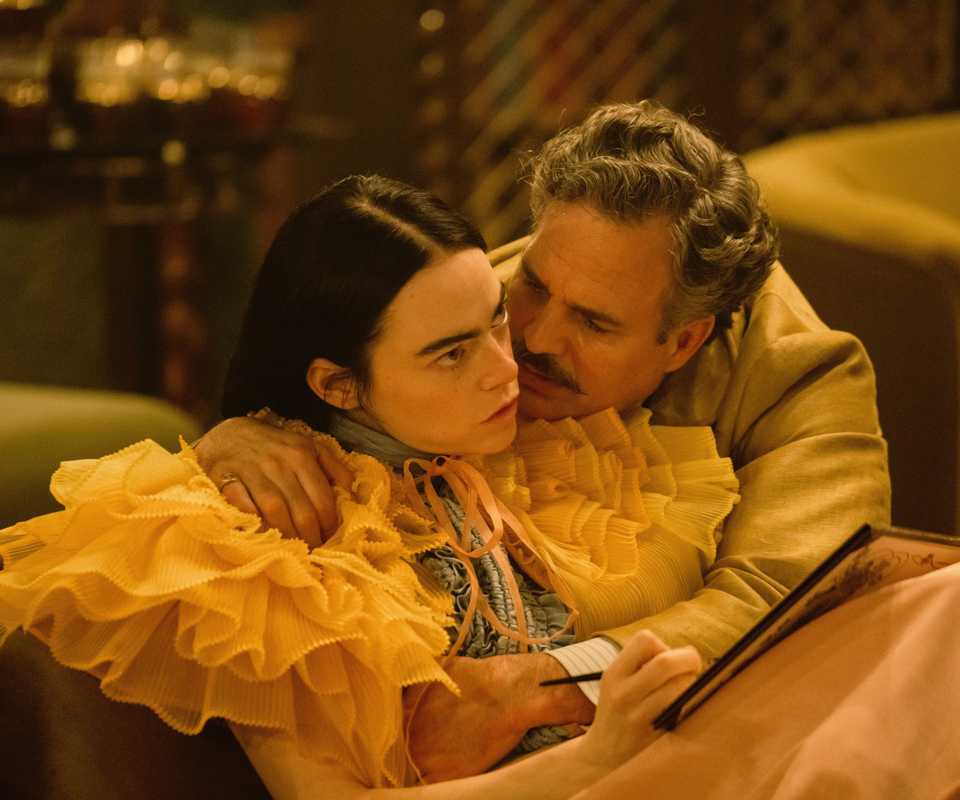
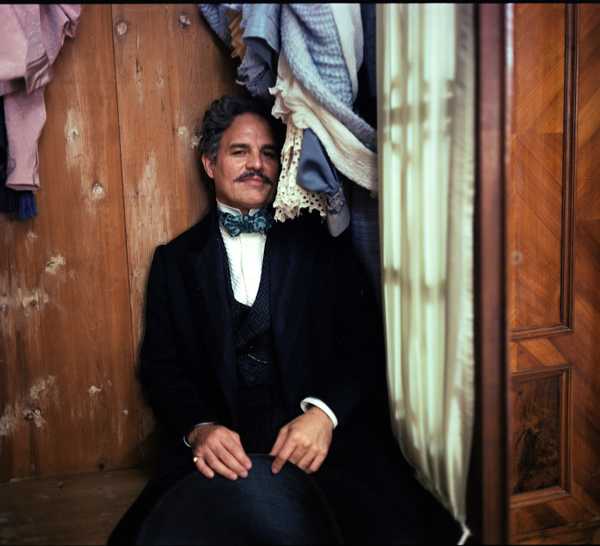
Ruffalo is astonishingly funny as Duncan, a creep who thinks he’s the luckiest man in the world because he alone has conquered a Lolita in a woman’s body. Yet he quickly discovers he’s instead unleashed an insatiably curious force of nature into the wider world. The more Bella experiences, the faster she develops — and the less important he becomes. Duncan eventually grows so desperate and pathetic that he starts throwing tantrums that will leave you cackling.
At first, Bella has desire but little to no empathy. She knows what she wants but cannot yet comprehend the effects her choices have on other people. Her freedom can feel selfish and sometimes cruel. This same emotional disconnect is what renders her functionally immune to the exploitation she experiences, at least in terms of the associated trauma you’d expect — but it remains exploitation nonetheless. Poor Things refuses to let that define her as a character. The men around Bella repeatedly attempt to tell her what her body, appetites, and experiences mean. She refuses to surrender that authority and gradually grows into a fully actualized human being with total independence. How she gets there delivers plenty of surprises along the way with a deeply satisfying conclusion.
It’s impossible to measure Bella’s behavior against any societal expectations, whether in our world or that of Poor Things. She is an impossible thought experiment: a new consciousness developing at a rapid rate inside a mature body. That premise is frequently disturbing, and that discomfort never disappears. But what makes Poor Things so interesting is that our discomfort is used to separate innocence from obedience and sexual experience from shame in a way that makes us wonder why we are socialized to draw connections between these things to begin with. By the end, Bella is not the woman whose body Godwin recovered, nor the child whose mind he placed inside it. She has become a wholly new person.
In addition to the powerful performances and profound message, the most memorable thing about Poor Things is its production design. The meticulous, colorful sets and costumes evoke Wes Anderson, but where Anderson so often confines his characters to limited spaces and a limited range of motion, Lanthimos surrenders constraint and manners for the sake of giving his characters absolute freedom (especially Bella). Poor Things and the characters in it are less mannered and more vivid. Even supposed villains like Duncan — and Godwin, to a lesser extent — reveal flashes of tenderness and humanity. The world resembles a dazzling dollhouse, but its inhabitants are as messy and dynamic as you or me.
Ultimately, Poor Things takes one of science fiction’s oldest tales of body horror and romantic tragedy and transforms it into something even stranger, sexier, and more triumphant: a resurrected woman ravenous for everything life has to offer — even when others might deem her pursuits as unnatural and disturbing.
Poor Things leaves Netflix on Sept. 7, 2026.