If you're ignoring iPhone focus modes, you're missing out on Apple's best productivity tool - Engadget
tags:Go beyond Do Not Disturb: control what alerts you get and when instead of being overwhelmed with pings all the time.
Hadrian/Shutterstock
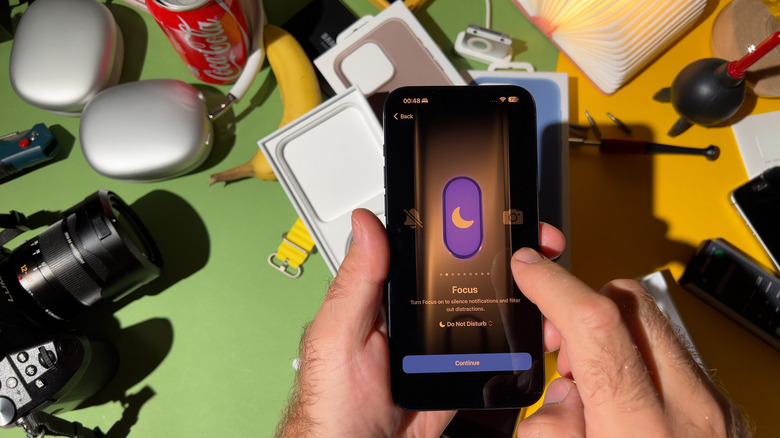
Prior to iOS 15, Do Not Disturb on iPhone was a simple switch that let you silence all calls and notifications. But in 2021, Apple evolved this feature into Focus modes. Instead of one all-or-nothing toggle, you now have several customizable modes to choose what alerts you get in different situations. For example, you might limit notifications to only calls from contacts while driving, or suppress pings from work apps while you're off the clock.
Focus modes help you shift your device between the various roles it serves to declutter it and reduce distractions. The default modes are a great start, but there's the option to make your own as well. It takes a bit of time to set them up properly, but once you start using Focus modes, you'll enjoy fewer interruptions while also knowing that the right notifications will come through.
Introduction to Focus
Andreas Naegeli/Getty Images
To start using Focus on your iPhone, open Settings and tap the Focus entry. We'll concentrate on iPhone here, but these configurations sync to your other Apple devices (including iPad, Apple Watch, and Mac) if you choose. You'll see a list of default modes like Personal, Sleep, and Work. Select one to personalize it.
Controlling notifications is done through two panels: People and Apps. In each, you'll need to choose either Allow Notifications From or Silence Notifications From. The first is good for modes like Sleep, where you only want to hear from a select group of people or apps. The second is better for modes like Work to selectively block noisy apps and people while letting everything else through.
Use the Add button in each panel to select as many contacts and apps as you want to mute or allow through. In the People section, you'll also notice an Allow Calls From toggle (if you've limited alerts to certain people). Select any contact groups you've set up, as well as broader options like Everybody, Allowed People Only, Favorites, and Contacts Only.
Unless you choose Everybody, you'll see an Allow Repeated Calls toggle to allow a second call from the same person within three minutes. If you've chosen to silence specific contacts, this changes to a toggle controlling whether they can still call you. In the Apps section, enable Time Sensitive Notifications to let such alerts through from other apps (like calendar reminders or food deliveries).
To complete the basic setup, hit Options to review a few self-explanatory toggles. In particular, Dim Lock Screen is a great way to de-emphasize your phone when you're trying not to use it as much or are in a dark environment.
Unique Focus features and adding your own

RYO Alexandre/Shutterstock
Tap the Plus (+) icon on the Focus page to access other default Focus modes or set up a custom one. Several of these modes have unique properties beyond the general filters discussed above, mostly related to automatic activations:
- Driving: Configure an Auto-Reply to let people know you're driving. This can also be activated while you're driving with CarPlay or connected to your car's Bluetooth.
- Fitness: Turns on automatically when you start a workout in Fitness on your iPhone or using your Apple Watch.
- Gaming: Will activate when you connect a wireless gaming controller to your phone.
- Mindfulness: By default, this will turn on automatically when you start a session in the app of the same name.
- Sleep: This will turn on according to the sleep schedule you've set up in Health.
Custom Focus modes fill the gaps if the pre-made categories aren't enough. I have one called Calls Only that allows all calls to come through while muting all other alerts.
All modes (except Do Not Disturb) are customizable with an icon and color to help distinguish them at a glance; tap Edit on their page to change this. If you don't use one anymore, tap Delete Focus at the bottom to remove it from the list.
Making the most of Focus

Jlco - Julia Amaral/Getty Images
On the main Focus page, you'll spot two other toggles. With Share Across Devices enabled, setting a Focus mode on your iPhone will mirror it to other devices using your Apple account. In most cases, this is convenient; you don't want to get unwanted alerts on your Apple Watch while they're suppressed on your iPhone. If you turn it off, the status of every device works independently.
Turning on Focus Status means your contacts will see a message that you're in a Focus mode when they open an iMessage conversation with you. If they send a message and it's urgent, they have the option to notify you anyway. This is supposed to work across apps, but in practice it's not really supported outside iMessage. Your contacts won't see the name of the mode you're in, and you can disable it for individual modes if you prefer. You also have the option to stop sharing Focus status with specific contacts: Open their chat in iMessage, tap their name at the top, and disable Share Focus Status.
There's a related setting worth configuring that's not shown in the Focus menus: Emergency Bypass. With this, calls and/or texts from selected contacts will make noise, even if your phone is on silent or in a Focus mode. While great for people you absolutely must hear from, you should use it judiciously; a non-urgent call could ring while you're in a meeting or otherwise need silence. To enable it, open Contacts, select a person, and tap Edit at the top-right of their contact page. Hit Ringtone or Text Tone, then enable Emergency Bypass at the top.