Gears of War: E-Day multiplayer is so old, it feels new again
tags:
Getting older means you might wake up one day and realize you've missed Gears of War. I never counted the cover shooter that birthed a thousand copycats among my favorites, but the seven year break between Gears 5 and E-Day has reminded me how rarely a grungy, uncomplicated third-person shooter comes along these days, and just how good The Coalition has gotten at making them.
Last week, I played a few hours of Gears of War: E-Day multiplayer split between Horde Siege—this game's expanded take on its long-running PvE co-op—and standard Versus PvP. Both modes were unexpected, but not because Gears is venturing into uncharted territory. It's actually the opposite: There is no surprise battle royale, no extraction elements, not even Call of Duty loadouts.
E-Day is The Coalition saying loudly, and proudly, that multiplayer as it was 20 years ago was good for its own reasons, and I'm inclined to agree.
Versus
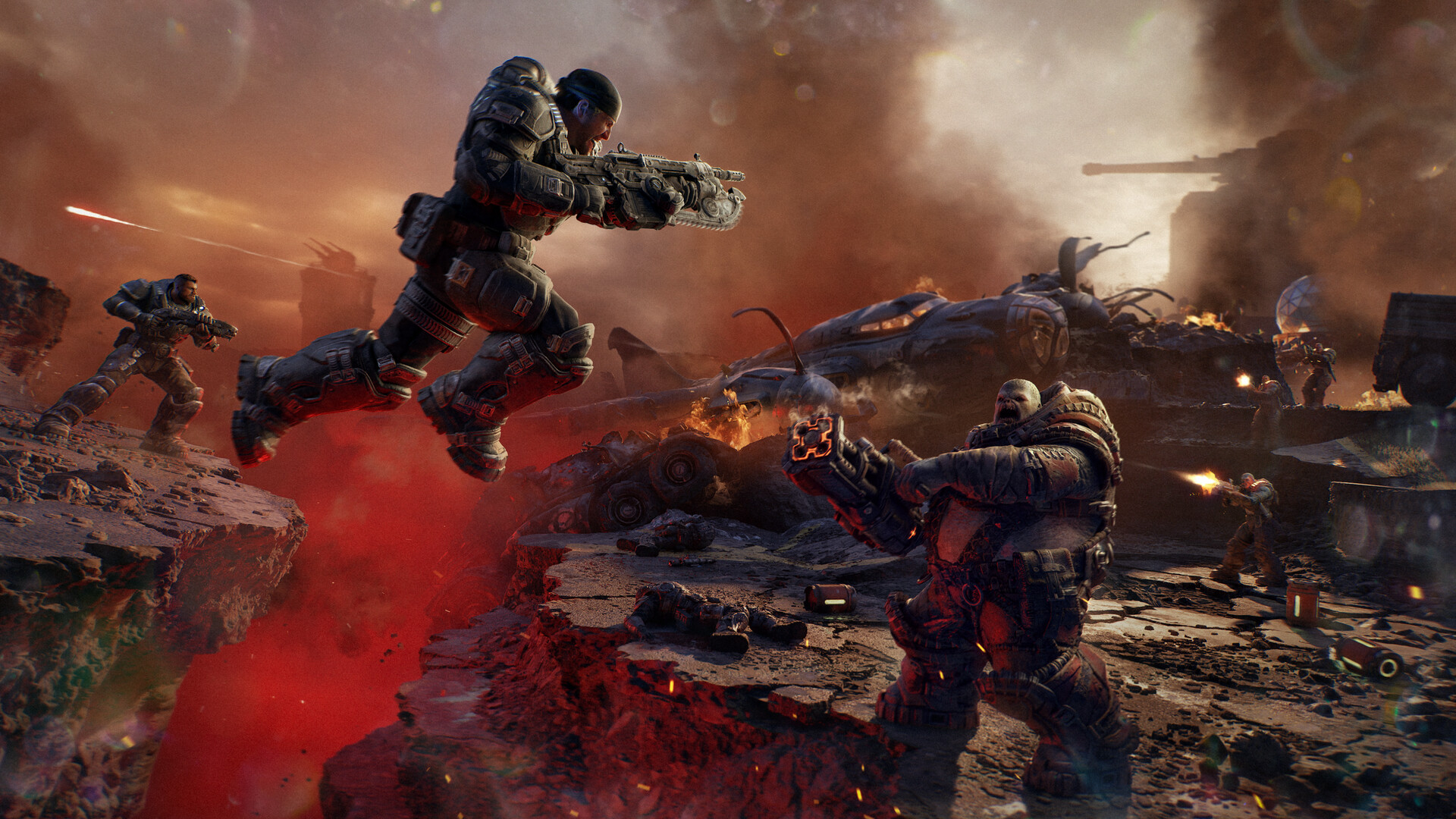
Take the sampling of E-Day Versus I had access to, which could've been plucked out of 2007: We've got 4v4, classic modes, and Locust v. COGs. My first round of team deathmatch couldn't have had a more perfect beginning: four meaty grunts sprinting toward the center of the map, immediately equipping the gnasher shotgun, and hipfiring wildly for an instagib. E-Day is appropriately gorey, though I noticed sustained damage doesn't produce the volume of blood it used to—perhaps an allowance to readability, or a consequence of hitmarkers now serving as the primary damage feedback.
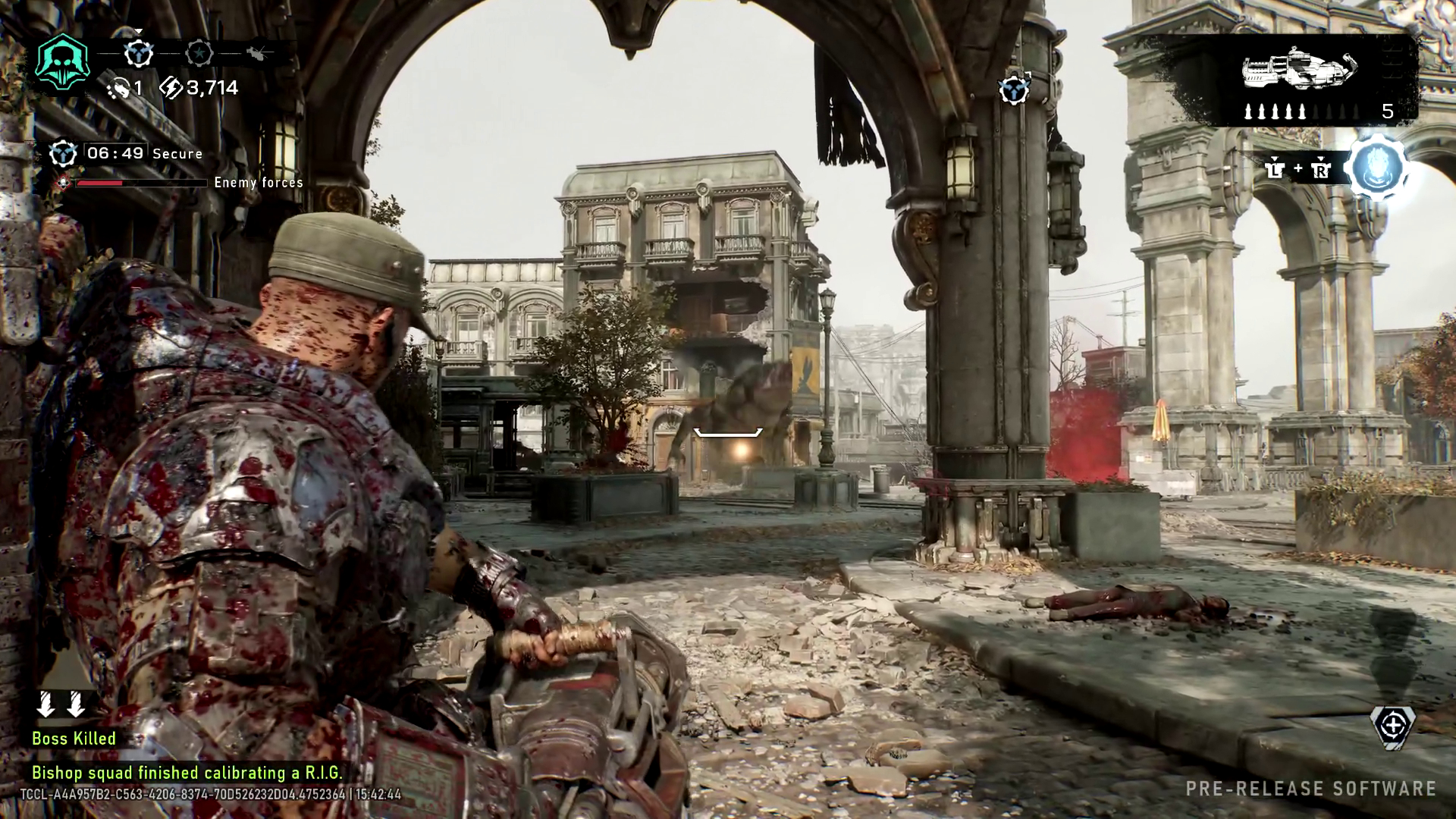
Speaking of sprint, yes, the iconic roadie run is gone. The thick combatants of prequel Gears now run upright like normal people, which makes sense for E-Day's new emphasis on mobility, but is sad nonetheless.
Instead of pulling the camera in, sprinting now zooms out so you can survey surroundings and improvise where to go next. It's pretty much the inverse of the roadie run—which scrunched you down so you wouldn't get shot running in a straight line to the next piece of cover.
The Y button (on controller) is a dedicated jump (more of a heavy hop) that will also vault up or over cover, and you can also slide out of a sprint. It speaks to the consistency of Gears that the ability to hop on top of a waist-high planter is a newsworthy change. I'm not sure that's a big deal for combat, as cover is still the place to be in Gears, but it will let you easily take shortcuts across maps.
Keep up to date with the most important stories and the best deals, as picked by the PC Gamer team.
Movement struck me as the single biggest mechanical shift of E-Day, and it'll take more time than I had to fully judge it, but first impressions? Gears feels a little faster now, but still hefty. I like it.
I also like Gears' classic modes: Scatter power weapons with learnable locations around a map in 2026 and I will howl at the moon. Finding the torque bow or longshot was like leaping to the top of the food chain, and the predictability of starter weapons (lancers, gnashers, pistols) means 1v1s are decided by the little things like headshots, positioning, and map control. I can't speak to these changes myself as a lifelong casual, but it's also encouraging that The Coalition wants to clamp down on annoying "wall bouncing" techniques that turned past iterations of Gears Versus into inscrutable bumper cars with shotguns.
Image 1 of 3
(Image credit: The Coalition)
Horde Siege
It should be no surprise to report that the co-op PvE that helped popularize "horde" modes in general is still good, though E-Day's take on it is pretty different. Horde Siege is an 12-player variant that divides two squads up between missions on a large map.
The format almost seems inspired by Helldivers 2, or recent Black Ops Zombies: you drop in, complete objectives, and maybe hit up side missions along the way before extracting. There wasn't much to do or see on the city streets between mission zones—I spent a surprising amount of time sprinting down empty roads to where the action was, but the missions themselves are great little instances of wave-based survival. The preview build included a shorter beginner playlist with just one survival mission—took about 10 minutes total—but the full format is more like 30 to 45 minutes, depending on how many times your squad wipes.
I mostly played with randoms, but was able to squad up with US editor-in-chief Tyler Wilde for a full length match. I'm no Horde expert, so forgive me if this is old news for The Coalition's run of games, but I love how enemy aggression and health ramps up throughout the match.
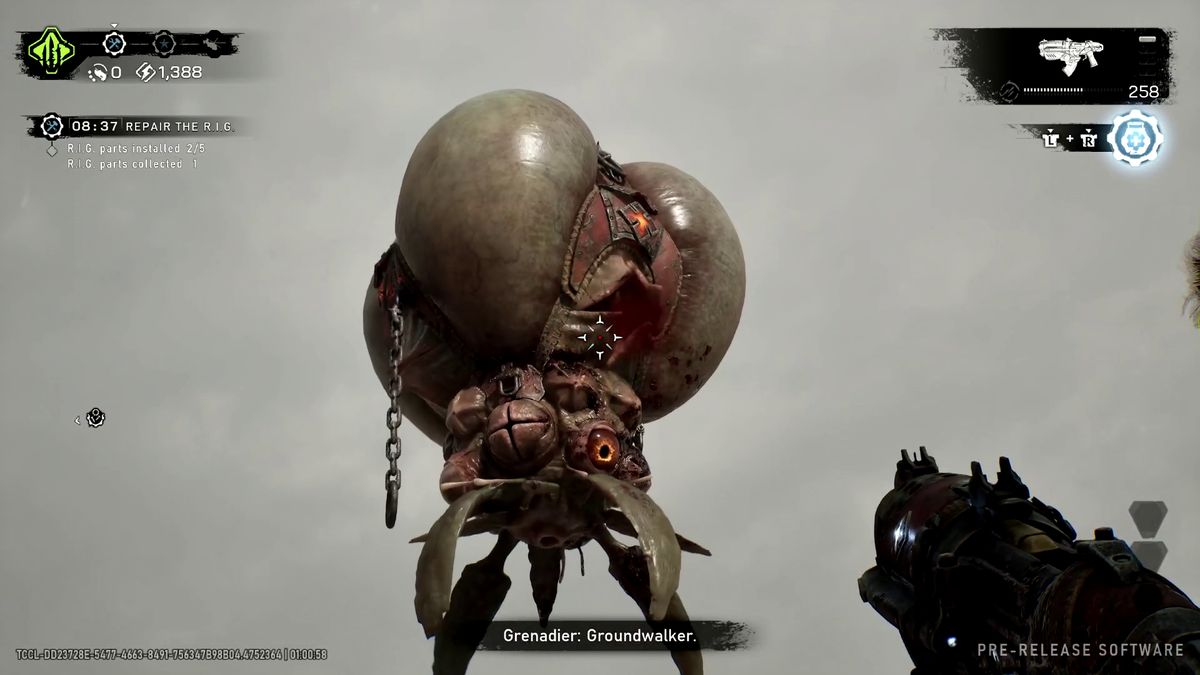
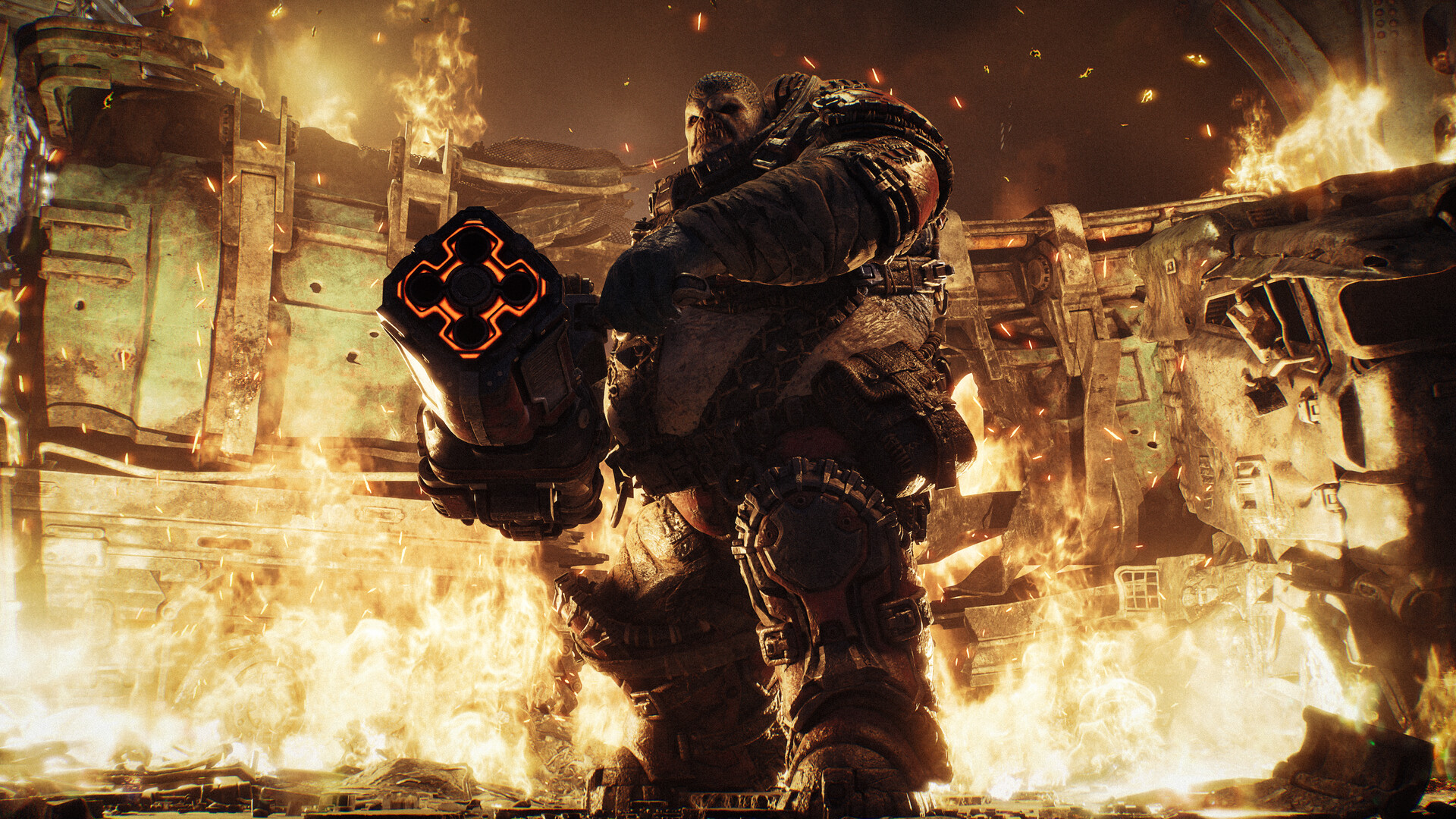
Our first two defense missions were chill enough that we could comfortably banter about non-Gears things while sawing Locust in half, but that eventually changed when three-story mantis monsters and flying eyeball wraiths started showing up in numbers. The last mission—a king of the hill thing that had us "calibrating" zones in a park—gave us a lot of trouble. We wiped three times before wising up enough to prioritize targets and conserve power weapons. This was all on the lowest overall difficulty, mind you. I can't imagine the higher tiers will be feasible without a particularly lucky set of randoms or some mic'ed up friends who are decent at Gears.
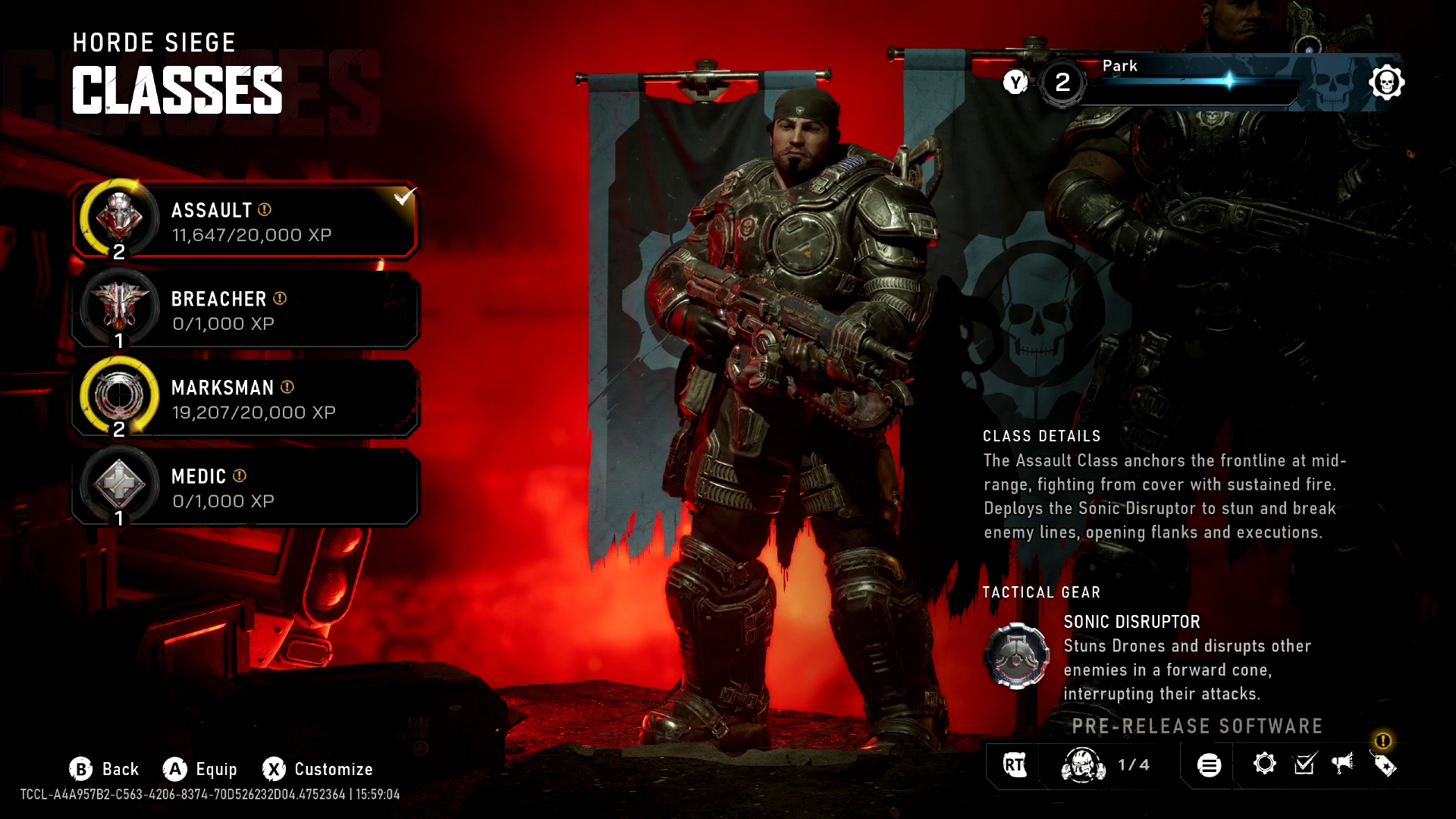
Horde Siege also has permanent progression. You level up its four classes independently—Assault, Medic, Sniper, and Breacher—and each has a class ability. I mostly played Medic, whose area-of-effect heal bot that also revives downed allies seems essential. Guns can take attachments that upgrade core stats or add new functionality, like the bayonet I affixed to my gnasher for a gnarly one-two-punch. There's also armor mods and squad perks purchased mid-round with the same energy currency you use to build turret stations or resupply ammo.
Not a "forever" game
All fairly simple stuff for those who've kept up with co-op shooters since the advent of Horde—I don't foresee these customizations rising to the rank of "build crafting"—but maybe approachability is the point. The Coalition clearly doesn't want gear score or random chance to upstage good coordination, resource management, or finding the perfect camping spot where you can mow down Locust in relative safety. It's not mindless work, especially if you pick your difficulty accordingly, but it is more about endurance than grinding.
I wonder, though, if Horde Siege will be the only version of Horde in E-Day. There is a 10-wave version of the mode I didn't have time to try, so there's that box checked, but I wrapped up the playtest wanting a more focused, classic option with less empty space. Maybe that'll be a thing in the full version, or an eventual milestone on a yet-to-be-seen roadmap.
But I also suspect The Coalition isn't approaching this Gears like a live service forever game. It sounds like cosmetics will be a thing and seasons are in the works, but with those classic Versus modes especially, E-Day multiplayer is taking the shape of something meant to be enjoyed for dozens of hours, not thousands.
That's a good thing, in my book: it shows an awareness on The Coalition's part that Gears wouldn't really be Gears anymore if it padded everything out with Call of Duty-level loadouts or roguelike deckbuilding. It's those older qualities that make E-Day refreshing in 2026, and could help it stand out come October.
Morgan has been writing for PC Gamer since 2018, first as a freelancer and currently as a staff writer. He has also appeared on Polygon, Kotaku, Fanbyte, and PCGamesN. Before freelancing, he spent most of high school and all of college writing at small gaming sites that didn't pay him. He's very happy to have a real job now. Morgan is a beat writer following the latest and greatest shooters and the communities that play them. He also writes general news, reviews, features, the occasional guide, and bad jokes in Slack. Twist his arm, and he'll even write about a boring strategy game. Please don't, though.