First bluefin tunas caught off Yorkshire since 1960s ‘success story’ for marine conservation
tags:Researchers have lauded two giant bluefin tunas being caught off the coast of Yorkshire for the first time in more than six decades as a “success story” for marine conservation.
The tunas, which were caught a day apart off the coast of Whitby earlier this week, have mostly been absent along the north-east coast of Britain since the 1960s. While small numbers of the species have been spotted in the waters around Yorkshire in the previous years, the pair were the first to be caught for market from the North Sea since licences to catch the fish were issued in July.
Rodney Forster, a professor at the University of Hull and head of the Hull marine laboratory, called the tuna’s reappearance a “success story about the management of fisheries” in Britain.
“They were fished almost to the point of extinction in their spawning grounds in the Mediterranean through the 70s and 80s,” said Forster. “But now careful protection of the stock means they’ve increased, even to the point that they’re now spreading back out to their old grounds around the UK and even into the Baltic Sea.”
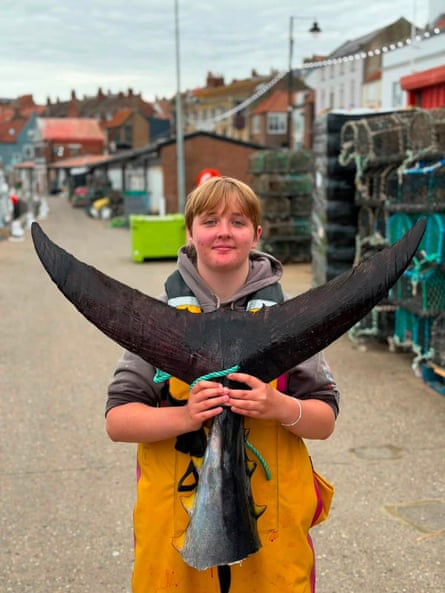
Forster said the tuna were not the only marine life that had returned to the Yorkshire coast, pointing out that minke whales and bottlenose dolphins had seen a noticeable increase in numbers around the North Sea over the past decade.
Bryce Stewart, a senior research fellow at the Marine Biological Association, a marine charity based in Plymouth, called the return of bluefin tuna to the UK “fantastic” and lauded the work done by the International Commission for the Conservation of Atlantic Tunas (Iccat) to re-establish populations.
“It seemed like an era that had gone for ever, you know, I mean normally if we lose a large species like this from an area of sea, they don’t come back,” said Stewart. “So, as I said, both from a personal scientific point of view, this is a really wonderful thing to see.”
Despite joy at the tuna population increasing around Yorkshire and beyond, concerns have also been raised that their increased numbers farther north could in part be linked to the effects of climate change.
Both Forster and Stewart mentioned rising temperatures in the North Sea as another factor in the tuna’s return, albeit a less influential one than the management of fisheries. Stewart said the warmer temperatures had a “sort of knock-on effect” as the small fish that tuna eat, such as herring and sprat, do better in warmer temperatures. Both of the fish caught in Whitby were notably well fed, with each weighing about 320kg (700lb), roughly double the size of the average tuna found on the south coast.
after newsletter promotion
Climate change is one of many factors alongside pollution and illegal fishing that could prevent the tuna from properly re-establishing themselves along the Yorkshire coast, but there are hopes that if properly managed they can thrive there and even move into Scottish waters.
Calum Duncan, the principal policy specialist at the Marine Conservation Society, lauded the regeneration of the tuna populations, but warned that their continued survival hinged on consistent care and for British fishing policies to place a greater onus on protecting marine ecology.
“We’ve got a long, long way to go, but it’s really encouraging to have achieved this,” said Duncan. “Stories like the return of bluefin tuna send a clear signal that human beings can manage our way out of environmental decline by making good decisions and working together, making good plans and – most importantly – implementing them. But we just need to do a lot more of it and need to ramp it up.”