F1 Shortening Races So Engines Can Be More Fuel-Thirsty - Jalopnik
tags: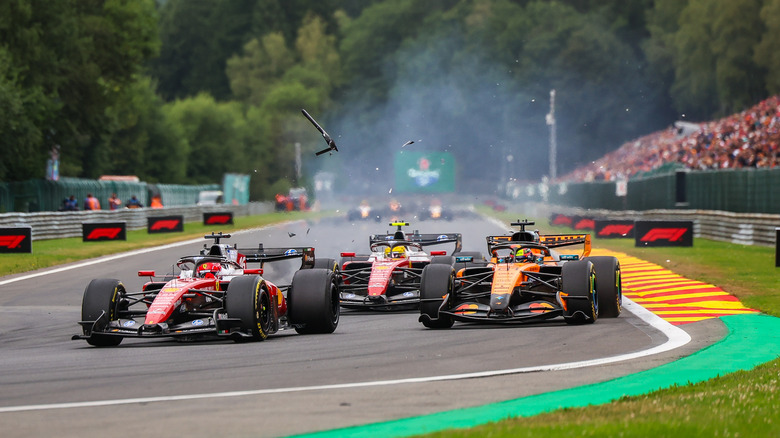
Jayce Illman/Getty Images
Formula 1 fans and a few of the championship's drivers have been completely up in arms over the season's new technical regulations. Now, F1's decision-makers are willing to move heaven and earth to silence complaints, even if it means potentially upending a 68-year tradition. F1's teams agreed earlier this week to shorten Grands Prix from 305 kilometers to 290 kilometers, roughly three laps at most circuits. The small change for the 2027 season will allow an increase in ICE horsepower by raising fuel flow limits without forcing the teams to completely redesign their cars.
All of this comes down to fuel. The teams already agreed to increase combustion power from 536hp to 563hp earlier this year. It's a modest 27hp bump to reduce the reliance on electric power, but the teams needed a way to make the power increase feasible in practice. More power means more fuel. F1 currently imposes a maximum energy flow limit of 3,000 megajoules per hour, or 24.7 gallons of gasoline per hour when using the EPA's energy density standards. In 2027, that limit will be 3,150 MJ/h or 25.9 gal/h. According to the Race, the teams simply didn't want to redesign their chassis to fit larger fuel tanks for the extra gallons of gas. They advocated for the free solution of shortening the races by 5% to parallel the 5% power increase.
The minimum distance was a 68-year tradition
Bernard Cahier/Getty Images
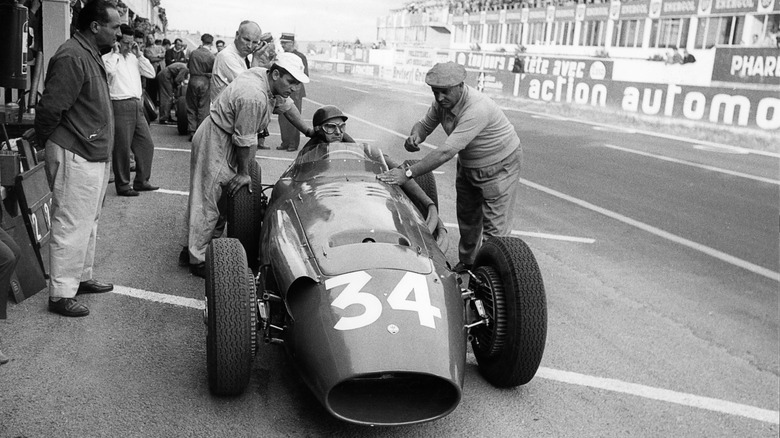
It might not sound like a big deal, but the minimum distance of F1 races has been 300km plus one lap since 1958. From Juan Manuel Fangio to Max Verstappen, it has been one of the few standards that have been tweaked slightly but never abandoned entirely over F1's history. When first introduced, it was simply a minimum alongside a maximum distance of 500 km, the previous minimum. The organizers of each Grand Prix could choose any race distance within that range, but gravitated to the minimum over time. By the late 1970, it was the unofficial standard. The only exception to this rule has been the Monaco Grand Prix, due to the time constraints and street circuit's unusually slow average speed. The standard became official in 1989 with the current definition: the fewest number of laps needed to complete 305 km.
The 15-km distance cut is only a temporary measure for 2027. However, the power increase is permanent and there will be an additional 40-horsepower bump in 2028. The hope is that F1 will revert its races to 305 km, but nothing is guaranteed, as the teams must approve any rule changes. The teams will hopefully dedicate resources to redesigning their cars for the added fuel, or they could just push to further shorten races. It's ridiculous. Imagine if the International Olympic Committee and World Athletics shortened the 100-meter dash to 90 meters because the fans were frustrated that no one's broke the world record in 15 years. Nothing is sacred anymore if it's to protect F1's perceived spectacle. The customer is always right, even if the changes they want will erode the sport's history and make the racing worse.