Ducati Once Built A Ferrari V8 Engine For A Lancia Sedan - Jalopnik
tags: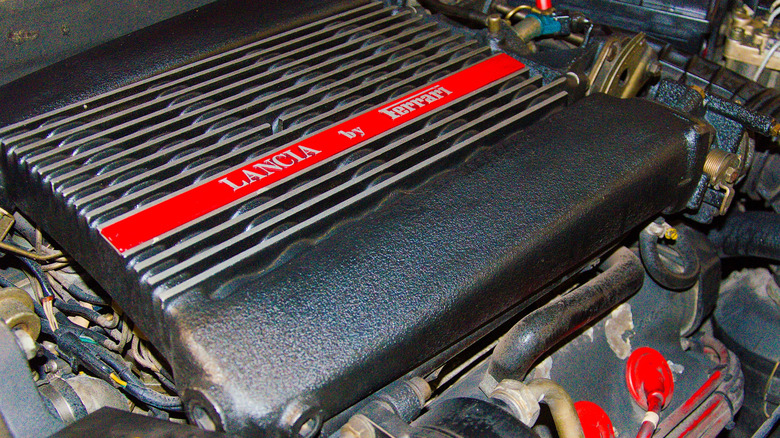
ghiz/Shutterstock
Some affinities for automakers go beyond the petty, needlessly heated barroom debate. Beyond the Ford-versus-Chevrolet rivalry and similar automotive antagonisms. Some brands are straight-up tied to national pride, like Ferrari, Ducati, and the hearts of Italian motoring fans.
Of course, for most misty-eyed super fans, a Ferrari is simply, well, out of the question. If it's not a matter of budget, it's practicality. But every once in a while, wild combinations allow Ferrari DNA to reach the hands of car enthusiasts who need four doors and at least a modicum of usability. Believe it or not, decades before Alfa Romeo put BMW on alert by putting a Ferrari-derived twin-turbocharged V6 in the rear-wheel drive Giulia Quadrifoglio, a front-wheel drive Lancia got a Ferrari V8.
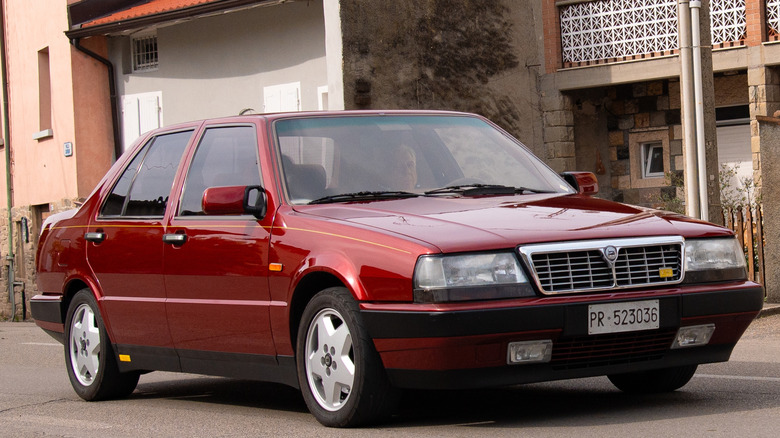
It was all part of Lancia's participation in a multi-brand, multinational cooperative effort to build a front-wheel drive sedan to compete with the likes of the BMW 5 Series and Mercedes-Benz E-Class. Using Fiat's Tipo Quattro platform as a base, Lancia built the Thema. The legendary Italian automaker didn't stop there. Lancia swapped the more pedestrian gas and diesel engines for a properly piccante 32-valve Ferrari V8. If that wasn't enough, another Italian icon assembled the Ferrari engine: none other than Ducati. The same brand behind that oh-so-good Ducati V4 motorcycle engine. In typical Ferrari fashion, the Lancia sedan was an absolute tire-burner.
Lancia made the spicy sibling by putting a Ducati-built Ferrari V8 in the Thema 8.32
ghiz/Shutterstock
It sounds a bit like a car collab fever dream: a front-wheel drive Lancia sedan based on a Fiat platform with a Ducati-assembled Ferrari V8 under the hood. Therein lies the origin of the Lancia Thema 8.32's strange alphanumeric moniker. The "8" refers to the number of cylinders, while the "32" points to the 3.0-liter Ferrari V8's 32-valve application. Employ some simple math, and you'll find that the engine employs four valves per cylinder, the same setup you'd see in a Ferrari 308's Quattrovalvole V8.
The Ducati assembly isn't the only way the Ferrari-labeled engine differed from the brand's other production mills. Part of the reason bedroom-poster-quality Ferraris produce such an iconic soundtrack resides in a high-revving flat-plane crank construction. Instead, Ducati's Bologna plant took Maranello-made parts and built a cross-plane crankshaft mill for an engine that would otherwise have a flat-plane setup. With that and a revised firing order, the Thema 8.32 was a torque-happy, more day-to-day livable application than the flat-plane, 32-valve, quad-cam mill in Magnum P.I.'s Ferrari 308 ride of choice.
With the Ducati-assembled Ferrari engine tucked under its hood, the Lancia Thema 8.32 produced 215 horsepower. It was more than respectable for the time; the engine put the Thema 8.32 in the same rarified air as the E28 BMW 535i of the era. Not too shabby. Needless to say, even with a heavy V8 over the front wheels, the Thema 8.32 was pretty swift.
Not the fastest front-wheel drive family member
GEORGE STAMATIS/Shutterstock
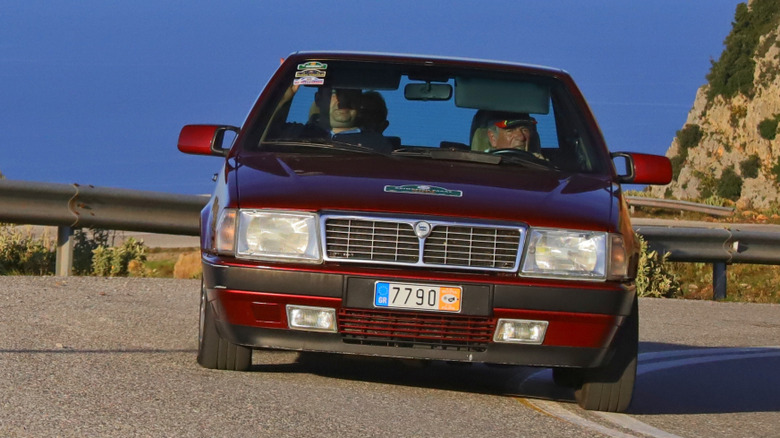
What's a family without some sibling competition? In that spirit, the Lancia Thema 8.32 managed to outgun many of its Tipo Quattro siblings. Get it angry, and the European-spec Italian Q-car could hit 60 miles per hour in around 6.8 seconds. That is, if you launched it without torturing the front tires beyond their limits. That wasn't, however, quick enough to claim all the familial bragging rights.
In addition to the Lancia Thema 8.32, Fiat built the Croma, Alfa Romeo made the charming 164, and Saab rolled out the 9000, all based on their shared front-wheel drive platform. Of the unorthodox European kindred, the Saab 9000 Aero was the swiftest. That was with half the number of cylinders of the Thema 8.32, too. Certainly a better proposition than the time one of the worst V8s ever almost went into a Saab.
With a five-speed manual gearbox, Saab's 9000 Aero made 225 horsepower, enough to outrun any production front-wheel drive sedan of the day. It could also sprint to 60 miles per hour in just 6.2 seconds, a little more than half a second quicker than the Lancia. It was quick enough to show a Ford Taurus SHO a set of taillights. Now that's a spicy Swedish meatball.