China's Gnarly Sales Slide Just Hit The 10-Month Mark - Jalopnik
tags:
Wengen Ling/Getty Images
Good morning! It's Wednesday, August 12, 2026, and this is The Morning Shift, your daily roundup of the top automotive headlines from around the world, in one place. This is where you'll find the most important stories that are shaping the way Americans drive and get around.
In this morning's edition, China's car market's sales skid just entered its tenth month, General Motors is setting up a $4.5 billion safety net to avoid future parts shortages, Porsche is partnering with Xpeng to help the Volkswagen Group meet its emissions targets and Toyota is recalling over half a million Camrys for malfunctioning gauge cluster screens.
If you'd like a recap of the latest auto news sent to your inbox each weekday, you can sign up for Jalopnik's free Morning Shift newsletter here.
1st Gear: China can't get out of this car sales funk
Aerialperspective Works/Getty Images
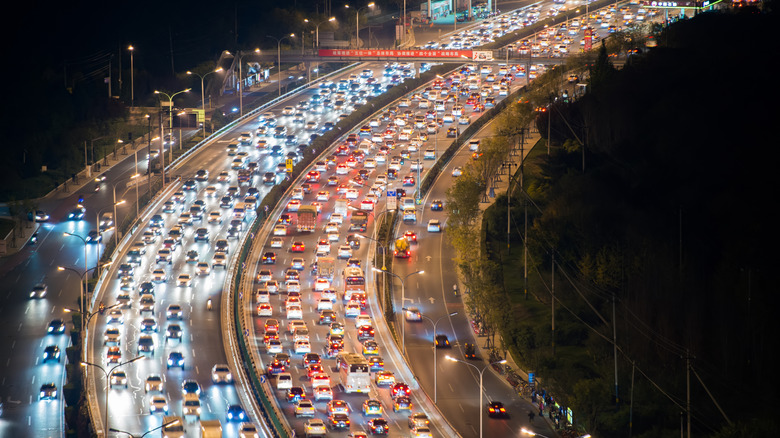
We recently talked about how German automakers were struggling mightily in China, but they're not the only ones. The country's overall market fell for the 10th straight month in July, though there were some signs that the pace of decline was easing. On the bright side, there was strong export growth as Chinese automakers stepped up overseas exports to offset cut-throat competition at home. No matter how you slice it, the decline underscores larger strains on China's economy, where household spending is slowing and exports have accounted for a greater share of growth.
Sales in China slid 21.1% in July from the same time a year earlier to 1.47 million vehicles. At the same time, exports rose a staggering 88.2% to 923,000 vehicles, according to the China Passenger Car Association. Electric vehicle and plug-in hybrid exports also grew — up 147.8% year-over-year, but they suffered a 3.9% domestic decline. From Reuters:
For the first seven months of the year as a whole, domestic passenger vehicle sales declined 20.5%, equivalent to about 2.65 million fewer vehicles than in the same period a year earlier.
Automakers have stepped up efforts to expand abroad, particularly in Europe, Southeast Asia, Latin America and the Middle East, creating a pronounced gap between domestic and overseas demand.
In the domestic market, some carmakers are also piling into the premium segment with bigger, feature-packed models, including Xiaomi's extended-range SkyNomad SUV series.
"Replacement demand has moderated after the subsidy-driven pull-forward, while consumers have become increasingly selective given frequent product launches and a more competitive market," HSBC analysts said in a note in July.
The pressure is evident among industry leaders. BYD, the world's largest EV maker, has been grappling with a slowing home market, yet record overseas shipments in July helped lift its global sales for a third consecutive month.
But not everyone is suffering, even in the home market.
Stellantis-backed Leapmotor, one of BYD's fastest-growing challengers, reported global sales of more than 100,000 vehicles in July, more than double a year earlier.
Analysts say it is catering better for current consumer demand.
"What consumers want are vehicles with strong value for money, not necessarily premium models," Cui said. "Automakers want to move upmarket, but consumers are looking for affordability."
One tactic Chinese automakers are pushing as they move overseas is tapping into underutilized factories owned by traditional automakers. It's a way for them to expand production capacity and gain market access. Last month, Geely and Ford penned an agreement that let Geely build electric SUVs at a Ford plant in Spain. Still, these sorts of agreements don't make up for the losses they're seeing at home.
2nd Gear: GM doesn't want to get caught in a parts shortage ever again
John Gress Media Inc/Shutterstock
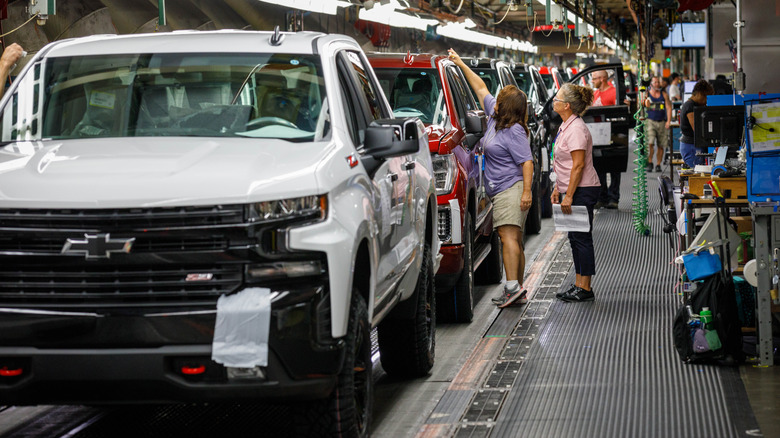
General Motors has been bitten more than once when it comes to critical parts shortages in recent years, and now it's setting up a $4.5 billion safety net designed to keep the flow of these parts strong even during supply chain troubles. The General wants to avoid future parts crunches by securing supplies of high-risk components through a financing agreement where it pre-funds the purchases of essential parts.
The move aims to give suppliers enough capital to maintain production and even potentially stockpile parts. That means GM can keep its assembly lines moving even if there's a supply chain disruption without tying up large sums of money. CEO Mary Barra has pledged she would reshape the automaker's supply chain and build a system more capable of dealing with disruptions. From the Wall Street Journal:
"Our industry has experienced significant supply chain disruptions in the past for various reasons, and it's safe to assume they will happen in the future," GM said. "This program will help ensure that we are prepared for multiple scenarios."
Under the deal, supply-chain management firm Procura will receive funding through a bank syndicate led by JPMorgan Chase and Santander. Procura will prepay certain suppliers on GM's behalf, giving them capital required to make and store inventory set aside for the Detroit automaker.
The substantial commitment underscores GM's push to avoid a repeat of the severe shortages that have dogged the industry in recent years. A postpandemic semiconductor shortage cost GM billions as the automaker was forced to sporadically idle assembly plants across North America.
Beyond semiconductors, GM and other automakers have wrestled with supplier bankruptcies, logistics delays across rail and freight networks and volatile raw-material pricing that have strained the industry's parts network.
In its filing, GM said it aims to lock down parts in case of a range of events. That means it'll be prepared for anything from a cyberattack to a demand spike to a natural disaster. Based on the struggles it has had in the past, I'd say this is a good move.
3rd Gear: Porsche gets creative to help VW meet emissions targets
onapalmtree/Shutterstock
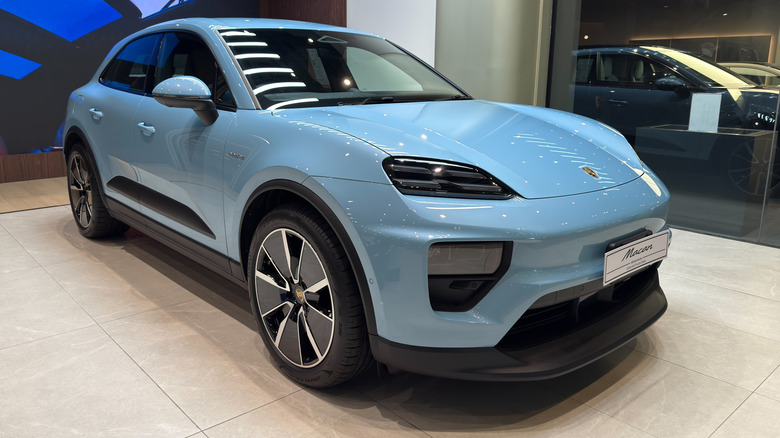
Porsche is doing some fancy emissions footwork to help the Volkswagen Group meet its emissions goals. The German sportscar maker will pool its 2026-2027 emissions with Xpeng, the Chinese EV-only automaker that has a close relationship with VW. The move means Porsche will leave VW Group's emissions pool, which failed to reach its emissions target in 2025 after recording an average of 100 g/km — exceeding its EU-mandated target of 93.6 g/km. VW Group will need to reduce emissions by larger amounts in 2026 and 2027 to avoid EU fines. From Automotive News:
VW Group CFO Arno Antlitz said in May that the automaker could face a total of €1.5 billion in fines for missing its 2025-27 emissions targets.
He said the company anticipates annual EU penalties of €400 million to €500 million in that period.
[...]
Porsche, with a new focus on internal-combustion vehicles and declining sales of EVs such as the Taycan, would be a drag on VW Group emissions. Taycan sales were down about 20 percent and Macan electric sales in Europe down about 30 percent through June. Only the new Cayenne EV has shown growth, but at a lower volume.
Xpeng's sales are up 126 percent to about 19,000 in Europe through June, according to figures from Dataforce.
Since the EU began sharply reducing fleet emissions targets starting in 2020, many automakers have joined emissions pools with EV-only or EV-heavy brands in an effort to avoid fines that could reach into billions of euros.
Generally, the cost of paying an automaker to join a pool is less than that of potential fines, legal experts have said, although the terms of pooling are not required to be publicly available. In recent years, for example, Tesla has booked billions in profits through pools in Europe and selling credits in North America.
Automakers can join pools until the end of the calendar year, in this case Dec. 31, 2026. The Porsche-Xpeng pool, which will be managed by Porsche and applies to both 2026 and 2027, was published in an EU document dated Aug. 5. It is an open pool, meaning other brands or automakers can join, as opposed to a closed pool, which generally includes brands of a specific group.
Other open pools in place for 2026 include one managed by Tesla that includes Ford, Honda, Mazda and Suzuki; and a Mercedes-Benz pool that includes Volvo, Polestar and Smart.
The EU's current 2025-27 CO2 emissions targets, which are unique to each automaker, are about 15 percent lower than the 2021 levels. Missing the target results in a fine of €95 ($98) per gram of CO2 over the limit per vehicle. The targets were to go into place in 2025, but automakers were granted a reprieve in March 2025, and will now be averaged over three years
VW Group snapped up a 5% stake in Xpeng back in 2023 in order to gain access to its software architecture and AI capabilities. Since then, the two companies have jointly developed models for China, and they've been in talks for Xpeng to take over one of VW's European factories.
4th Gear: Over 500,000 Camrys recalled for banking gauge clusters
Jonathan Weiss/Shutterstock
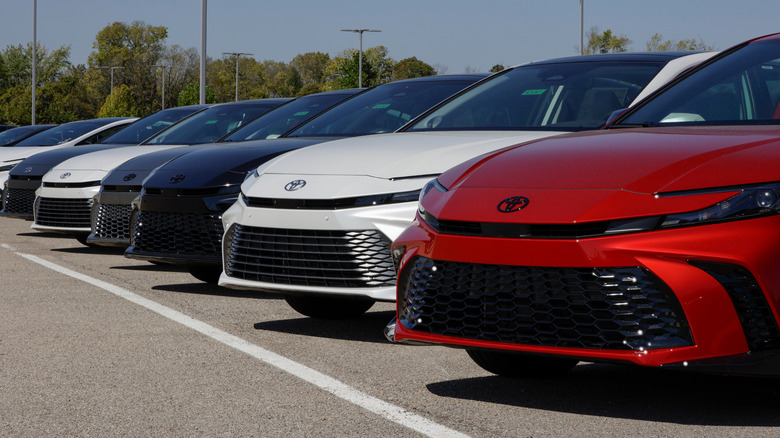
Toyota is recalling a whopping 508,354 Camrys from the 2025 and 2026 model years because of an issue with the digital gauge cluster. Well, issue might be a bit of an undersell, because it's not turning on with the car, and that's a bit less than ideal. From the National Highway Traffic Safety Administration:
The instrument cluster display may fail during vehicle startup, deactivating the hazard lights, turn signals, seat belt warning system, and smart key reminder. As such, these vehicles fail to comply with the requirements of Federal Motor Vehicle Safety Standard (FMVSS) numbers 101, "Control and Displays," 108, "Lamps, Reflective Devices and Associated Equipment," 114, "Theft Protection and Rollaway Prevention," and 208, "Occupant Crash Protection."
At the very least, the fix is fairly simple. Dealers will update the display software for free, and owners should expect to be mailed a letter if their Camry is impacted by September 21 of this year.
As you may have guessed, Toyota and NHTSA aren't aware of any accidents or injuries related to the issue; it's more of an annoyance and something that shouldn't be happening on brand-new cars.
Reverse: Test cars thuroughly
Andy Kalmowitz / Jalopnik
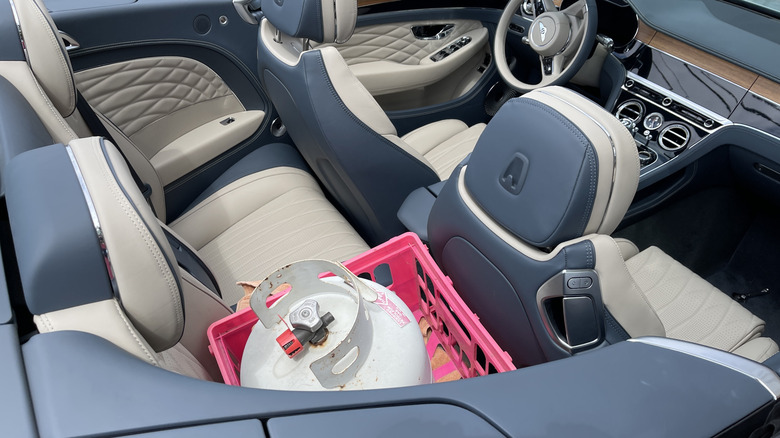
Whenever I land on a day with events I'm not particularly taken by, I always go through my camera roll to see what I was doing on that particular date. Well, as it turns out, on August 12, 2024, I was using a Bentley Continental GT Convertible to refill a propane canister. You can never accuse me of not putting the cars I test through their paces.
The Fuel Up
Al Drago/Getty Images
Tough news today, friends. Gas prices are once again moving in the wrong direction as Trump claims "total control" over the Strait or Hormuz. This hasn't exactly been great for oil, as WTI Crude Oil futures and Brent Crude prices were sitting at $83 and $89, respectively, at the time of publication.
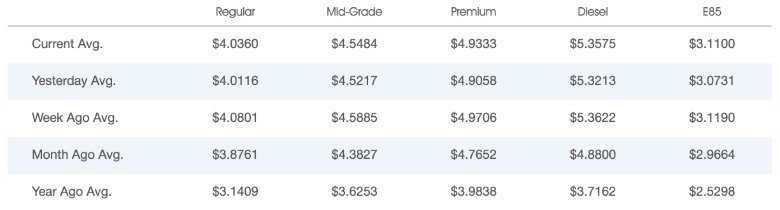
Here's where national average prices stand right now, according to AAA:
 AAA
AAA
This all shakes out to the average price of a gallon of gas rising another 3 cents overnight to $4.04, according to AAA. While that's far less than ideal, we can take some solace in knowing we're still well off the 2026 high of $4.56 that we saw back in May.
On the radio: Steely Dan - Do It Again
Happy WednesDan to all who celebrate. Let's make today the grooviest one yet. It's what we all deserve.