Chancellor Rachel Reeves - who was at Sir Keir's side on the front bench as usual - appeared close to tears.
Labour MP Carolyn Harris was also overcome by emotion as she told MPs that "every day we see his decency and his courage shine through".
… %!s()
Sir Keir is due to hand over power to Andy Burnham on Monday, after the former Greater Manchester mayor is confirmed as Labour leader at a special Labour conference on Friday.
Conservative leader Kemi Badenoch refrained from attacking the outgoing PM's record, instead praising him for his work on Ukraine and his friendship with the country's President, Volodymyr Zelensky.
But she did aim some jibes at Labour MPs and their next leader, who was absent from the session as he has been at all the PMQs sessions since he returned to Parliament last month.
Liberal Democrat leader Sir Ed Davey said Sir Keir had worked with people across the House of Commons and described him as a "true patriot".
Watching on were several guests of the prime minister including campaigners he had met during his time in Downing Street.
He addressed some of them directly as he spoke, saying: "To all those in the gallery whose lives have been changed or improved by this Labour government, and all across the country who struggle to be seen or heard, you're the reason I came into politics."
Despite being forced out by his own MPs just two years after winning a landslide election victory, Sir Keir was met with cheers from the Labour benches as he arrived in the House of Commons.
As is often the case for a prime minister's final question session, the tone was gentler and more light-hearted than usual, with plenty of jokes about England's World Cup hopes as well as the by-election in Clacton.
However, it began on a sombre note with Sir Keir paying tribute to former MP Ann Widdecombe.
He said it was "chilling" that during his time in Parliament three serving or former MPs had been killed.
Badenoch paid tribute to the former Conservative minister as a woman of "high principle" with a "wicked sense of humour".
Prime Minister's Question took place eight hours before the World Cup semi-final between England and Argentina - and references to the match came thick and fast.
Conservative MP Graham Stuart joked that the prime minister had been given the "red card" by "400 dodgy referees".
Liberal Democrat MP Will Forster asked Sir Keir if his last act would be to declare a bank holiday if England wins the World Cup.
The prime minister replied that he didn't want to "tempt fate" and suggested Forster ask him again on Sunday.
There were also several references to the by-election in Clacton, triggered by the resignation of Reform UK leader Nigel Farage.
The main parties are not taking part in the election, accusing Farage, who is re-fighting the constituency, of pulling a stunt, as he stands again in the Essex constituency.
The boycott means Farage's opponents are largely either independent or novelty candidates.
Sir Keir suggested people in Clacton should "put your vote in the bin".
Lib Dem leader Sir Ed said he could not "back joke figures with ridiculous policies" adding: "Which is why I'm supporting Count Binface."
Reform UK MP Danny Kruger hit back at the jibes, arguing that a "comedian with a dustbin on his head" was a suitable substitute for the major parties.
Cabinet members had a whip round, organised by deputy prime minister David Lammy, to buy Sir Keir a vintage silver carriage clock as a leaving gift.
The clock, made in the 1920s by the firm responsible for building Big Ben, was presented to Sir Keir at his final cabinet meeting on Wednesday morning.
It included a plaque engraved with "Change promised, change fought for, change delivered. Thank you Keir – The Cabinet," Downing Street said.
Lord Kinnock, the former Labour leader, has told the BBC he advised Sir Keir earlier this year to "stand fast" against challenges to his leadership.
In an interview with BBC Newsnight and 5 Live, he revealed he had been texting the prime minister before and after the local election results in May. %!s()
Legendary author Stephen King has strongly criticized the state of Utah for banning his novella collection that inspired the movies Stand by Me and The Shawshank Redemption.
The Salt Lake Tribune reported that King’s 1982 collection Different Seasons was banned from all public schools in Utah. The collection features four novellas: Rita Hayworth and Shawshank Redemption: Hope Springs Eternal; Apt Pupil: Summer of Corruption; The Body: Fall from Innocence; and The Breathing Method: A Winter’s Tale.
… %!s()
Rita Hayworth and Shawshank Redemption: Hope Springs Eternal was adapted into the 1994 movie masterpiece The Shawshank Redemption, and The Body: Fall from Innocence was adapted into 1986 coming-of-age classic Stand by Me.
According to the SLT, Utah law requires a book be banned from all public schools in the state if at least three school districts decide it includes to “objective sensitive material.” That happened earlier this month when the Davis, Jordan, Tooele, and Washington school districts decided to remove the collection from their libraries, triggering a statewide ban on July 6. The book had previously been available to students in grades 7–12. Utah code defines “objective sensitive material” as “instructional material that constitutes pornographic or indecent,” is “harmful to minors,” or “includes certain fondling or other erotic touching.”
On its website, Davis school district said Different Seasons “violates the standards” because it describes “genitals in a state of sexual stimulation or arousal.”
Three pages were cited containing those descriptions, per the website:
On page 184 the statement violates the law showing humans in a state of sexual stimulation or arousal.
On page 251 it describes genitals in a state of sexual stimulation or arousal.
On page 252 it again describes human genitals in a state of sexual stimulation.
It is thought that Apt Pupil is the novella in question. Apt Pupil is a dark psychological thriller about an all-American high school student who discovers his elderly neighbor is a fugitive Nazi war criminal. Instead of turning him in, the boy blackmails the man into sharing horrific Holocaust stories, leading both into a dangerous, corrupting descent into evil.
“They banned DIFFERENT SEASONS in Utah,” King said in a response issued on social media. “Contains STAND BY ME and THE SHAWSHANK REDEMPTION, stories of friendship and courage. Readable by teens, too. What's wrong with these people?”
King did not mention Apt Pupil: Summer of Corruption or The Breathing Method: A Winter’s Tale in his tweet.
This isn’t the first time Utah has banned a King collection — in February his 1998 horror novel Bag of Bones found its way onto the banned list. Indeed, various King books have been banned over the years across the U.S.
In January, the American Civil Liberties Union of Utah filed a lawsuit against state officials on behalf of the estate of Kurt Vonnegut and several bestselling authors, arguing that the book bans are “unconstitutional under the First and Fourteenth Amendments."
Photo by Jim Spellman/WireImage.
Wesley is Director, News at IGN. Find him on Twitter at @wyp100. You can reach Wesley at [email protected] or confidentially at [email protected].%!s()
The Galaxy Z Fold 8 series will launch next week, and while we’ve seen some early leaked images of the new phones, Samsung has now confirmed new technology is powering the displays.
… %!s()
Samsung calls its new foldable display stack "Flex Titanium", which it says will reduce crease visibility and improve durability on its "next-generation" Galaxy foldables: the Galaxy Z Fold 8, Fold 8 Ultra and Galaxy Z Flip 8.
While Samsung has tinkered with the durability, or functionality of its foldable displays (like adding and removing a digitiser layer for S-Pen support), Flex Titanium seems like one of the more drastic material upgrades to the Fold line because it adds this new titanium-alloy.
That distinction is important. As Samsung tipster Ice Universe put it, the crease was never just a hinge problem, it’s also the result of stress building up across every layer of a foldable screen, the ultra-thin glass, the OLED panel, the adhesive, and the support structure beneath it all.
Every fold adds a little more of that stress, and if it isn't evenly distributed, it eventually becomes permanent. Flex Titanium tech supposedly tackles that at source.
MORE FOR YOU
Galaxy Z fold 8 Display: What’s Actually In Flex Titanium
A fairgoer tries out the Samsung Galaxy Z Fold7 with games at the Samsung booth at the Cologne trade fair center in Cologne, Germany, on August 21, 2025, on the second day of Gamescom 2025 (Photo by Ying Tang/NurPhoto via Getty Images).
NurPhoto via Getty Images
Samsung's press release describes two new components: a titanium-alloy film sitting beneath the OLED panel, offering 20 times the mechanical stiffness of the polymer film it replaces while measuring roughly a third the thickness of a human hair.
There’s also a titanium plate beneath that, using "micro-patterned" holes to bond tightly to the display module without air gaps. Eliminating air gaps should offer more stable support every time the phone folds.
How important is this new tech? Ice Universe has gone as far as comparing its significance to Ultra Thin Glass (UTG), the invention that made foldables possible in the first place. History will tell us if that’s right, but to me it looks like UTG made foldable phones possible while Flex Titanium is a significant improvement on flexible glass tech.
Check out my video below of me handling some early UTG when it first landed in 2020.
Could Flex Titanium Save You Money On The Galaxy Z Fold 8?
Screen repairs on the Galaxy Z Fold 7 are genuinely brutal: Samsung’s European parts pricing puts the inner display at €761, around $885. Break both the inner and outer screens, and you’re looking at roughly €1,286, or around $1,500, on a phone that started at $1,999. That's most of the price of a brand new device just to fix the one you already own.
If Flex Titanium meaningfully reduces the chances of needing a screen replacement, which is the biggest argument against buying a foldable, it makes it more of a palatable investment. Especially if you combine that with Samsung's commitment to seven years of software updates on recent Galaxy devices.
With that said, this is also new display technology that itself may be expensive for Samsung to produce. "Titanium" doesn’t exactly sound cheap. We’ll have to see what repair prices are, but don’t be surprised if the phone is less likely to break with the cost of fixing it is even higher.
Heading back to Palworld after two-and-a-half years, I can definitely see where Nintendo’s patent lawsuits have needled the game. You can’t glide with Pals anymore, a concept apparently Nintendo owns and wants to keep to itself. And there is some sort of stipulation that you can’t throw a ball and have a battling creature come out of it (now you just hold up your hand and they appear). It’s all rather absurd..
… %!s()
However, there is not just a legal conflict between Pokémon and Palworld, but rather fanbases clashing as well. There is a contingent of fervent Pokémon fans who make it their mission to try and take down Palworld, calling it a cheap knock-off of the series that inspired it, or claiming that it outright plagiarized the original. In some cases, saying it looks like “AI slop,” a more common phrase now from 2.5 years earlier.
Palworld is not the most polished game in the world, and it has certainly taken ideas from a host of games. Not just Pokémon (which of course does not own battling and catching monsters. Not yet, anyway), but you certainly see echoes of Breath of the Wild as well in its open world. None of this, however, takes away from the fact that Palworld is a fundamentally fun game, and it is hardly the first title to borrow from other big industry leaders. It has combined a number of systems under its own banner to create something unique, and if it was just a bad clone, well, we wouldn’t be here, would we? Through all of this, we have to keep in mind that Nintendo is a monster company with one of the biggest IPs of all time, and Palworld doesn’t have a fraction of its cash. Yet, it’s doing all this, creating a game that is almost, if not frequently more engaging.
Pokemon Z-A
Nintendo
There’s a line I’ve heard out there that if you truly think Palworld is better than Pokémon, you have nostalgia glasses on and haven’t played for generations now. You’re thinking only about the bare-bones games from ages ago.
Play Puzzles & Games on Forbes
I did play those, but what I do remember is eagerly looking forward to seeing how the series would evolve from there. Even when I was like, ten, I was hoping we’d get a more action-based take on the series. A big (for its time) world to explore and no turn-based combat. It never came, not in the ways I wanted. Not until Palworld, 25 years later.
The combination of survival mechanics, base-building, live combat against Pals and humans alike, world exploration and secret-finding, breeding and min-maxing, and playing in the same world with friends all adds up to a tremendous experience, which is why so many people have logged on for Palworld 1.0.
Game Freak has not innovated at nearly the pace it should have over all these years. This isn’t to say Pokémon is crashing and selling terribly, but if fans are introspective, there is a lot of “bare minimum” progress going on here. Even brand experiments like Pokopia aren’t matching what Palworld is doing here. Pokémon is not a terrible series by any means, but Palworld is not a terrible game either. Both can coexist, but yes, Palworld certainly has some advantages, expanding the genre more than Pokémon has in a long, long time.
After announcing the end of physical Playstation media, the corp builds yet another wall in the garden
…
Sony’s Crunchyroll store changes feel like subscription culture gone too far
Image: Eiichiro Oda/Shueisha
For most people, an online store serves one purpose: you find something you like, you buy it, and a few days later it shows up on your doorstep. Crunchyroll's upcoming storefront overhaul has a different goal in mind.
According to its FAQ page updated late on Tuesday, Crunchyroll is transitioning its online store this August to "a brand-new shopping experience" that will be tailored exclusively to the Mega and Ultimate subscription tiers, which cost a monthly fee of $14 and $18, respectively. The new storefront will focus on collectibles, curated drops, limited-release products, and exclusive merchandise inspired by the anime series fans love. Ahead of the transition, it's also increasing its Summer Sale discounts to 50 percent before the current store gives way to whatever comes next (to get merchandise off shelves as fast as possible).
It's a curious shift, not because anime merchandise is changing, but because the relationship between retailers and customers is changing with it. Crunchyroll is now making membership itself the price of admission for something that shouldn’t need it in the first place. It’s a subtle distinction, but an important one, as it speaks to a larger trend that has quietly reshaped everything from streaming to shopping: companies don't just want customers anymore. They want — need — members.
The language Crunchyroll uses throughout its FAQ page is particularly telling. Rather than talking about making shopping easier or expanding its catalog, the company repeatedly emphasizes exclusivity. The new store promises "curated drops," "limited-release products," and merchandise designed to capture the excitement of convention exclusives. It even cites "the thrill of discovering something special before it's gone" as part of the vision behind the redesign.
On the surface, it might sound punchy and filled with fun, but to me it’s a pitch for scarcity, something Crunchyroll’s owner, Sony, knows all too well. There's nothing inherently wrong with limited-edition merchandise. Collecting has always been part of anime culture, and genuinely rare items have long been part of the hobby. The major concern is broader, with many fearing the modern anime industry is manufacturing scarcity more than it is responding to it. Limited drops, countdown timers, members-only access, lottery systems, convention exclusives; the product itself often feels secondary to the fear that if you don't buy it right now, you'll never get another chance.
Crunchyroll isn't alone in chasing that strategy. Sneakers, trading cards, Magic: The Gathering, vinyl records, even fast-food collaborations now revolve around carefully engineered moments of exclusivity. Anime merchandise is simply the latest thing to be folded into the same playbook.
But there's also a practical business reason for the shift. Running a traditional online retailer is expensive. Warehouses full of inventory, products that sit on shelves for months, clearance sales, returns, and thousands of individual SKUs all eat into margins. Limited drops flip that equation on its head. Produce a smaller run, announce it with fanfare, sell through in a matter of hours, and move on to the next release. Less inventory, less risk, fewer warehouses, and a product that's sold before it ever has the chance to gather dust.
That's what makes this announcement feel like the final chapter in a story that began when Sony acquired Right Stuf in 2022. Right Stuf was beloved because it sold everything, not just collectibles. Obscure Blu-rays, hard-to-find manga, niche art books, discounted box sets — if you were an otaku looking for something extremely specific, Right Stuf probably had it. Since being folded into Crunchyroll, that sprawling catalog has steadily become leaner. Now, rather than positioning itself as the place to buy anime, Crunchyroll appears to be repositioning itself as the place to buy exclusive merchandise around anime.
The shift to curated and exclusive retail is perhaps most obvious in manga. After Crunchyroll absorbed Right Stuf, it proudly advertised a storefront with more than 30,000 products, including roughly 17,000 manga volumes, promising fans they would spend "less time searching and more time falling in love with our expanded selection." In the months leading up to Crunchyroll’s latest announcement, however, collectors had increasingly noticed entire series disappearing from the catalog, missing preorders, and a noticeably slimmer selection than the Right Stuf era. While those reports are anecdotal, they've become common enough across manga collecting communities that the new strategy almost feels like confirmation rather than surprise.
The irony of the shift is hard to ignore. Long before anime became a mainstream entertainment giant, fans dealt with imported DVDs, delayed releases, fansubs, and merchandise that was often impossible to find outside Japan. Crunchyroll built its reputation by removing those barriers, launching in 2006 as an unauthorized anime streaming platform before evolving into what it is today. Whatever you think of the company's changes under Sony, making anime easier to access was central to its identity. But the merchandise side now appears to be moving in the opposite direction — or, at the very least, in the same direction as Sony.
Image: Crunchyroll
Over the past few years, the Japanese tech giant has increasingly prioritized ecosystems over individual products, whether through PlayStation's digital-first future or Crunchyroll's expanding role as an all-in-one anime platform. A members-only storefront doesn't feel like an isolated retail decision so much as another expression of that philosophy: the more reasons consumers have to stay inside Sony's ecosystem, the less reason they have to leave it.
Crunchyroll’s shift is also reflective of where anime fandom finds itself today. As the medium has exploded in popularity, nearly every part of the hobby has become more premium. Convention VIP badges sell out in minutes. Figures disappear behind preorder windows. Collector's editions, exclusive Blu-rays, lottery sales, early-access tickets, and now, potentially, subscriber-only storefronts all ask the same question: how much more are your biggest fans willing to spend?
From a business perspective, it's easy to understand the appeal. The changes reportedly come in response to community feedback and a desire to create a more compelling experience for its most engaged fans. Restricting purchases to subscribers could make it easier to predict demand, reduce scalping, and justify producing more ambitious merchandise. Those are legitimate goals, and collectors may very well appreciate a more curated shopping experience.
Image: Melvin Chavez/Unsplash
But they also reveal a philosophical shift: The priority is no longer about making anime merchandise available to as many fans as possible, but building a better experience for the fans already paying to be inside the club. That may ultimately prove to be good business. Sony, after all, has spent years building interconnected ecosystems across PlayStation, Crunchyroll, and Aniplex, encouraging fans to stay within its own services rather than venture elsewhere. There's a logic to making every part of that ecosystem reinforce the next. The danger is that walls have a way of getting taller over time. Anime fandom as a luxury.
Anime didn't become a global phenomenon because companies found more ways to charge the people who were already here. It grew because the industry spent years making the medium easier to discover, easier to watch, and easier to fall in love with. If even buying a figure or a Blu-ray starts to require another subscription, that's not just a storefront redesign. It's another step toward a future where being an anime fan means paying for access before you've bought a single thing, and that's a future that feels far less exciting than any limited-edition drop ever could. %!s()


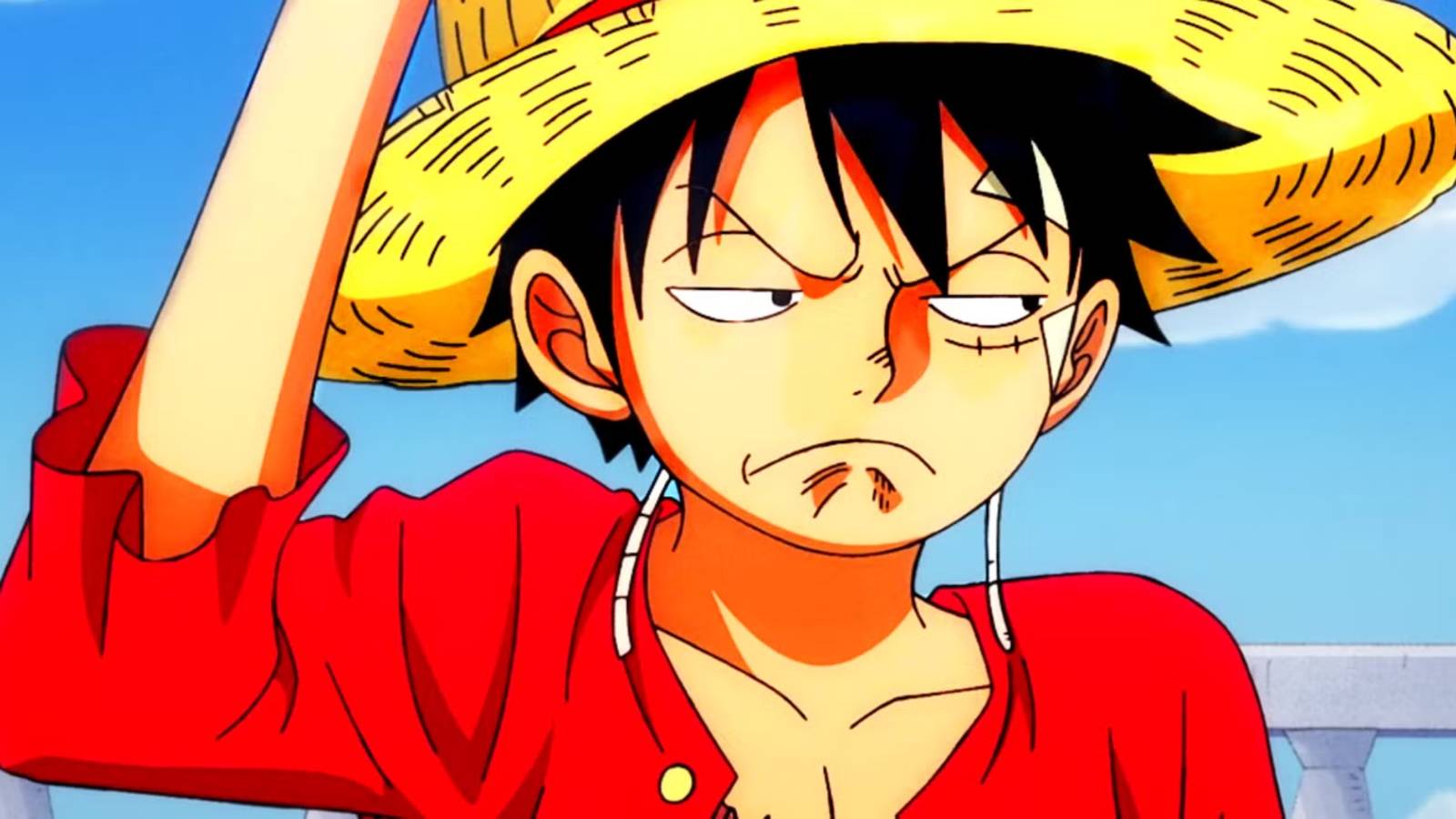 Image: Eiichiro Oda/Shueisha
 Image: Crunchyroll
 Image: Melvin Chavez/Unsplash