Cloudstreet, Tim Winton’s sprawling Australian family epic, has been voted Australia’s favourite book in a poll run by ABC Radio National.
The broadcaster announced over the weekend the results of a nationwide poll to determine a list of readers’ top 100 Australian books.
… %!s()
Markus Zusak’s 2005 novel The Book Thief took second place, while Trent Dalton’s Boy Swallows Universe came in third.
First published in 1991, Cloudstreet follows two working-class Australian families, the Lambs and the Pickles, over their 20 years living together in an old rambling house called Cloudstreet, in postwar Perth.
The story – Winton’s fifth novel and ninth book – won a swathe of awards upon publication, including the Miles Franklin in 1992, and has been a staple of Australian English literature classes for decades. It’s sold hundreds of thousands of copies in Australia alone.
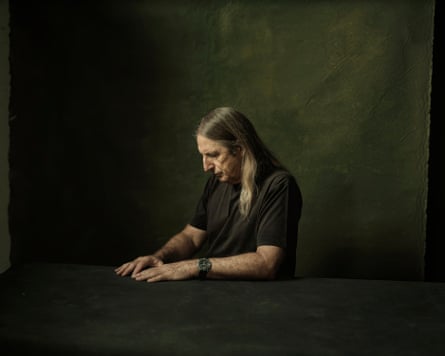
Author Tim Winton in 2024. Photograph: Adam Ferguson
Cloudstreet has topped previous polls on Australian books, including one by the Australian Society of Authors surveying writers on their favourites in 2003, and a subsequent poll run by the ABC the same year, surveying the public. Winton’s novel appeared in a 2019 BBC list of “100 novels that shaped our world”.
The final top 100 in this year’s ABC Radio National poll included adult fiction, nonfiction, young adult fiction, children’s picture books, history and cookbooks.
The Australian Women’s Weekly Children’s Birthday Cake Book made it into the top 50 (at No 22), while Stephanie Alexander’s The Cook’s Companion came in at number 56. RecipeTin Eats: Dinner by Nagi Maehashi made the cut at 96.
Authors Helen Garner, Melissa Lucashenko, Geraldine Brooks, Anna Funder, Peter Carey and Hannah Kent all had multiple books in Sunday’s top 100. Books by children’s authors Alison Lester, Paul Jennings, Mem Fox, Jeannie Baker and Ruth Park appeared in the final 100.
The earliest published work was For the Term of His Natural Life by Marcus Clarke from 1874 (No 80). The most recent were Sally Hepworth’s Mad Mabel and Charlotte McConaghy’s Wild Dark Shore, both published in 2025.
Kate Evans, the host of ABC Radio National’s literary show The Bookshelf, said the list included “audacious literary fiction to historical accounts of who we’ve been and how we might understand all that complicated past, to joyful children’s books, Indigenous stories of both pain and humour, and many, many family stories”.
“This list defies any glib conclusions about how we read – and surely that’s the point,” Evans said. %!s()
Williams scored 26 points as the Golden State Valkyries came back to take the lead at home against the Atlanta Dream.
Gabby Williams scored a game-high 26 points, including four key free throws in the final 78 seconds as the Golden State Valkyries held off the Atlanta Dream 68-64 in game one of the WNBA Finals.
… %!s()
Williams, runner-up to Atlanta’s Angel Reese in Defensive Player of the Year voting, has emerged as an offensive force for the Valkyries in the playoffs and carried the scoring load on a tough shooting night for the hosts, who did not have another player score in double figures on Saturday.
Reese blocks the shot from Williams during the game [Noah Graham/Getty Images via AFP]
The French star took some time to warm up, going scoreless in the first quarter as the Valkyries got off to a tentative start in front of a raucous crowd at Chase Center.
“Once we all started having fun and the excitement got out, we started to kind of find our way,” Williams, who erupted for 16 points in the second quarter, said in an on-court interview.
“There was a lid on that basket tonight, but that’s why we rely on our defence,” she said.
Golden State trailed by one with 1 minute and 18 seconds remaining when Williams seized the rebound off a miss by Atlanta’s Allisha Gray and was fouled by Reese.
Williams made both free throws to put the Valkyries up 65-64 and added another pair of free throws to seal the win with 4.1 seconds left.
“It came down to getting stops and that’s been our bread-and-butter all year,” noted Williams, whose team has allowed 335 fewer points than any other in the WNBA this season. “That’s why we harp on it so much, because we’ve built such great defensive habits.”
Gray, the Dream’s leading scorer, returned after missing two games with a hand injury and scored 19 points, but she was scoreless in the fourth quarter, when Atlanta made just two of their 19 attempts from the floor.
Angel Reese of the Atlanta Dream reacts after the 68-64 loss [Ezra Shaw/Getty Images via AFP]
Reese added 14 points and 12 rebounds, and Rhyne Howard scored 12 for Atlanta.
Atlanta scored just two in an overall eight-point fourth quarter, where Gray was scoreless over the final 10 minutes and Reese scored all of her 14 points in the first half.
“I don’t think they really did anything,” Reese said. “Maybe that was just on me; I wasn’t aggressive enough with the ball and trying to get the ball and get to my spot. I’m definitely going to do a better job of that next game.”
The Valkyries will host game two of the best-of-seven series on Monday.
Both teams are chasing a first WNBA title. The Dream have come up empty in three prior trips to the Finals, most recently in 2013.
The Valkyries, who last year became the first WNBA expansion franchise to reach the playoffs in their inaugural season, are now contending for the title in their second.
Golden State Valkyries players celebrate at the end of game one [Jeff Chiu/AP Photo]
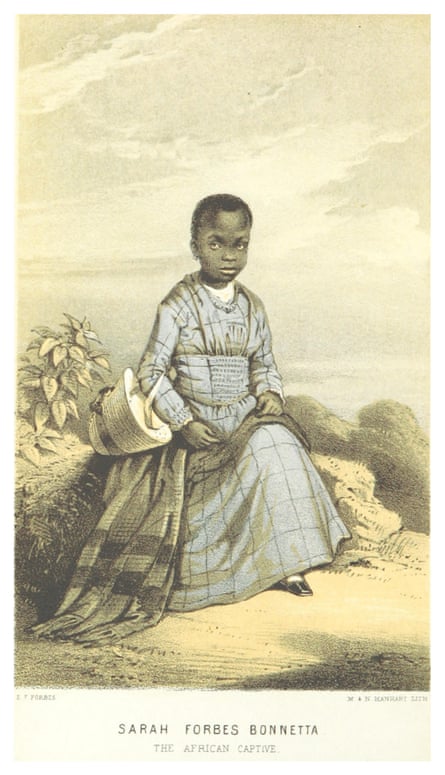
When she was seven years old, Bayo Randle’s great-great-grandmother Sarah Forbes Bonetta was presented to Queen Victoria at Windsor Castle as a “diplomatic gift” from an African king.
Victoria would go on to pay for Bonetta’s education, approve her marriage to one of west Africa’s wealthiest men, and become godmother to her eldest daughter.
… %!s()
But while Victoria took a genuine interest in Bonetta’s welfare, making the orphan a royal protege and meeting with her over the years, their relationship was part of a bigger agenda.
“I don’t think a human being, who has agency, could be ‘gifted’ from one to another, but had she not been gifted to Queen Victoria, would I be here today?” said Randle, a British-Nigerian barrister from London.
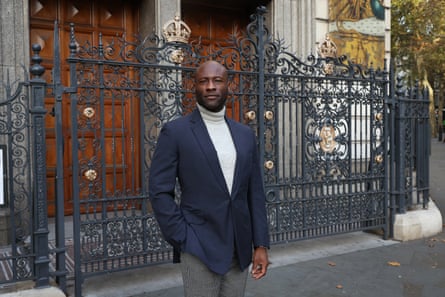
Bayo Randle, Bonetta’s great-great-grandson, is a barrister in London. Photograph: Martin Godwin/The Guardian
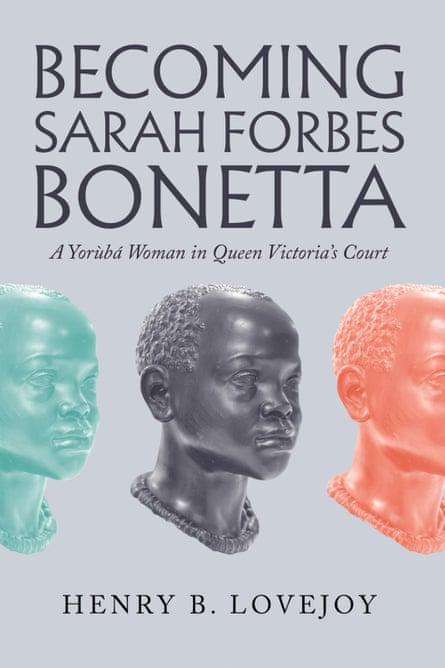
The new book, by a Canadian academic, Prof Henry Lovejoy, charts how Bonetta was brought to England by Frederick Forbes, of the Royal Navy’s West Africa Squadron, which was set up to enforce the abolition of the transatlantic trade.
Born in 1843 in Òkè-Òdàn, south-west Nigeria, Bonetta was originally called Àìná. Her family was killed in 1848 when her town was attacked by King Ghezo of Dahomey’s forces.
Bonetta, then five, is believed to have been captured by the agodjié – the all-female regiment depicted in the Hollywood movie The Woman King – and held at King Ghezo’s court.
The book by Henry B Lovejoy. Photograph: supplied
In 1850, Forbes went to Dahomey – which is now Benin – to petition Ghezo to sign an anti-slavery treaty. The mission failed but Forbes asked Ghezo if he could take Bonetta to England.
Bonetta would go on to live a life of renown, becoming one of the most artistically represented and widely reported African women of her time. But she was never truly free.
Lovejoy’s book describes how, before Forbes arrived in England with her – giving her his own name and that of his ship, the Bonetta – he petitioned for her to be “the property of the crown”.
This meant Bonetta was “effectively indentured to Queen Victoria until age 19” under the post-abolition legal structures, Lovejoy said. Bonetta was then married off to James Pinson Labulo Davies, a merchant and philanthropist, of whom she would write: “I don’t feel a particle of love for him.”
Lovejoy’s research for the website liberatedafricans.org, developed with Kartikay Chadha, documents how, after abolition, more than 700,000 Africans “liberated” from enslavers were forced into indentures of up to 14 years “to pay for the cost of their own freedom” by governments including Britain’s.
Lovejoy claims Bonetta was at the elite end of this bonded labour system, “educated to be a missionary who would Christianise Africa”. In her lifetime her image was exploited as imperial iconography, promoting the idea that British colonialism of Africa was a “civilising mission”.
Bonetta was a famous figure in 19th-century England. Photograph: Alamy
Lovejoy, of the University of Colorado Boulder, said: “Sarah’s imagery was used to project the idea of the queen’s benevolence – at a time when ‘liberated’ Africans are being forced into indentures.”
Nonetheless, when Bonetta attended the 1858 wedding of Queen Victoria’s daughter, the Princess Royal, American abolitionists saw it as proof that Victoria, then the most powerful woman on Earth, believed in equality.
For Randle, a plaster bust of Bonetta sculpted in 1851 by Benedetto Pistrucci, the Royal Mint’s chief engraver, symbolises the story’s “duality”. Randle saw it last year after Lovejoy had tracked it down to a private family collection in his research.
“Who gets to see what their great ancestor looked like as a child, the cultural markings on her face? That is amazing. But at the same time it was a bust prepared for phrenological purposes, within a racist framework, where [Bonetta] was shown as an ‘excellent specimen’,” Randle said.
Randle first learned his family history from his father, Adekunle Randle, a retired lawyer. The family still has the engraved goblet and plate that Queen Victoria gave to Bonetta’s daughter, Victoria, who, with the queen’s help, was educated at Cheltenham ladies’ college.
Lovejoy’s book challenges the myths that Bonetta was a Yoruba princess, that she herself was Queen Victoria’s goddaughter, and that she spent most of her life in England.
Randle, 37, who maintains his family’s ancestral ties with Òkè-Òdàn, welcomes research into Bonetta, who was a gifted linguist, musician, travel writer, educator and leading woman in 19th-century Lagos, until her death from tuberculosis in Madeira in 1880, aged 37.
“Whether [Lovejoy’s] book is comfortable for me is beside the point,” Randle said. “It’s for the advancement of knowledge and how we learn from the past. Where the real discomfort lies is in what [Bonetta] was the symbol of, what she was used for.
“But it would be a mistake to paint her story as entirely tragic,” he added. “My great-great-grandmother was very capable, courageous and dignified through adversity – through the trauma of losing her family, being displaced, and changing like a chameleon to fit into a culture so alien from what she’d known, she thrived. She is an early example of Black Britain.” %!s()
Profits at Condé Nast’s UK arm slumped by more than a third last year, according to figures published shortly after the billionaire family that owns the luxury magazine group and titles from Vogue to GQ ruled out a sale.
… %!s()
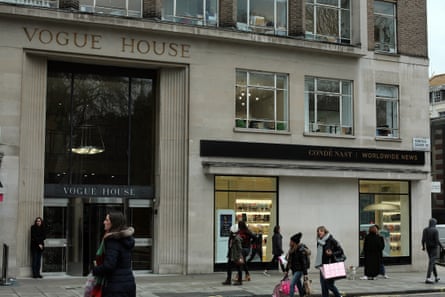
The publisher, which enjoyed a bumper 2024 after booking £64m in proceeds from the sale of its UK headquarters Vogue House in London, saw pre-tax profits excluding exceptional items tumble 36% from £28m that year to nearly £18m last year.
Revenues generated in the UK fell 7% from £75.9m to £70.6m, newly filed accounts showed. However, an 18% increase in international revenues, to £29.7m, helped keep the company’s total revenues almost flat, at £100m.
“Condé Nast remains profitable in the UK for another year,” a spokesperson for the publisher said. “The change in the exact level of profit reflects a period of planned investment in customised client solutions.”
Restructuring costs at the company, which publishes glossy titles and brands including Vanity Fair, House & Garden and Tatler, more than doubled year on year, from £1.9m to £4.3m.
Condé Nast said the latest restructuring charge was “primarily due to severance costs”. Despite the hefty restructuring bill, staff numbers remained almost flat, dipping from 466 to 461 between 2024 and last year.
“There were no large restructures in the UK business in 2025. There were isolated instances of redundancy, but headcount remained flat as hiring continued across the business,” the spokesperson said. “In addition, there have been changes to the pension scheme projections and wage inflation, which also impacted profit for this year.”
Condé Nast had enjoyed a bumper 2024 after booking £64m in proceeds from the sale of Vogue House in Hanover Square, London. Photograph: Martin Godwin/The Guardian
Last week, Steven Newhouse, the chair of the Newhouse family holding company Advance that controls Condé Nast, ruled out a sale of the publishing giant. There had been speculation that the Amazon founder, Jeff Bezos, who owns the Washington Post, could buy the business.
Newhouse made the comment after the abrupt departure of the chief executive Roger Lynch, hired in 2019 to turn around the business, to become the boss of the toymaker Mattel.
“Maybe for a certain class of non-media owner, there’s a prestige to owning media properties,” he told the Financial Times. “But we’ve been a media owner for 100 years. So we’re not in it for the glamour.”
Earlier this year, Lynch described the introduction of Google’s AI Summaries – which often negate the need to click through to source material – as “another sort of death blow” to the way consumers have traditionally searched online and reached media outlets. He said Google searches were “no longer a meaningful driver” of Condé Nast’s business, accounting for only about a quarter of visits to its websites last year.
skip past newsletter promotion
after newsletter promotion
Globally, seven of Condé Nast’s largest brands – Vogue, GQ, the New Yorker, Wired, Vanity Fair, Architectural Digest and Condé Nast Traveler – account for 85% of the company’s revenues.
Newsstand sales and other subscriptions account for about 14% of total revenues, with advertising and “other services” accounting for about 86%.
The publisher’s accounts filed at Companies House show that the highest-paid director - Natalia Gamero del Castillo Calleja, the company’s most senior executive outside the US who resigned last August - took home more than £1.3m.
Earlier this year, Condé Nast announced plans to shutter Self, its women’s health magazine, after 47 years. %!s()
Champion dominates fellow British boxer in London before facing a challenge from IBO champion Hrgovic.
Daniel “Dynamite” Dubois has retained his WBO heavyweight belt with a one-sided and devastating second-round stoppage of fellow British boxer Fabio Wardley in their world title rematch in London.
… %!s()
The 29-year-old champion made a storming start at the O2 Arena on Saturday, and Wardley’s legs gave way within 17 seconds of the opening bell as Dubois floored him with a straight right punch.
Wardley, 31, beat the count and could have been stopped at the end of the first round when he took a further brutal pounding on the ropes but was saved by the bell.
Dubois dominated Wardley during the WBO world heavyweight title fight [John Sibley/Reuters]
There was no escape from the onslaught of blows in the second round as Dubois picked up where he left off and Wardley took punch after punch until the towel was thrown in and referee Steve Gray brought the fight to a close.
“Fabio is a great warrior, coming in for a second time, but it was my time and my era,” said “Triple D”, never a man for long speeches. “I had my intentions, bad intentions, from the beginning.
“Our back was against the wall the first time. This time, we just had to go out there and show that we mean business, and that’s what we did tonight.”
Dubois dealt Wardley his first defeat as a professional in May when he came back from two knockdowns, the first after 16 seconds, to take the title in the 11th round of a thunderous and bloody clash in Manchester.
Dubois knocked down Wardley within the first 17 seconds of the fight [John Sibley/Reuters]
Wardley, promoted to WBO champion in November after Ukraine’s Oleksandr Usyk vacated the title, was acclaimed for his courage and refusal to give in the first time around, but on Saturday, he looked like a shell of the man seen in Manchester.
He now has a record of 20 wins and two defeats with Dubois on 24 wins with three defeats.
“I’ve always thrown myself in with the best competitors out there, the toughest, the biggest, hardest, meanest guys around. There’s no shame in testing yourself against the best,” he said.
“Daniel’s a testament to coming up short and coming again. I’ll be looking to do the exact same thing.
“Boxing is a game of fine margins. It can be done and over in a round or two, or it can go into a big old war like it was last time.”
The match was ended in the second round and Dubois declared the champion [John Sibley/Reuters]
Dubois was previously the IBF champion, losing the title to Usyk in London in July last year before coming back to take the WBO belt from Wardley.
Croatian Filip Hrgovic, the IBF champion after beating the United Kingdom’s Moses Itauma in August, was ringside on Saturday and challenged Dubois to a fight with both belts on the line.
“It was an easy night for Daniel. He did a good job, quick win. So he’s ready to fight me in March, right, Daniel?” Hrgovic said before promoter Frank Warren suggested he might have to deal with other candidates first.
Dubois beat the Croatian in June 2024 to take the interim IBF belt and was then upgraded to champion when Usyk vacated his title.
“I want to have a rematch with him. I want to get my old belt back and rule the division,” Dubois said.
IBF champion Filip Hrgovic holds his belt in the ring after the fight [John Sibley/Reuters]