A forestry technician uses a drip torch to set a prescribed fire near a grove of giant sequoias. Credit: National Park Service/Anthony Caprio
A new study found that giant sequoias were nearly four times as likely to survive extreme wildfires in forests managed with prescribed burns, which decrease tree mortality. The work is published in the journal Nature Communications.
… %!s()
Giant sequoias are a unique species found naturally only on the western slopes of California's Sierra Nevada mountain range. These trees, which can reach more than 300 feet (91 meters) in height and more than 30 feet (9 meters) in diameter, are keystones of the ecosystem and serve as carbon sinks, water filters and structural habitats for birds, insects and small mammals.
Recent wildfires have caused far more giant sequoia deaths than usual, threatening the trees' future. Prescribed, or "controlled," burns help the trees by thinning underbrush, dead wood and other dry fuels, reducing the likelihood of mortality from high-intensity wildfires.
Tracking losses across 19 groves
Researchers analyzed data on 26,403 giant sequoias across 19 groves in Sequoia and Kings Canyon National Parks in the wake of the 2020 and 2021 fire seasons, when a record 6.8 million acres (2.8 million hectares) burned across California.
During those two years, 19% of the total mature giant sequoia population across the range was destroyed.
Left: An aerial photo showing high sequoia mortality in an area that had not experienced fire in many decades, and high sequoia survival in an area treated with prescribed fire in 2012. Right: General Sherman, a giant sequoia and the largest tree in the world by volume, towers over the forest in Sequoia National Park. Credit: National Park Service/Anthony Caprio (Left), Samuel Grinis (Right)
Remote sensing sharpens the case
The team combined lidar, stem maps, high-resolution imagery and modeling techniques to estimate giant sequoia mortality in relation to forest management practices. It found that prescribed burns saved roughly 1,800 giant sequoias.
While prescribed burns are widely considered among the best ways to protect giant sequoias, evidence to date has been primarily anecdotal. This study showed the value of high-resolution remote sensing for species-specific conservation efforts, with applications for old-growth forests worldwide.
Publication details
Dan J. Dixon et al, Previous prescribed burns saved thousands of ancient sequoias during historically unprecedented wildfires, Nature Communications (2026). DOI: 10.1038/s41467-026-75418-6
Bachelor's in mathematical biology, Master's in creative writing. Well-traveled with unique perspectives on science and language.
Full profile →
Citation:
Record fires killed nearly 1 in 5 mature giant sequoias, but controlled burns can boost survival (2026, July 21)
retrieved 22 July 2026
from https://phys.org/news/2026-07-mature-giant-sequoias-boost-survival.html
This document is subject to copyright. Apart from any fair dealing for the purpose of private study or research, no
part may be reproduced without the written permission. The content is provided for information purposes only.
%!s()
A trader works on the floor of the New York Stock Exchange (NYSE) in New York City, on April 4, 2025.
Timothy A. Clary | Afp | Getty Images
Many investors remain enamored with the so-called "Mag 7" and the tech-led U.S. stock market. A history lesson may be in order so they don't get hobbled by mistakes that sank portfolios in the early 2000s.
… %!s()
While there are differences in today's market, the phase we are in resembles the period before the dotcom bubble burst in some important respects. During the dot-com heyday, many market participants became overly concentrated in the technology sector and ultimately lost big.
"People get caught up in the hype," said Seth Hickle, chief investment officer at Mindset Wealth Management in Indianapolis, Indiana. Many investors bought into the tech sector after enormous gains had already happened, ignoring valuations and overestimating their risk tolerance until volatility showed up in their portfolio, Hickle said.
The warnings are being voiced every day. JPMorgan CEO Jamie Dimon told CNBC Contributor Wilfred Frost on Monday that he wouldn't buy stocks at these valuations. (Dimon said he wouldn't buy long-dated treasuries either.) Warren Buffett recently told CNBC's Becky Quick that "It's tough to find values when everybody is preferring gambling."
Financial advisors say the first step is to have a strategy — and recognize that chasing gains isn't one.Many investors during the dotcom years were content with the latter. A strategy for investing has to be set before you invest, and it has to include a plan for cashing out some of your chips. To mitigate bad decisions based on emotions, you've got to know what you're buying, why, and when it makes sense to get out, said Dan Sudit, partner at Crewe Advisors in Salt Lake City.
Financial advisors caution that there is a tendency among investors to repeat the mistakes of the past. Technology is core to the stock market and its role in future long-term growth will continue, but there are ways to gain exposure to technology high fliers without repeating the mistakes of the dotcom era.
S&P 500 funds are meaningful tech bets
One of the problems during the dotcom era was that investor portfolios became too tech-heavy. The same could happen today if people aren't careful. AI is quickly reshaping society, and many investors want to buy stocks or funds to benefit from its expected growth. However, many investors already hold top-performing stocks within their core portfolio — and some don't even realize it. Aaron Ulrich, owner of Integra Financial Planning, in Prospect, Kentucky, says clients often ask him about well-performing stocks like Nvidia, Tesla and Apple without knowing they are part of their diversified portfolio.
Instead of trying to pick the next big winner, or investing in a single sector ETF, investors should diversify. For many investors, owning a core ETF that tracks the S&P 500 Index is a good starting point because it has "meaningful technology exposure" and also provides diversification, said Shannon Saccocia, chief investment officer of wealth at Neuberger Berman in New York. Outside of U.S. large-cap stocks, investors should invest a portion of their portfolio in small-cap stocks, international companies, emerging markets and energy companies, Saccocia said.
A diversified strategy is better than trying to pick the next wonder, Ulrich said. "We don't know the next Nvidia. The idea that we can, today, know the one stock that's going to be up 2x, 5x or 10x over the next two to five years is impossible. Those same stocks can go down considerably," Ulrich said.
Don't buy what you can't afford
While the prospect of making gobs of money by investing in a particular sector can be exciting, Ulrich talks with clients about their time frame and risk appetite, helping them understand how much above their daily needs they can afford to invest. Their long-term goals also factor into these decisions.
When the dotcom bubble burst, many people lost substantial savings they couldn't afford to lose. At that time, Sudit lived near a retired couple who lost a significant portion of their savings by investing in dotcom stocks. The husband put about half of the couple's investable assets in the technology sector, and when the losses started piling up, they had to downsize their home and tighten their budget, meaning they couldn't afford vacations they'd dreamed of, new cars, or to help grandchildren with education. People have to be careful not to let excitement about a particular sector get in the way of reason, Sudit said. "You may have to let opportunities pass because you can't afford the massive risk."
Limit thematic, sector investing to 20% of equity portfolio
Some investors are drawn to investment themes. If that's the case, they can look at investing thematically, but only after they build a core equity portfolio. Around 80% of an investor's equity exposure — a figure that depends on age, time horizon, risk tolerance and other factors — should be well diversified, Hickle said.
To get broad-based exposure, the core portion of the portfolio might include ETFs that follow the S&P 500 and the small-cap stock-focused Russell 2000. The Nasdaq 100 is also a popular core holding — it excludes financials and is technology-focused (close to 70% of the fund's portfolio is tech sector, as of June 30).But it also has considerable stock overlap with the S&P 500,so be aware for diversification purposes.
Stock Chart IconStock chart icon
The Russell 2000 performance vs. the S&P 500 in 2026.
Then, with the remaining 20% of the equity exposure, an investor can choose investments that help express the themes they are most interested in. Some clients do this by picking individual stocks. Another option is to look at ETFs that focus on specific themes or sectors, such as the State Street Select Sector SPDRs, which break down the S&P 500 by industries including financials, healthcare and energy. When buying thematic ETFs, which now include many funds targeting AI and other tech innovations (space stocks are a recent example), investors should try to ensure there's not too much overlap with their core portfolio, Hickle said.
"I would never just own one sector ETF because you could be wrong," said Neale Ellis, founding partner and co-chief investment officer at Fidelis Capital in Dallas.
Someone who wants additional exposure to high fliers might also consider options that offer some upside, but also limit their downside exposure. They could consider, for instance, hedged ETFs such as the JPMorgan Hedged Equity Laddered Overlay ETF (HELO), T. Rowe Price Hedged Equity ETF (THEQ) and Parametric Hedged Equity ETF (PHEQ).
Consider the tax effect
Investors who want exposure to high fliers often forget they are growth investments, not income-producing, so they'll produce meaningful capital gains, according to Sudit. Short-term capital gains are taxed according to ordinary income tax brackets. After owning the investment for a year, you'll be taxed at long-term capital gains rates.
It's important to consider taxes because selling a popular technology stock or fund could result in a large tax hit, though it still might be a prudent move if you're in over your head in risk.
Sudit had a client who, during the dotcom period, invested $5,000 in a high-flier dot-com stock, without consulting an advisor. He hoped the growth would give him funds to buy a sports car within the next year. He got his 10x return, but the stock appreciated so much that selling would have meant huge capital gains. He didn't take chips off the table, and the company went belly-up. In this case, the client could afford to lose his initial investment and the paper gains, but that's not true for everyone, so investors have to be mindful.
There may be options for tax-loss harvesting. This involves selling securities at a loss to offset capital gains or lower taxable income, resulting in a reduced tax liability. Even if you have a tax bite, it could still be worth selling an investment that's overly risky, Ulrich said. "You don't want to hold onto something that you know is not working. Whether it's up or down, if you have concerns about your level of risk inside your portfolio, it doesn't make sense to keep holding that so you effectively take on more risk."
With just two weeks to go until Spider-Man: Brand New Day, today brings the film's final trailer — which contains a few new shots from the upcoming blockbuster.
… %!s()
If you've been checked out of the MCU for a while, or can't remember what happened back in Spider-Man: No Way Home, the first half of this trailer acts as something of a quick-fire recap. We see a young-looking Tom Holland meeting best pal Ned and dating girlfriend MJ, before both are made to forget his existence. (Tom Holland and Zendaya have great chemistry for some reason! Who knew.)
If you're looking for all-new shots, however, the trailer has only a few. There's a snippet more of Bruce Banner in full Hulk mode ("No Banner!" he roars. "Only Hulk!"), and a new quip from Spider-Man as he takes on a cluster of ninja monks from criminal group The Hand ("Could we do this one at a time, please?!"). The trailer then concludes with a fun moment from Ned, who realizes that Spider-Man is in the building... just as he notices the superhero standing right in front of him.
There's clearly still a lot from the film that Marvel and Sony are not showing — and with this being described as the final trailer, it really does feel like the film's promotional campaign has now revealed everything it's going to ahead of the movie's launch in theaters on July 31.
On the one hand, some fans will undoubtedly be disappointed that this final trailer did not show more. But with the film so close and numerous secrets still under wraps, perhaps the time has come to leave the remaining answers for your first viewing.
Only then will we find out who Sadie Sink is playing, who the real villain of the film will be, whether Ned and MJ will get their memories back, and where exactly the movie will leave Peter Parker ahead of Marvel's impending Avengers: Doomsday and Avengers: Secret Wars.
All of that said, there's still plenty to chew over as the days tick down until the movie's launch. Only this morning, director Destin Daniel Cretton revealed that he was keeping the identity of Sadie Sink's character a secret until fans see the film for a "very real reason" that he believes fans won't "get mad at," despite all the secrecy. The mystery behind who the Stranger Things alum is playing has dominated online conversation around the film to date.
Sink has been almost entirely absent in trailers (you can spot her briefly in today's trailer, though in a re-used shot where she's completely obscured beneath a large coat and hood). Still, Sink has now begun giving interviews on Spider-Man: Brand New Day's promotional tour, with rather amusingly tight-lipped results. Online, however, most fans are now pretty convinced that Sink has been cast as X-Men star Jean Grey.
As for the movie's star, Tom Holland recently revealed that the film's title would only make sense in "the final frame of the movie," something Cretton has since backed up. "The title, to me, does reflect where he ends up," the director acknowledged. "The journey of this movie is about searching for that feeling of a brand-new day. I don't think he really has that feeling in the beginning of this movie."
The impact of heatwaves is two-fold for bumblebees.
UK species are adapted to our historically cooler climate - with fat, furry bodies that help them retain heat and powerful flight muscles that warm them as they fly.
… %!s()
But in a heatwave their muscles generate more heat, while their thick coats and round bodies make it harder to cool down.
Dr Richard Comont, the Trust's science manager, says that once air temperatures reach around 28C to 32C, UK bumblebees can start to struggle to fly without overheating. If they cannot fly, they cannot forage.
"They actually cook themselves from the inside out," says Comont. "Once their internal body temperature is much above 40C, they literally start dying, they start keeling over."
The BeeWalk data shows in 2022, when the UK had three official summer heatwaves and temperatures reached 40.3C, population numbers dropped significantly.
Red-tailed, buff-tailed and common carder bumblebees - three of the country's most common species - peaked well below normal levels - down 20%, 25% and 35% respectively - before dropping further into autumn as colonies struggled.
The effects appeared to last beyond that summer. BeeWalk data showed overall queen numbers were below average in March, April and May 2023.
Scientists stress that warm, sunny weather is not automatically bad for bumblebees. Previous warm years have been good for some species, particularly those with more southerly ranges.
The problem is extreme heat and drought. As well as their overheating bodies, the other issue for bumblebees is dwindling supplies of food.
Colonies depend on workers bringing back a steady supply of nectar and pollen through the summer. If flowering plants begin to dry up, they produce less.
Dr Paul Williams, a bumblebee expert at the Natural History Museum, says foraging is an energy calculation for bumblebees. The nectar return has to make the expenditure of energy worthwhile. As he puts it, they need to "make a profit".
They cannot afford to waste energy searching dried-up flowers for nectar and pollen that is no longer there.
If they cannot find enough food, larvae develop more slowly, colonies grow less strongly and fewer new queens may be produced for the following year.
Rising global temperatures, as a result of climate change, has put the UK on course for more frequent and intense heatwaves.
Conservationists say the best way to help is by creating more flower-rich habitats, so bumblebees can find food even as the climate becomes more extreme.
Dr Sarah Beynon is an insect expert whose west Wales farm is managed for wildlife as well as food. She has planted meadows, willows, hedgerows, tussocky grasses and late-flowering crops to give insects food through the summer.
"When we came, this farm was a wildlife desert," she says. "In 10 years, it's become a nature reserve."
Her message is that people do not need acres of land to help. A pot of native wildflowers on a doorstep or windowsill can act as a small refuelling stop for insects moving through a human-dominated landscape.
"Your flowerpot is a service station," she says. "It's somewhere to rest, refuel and carry on."
Dr Richard Comont adds that putting in a pond - however small - and shade can also help.
Flowers growing near water tend to produce nectar with more moisture in it, he says. Bumblebees cannot collect water in the way honeybees do, they get most of the liquid they need from nectar, so wetter nectar can help make colonies more resilient in hot weather.
Whilst planting dense shrubs gives bumblebees places to escape the heat of the sun, and can allow them to move between flowers through cooler patches of air. %!s()
Did you get to see the 2024 film Civil War, with its dystopian depiction of a present day USA in the midst of a violent meltdown?
… %!s()
What made it such an effective thriller was that it all seemed so frighteningly real. Although the two sides in that civil war were fictitious, it hit a raw nerve precisely because of the very obvious divides that scar modern day America.
But interestingly it was actually written and directed by a British film-maker, Alex Garland, and he expressed worries about his home country, as well as the US. In both countries, he told the Guardian, "there's a lot to be very concerned about".
He's not alone. If you are an avid user of social media, you could almost believe that we are a nation disunited enough to have a full-on civil war of our own. And even away from the exaggerated adversarialism online, there are plenty of people worried that Britain is gripped by uncontrollable rage.
It's a sense of discord that Britain's new prime minister, Andy Burnham, seems to recognise. Since announcing his run for the Makerfield seat in May, he's repeatedly urged Britons to forget about party labels or factional identities and instead unite around pride in their local area. "Place first, not party first", is how he puts it.
And as he entered Downing Street on Monday, he called for a "new national sense of unity, of common purpose and positivity".
But it's worth asking: just how divided really is Britain?
Common Ground
Evan Davis travels across the UK exploring the forces that are driving the UK apart, and he hears ideas to improve our sense of "social cohesion".
Listen Now
Some talk as though the population is ready to wield the pitchforks; that we are close to social breakdown; that a small spark could lead to a serious fire.
Last year, a commission co-chaired by the former Home Secretary, Sir Sajid Javid, warned in a report: "The bonds that hold society together - civic participation, and a shared sense of belonging - are under growing pressure."
Well, I have just had the privilege of spending a month journeying - literally and figuratively - through some of the divisions that define modern Britain, for a Radio 4 series.
Is there any common ground left in the country that Burnham has now inherited - or are we polarised to the point of no-repair?
A defining split
For a long time, Britain had a clear, defining split: social class. What kind of job you had, how you spoke, what time you had your evening meal, what you watched on TV, how you voted… it was all pre-determined by your working or middle class background.
Today, that has got a lot more complicated with a decline in the number of jobs that would have been regarded as "working class", and a big rise in the number of young people going to university from those backgrounds. That's not to say it isn't still there.
But probably the most obvious faultline in Britain and other western countries now is in values, with a marked difference between two sides: progressives on one side, and social conservatives on the other. If we have a civil war any time soon, it'll be the Allied Readers of the Guardian versus the United League of GB News Viewers. That schism is more clearly driven by age and education than it is by class.
Image caption,
Evan travelled across the UK meeting people, including meeting English‑language students, one of their sons, and their teacher
This clash defines politics at the moment, and manifests in rows about "woke" values, patriotism, and immigration. And what makes it so intense is a feeling, held by some on both sides, that the other side is some kind of existential threat to their vision of what society should be.
Because this is such a clear schism, we commissioned polling from the More in Common research institute (covering Great Britain, not Northern Ireland).
We asked respondents if they prefer living in communities "where more people come from different cultural backgrounds", or "where most people come from the same cultural background". We found a population split down the middle: 53% prefer a diverse community, 47% said they preferred a more homogenous one.
It poses a challenge for Burnham: it's much harder to settle a national argument where there is a 50-50 divide, than where one side dominates completely.
On the specific question of immigration, however, the country looks more united. Our poll found that about three-quarters of Britons thought immigration was too high. Burnham himself has said that net migration was "way too high" under the Conservative government, and said he'll try to "find the right balance" on the issue.
Faultlines
But that's not the only faultline cutting across British society. From my conversations around the country, I heard a list of other, quite distinct concerns. These are often bound up under one general heading of "polarisation", but it's been illuminating to unpack them.
One specific worry - most keenly felt on the right - is about social integration. It is whether in some cities, there are communities of different culture, ethnicity and even language, residing right next to each other but living totally separate lives. We saw that voiced in Leicester, the city with the highest share of people who speak a main language that's not English.
Jason, a 54-year-old window installer, has watched the city undergo this change, and has made Hindu and Sikh friends. But Jason, who is white British, also has his complaints, and says that Muslim families in the area tend to turn down his services. "They do stick to their own."
He says there's one part of the city he now stays away from, after he was racially abused last year by a group of men in a car "calling me a white so-and-so". And he finds the language barrier particularly difficult. "Sometimes it's very hard to take an inquiry on the phone. You're doing a quote on the windows and you just really can't communicate."
And then there's another worry - perhaps felt more keenly on the left - about what some see as rising levels of racism and violence. From Southport to Southampton, racial tensions have erupted on the streets in the last few years.
Image source, SOPA Images/LightRocket via Getty Images
Image caption,
From Southport to Southampton, racial tensions have erupted on the streets
Hannah Henderson, who runs a dog-friendly coffee shop in Southampton, says she was recently driving with her daughter when they passed a hotel that houses asylum seekers. "There was a protest happening… people with the St George's flags around their shoulders… police lining up. She felt really unsafe. She's twelve. She didn't really understand, why would people be so cross?".
And then there's the divide between different places. Some residents of deprived, post-industrial towns - areas that have suffered from the disappearance of manufacturing and mining - feel a quiet frustration towards larger, economically flourishing cities. Those smaller towns tend not to have a university, and they tend to have a run down high street, giving a visual sense of decline. Places like Wigan - in Greater Manchester, Burnham's stronghold - often languish next to the bigger cities in whose shadow they sit.
Image source, Topical Press Agency/Getty Images
Image caption,
Miners leaving the Taff Merthyr pit having spent 24 hours on strike below ground
This is a point made by Fiona Hill, the daughter of a coal miner from Bishop Auckland who later moved to Washington DC to become a senior White House adviser. Her book, There's Nothing For You Here, is named after the advice her father gave when she left school in 1984.
"The reason it's called 'left behind' is because you look at health outcomes, education, transport, access to amenities… and all of the [towns] that we're talking about are left behind," says Hill, who is now chancellor of Durham University. "Certainly they're not on the same level as… the flourishing city centres in Manchester, Liverpool, and absolutely not at the same level as London."
Sharing too little
Another, related concern is that we simply share too little these days: we do things at home alone; we don't go to church together each Sunday; we barely go out to the pub like we used to.
And on the national level - in England at least - there's only a vague sense of identity. Yes, most of us might enjoy watching the national football teams. But is that all our sense of nationhood consists of now? Even the flag - and its place on lampposts and signs - has become divisive.
Playwright James Graham thinks that a nation is largely defined via "the story it tells itself" - and parts of England, he says, feel excluded from the national story.
"Some people get bigger roles than others in that story, historically," he says. "If you see yourself on screen or stage, or in film or books or newspapers, if you feel like you're being seen and you're being heard and you feel part of a story, that does temper some of the natural bitterness and resentment that you feel when your economic situation isn't quite so good."
It all suggests Britain is a nation not quite at ease with itself and with a lot to fix.
Common ground
That being said, we found a lot of common ground talking to people around Britain; reasonable folks dispirited by the problems they observe, but ready to navigate their way through them constructively. For every riot, there are volunteers who'll come out the next day to clean up the mess.
Often there's a sports team or community centre that becomes a focal point for neighbourly spirit. At Grimsby Town Football Club, we heard from Christine Green, who started volunteering for the club during a difficult period in her life. "I was going through a divorce and… needed something to occupy my time and my mind so I'm not focusing on negative stuff", she remembers.
She lives in the deprived East Marsh area of Grimsby, a neighbourhood she says is often derided as a place of crime and unemployment. It is an image she doesn't recognise. "I know the person next door and I know the person across the road. My mum lives the next block up and my daughter can take the dogs for a walk. That's nice to me - not living in a secluded house where you've got no idea who anybody is around you."
Lord Stockwood, the Grimsby-born entrepreneur who bought the football club in 2021, says: "In an increasingly complex and crazy world, this is a place of permanence and love and memory for me and for many others."
Indeed, in our poll, it was encouraging that most respondents didn't seem to want to burn their locality down. We asked respondents if the city, town, or village they lived in was a good place to live and work. A full 70% thought their location was "very good" or "somewhat good" as a place to live. (It was less than that, only about half, who thought it was a good place to work.)
But is 70% good enough? You can take a glass two-thirds full or a third empty view of that figure.
Place is a unifying force
I do wonder if one way of finding common ground will be a renewed focus on the idea of "place". Increasingly, there's a push - from politicians and academics - to help people forge (or re-forge) connections to their local areas.
Certainly, Burnham seems to agree. When we embarked upon this journey, we didn't know he would be entering No 10. What fortuitous timing. He must have spent more time outside London in the years running up to his premiership than any other modern prime minister - and it's fascinating to see where that's landed him.
Image source, Getty Images
Image caption,
Andy Burnham has given his first speech as prime minister
Last year, he told the Institute for Government think tank: "Place is a unifying force. However people vote, they are united by a desire to see the place where they live move forward."
From the capital, the thinking goes, it's easy to think that if we can make Britain work, then each community will flourish. It might be that we really need to do it the other way round - if we can make each community flourish, then the country will work.
That's not straightforward by the way. As Burnham knows, it has been easier to revitalise Manchester than the many towns spread around it. But creating social cohesion where it is lacking, is surely a defining mission of Burnham's premiership.
Top picture credit: Getty Images
BBC InDepth is the home on the website and app for the best analysis, with fresh perspectives that challenge assumptions and deep reporting on the biggest issues of the day. Emma Barnett and John Simpson bring their pick of the most thought-provoking deep reads and analysis, every Saturday.Sign up for the newsletter here
Get in touch
Are you personally affected by the issues raised in this story? %!s()





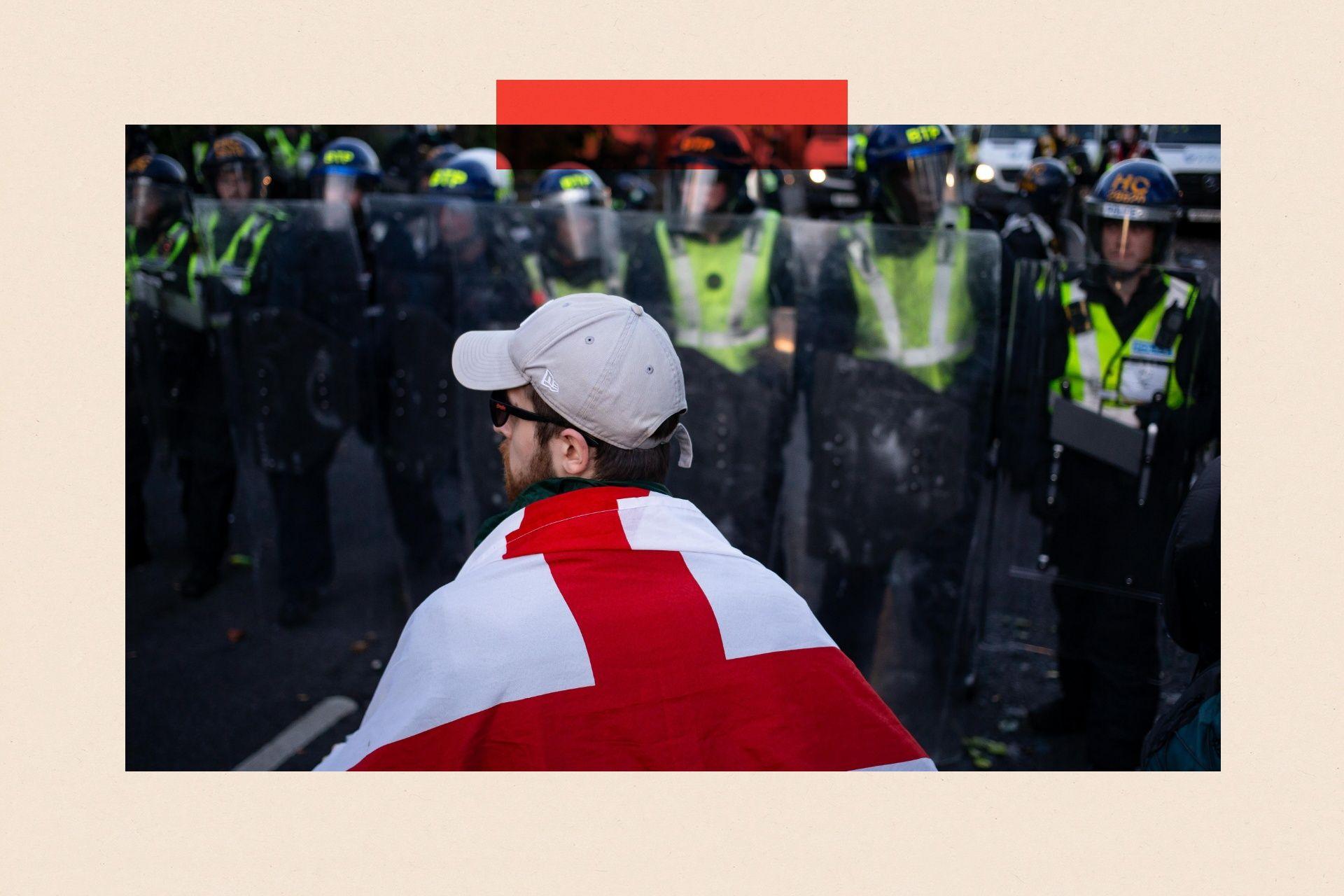 Image source, SOPA Images/LightRocket via Getty Images
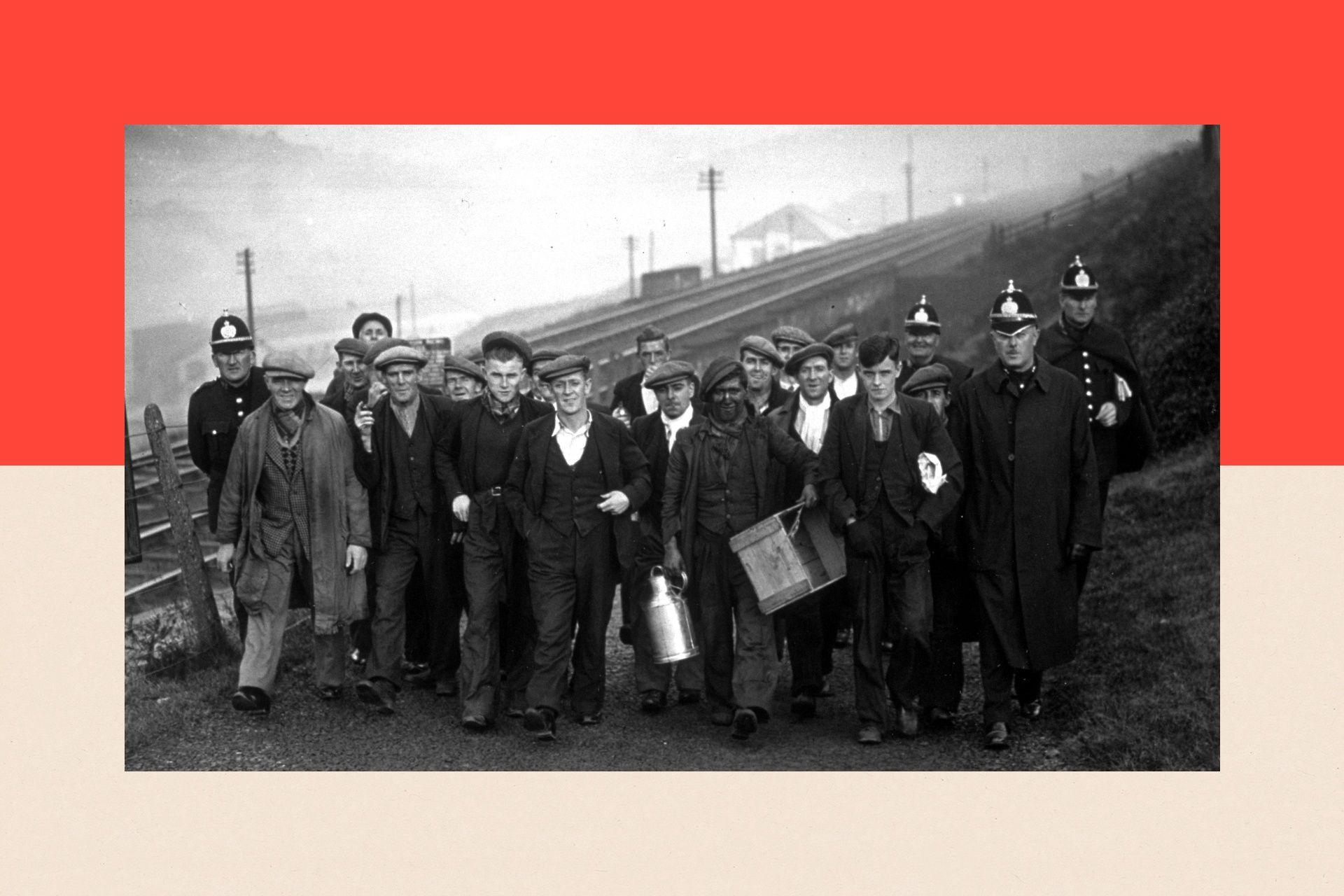 Image source, Topical Press Agency/Getty Images
 Image source, Getty Images
