House of the Dragon unceremoniously executed one of its biggest characters last night in episode 6. The killing happened in almost an identical way to how another big character died this season, albeit not after someone fell off a dragon.
… %!s()
Both Jace and now Criston Cole were pumped full of arrows, but Cole’s death was especially significant, given that he’s been such a huge part of the show since the beginning and has endured one of its most dramatic transformations. But it’s a strange situation. We saw someone kill Cole that…almost no one actually recognizes, short of lore enthusiasts. So, who was that woman who killed Criston Cole with two arrows to the gut and one to the face?
That is Alysanne Blackwood, played by Annie Shapero, and not just some random soldier. She’s known as “Black Aly,” a famous archer and the aunt of Lord Benjicot Blackwood. She was also the second wife of Lord Cregan Stark of Winterfell.
House of the Dragon
Photograph by Theo Whiteman/HBO
Here execution of Cole is a change from the book, as there Cole is shot by three Blackwood archers, but they’ve been turned into just Aly for the show. I don’t believe her eye black is in the book, but it’s not just to look cool; it’s for more precise archery, giving better vision during the day, as we see with NFL football players. She definitely did not “miss” his head with those first two arrows, which were no doubt placed on purpose.
MORE FOR YOU
House Blackwood has not been a terribly major house in at least the Game of Thrones shows. They’re from the Riverlands and depending on how things go with House of the Dragon’s faithfulness to the books, they have another significant moment later, but I won’t spoil that one since we’re not there yet.
There are complaints from book-readers about Cole’s death, not about Alysanne being the one to shoot him, but rather a missing quote that was quite cool. That’s Pate saying “I’ll have no songs about how brave you died, Kingmaker. There’s tens o’ thousands dead on your account.” It references a line Cole said earlier, so it would be sort of weird to hear it here with no way for Pate to have heard that, but some fans are upset it was missing all the same. Rather, there was a different, I might argue better, quote from young Oscar Tully, “I made a promise to the dead Cole, I promised I’d build a sept out of traitors’ bones. I don’t have near enough bones yet.”
All in all, I thought this was handled well, at least as someone who is a non-book reader. Cole didn’t really deserve better after all he’d done, and becoming a legendary warrior with a glorious death wasn’t something he’d earned. Great scene.
You're currently following this author!
Want to unfollow? Unsubscribe via the link in your email.
,
Jason Guerrasio
You're currently following this author!
Want to unfollow? Unsubscribe via the link in your email.
… %!s()
,and
Jordan Pandy
You're currently following this author!
Want to unfollow? Unsubscribe via the link in your email.
Simone Biles, Bella Hadid, and Elon Musk all have homes in Texas.
Getty Images
Texas is popular for many reasons.
The second-largest US state is the birthplace of the iconic musician Beyoncé Giselle Knowles-Carter, NFL star Michael Strahan, and actresses Selena Gomez and Reneé Zellweger.
It's also home to a beloved football team, the Dallas Cowboys, and internationally famous festivals, including South by Southwest.
Beyond its cultural significance, Texas has a reputation for its affordability, largely due to its relatively lower cost of living and absence of state income tax. This personal finance appeal, combined with a business-friendly environment, has attracted entrepreneurs and their companies over the years.
US Census Bureau data shows that Texas population growth has declined nationwide; Texas is still a leader in attracting movers. From July 1, 2024, to July 1, 2025, Texas had the highest number of new residents, adding 391,243.
Several celebrities are among the hordes of movers to Texas. This reflects a broader trend of wealth realignment in the United States, where even the proverbial Joneses are moving to areas where their money goes further, and the weather is more favorable.
Consider supermodel Bella Hadid, who moved to Fort Worth, Texas, or comedian Roseanne Barr and podcast host Joe Rogan, who have decamped from LA to Austin in recent years.
Business Insider has compiled a list of 21 notable celebrities and businesspeople who have moved themselves — and in some cases, their businesses — to the Lone Star State.
The list is presented in alphabetical order by last name.
Roseanne Barr traded Hollywood for 30 acres in Texas Hill Country.
Roseanne Barr.
Araya Doheny/Getty Images for DailyWire+
Roseanne Barr's son, Jake Pentland, told Us Weekly in June 2025 that his famous mother had traded the Hollywood Hills for Texas Hill Country, a region in central Texas that includes cities like Austin and New Braunfels.
"My mom lives with me, my wife, and my two daughters — she's the best grandma," Pentland told the magazine.
In a separate interview with Fox News Digital, Barr said living in Texas is a "dream come true."
"I'm doing a lot of mowing. I've got a really fantastic tractor out here, and I'm mowing," Barr said. "The only problem is I don't clear the trees quite as good as I should, and I'm always hitting a tree and knocking it over, and it always hits me in the head."
Simone Biles moved back to her hometown.
Simone Biles and Jonathan Owens at The ESPYs award red carpet.
ANGELA WEISS / AFP
Before becoming one of the world's most decorated gymnasts, Olympian Simone Biles grew up in the Houston area with her grandparents.
This year, Biles and her husband, NFL safety Jonathan Owens, announced their return to Texas after Owens' contract with the Chicago Bears expired.
After roughly three years of construction, the couple settled into a large, lavish lakefront mansion in Springfield, Texas — about three hours north of Houston — Realtor.com reported in February.
Haylie Duff said it took a while to realize she could still have an acting career without living in LA.
Haylie Duff.
Alberto E. Rodriguez/Getty Images
A native of Texas, Duff decided with her fiancé Matt Rosenberg to pack up the kids and leave California once the pandemic hit.
At first, she was nervous that the move would hurt her career.
"I think so much of my fear of moving out of Los Angeles was that my career was there and that I would never work again or something like that," she told Fox News Digital in 2022. "And, you know, I think this has all taught us that Zoom certainly can be a very powerful tool. And we can, you know, very luckily for me, get to continue to work from here, and I get to live near my dad. I haven't lived, here, near my dad in a really long time."
Scott Eastwood loves living in Texas because it 'slows life down.'
The son of Clint Eastwood, Scott has been methodically building his own career, showing up in the "Fast and Furious" franchise and Guy Ritchie movies.
During his downtime in Texas, he does everything from fishing to hunting.
"I think that's why people who come to Texas really can fall in love with it," he told Flaunt in 2021 from his home in Austin. "There's more community, people are more neighborly, people are nice. It slows life down a little bit. It's not this fast-paced living in a big city like New York or Los Angeles."
Adrian Grenier's acting career is thriving in Texas.
Adrian Grenier speaks onstage during SXSW.
Gary Miller/The Hollywood Reporter via Getty Images
In 2020, "Entourage" and "The Devil Wears Prada" star Adrian Grenier left the Hollywood Hills for a 46-acre sustainable ranch in Bastrop, Texas, a city about 40 minutes southeast of Austin.
While in Texas, Grenier has continued acting and most recently appeared in the short film "Self Custody," about a struggling father who loses a cryptocurrency fortune. The film was shot in Austin, near his home.
In an interview with Page Six in March, Grenier said Texas' burgeoning film and television industry will keep him in the state.
"There's $2.5 billion that the Texas state government just put into film and television projects in Texas," Grenier said. "They're building three movie studios not too far from me. I don't see any reason why we wouldn't just continue to film in Texas."
Bella Hadid said she moved to Texas for her health.
Supermodel Bella Hadid.
Kevin Mazur/Getty Images for Teton Ridge
After spending most of her life jet-setting around the world trying to conquer the modeling industry, Hadid decided recently to take some time away from the spotlight.
In early 2024, she spoke to Allure about moving to Texas to focus on her mental and physical health (she was diagnosed with Lyme Disease in 2013), and be with her then boyfriend, cowboy Adan Banuelos.
"Just as I have styled myself for years now — which I still do — I love being able to do my own hair and makeup, be happy with how I look, and get ready with my girlfriends here in Texas," Hadid told Allure. "We have the best time, and I never feel like I need to do too much."
"For the first time now, I'm not putting on a fake face. If I don't feel good, I won't go. If I don't feel good, I take time for myself. And I've never had the opportunity to do that or say that before," Hadid added. "Now, when anybody sees me in pictures, and they say I look happy, I genuinely am. I am feeling better; my bad days now were my old good days."
Woody Harrelson is lobbying to make Texas a hub for film and television production.
Woody Harrelson.
Rodin Eckenroth/Getty Images for 20th Century Studios
Harrelson lived in Hawaii for many years before moving back to his home state of Texas in 2023.
Now in the Lone Star State and living outside Austin, the actor has lobbied alongside longtime friend Matthew McConaughey to make Texas a hub for film and television production.
In 2025, the Texas House approved Senate Bill 22, which provides $300 million every two years through 2035 to support the local film industry.
Chanel Iman said Texas gives her more freedom.
Chanel Iman and her husband, Davon Godchaux, attend The Miami Open.
Alexander Tamargo/Getty Images for Lacoste
Supermodel Chanel Iman and her husband, New Orleans Saints football player Davon Godchaux, purchased a spacious ranch about 90 minutes west of Dallas, Architectural Digest reported in June.
"Texas gave us the freedom to dream bigger," Iman told Architectural Digest. "We love the land, the openness, being surrounded by nature. That's really what brought us here, and it's a dream come true."
50 Cent is a New Yorker, but his primary residence is in Texas.
Curtis Jackson III, also known as 50 Cent.
John Lamparski/Getty Images
In 2021, the rapper-turned-television producer and entrepreneur announced on X that he was living in Houston.
Since James Marsden moved to Texas, he lives closer to his mother.
James Marsden.
Charley Gallay/Getty Images
The star has enjoyed visiting Austin for decades but finally decided to live there in 2020.
"I love it. I've been coming here for 20 years," he told "Live with Kelly and Ryan" in 2020. "I'm much closer to my mom and everybody. I love it. It's great."
Former Uber CEO Travis Kalanick traded California for Texas.
Travis Kalanick.
Theo Wargo/WireImage
The former Uber CEO announced on the daily live video and audio podcast TBPN in March that he had moved to Texas in December 2025.
Kalanick joins a slew of tech billionaires, including Tesla CEO Elon Musk, who have left California for greener pastures.
Keith Lee fell in love with Dallas' restaurants.
Keith Lee onstage at VidCon Anaheim on June 23, 2023, in Anaheim, California.
Unique Nicole/Getty Images
The former mixed martial arts fighter turned TikTok food critic has set up shop in Texas.
After living in Las Vegas, Lee relocated to Texas in November 2024. In a December video reviewing the downtown Dallas restaurant The Wicked Butcher, he revealed that he now lives in Dallas.
"One thing I do love about the Dallas food scene — we've been here a month, a month and a half — they do have some nice fine dining restaurants," Lee said.
Matthew McConaughey wanted to be closer to family.
Matthew McConaughey.
Getty
Oscar-winner Matthew McConaughey and wife Camila Alves settled in Austin in 2012 after buying a 10,800-square-foot mansion.
According to a 2024 profile in Southern Living, the move to Texas was initially because of a "family crisis," when he needed to help his mother and two brothers. The couple decided to stay put and raise their three children there.
"Ritual came back," McConaughey said of being back in Texas. "Whether that was Sunday church, sports, dinner together as a family every night, or staying up after that telling stories in the kitchen, sitting at the island pouring drinks and nibbling while retelling them all in different ways than we told them before."
Elon Musk moved to Texas and brought his companies with him.
Elon Musk has moved both SpaceX and Tesla's headquarters out of California to Texas.
In 2020, Musk announced that he had moved to Texas at The Wall Street Journal's CEO Council summit.
Musk has said he owns a tiny home in Texas, and records show he bought a house in Austin in 2022.
Shaquille O'Neal has been buying up properties in North Texas.
Shaquille O'Neal.
Getty/E! Entertainment
In 2022, O'Neal bought a 5,269-square-foot home in Carrollton listed at $1,224,000 and sold it in 2024 for an undisclosed amount, though it was listed for $1.7 million, according to Realtor.com.
That year, Chexy Trust, tied to the Carrollton purchase, bought a 4,670-square-foot home in Rockwall County. In 2024, O'Neal opened a branch of his Big Chicken chain restaurant in Fort Worth.
As his footprint in the region grows, he told Dallas television station WFAA he plans to make the area his home base.
"I'm 75% going to move here full time," O'Neal said last June. "I have to see what's going on with TNT next year, but based on that, you'll probably be seeing a lot more of me."
Glen Powell got tired of the lack of freedom living in Los Angeles.
Glen Powell.
Gabe Ginsberg/WireImage
The "Twisters" star, who is also a native Texan, recently moved back to Austin from Los Angeles to be close to his family and improve his mental health.
"When all you do is consume movies and entertainment, you could become a little self-aware and maybe derivative of yourself," Powell told USA Today. "Your personal life, there's no sort of freedom there, there's storytelling around that, and I feel like that's just not good for you on the long term."
Jared Padalecki has a soft spot for Austin.
Jared Padalecki.
Charles Sykes/Invision/AP
Padalecki ditched Hollywood for Texas before it was a trend. The "Supernatural" star, a San Antonio native, relocated from Los Angeles to Austin with his wife, Genevieve, in 2012.
In an Instagram video taken on Austin's 24th Street in 2020, he explained why he loves the city so much.
"Austin brings me a warmth and a happiness and a peace that I have been unable to find anywhere else in my travels," Padalecki said. "I love being here."
Jesse Plemons returned home and brought Kirsten Dunst with him.
Kirsten Dunst and Jesse Plemons.
Mike Coppola/Getty Images
Kirsten Dunst and Jesse Plemons, who got engaged in 2017 and married in 2022, thought they'd temporarily go to Texas, Plemons' home state, during the pandemic, but have since grown accustomed to life there.
In an interview with CBS News Sunday Morning, Dunst said that she's enjoyed her time in Texas.
"It's everything," she said. "People care less because it's not a movie town. They're better with children, the parks are nicer."
Plemons told Texas Monthly in a 2024 cover story that the couple was renovating their home in East Austin, potentially to move into it for good.
"The people just look at you in a different way," Plemons told Texas Monthly. "They're not on the hamster wheel."
Christine Quinn's return to her home state has brought her closer to her family.
Christine Quinn.
Arnold Jerocki/Getty Images
In 2025, former "Selling Sunset" star Christine Quinn relocated to her home state of Texas after splitting from her ex-husband, tech entrepreneur Christian Dumontet.
Quinn now lives in a suburb outside Dallas with her young son, Christian.
"I am really, really grateful to be living here," Quinn told People in January, adding that she's happy to be closer to family. "I have a sister who lives really close to me, and my son has a cousin. So it's really something that I needed as opposed to the chaos when I was in Los Angeles."
Joe Rogan ended up in Texas once the pandemic hit.
Joe Rogan.
Syfy/Getty Images
Like many other celebs, Rogan left Los Angeles once the pandemic hit.
In a 2023 episode of his popular podcast, "The Joe Rogan Experience," he explained why he ended up in Texas.
"Then we went to the lake, and people are playing music and jumping in the water," said Rogan, adding that his kids "were like, 'We want to live here!'"
"That was it. Two months later, I lived here," he said in the podcast episode.
Jamie Lynn Sigler has felt more connected to her craft since moving to Texas.
Jamie-Lynn Sigler.
Jason Mendez/Getty Images
"The Sopranos" star moved to Austin in 2021 with her family, husband Cutter Dykstra, and sons Beau and Jack.
"I almost feel more connected to my craft and why I love acting," Sigler told The New York Times in 2021. "When the calls come in, it's a beautiful surprise. I'm still on things and I'm still a businesswoman and it's still my career, but I don't feel the pressure around it because we took a stand for ourselves and we made decisions for our families."
Read next
Alcynna Lloyd
You're currently following this author!
Want to unfollow? Unsubscribe via the link in your email.
Alcynna Lloyd is a real estate reporter with Business Insider. She writes about homebuying behavior, tiny homes, multi-generational housing, migration trends, and housing affordability.Prior to joining Business Insider, Lloyd was the Digital Media Manager at HousingWire.Do you have feedback or a tip? Find her on X/Twitter, LinkedIn, or email [email protected]. Some of her articles include:
They tried to build the healthiest home in America
Home saunas are becoming the ultimate status symbol for wealthy homeowners
'Botox once a quarter. That's non-negotiable': Luxury realtors break down what they're spending on their appearance — and why
A stay-at-home mom's move to Texas was lonely at first. Then she found the secret to making friends.
He didn't want to move away from his friends, so he built them an apartment building. Now, they all own it.
I was tired of paying rent for my small business, so I bought the building. I've made over $100,000 renting it on Airbnb to support my café.
Jason Guerrasio
You're currently following this author!
Want to unfollow? Unsubscribe via the link in your email.
Jason Guerrasio is an award-winning entertainment correspondent at Business Insider and has covered various aspects of the film industry for close to two decades. On the site his reporting can range from what's going on behind-the-scenes at some of the biggest companies in Hollywood to colorful interviews with some of the most well-known names in entertainment.In 2020, Jason received the New York Press Club award and Los Angeles Press Club award for his story on the rise and fall of MoviePass. It has since been made into the HBO documentary "MoviePass, MovieCrash."Previous to BI, Jason was the managing editor at Filmmaker Magazine, one of the leading publications in the independent film industry. He's also written for numerous publications over the years, including Vanity Fair, Esquire, Rolling Stone, Vulture, Variety, and indieWire.Popular ArticlesGrowing up Marvel: The tormented life of Stan Lee's child, JC LeeA bullet. A legend. A lie. Bufford Pusser killed his wife, authorities say. What happens to his legacy now?Battles with Rupert Murdoch to gaining David Fincher's respect: How 'Fight Club' went from box-office bust to '90s cult classic
Jordan Pandy
You're currently following this author!
Want to unfollow? Unsubscribe via the link in your email.
Jordan reports on moving trends — from remote work to house hacking. He also writes about movers struggling with issues around relocating like buyer's remorse and the many intricacies of moving to an unfamiliar state.
He also has stories focusing on property technology and in 2022, moderated a panel on fractional investing at real estate technology conference Blueprint.
Before Insider, he covered luxury real estate in South Florida for The Real Deal.
He holds a Master's degree in Magazine Writing from New York University and a Bachelor's degree in English from Florida State University.
Kumar Chivukula leads Opsera's innovation in Agentic DevOps and AI-SDLC, empowering secure, AI-driven software delivery.
getty
Over the past year, my conversations with technology leaders have shifted noticeably. Back then, we asked: Can large language models write faster and better code, generate documentation and run tests?
… %!s()
Today, it’s more compelling: What is all of this actually costing us?
These stories have triggered an important conversation about AI spending. The issue is not how many tokens organizations consume; it’s whether that consumption translates into meaningful software delivery outcomes.
Many organizations are discovering how AI increases activity more quickly than it increases value. Code generation, analysis, testing and documentation all happen faster. Yet engineering teams still struggle with rework, alignment and delivery bottlenecks. As a result, token consumption is rising while the returns remain difficult to measure.
Tokens As A New Production Resource
Enterprise software organizations already have mature frameworks for managing labor costs, cloud infrastructure and software licensing. Every investment is tied to expected outcomes, and leaders know what they spend and expect to receive in return.
AI poses a different dynamic. Every prompt, model interaction and automated workflow consumes tokens, creating a new operational spend category. As adoption expands, token consumption is becoming as measurable as cloud usage or infrastructure costs.
Building A Value Framework
Reflecting on the cloud era, when adoption accelerated, many organizations prioritized consumption over outcomes. The result was sprawl, rising costs and elusive return on investment. Over time, organizations learned the goal was not simply to reduce spend, but to understand the value each unit of compute produced.
The same shift is happening with AI.
Organizations that succeed with AI will not be those that consume the most tokens, but the ones that understand how token consumption translates into business outcomes.
Right now, most organizations have no answers.
More Output Vs. More Value
Most organizations measure AI progress today without knowing if it’s actually working. They measure the number of users, licenses activated, prompts run and lines of code generated. These are useful signals, but they say nothing about performance.
The output-to-value gap shows up in sprint reviews. Sure, a team can generate thousands of lines of code in a week, but it takes two weeks to review, rewrite and realign it with existing architectures and security requirements. As a result, token consumption increases while delivery velocity remains low.
The problem is that AI doesn't reduce the cost of rework; it accelerates the rate at which rework occurs. Every ambiguous prompt can produce confident-sounding output. But it has to be validated, corrected or discarded downstream. This waste is invisible to usage dashboards that track what went in, but not what came out.
We must start measuring AI yield: the percentage of generated output that reaches production without rework.
The Root Cause: Context Loss
Understanding why AI yield is lower than expected requires looking at something not yet examined: What do AI systems actually know when they are asked to perform work?
Most AI coding tools operate with limited awareness of organizational context. They may have access to a codebase, but not legacy architectural decisions, compliance requirements or the business rules. Most importantly, AI often doesn’t understand the intent of feature requests.
As a result, context has to be recreated throughout the software delivery process. Engineers reexplain requirements. Teams reestablish architectural constraints. Domain knowledge gets reintroduced into prompts and workflows. The result is an organizational context reconstructed repeatedly.
This becomes an economic issue because too much token usage is spent rebuilding context that already exists. This cost doesn’t appear as a separate line item—it accumulates across teams, projects and delivery cycles.
That’s why “AI tokenomics” cannot be solved through budget controls alone.
Why The Real Bottleneck Was Never Typing Speed
The first wave of AI coding tools solved a real problem: developers could produce code faster. But software delivery was never primarily bottlenecked by code generation speed; it’s always been an alignment issue. It’s hard to ensure everything else remains connected throughout the delivery process.
Closing those gaps consumed far more time and effort than writing the code itself.
Software can now be produced faster than ever. However, AI has created a growing disconnect between activity and outcomes. More code is generated, but not necessarily more value.
Organizations that address this early can approach AI differently by focusing less on generation speed and more on preserving intent, reducing rework and ensuring context remains connected to execution.
When Context Is Infrastructure
Measuring token consumption alone is incomplete. Instead, a more useful signal is how AI activity is converting into production-ready outcomes. How much rework is needed, how quickly do features move from intent to deployment and how often must teams recreate context before meaningful work begins?
The organizations seeing the greatest returns from AI are beginning to look beyond usage metrics and focus on outcome metrics.
Recognizing that context can no longer be treated as something that lives in meetings, documents, chat threads or individual employees' heads is now vital.
As AI becomes part of the delivery process, context increasingly functions as infrastructure.
All existing software delivery elements must remain accessible so they don’t have to be repeatedly reconstructed, and so organizations don’t pay for re-contexting tax through rework, misalignment and unnecessary token consumption.
The Next Phase Of AI Adoption
As AI becomes more deeply embedded in software delivery, three capabilities will become increasingly important: persistent intent that endures beyond individual prompts and sessions, shared context that can be reused across teams and workflows and governed execution that links AI-generated outputs to approved objectives and constraints.
Organizations that address these issues can gain real value from every token they consume.
Forbes Technology Council is an invitation-only community for world-class CIOs, CTOs and technology executives. Do I qualify?
(Image credit: Lam Yik Fei/Bloomberg via Getty Images)
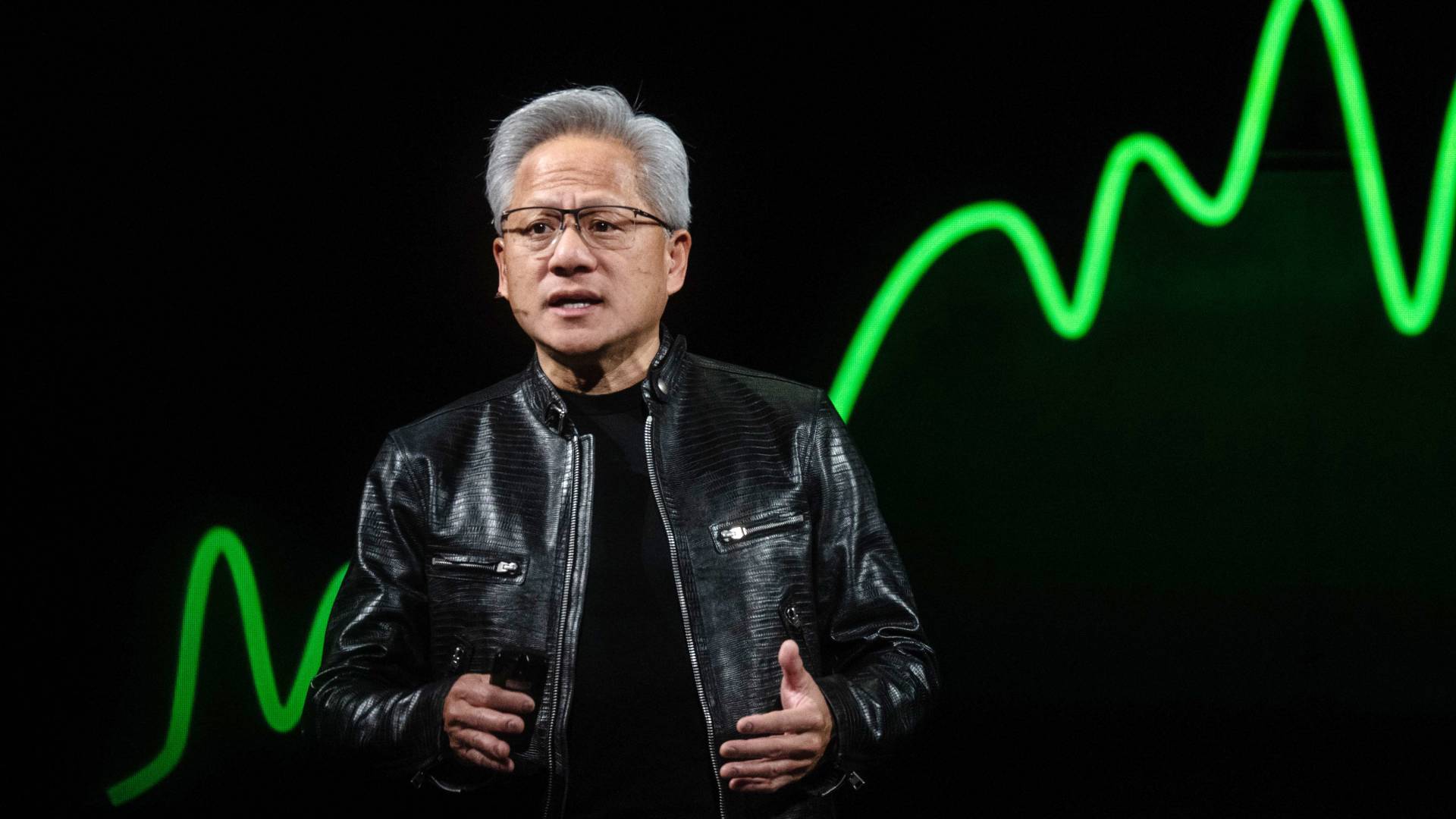
Nvidia's CEO Jensen Huang joined X last month, and recently made his first-ever post. As you could probably guess, it's about AI. He argues, alongside companies like Google, OpenAI, and Meta, that the US should not aim to restrict open models 'prematurely', as they're important for the growth of AI (among other things).
… %!s()
Taking a quick step back, Open models are ones that give access to weights or even code to see how it runs and to allow users to modify them. These can be run locally and are customisable. Closed models are those that tend to be run by specific companies, accessed via the cloud and APIs, and keep all their weights hidden.
Open models out of China, like DeepSeek, became a problem for American AI firms at the start of last year. They exploded onto the scene, offering similar services to the likes of OpenAI, but totally free and available locally. Just last week, the Trump administration was reportedly looking to ban Chinese AI models due to cybersecurity concerns.
The battle between closed and open models is also partially a digital proxy war between American and non-American AI. Open models give access to anyone, and the US is hoping for AI dominance. Sharing how it builds its world-leading models could pose a risk to American hegemony, even if AI makers posit that open models are a benefit to everyone.
Microsoft's open letter claims that open weights strengthen competition and "expand access to the AI economy". Effectively, the wider adoption of AI is good for the companies betting on it, and the likes of AMD, Cloudflare, Google, GitHub, IBM, Hugging Face, LM Studio, Meta, OpenAI, and of course Nvidia have signed the appeal.
For my first post, I’m sharing a letter @NVIDIA signed on why open models matter.AI will transform every industry, power every company, and be built by every country.Open models strengthen safety and cybersecurity, accelerate innovation and diffusion, and enable sovereignty.… pic.twitter.com/t02bi51N4CJuly 24, 2026
The letter claims to want to avoid "premature restrictions on open models that stifle competition or drive innovation overseas".
Huang says "AI will transform every industry, power every company, and be built by every country. Open models strengthen safety and cybersecurity, accelerate innovation and diffusion, and enable sovereignty. The world needs both frontier closed models and frontier open models."
Keep up to date with the most important stories and the best deals, as picked by the PC Gamer team.
The letter does acknowledge problems with open models, though. It says "open weights carry real and distinct risks. Once released, the weights are beyond the original developer’s control, and modified versions are difficult to trace or reverse. But the right response to this risk is not to prohibit open weights."
Not only is wider adoption good for these companies, but they argue the insights gained from open models can be used to counter the negative effects or risks of leaving them widely accessible to all. And, ultimately, it's in the interest of the companies causing the memory crisis to justify AI of all kinds. The increasing prices of hardware, use of water, and general strain on resources have got to be worth all the effort, right?
James is a more recent PC gaming convert, often admiring graphics cards, cases, and motherboards from afar. It was not until 2019, after just finishing a degree in law and media, that they decided to throw out the last few years of education, build their PC, and start writing about gaming instead. In that time, he has covered the latest doodads, contraptions, and gismos, and loved every second of it. Hey, it’s better than writing case briefs. %!s()
Backers of physical media have called on gamers to boycott PlayStation for a week in August to send a message to Sony that its decision to kill discs from 2028 is unacceptable.
… %!s()
The Does it play? X / Twitter account, which is a fierce critic of Sony’s plan to do away with PlayStation game discs, issued a call to arms that has been viewed on the social media platform nearly 1 million times.
“Sony wants to abandon fans? Let's give them a small taste of their own medicine!” the Twitter account said. “Together with other creators we call for a 1 week #PSBlackout in August. No logins, no play sessions, no purchases on any of Sony's platforms.”
Sony’s rationale for ditching discs is that it’s simply following consumer trends. “In response to shifting trends in consumer preference, new games will be released on PlayStation Store and at retailers in digital formats only,” Sid Shuman, Senior Director, Sony Interactive Entertainment Content Communications, said in a post on PlayStation Blog.
“As consumer preferences and the broader entertainment industry continue to shift away from physical discs to digital, physical game disc production for all new games releasing on PlayStation consoles will be discontinued starting January 2028. Following this date, new games will be available on PlayStation Store and at retailers in digital formats only. This transition has no impact on games that already released, or will be releasing, prior to January 2028 in disc format.
“This is a natural direction for Sony Interactive Entertainment to adapt to consumer trends as the general preference for digital media significantly outpaces physical discs. This transition will enable us to align more closely with how most of our community prefers to access and play games today."
Reinforcing this trend, Mat Piscatella, Senior Director and Video Game Industry Advisor at Circana, said that just seven PlayStation video games had sold more than 100,000 physical units so far this year in the U.S.. Only two PlayStation video games sold more than 10,000 physical units in the U.S. during the week ending July 11.
However, since the announcement, gamers have called on Sony to U-turn on its decision, signing online petitions and swarming over PlayStation social media posts to express concern about video game preservation and ownership — even overshadowing the release of new games that have nothing to do with what’s going on at Sony.
Complaints have also come from other groups. The UK’s Digital Entertainment and Retail Association (ERA) called Sony’s decision “a triumph of corporate convenience over consumer choice.”
In a statement published online, Kim Bayley, CEO of ERA, said its data shows that 25% of under 25s use discs for gaming, and that discs should remain as a choice on top of digital.
“Every year, millions of gamers still choose to buy physical copies because they value true ownership. A disc can be shared with family, traded in, collected, preserved and, crucially, still played years from now. A download licence often offers none of those freedoms,” Bayley said.
Does it play? and other critics of Sony have remained determined to continue the fight. Here’s the boycott statement in full:
If history has told us anything, it’s that video game boycotts rarely result in the action they desire. It probably doesn’t help that Metal Gear Solid 4 will finally escape PS3 prison via Metal Gear Solid: Master Collection Vol. 2 that week. There are of course instances of companies reversing decisions amid a backlash, but, analysts have told IGN, it remains unlikely that Sony will U-turn on this.
Dr. Serkan Toto, CEO of Japanese game industry consultancy firm Kantan Games, suggested that even if half a million people cancelled their PlayStation Plus subscription in protest, it would be just a drop in the ocean for Sony.
"I sympathize with physical media fans, but Sony will not reverse this decision," Toto told IGN. "They of course knew what the online reaction would look like, and they now wait for this storm to pass.
"Sony has over 120 million active PlayStation users," he continued. "Around 50 million people subscribe to PlayStation Plus. As a thought experiment, let's say 500,000 cancel in protest, that would be just 1% of that business gone — of course not enough for Sony to start rethinking. Digital is just too lucrative."
Piers Harding-Rolls, games industry analyst at Ampere, has said a lot has changed over the course of the last two generations. "Console gaming is the last hold-out for physical media in the gaming sector, but physical product has been declining in importance," he said in a post on the Ampere website. "Back in 2013 when the PS4 launched, Ampere data shows that only 13% of total full games unit sales for Sony consoles were digital (including digital-only games). Fast forward to 2025, and this digital share of full game purchases stood at almost 80% of the total.
"Inevitably there will be concerns from PlayStation gamers around various aspects of this announcement including choice, accessing older physical games on new consoles, the ability to collect physical games, and game preservation, however the purchasing trends of gamers are clear."
One analyst said fans of physical media had their chance and blew it, so there’s no going back. “If gamers and preservationists had bought more physical games, Sony wouldn’t have seen the digital sales ratios that justify this decision,” Robin Zhu, a games analyst at Bernstein, told the Financial Times.
For Sony, going all-digital for new game releases will earn it more money from every sale at a time when console sales are expected to plummet due to their rising cost. For a first-party PlayStation game such as The Last of Us, Sony will only keep around 65% of the money from a physical copy, with around 30% going to the retailer and roughly another 5% on manufacturing costs. Meanwhile, for a physical copy of a third-party game such as the Activision-published Call of Duty, Sony will get a licensing fee, likely around 15%.
For downloads, however, the margins are much higher. For a first-party game sold via Sony's own PlayStation Store, the company obviously keeps 100% of the revenue. For third-party games such as Call of Duty, meanwhile, Sony keeps a 30% cut (so, roughly $21 for a $70 game).
Photo by Nikos Pekiaridis/NurPhoto via Getty Images.
Wesley is Director, News at IGN. Find him on Twitter at @wyp100. You can reach Wesley at [email protected] or confidentially at [email protected].%!s()