Dave Green and Andrea Urmston found they instantly hit it off when their paths crossed while working in separate roles at Manchester Airport.
The two strangers got on so well they could complete each other's sentences - which made sense when they discovered the truth.
… %!s()
Green was the adopted brother Urmston had not seen in more than 30 years.
"I was shaking, I was just shaking and my heart was pounding," Urmston told the BBC. "I'd finally found him. It's unbelievable."
In 2005, Green was managing the bus station at the airport and Urmston serviced the vending machines.
Over the next two years they became firm friends, texting and phoning each other when they were not at work.
One day during a phone call, Green told Urmston something he had never mentioned before. He was adopted and his birth name was Stuart Proudlove.
"I kind of froze and didn't speak for a minute," says Urmston. Her maiden name was Proudlove and she had a brother who was adopted before she was born.
"It's not a very popular name and it had to be him. Other than family, I had never heard that surname anywhere else," she added.
She immediately rang her mum, Susan, to check her long-lost brother's birth date. They matched: 24 March 1966. She called Stuart straight back.
"I said 'it's got to be you, it's got to be you', and I said 'I need to see you', and so I went to pick him up," Urmston said.
As they were driving to their mum's, Green realised where he was. They were driving along the bus route he used to cover before becoming a manager.
His old route had taken him right past his mum's house, and the school that Urmston had attended.
He had been within touching distance of his birth family without realising.
Susan finally meeting Green was a surreal moment. "There were lots of tears," said Urmston, "then we just all hugged."
"I couldn't believe that I'd got my brother and my mum together, it was amazing."
Urmston's mum had told her that she had a brother when she was younger.
She told her he had been given up for adoption and had gone to a lovely lady who could not have children of her own.
"I immediately wanted to go and call him so we could play," Urmston recalled. Susan said she had tried to find her son with the help of the Salvation Army, but hadn't got anywhere.
"I asked if we could go and get him back," Urmston said, "she did explain that it didn't work that way, so I promised her that I would find him for her one day."
Now they were finally being reunited.
"She had wanted that since being as young as I can remember," Urmston said, "so yeah, I gave her that. I promised her that."
On the mantlepiece in Susan's home was a picture of Green as a baby.
It had been sent by his adopted parents to his birth mother days after his adoption.
The same photograph had also been displayed in his adopted parents' house.
Green had known he was adopted since he was 10 years old - his adopted parents had shown him the paperwork.
But he says he had a very happy childhood, and had never harboured any desire to track down his birth mother.
"I didn't feel like I had to go searching or have any unanswered questions," said Green.
For all three, finding each other has been a life-changing experience.
"I went from having really not a lot of positivity in my life at the time, to finding out that my best friend was my sister," Green added.
"I'd found my birth mum being able to sort of make her truly happy. And I'd found a family really that I never really knew existed."
Their mum died recently, but both say they are glad she got to be reunited with her son.
"She was so desperate to find you to make sure you'd had a really good life," Urmston said.
For Urmston the reunion is bittersweet. She had longed to find her brother for years.
"My mum and dad, they separated unfortunately and so I went through a lot of hard times knowing [Dave] was out there but I didn't know [where]."
Both though now say they are making the most of the time they have together after moving in with each other in Kidsgrove, Staffordshire. It is, they say, their "lottery win". %!s()
A Cockroach Janta Party (CJP) supporter wearing a cockroach mask at a protest over irregularities in major public examinations in Delhi
… %!s()
By
India correspondent
It began with a fear familiar to millions of young Indians: if the examinations that determine their future cannot be trusted, what can?
Weeks later, on Monday, tens of thousands of young men and women tried to march on India's parliament. Police responded with tear gas and baton charges. Thousands more have returned to the streets in the days since.
The Cockroach Janta Party (CJP), a youth-led movement born out of anger over repeated examination paper leaks, has quickly become India's biggest student mobilisation in years.
It is demanding education reforms and the resignation of Education Minister Dharmendra Pradhan. At its centre is activist Sonam Wangchuk, who says he lost 11kg (24lb) during a 26-day hunger strike in support of the movement. He ended his fast late on Thursday, but student leaders say the protests will continue until their demands are met.
The obvious question is whether this is simply another student protest - or the beginning of something larger.
History offers reasons for both caution and optimism.
Student movements have periodically transformed Indian politics. The Nav Nirman agitation in Gujarat helped trigger veteran socialist leader Jayaprakash Narayan's movement against former prime minister Indira Gandhi in the 1970s. Others have erupted dramatically before fading away.
Image source, Reuters
Image caption,
A protester hurls a tear gas canister back at police during a CJP march in Delhi
What makes the CJP unusual, however, is not simply its scale but the nature and breadth of its grievance.
Unlike many of the biggest protests against Prime Minister Narendra Modi's government over the past decade - whether over citizenship, farm laws or other contentious policies - this movement is not fundamentally about ideology. Nor is it rooted in the interests of a single community or social group.
Instead, it questions whether the state can still guarantee fairness in the examination system that millions of young Indians see as their principal route to social mobility.
"The exam and education system cuts across caste, class and gender to quite a large degree," Yamini Aiyar, Senior Visiting Fellow at Brown University, told the BBC. "The core constituency coming to these protests doesn't represent a singular interest group."
That breadth is also what makes the movement politically distinctive.
"This movement centres on administrative failure," Rahul Verma, a fellow at the Centre for Policy Research, a Delhi-based think tank, told the BBC. "The state's inability to conduct examinations fairly and prevent paper leaks makes it a very different kind of political challenge to the BJP."
Why are thousands protesting for education reform in India?
The hunger-striking engineer demanding education reforms in India
That difference, he argues, changes the politics. Unlike earlier protests rooted in ideology or policy, this one questions the BJP's ability to govern. "They must recalibrate their strategy," Verma says.
Many of those protesting, he adds, are not natural opponents of the BJP.
They are "aspirational young Indians and their parents who see these exams as a path to upward mobility". Because the grievance is about governance rather than ideology, he argues, the BJP cannot easily rally its supporters or deploy the political counter-narratives that helped it confront earlier protest movements.
Image source, Reuters
Image caption,
An injured teenage protester rests in her mother's lap at Jantar Mantar, a day after thousands marched on parliament over exam paper leaks in Delhi
Monday's demonstrations appeared to reinforce that assessment.
For the past two weeks, comparisons with the anti-corruption movement of 2011 had largely centred on the CJP's impressive online reach, while sceptics questioned whether digital momentum could spill onto the streets. Monday's turnout suggested it could.
Joyojit Pal, a professor at the University of Michigan who studies technology and society, says social media has become "a tinderbox waiting to explode with the next thing", its speed and reach driven by emotion.
Long-simmering frustration over the state's lack of accountability created the conditions for this "implosion", he told the BBC, adding that the architecture of social media makes such eruptions likely to recur.
How exam scandals threaten the future of India's young people
The question now is whether that online surge has become something more enduring.
"I think Monday's gathering indicates this movement may have crossed a tipping point," Verma says. Whether it grows from here, he adds, will depend largely on how the government responds.
For Aiyar, Monday's protests revealed something equally significant. Student unions, Left groups and organisations such as the Bhim Army, a Dalit rights group, were present, but they were ultimately "outnumbered by an organic outpouring of students from all over the country".
"That's unique compared to any significant protest in India's recent history," she says.
Image source, Hindustan Times via Getty Images
Image caption,
Cockroach Janata Party founder Abhijeet Dipke during a sit-in at Jantar Mantar demanding the education minister's resignation
Just as significantly, Aiyar believes the movement has already outgrown the organisation that sparked it and Wangchuk's hunger strike.
"The catalyst may have been the CJP," she says, "but it became bigger than them."
Students came not only because of the state's handling of the protests, she argues, but because they wanted "a space and a site to express the deep frustration" they had been carrying for some time. "The memes, posters and slogans suggested grievances extending well beyond exam paper leaks."
After initially leaving the response to ministers and party spokespersons, the ruling BJP party's top leadership stepped in on Wednesday. Defence Minister Rajnath Singh accused the opposition of using students "as a political tool" while insisting the government remained committed to addressing their concerns through parliament.
Modi addressed the issue publicly for the first time on Thursday.
"Nothing is more important than the welfare and future of our youth," he wrote on X, announcing fast-track courts to ensure "swift and stringent punishment" for those involved in paper leaks. "Those who try to harm the future of our youth will not be spared."
Whether those assurances will be enough to defuse the protests remains uncertain.
Aiyar believes the movement has tapped into broader anxieties over a slowing economy, scarce jobs and a deepening sense that the future offers diminishing opportunities.
Image source, AFP via Getty Images
Image caption,
Many believe the ongoing protests have tapped into wider public frustrations
"There is deep economic dissatisfaction and distress, which has translated into a lack of hope about the future," Aiyar says. "This could reflect growing exhaustion with a government that has been in power for a long time. Its failure to deliver on the promises it built its reputation on may have reached a tipping point."
For her, the protests are about far more than a single policy failure.
"The message from protesters is clear: we're exhausted. We need a new kind of politics, a new political grammar - one rooted in ideas and focused on governance and delivery."
Whether that frustration can be sustained as a political movement, however, is another question.
Political scientist Suhas Palshikar argues the Cockroach movement may simply provide an outlet for public anger before gradually losing steam, much like the farmers' protests.
"Where will the Cockroach movement go? Perhaps nowhere - it will allow venting of frustration and taper off," he wrote on X.
He also cautions against romanticising it as a Gen Z uprising.
"It would be a mistake to imagine a youth movement or a Gen Z movement - these are only convenient myths for commentators." The movement's "ideological and political character... is currently fluid", he argues, with different political forces likely to seek influence over it.
What the protesters have undeniably shown, he says, is a willingness to confront the state.
"The young have shown their angst and their disgust. They have borne the brunt of the democratic government's brutal police. They have also shown that only street action makes this regime... listen and talk."
Whether that energy can endure, Palshikar argues, will depend on many factors, including state repression, media blackouts, leadership challenges and the difficulty of building a broad social coalition.
Economist Surajit Mazumdar of Delhi's Jawaharlal Nehru University also believes the movement already points to something much larger than examination paper leaks.
Image source, AFP via Getty Images
Image caption,
Students participating in India's anti-corruption movement in 2011
"The current protest and the spontaneous response it has evoked is indicative of the widespread discontent of young people and students about the state of affairs in the country and in the education system which goes beyond the specific paper leak issue," he told the BBC.
Compared with earlier student mobilisations, he argues, the current movement appears "broader and larger in scale".
Mazumdar also rejects the idea that the protests are post-ideological. Like the farmers' movement before them, he says they show that "the democratic spirit is still alive in Indian society".
For Aiyar, that democratic impulse is already reshaping politics.
"People are seeking accountability for governance in sites that are non-electoral," Aiyar says. "The split between electoral legitimacy and democratic accountability outside electoral space is the new phenomenon of politics in India."
Whether that proves to be the defining legacy of the Cockroach Janta Party's protests - or merely a passing moment of public anger - will become clear only with time. %!s()
Indonesian babies were trafficked to Singapore. What happens to them now?
Figure caption,
Watch: A baby trafficking ring has been convicted - but what now for the babies?
ByTessa WongReporting fromSingapore and Astudestra AjengrastriReporting fromJakarta
…%!s()
On Tuesday an Indonesian court convicted 19 people for baby trafficking, wrapping up a high-profile case - but leaving a key question unanswered.
The members of the trafficking syndicate were found guilty of procuring at least 34 babies and selling them for adoption.
Most of the children were bound for Singapore, and at least 12 babies were sent over.
The case has garnered attention in both countries for months. Now that it has ended, its verdict has sharpened the question of what will happen to the babies in Singapore.
Will they - and should they - return to Indonesia?
This is foremost in the minds of the adoptive parents in Singapore taking care of the babies. For months they have been on tenterhooks, waiting to find out whether they will get to keep their children.
Speaking to the BBC after the verdict, David, the Singaporean parent whom we interviewed previously, said he wanted both governments to make a decision soon.
"Since the case is concluded, how can we move on and what will happen to our son? It's been almost a year of fear and anxiety from waiting," said David, who spoke to us on condition we use a pseudonym for him.
"I sincerely hope that both authorities can come to a decision based on the best interests of the children.
"We respectfully ask that, in making this decision, consideration be given to the fact that both our son and our family are victims of the circumstances surrounding this case."
David and his wife Ally had previously told the BBC that they had no idea the child they adopted from Indonesia could have been trafficked. They said they had done their best to do their own background checks.
During the adoption process they had submitted to numerous checks from the Singaporean government which, they said, should have detected the trafficking.
Neither Indonesian nor Singaporean authorities gave definitive answers to the BBC's previous queries about what they intend to do with the babies.
Following the verdict, we asked them again.
Indonesia's foreign affairs ministry said "several aspects require further examination including the children's legal status, the identities of their biological parents, and the ongoing proceedings in Singapore".
It reiterated that it is "committed to prioritising the best interests of the children".
Singaporean authorities have yet to respond to our latest queries.
Image source, BBC Indonesian
Image caption,
Earlier this week a court in West Java found 19 people guilty of trafficking the babies
There is little data on what happens to children who have been trafficked within Indonesia after they are rescued, as the information is generally not made public, according to Ni Made Martini Puteri, a criminologist and lecturer at the University of Indonesia.
It is even less clear what happens to children who have been trafficked overseas.
Anti-trafficking and child rights groups in Indonesia have argued that the children in this case should return to their biological parents, as a matter of principle.
Speaking to BBC Indonesian after the verdict, Ai Maryanti, a commissioner with Indonesia's independent child protection commission, said that as the children's true identities have still not been established, their "best interests have not been given sufficient consideration".
Just because the children may already be adopted in Singapore, that "should not be treated as the final outcome", she added.
"Of course, children who are victims of human trafficking must be returned. Even if they're already adopted, what's the legal basis for that?
"What we don't want is Singapore saying that the adoptions complied with their law. According to our law, we found there was a high level of manipulation, resulting in Singapore easily accepting [the adoption applications]."
During the trial it emerged that the trafficking ring had submitted false information when applying for the infants' birth certificates and family cards.
They had listed the names of members of the trafficking ring as the children's birth mothers.
Local officials had issued the documents based on this information, raising questions about whether they failed to conduct adequate checks.
Uncharted territory
Annulling the adoptions in Singapore and returning the children to Indonesia will likely be complicated, as it goes into uncharted territory.
Lawyers told the BBC they had never heard of a case where an adoption order was revoked in Singapore.
With a framework that is designed with "substantial safeguards upfront" including numerous checks, "adoption orders in Singapore are generally treated as final", said Derek Choo, an associate director with PKWA Law Practice.
If the government applies to revoke the adoption orders, the court could consider several factors, said Lim Fung Peen, a consultant with Yuen Law.
One is the psychological impact on the child, he said. Child psychologists had previously told the BBC that separating young children from their caregivers could have a lifelong impact on their mental health.
The duration that the child has spent in Singapore, and the family and living conditions the child would return to in Indonesia, could also be considered, according to Lim.
The babies are believed to have entered Singapore between 2023 and 2025, which makes the oldest among them at least three years old by now.
Another factor could be whether the basis of adoption is untrue, said Lim. In this case, the babies' birth certificates have been proven to be fraudulent and thus a court could find the basis of their adoption "questionable", he said.
Then, there are other challenges.
Image source, Getty Images
Image caption,
At least 12 babies are believed to be in Singapore already (file picture)
Indonesian authorities still have not identified all of the children's birth parents. This means that some children may have no one to return to.
If they are returned, they would be placed into state care. At least eight other babies rescued from the trafficking ring are already in the care of an orphanage in Bandung.
"Suppose a child is recognised as a trafficking victim and returned to Indonesia, but nobody here knows who the biological parents are because our evidentiary system is weak," said Puteri.
"I would argue that if the child has only known life in Singapore since infancy, then it makes more sense for the child to remain in Singapore with the adoptive parents.
"However, if the biological parents are later identified, the child should still have the right to know who they are."
With the verdict, Singapore should now treat these children as victims of trafficking and thus give them protection, she argued.
"Protection should also extend to the adoptive parents because they too may have had no idea what had happened," she added.
David, the Singaporean parent, said that he and his wife only wish to "live a normal family life, like any other couple hoping to raise a child in a safe, stable, and loving home.
"We hope that this matter can now be brought to a resolution so that our son can move forward with certainty and security."
Additional reporting by Farida Susanty of BBC Indonesian.%!s()
Israeli settlers’ storming of Islam’s holy site fuels ‘hatred’ and obstructs lasting peace, joint statement says.
Eight Arab and Muslim-majority countries have strongly condemned the storming of the Al-Aqsa Mosque compound in occupied East Jerusalem by far-right groups and thousands of Israeli settlers.
… %!s()
In a joint statement issued on Thursday, the foreign ministers of Egypt, Indonesia, Jordan, Pakistan, Qatar, Saudi Arabia, Turkiye, and the United Arab Emirates denounced the “mass incursions by settlers led by extremist Israeli ministers into the Noble Sanctuary” of Al-Aqsa.
The diplomats underscored that the storming of Islam’s third-holiest site took place under the protection of Israeli police forces.
“These provocative actions fuel hatred and extremism, and obstruct efforts to advance a just and lasting peace on the basis of the two-State solution,” the statement said, calling the escalation “an unlawful attempt to alter the historical and legal status quo” of the holy sites in Jerusalem.
“Israel has no sovereignty over occupied Jerusalem or its Islamic and Christian holy sites,” it said.
More than 4,200 Israeli settlers and members of far-right groups stormed the Al-Aqsa Mosque compound on Thursday, one of the largest incursions this year, to mark the Jewish holiday of Tisha B’Av.
Israel’s far-right National Security Minister Itamar Ben-Gvir also entered the site under heavy police protection.
Palestinian officials said Israeli forces imposed tight restrictions at the mosque’s gates, barred large numbers of Palestinian worshippers and students from entering, and assaulted several people.
Israel captured East Jerusalem in 1967 and formally annexed it in 1980. In 2024, the International Court of Justice ruled that Israel’s occupation of the Palestinian territory, including East Jerusalem, is illegal.
Under the status quo, the Jerusalem Waqf, a Jordanian-appointed body, manages the Al-Aqsa Mosque.
Thursday marked the Jewish day of mourning, Tisha B’Av, that commemorates the destruction, twice, of an ancient Jewish temple, according to religious tradition, believed to have stood at the site known to Muslims as Al-Aqsa and to Jews as the Temple Mount.
The joint statement on Thursday denounced “the illegal and extremist acts represented by incitement and calls to mobilise incursions, as well as acts of violence committed by Israeli ministers and extremist groups”.
The statement called on Israel, “as the occupying power, to immediately lift the restrictions” imposed on access to the Al-Aqsa Mosque.
It also called on the international community “to take a firm stance obligating Israel to cease its ongoing violations and illegal practices against the Islamic and Christian holy sites in Jerusalem, and its violations of the sanctity of these holy sites”. %!s()
This satellite image shows plumes of smoke coming from the Rhinogydd mountains in Gwynedd, north Wales
ByAngharad Thomas
BBC Wales
Satellite images have captured plumes of smoke and damage caused by a wildfire in north Wales.
Data gathered by BBC Verify suggests an estimated 951 hectares (2,350 acres) of the Rhinogydd mountains in Gwynedd have been burned by a wildfire which broke out earlier this month.
Nasa's satellite-based FIRMS monitoring system has also detected heat signatures from four areas of Wales where wildfires have broken out.
It is showing heat sources at Blaenavon in Torfaen, Presteigne in Powys, and Pentre Halkyn in Flintshire.
Natural Resources Wales said a specialist firefighting helicopter will be deployed to Rhinogydd on Friday morning after calls for "aerial support".
Image source, Pat O'Neill
Image caption,
People living close to the Rhinogydd mountains have been advised to keep doors and windows closed
On Wednesday the Welsh government activated "crisis management arrangements" to tackle the wildfires that have broken out across Wales.
NRW said: "While the helicopter is being deployed to support the response in the Rhinogydd, its availability will continue to be assessed in line with operational needs across Wales and the wider UK.
"Should other fire and rescue service require aerial support for incidents in their area, we will remain in close contact to understand those needs and consider how best to assist alongside partner agencies."
In north Wales, the first signs of the fire from the Rhinogydd mountain were visible in satellite images from 13 July.
Members of the public have been urged to avoid areas affected by the wildfires, after reports that some people who travelled to them needed emergency rescue assistance.
Ch Insp Ian Roberts, of North Wales Police, said ignoring road closures and police cordons was "dangerous and may constitute a criminal offence".
"Anyone entering restricted areas or failing to follow police directions could be subject to enforcement action," he added.
Siân Gwenllian, cabinet minister for local government, housing and planning, said the fires at Rhinogydd and Blaenavon were the most "significant wildfire incidents in Wales".
She said: "Both remain active and are being managed reflecting the efforts of those involved.
"Other wildfires have been successfully brought under control and are now being monitored and dampened down - demonstrating both the hard work, expertise and professionalism of our fire service."
Image source, Getty Images
Image caption,
Emergency services were called to a fire on Kilvey Hill, Swansea, on Thursday night
On Thursday night, emergency services said they were aware of a fire on Kilvey Hill in Swansea.
Anyone nearby should keep their windows and doors closed due to the smoke, they warned.
Meanwhile, smoke from the fire at Blaenavon, which covers 220 hectares (543 acres), has travelled as far as Cardiff.
Gwenllian said the blaze was "currently the priority for ground operations" as firefighters and NRW remain on site in "challenging conditions".
She added the fire had "produced a significant amount of smoke", but officials confirmed there was "currently no threat to life or property".
"The fire is expected to continue burning for several days, and firefighters remain at the scene to prevent it spreading further and putting lives, wildlife and property at risk," she said.
South Wales Fire and Rescue (SWFR) said the Met Office anticipated the plume of smoke will settle lower overnight, after being sent east towards Newport earlier on Thursday.
Image source, Nasa Firms
Image caption,
Data from Nasa's FIRMS satellite monitoring system shows heat signatures - the larger red and orange rectangles - from the wildfires in Wales
Residents said the smoke had caused a "fogginess" and "acrid smell" stretching for several miles between Torfaen and Pontypool.
SWFRS warned residents to keep windows and doors closed, and advised commuters to switch air conditioning to recirculation mode in their vehicles.
The fire service said it had cut a full perimeter line around the incident.
"This offers a line of protection with the aim of keeping the incident contained, supported by two additional water bowsers from partners and contractors," it said.
North Wales Fire and Rescue Service said crews continued to monitor the situation in Capelulo, near Sychnant Pass, in the wake of a large grass fire on Conwy Mountain.
Elsewhere, firefighters have tackled fires at Hope Mountain and Brymbo, in Wrexham county, Pentrefelin, Holyhead, and Pentre Halkyn overlooking the A55 in Flintshire.
The fire service said they were continuing to oversee conditions as a precaution, with teams from Mid and West Wales Fire Service on hand to help.
Image source, South Wales Fire and Rescue Service
Image caption,
The Blaenavon wildfire now covers 220 hectares
Mid and West Wales Fire Service said it was tackling a blaze about the size of 120 football pitches - 90 hectares - in the Presteigne area on Thursday morning.
It added that crews were monitoring hotspots in the fire at Hanter Hill, in Gladestry, Powys.
Additional reporting by Alex Murray, BBC Verify%!s()
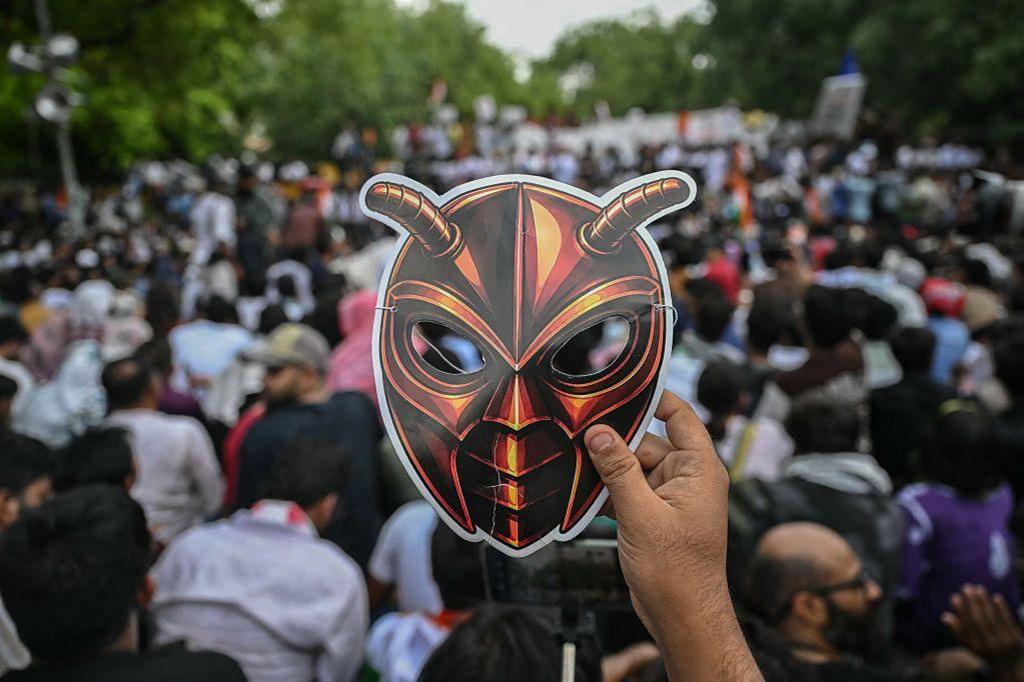 Image source, AFP via Getty Images
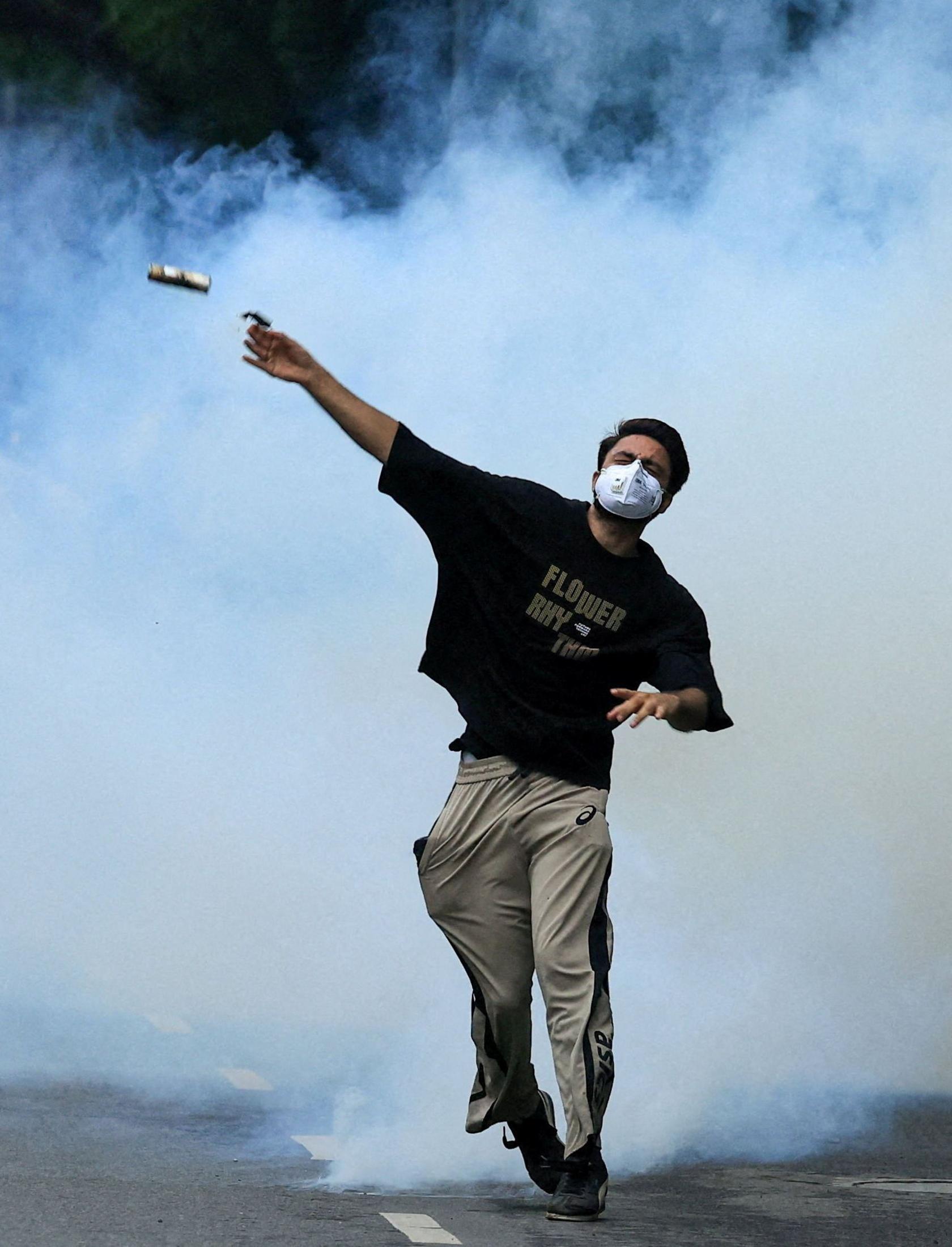 Image source, Reuters
 Image source, Reuters
 Image source, Hindustan Times via Getty Images
 Image source, AFP via Getty Images
 Image source, AFP via Getty Images
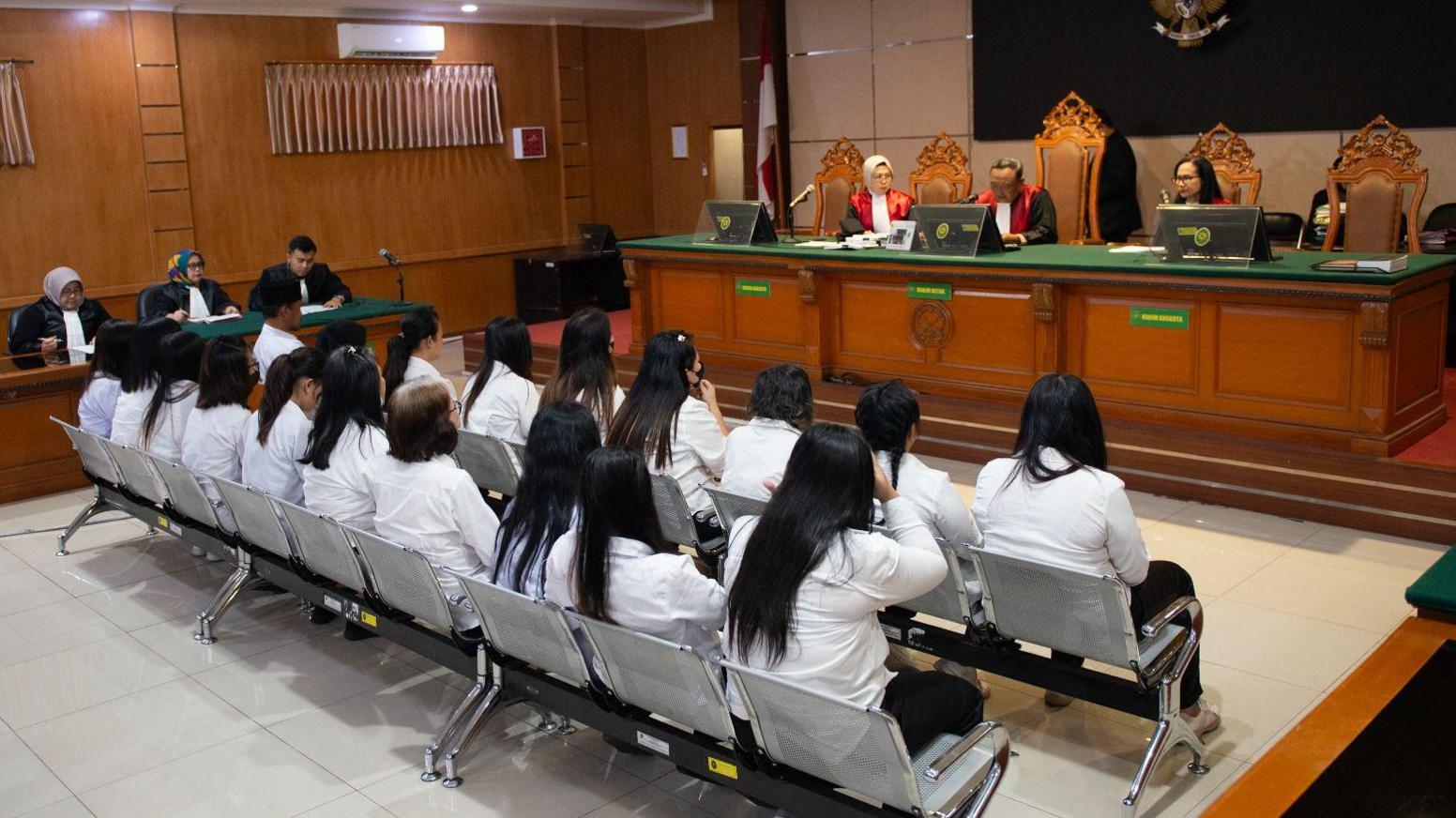 Image source, BBC Indonesian
 Image source, Getty Images
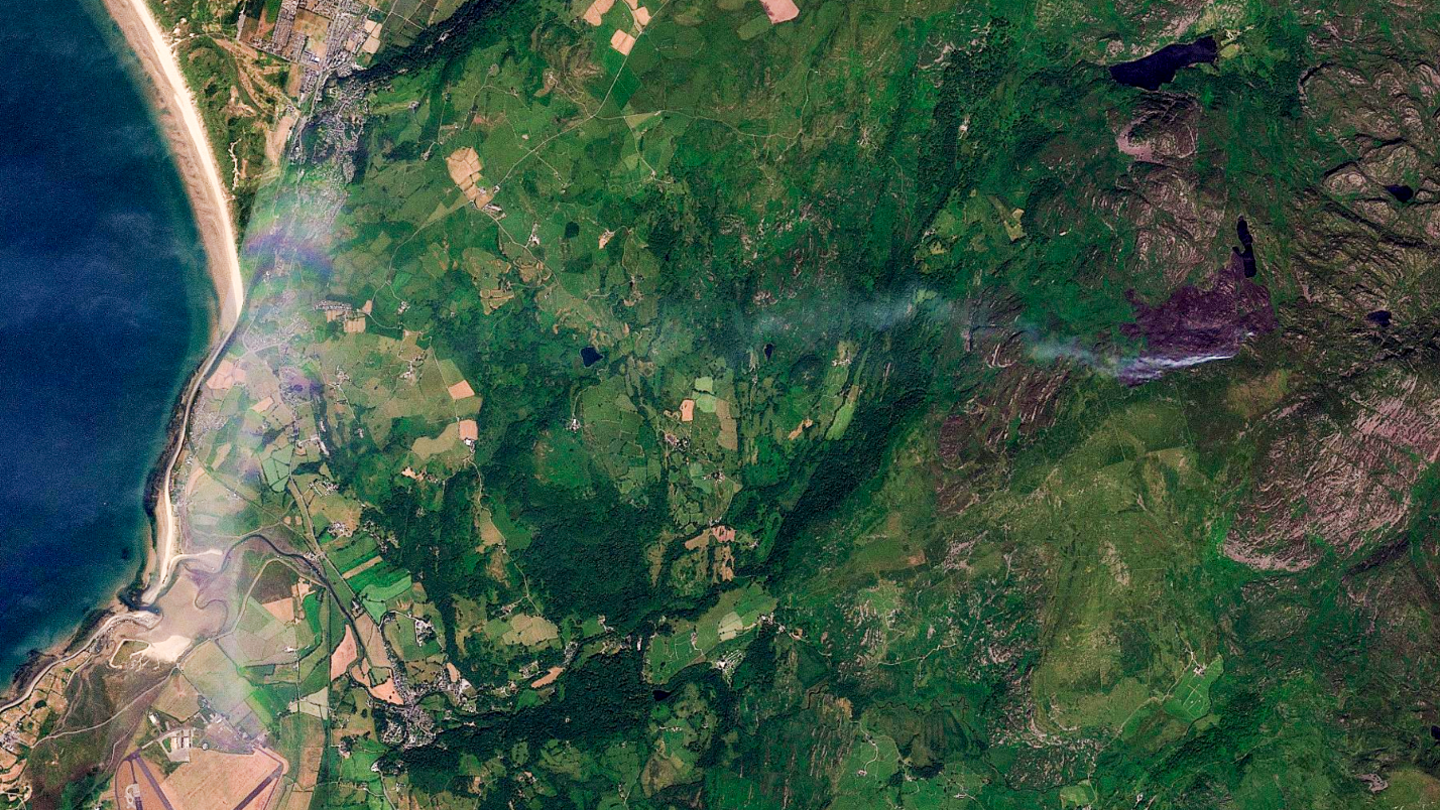 Image source, Planet Labs PBC
 Image source, Pat O'Neill
 Image source, Getty Images
 Image source, Nasa Firms
 Image source, South Wales Fire and Rescue Service