Ram has announced pricing for the 2027 1500 Rumble Bee, which arrives at dealerships later this year.
The entry-level model with the 5.7-liter V-8 will cost $62,790, while the 392 trim with the 6.4-liter V-8 will require $72,790.
At the top sits the Rumble Bee SRT, producing a whopping 777 hp from its supercharged 6.2-liter V-8 and carrying a $97,790 price tag.
The street truck has properly returned in the form of the 2027 Ram 1500 Rumble Bee. In fact, it's more like there are three new street trucks, as the Rumble Bee name will be paired with three different engines over a trio of trims. And now we know just how much each Rumble Bee will cost, with the entry-level truck carrying an attractive $62,790 starting price.
… %!s()
That sum will net you the base Rumble Bee, which features the 395-hp 5.7-liter Hemi V-8. While it has the least potent engine of the bunch, the standard Rumble Bee still gets the same mean-looking widebody stance and the ability to disconnect the front axle to create plumes of tire smoke. Ram claims a zero-to-60-mph time of 6.1 seconds and a quarter-mile run of 14.6 seconds.
Stepping up to the 6.4-liter Hemi V-8 brings 470 horsepower and requires $10,000 extra, putting the price tag for the Rumble Bee 392 at $72,790. The Rumble Bee 392 will roar to 60 mph in a claimed 5.2 seconds and complete the quarter-mile in 13.2 seconds.
The 392 will also be offered with a Track Pack that adds $10K and pushes the price to $82,790. This extra coin comes with great improvements too. The Track Pack wears the same muscular face as the top-level SRT, bringing improved cooling via extra vents and better aerodynamics with a 4.5-inch front splitter and a rear wing. There's also a launch-control mode and an electronically locking rear differential, and the same chassis upgrades found on the SRT, which include Bilstein adaptive dampers, beefy Brembo brakes, and 325-section-width all-season tires.
At the top of the range is the Rumble Bee SRT, which costs a whopping $97,790, but it's motivated by a fire-breathing supercharged 6.2-liter Hemi V-8 with 777 hp. The SRT has all of the same aerodynamic, braking, suspension, and cooling upgrades as the 392 Track Pack, but with an extra 307 horsepower. Thanks to full-time four-wheel drive with launch control, the SRT model will rip to 60 mph in a claimed 3.4 seconds, cover the quarter-mile in just 11.6 seconds, and hit a top speed of 170 mph.
The base Rumble Bee will go on sale first, reaching dealerships in late 2026, with the Rumble Bee 392 and SRT models set to follow in the first half of 2027.
➡️ Skip the lot. Let Car and Driver help you find your next car.
Caleb Miller began blogging about cars at 13 years old, and he realized his dream of writing for a car magazine after graduating from Carnegie Mellon University and joining the Car and Driver team. He loves quirky and obscure autos, aiming to one day own something bizarre like a Nissan S-Cargo, and is an avid motorsports fan. %!s()
A BYD Racco electric mini-car being launched into Japan's Kei car market. European carmakers will be hoping it won't appear in their home market any time soon. (Photo by Zhang Xiaoming/VCG via Getty Images)
… %!s()
VCG via Getty Images
If only the European Union could have read the final chapter first, it might have realized its aim to force a new electric vehicle monopoly on its unwilling citizens required small EVs to excite buyers.
Meanwhile, its tough targets for sales of EVs look destined to fall well short of the mandate that all new sedans and SUVs purchased in 2035 shall be all-electric. That 100% is under pressure and the industry and auto-making states have achieved a provisional 10 percentage point relief.
The current acceleration in European EV sales - in the first half of 2026 EV sales rose about 40% to 1,220,890 (ACEA) compared with the same period last year - masks the overriding failure. Unfortunately, that brought market share to only 20.7%.
Under the European Union’s zero carbon dioxide emissions target for autos in 2035, the next big hurdle requires an EV market share of around 60% by 2030. This target looks impossible in the time available as current forecasts center around 40%.
According to investment researcher Jefferies, European EV sales in 2030 will reach 5.8 million or 42% of the market. Jefferies expects sales of 2.9 million this year (22%) and 8.9 million in 2035 for 65%, when it should be 100%, according to current EU rules.
MORE FOR YOU
Fiat Topolino, an all electric quadricycle, is a version of the Citroen Ami. It is too slow and lacks safety provisions, so isn't a candidate for the small EV mass market.
getty
A mass market in EVs needs to be created. Analysts reckon an unpretentious little utility electric vehicle with a range of say 100 miles, a top speed of 60 mph, room for two adults and two children, priced from say €10,000 ($11,400), would do for EVs what the Nokia 3210 did for mobile phones. That would trigger a stampede for EVs, with not a subsidy or tax break in sight. So far there’s no sign of that, and time is running out, although to its credit the EU, with its Industrial Accelerator Act, wants urgent action to save local automakers from succumbing to ballooning Chinese sales.
Too large, too heavy, too pricey
Current EVs are still too large, too heavy and too pricey for the mass market. The EU wants to turn this around and create a market for small, genuinely affordable EVs. Average EV prices of around €45,000 ($51,300) are now on the way down, with many falling towards €20,000 ($22,800), and the likes of the Leapmotor TO3 and Renault’s Dacia Spring testing €15,000 ($17,100). These new mass-market EVs would be like Japanese Kei cars. Strictly short range but affordable, particularly if acquired through a lease.
If only the EV industry had reinvented the cheap and cheerful car. Remember the old internal combustion engine entry-level era when small cars like the Fiat 500, Ford Ka, Citroen C1, Peugeot 108 and Renault Twingo were seriously affordable and ubiquitous? As part of its plan to force people into EVs, the EU tightened emissions rules for ICE cars and effectively banished them.
Multi-brand giant Stellantis’s chairman John Elkann and former Renault CEO Luca de Meo had urged the European Union to sponsor a new class of small cars, modelled on Kei cars, small but built to strong safety standards. Volkswagen has joined the movement, which also wants a “Made in Europe” provision to reward manufacturers that localize production. The EU has proposed a 70% local-content threshold excluding batteries.
Industrial Accelerator Act
The EU has taken up this plan with its Industrial Accelerator Act proposals for a new E-Car category, less than 4.2 metres (13 feet 10 inches) long, and eligible for so-called super credits, giving them a higher CO2 emissions reduction benefit to help reduce fleet emissions and avoid fines. IAA, among other things, wants to re-establish Europe’s competitive edge.
Ford Ka
getty
Alexander Klose-Mozer, CEO of EuroEV and Managing Director of KM Electron, has been critical of European manufacturers’ lackadaisical approach to cheaper EVs.
“Europe can certainly build electric cars. The bigger challenge is building seriously affordable ones. Let me make it clear; I don’t think it is possible at present. Today, batteries remain the largest cost component, and this is where Europe is at its weakest compared with China,” Munich-based Klose-Mozer said in an email exchange.
“Beyond batteries, I think Europe has gradually lost some of its ability to engineer cost out of a vehicle. Our development processes have evolved around mature products, high-quality standards and established organizations. That produces excellent cars, but not always the lowest-cost solution.”
China speed
“There is also a speed issue. European manufacturers tend to optimize, validate and refine. Chinese companies have often been willing to build, learn and iterate much faster. Could Europe still do it? Absolutely. But I suspect it would require a different approach - perhaps a largely independent organization, with the freedom to rethink the product, the processes and the business model from scratch.”
“The real question is therefore not whether Europe has the engineering capability. It does. The question is whether it is willing to build the kind of organization needed to create a genuinely affordable EV,” Klose-Mozer said.
Dr Chris Vas, Associate Professor at the University of Canterbury in southern England, said the EU wants to persuade its manufacturers to go cheaper, the lowest price is more like €15,000 than €10,000.
“The more important question, however, is not whether Europe can produce a €15,000 EV. It is whether Europe can become the preferred location for the next generation of automotive supply chains. Small affordable EVs should not simply become another market segment. They are potentially the mechanism through which Europe generates the production scale needed to accelerate EV adoption, strengthen supplier ecosystems, improve battery learning curves and drive further cost reductions. That is why delays have ramifications well beyond consumer choice,” Vas said in an email exchange.
Vas said Europe needs to localize high-value components, particularly batteries and power electronics.
Make Europe the rational location
“The objective should not simply be to keep Chinese manufacturers out, but to create the conditions that make Europe the rational location for localization. If Europe can combine cost competitiveness, technical capability, engineering excellence and efficient logistics, then Chinese and other global manufacturers have commercial incentives to localize engineering, component manufacturing and supplier networks in Europe,” according to Vas.
“Ultimately, Europe’s risk is not being overtaken because China is faster. As we have argued, it is being overtaken because China is executing consistently while Europe continues to renegotiate the destination. The challenge is therefore not simply to move faster, but to provide the strategic certainty that allows industry to invest confidently over decades rather than electoral cycles,” Vas said.
Professor Enzo Baglieri, Professor of Operations and Technology Management at Italy’s SDA Bocconi School of Management, agreed that electric vehicles were much better suited to urban mobility than long journeys.
EU must have known its rules posed an existential threat
“We currently rely on the same vehicle for these two very different mobility needs. This is where EVs can create a new market segment—one where design innovation is still lacking and where business models need to evolve,” Baglieri said.
The IAA is not expected to become law until well into 2027. If European automakers fail to make the 2030 EV market share targets they face massive fines, but more likely the rules will be watered down. Manufacturers will be wondering how the EU could have approved such regulations, when it must have known its own industry was hopelessly behind and would face an existential crisis. %!s()
Center L to R: Jimmy Gonzales is Cepheus, Matt Damon is Odysseus and Himesh Patel is Eurylochus in THE ODYSSEY, written, produced, and directed by Christopher Nolan.
Melinda Sue Gordon
… %!s()
The most significant point of comparison to The Odyssey at the box office was always going to be Oppenheimer, another R-rated Christopher Nolan biopic that went on to earn nearly $1 billion worldwide. But so far, The Odyssey is wildly outpacing it.
The final domestic box-office earnings for Oppenheimer after 595 days were $330 million. Now, The Odyssey will pass that figure just 13 days after release. This Monday, The Odyssey earned $14.7 million, and it’s expected to go higher than that on Tuesday when the final figures come in, passing that milestone.
The Odyssey, perhaps unsurprisingly, has not yet passed Nolan’s The Dark Knight or The Dark Knight Rises’ domestic box office totals, which were $534 million and $448 million, respectively. Though that’s a pair of PG-13 Batman movies, one of which is considered perhaps the best superhero feature ever made. And still, The Odyssey may get close, if not pass one or both. It’s not impossible.
Forecasts are that even this weekend’s Spider-Man: Brand New Day is not likely to cause some sort of huge crash for The Odyssey, with around a $45 million estimate for the film’s third weekend, in addition to these incredibly high daily totals. How long the film’s legs are remains to be seen, but it will be a staple in theaters for a while to come.
The Odyssey
Warner Bros.
MORE FOR YOU
It is now almost certain that The Odyssey will cross $1 billion at the box office by the end of its run, which would pass Oppenheimer’s $975 million. The movies that have made $1 billion or more this year so far are Toy Story 5 ($1.026 billion), Michael ($1.016 billion, unseating Oppenheimer for the highest-earning biopic of all time) and The Super Mario Galaxy Movie ($1.011 billion).
The two likely earners to surpass those are both Marvel features, Spider-Man: Brand New Day and Avengers: Doomsday. Judging by the trajectory of both, Spider-Man seems likely to win the year. The last film, Spider-Man: No Way Home in 2021, made $1.9 billion, becoming one of the highest-earning films ever. So, needless to say, expectations are high for Brand New Day, which some critics are calling the best Spider-Man film ever. That opens tomorrow.
Regardless, The Odyssey will be one of the biggest success stories of the year, and this is not even wading into inevitable Oscar buzz, something that we are not going to see with Marvel features, to be sure. But that’s a conversation for another day.
Pokémon Pokopia will unlock underwater gameplay next week as part of a free update, alongside the launch of the game's first expansion.
… %!s()
On August 5, all players will gain the new Dive ability from a passing Manaphy, the Mythical water creature (that Pokémon Go seems to have forgotten exists). With Dive unlocked, you'll be able to summon up a bubble of air around your head — finally allowing your Ditto avatar the ability to survive for longer than a few seconds below the waves.
Indeed, underwater gameplay will allow you to build beneath the sea just as you currently can on land. Meanwhile, your gathered Pokémon can swim along with you.
Take a deep breath and unwind as we go on a deep dive into the underwater town of Bubbly Basin. 🫧🤿 The #PokemonPokopia Expansion Pass paid DLC Part 1: Bubbly Basin releases August 5, 2026. pic.twitter.com/iJPgzteM0P
All of this ties into the arrival of Pokopia's first paid expansion, Bubbly Basin, which will also become accessible on August 5 to anyone with the $34.99 Pokémon Pokopia expansion pass.
Most notably, this expansion adds the game's first post-launch region, the aforementioned Bubbly Basin, which features swathes of submerged land for you to flex your new Dive abilities. It's here you'll also meet Popplio, Mudkip, Corsola, Corphish and Chinchou, who'll teach you how to plant underwater grass, grow underwater watermelons, and power underwater electronic items (which sounds dangerous).
Other Bubbly Basin Pokémon spotted in today's trailer include Buizel, Lumineon, Stunfisk, Frillish, Carvanha, Sharpedo, Lantern, Totodile, Primarina, Golispod, and Dhelmise.
As you might expect, the expansion adds fresh items and furniture to collect, plus a Sharpedo submarine base. Finally, Bubbly Basin holds more secrets in its deepest depths: dark underwater caves illuminated only with neon coral.
You can purchase the Pokémon Pokopia expansion pass now ahead of Bubbly Basin's launch next week. The pass also includes a second expansion due this year that will add accessories for your Pokémon to wear, and a third expansion due in 2027 that adds yet another town.
Final Fantasy 14's latest patch has dropped, and it's introduced the North Horn—the next and final step in this expansion's "exploration zone", which has been a much-needed boon to the feeling of jolly cooperation I'm trying to get out of an MMO. This expansion is an entirely new map, filled with new Phantom Jobs to level up, critical engagements to grind, and carrots to discover.
… %!s()
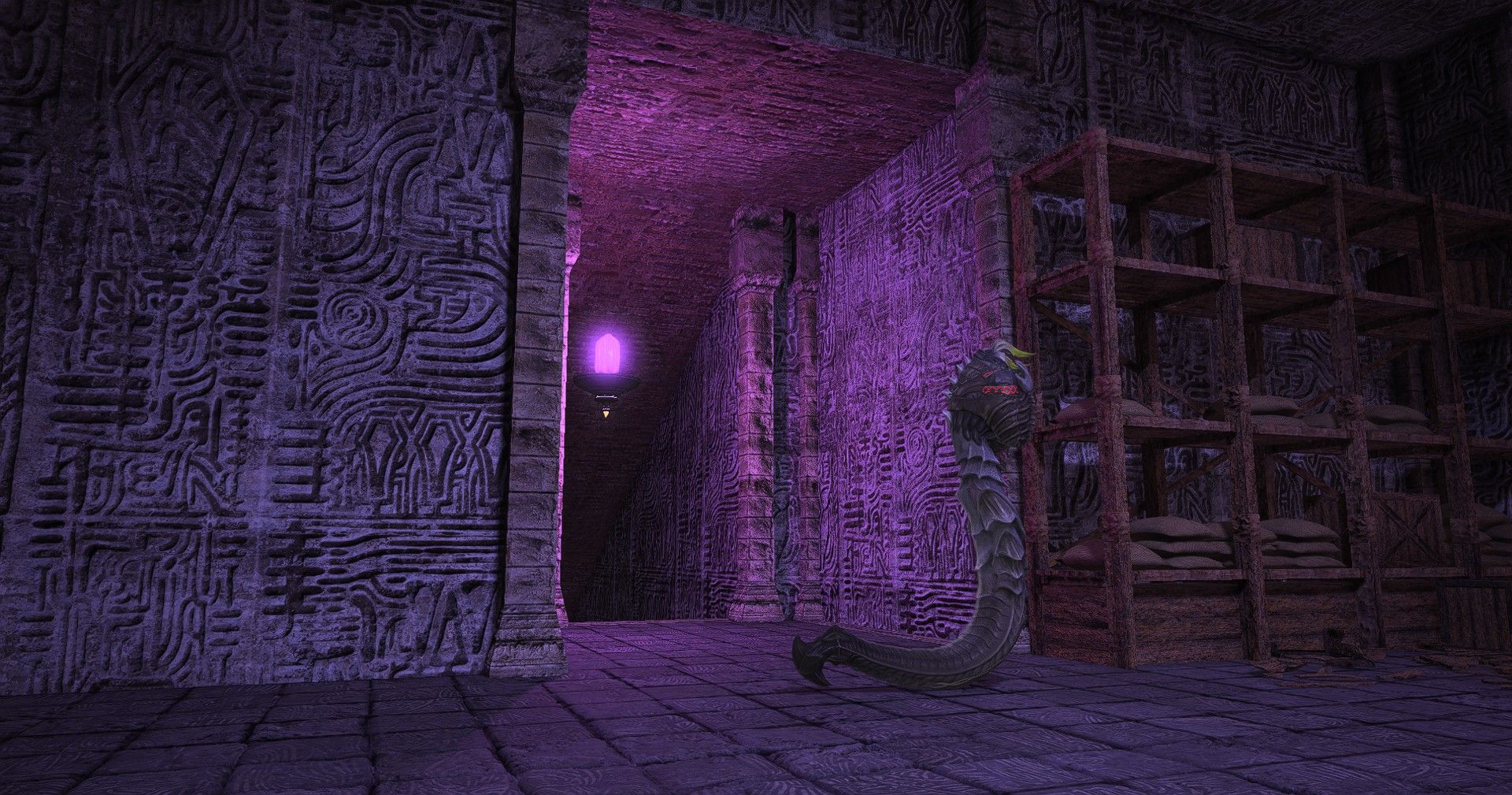
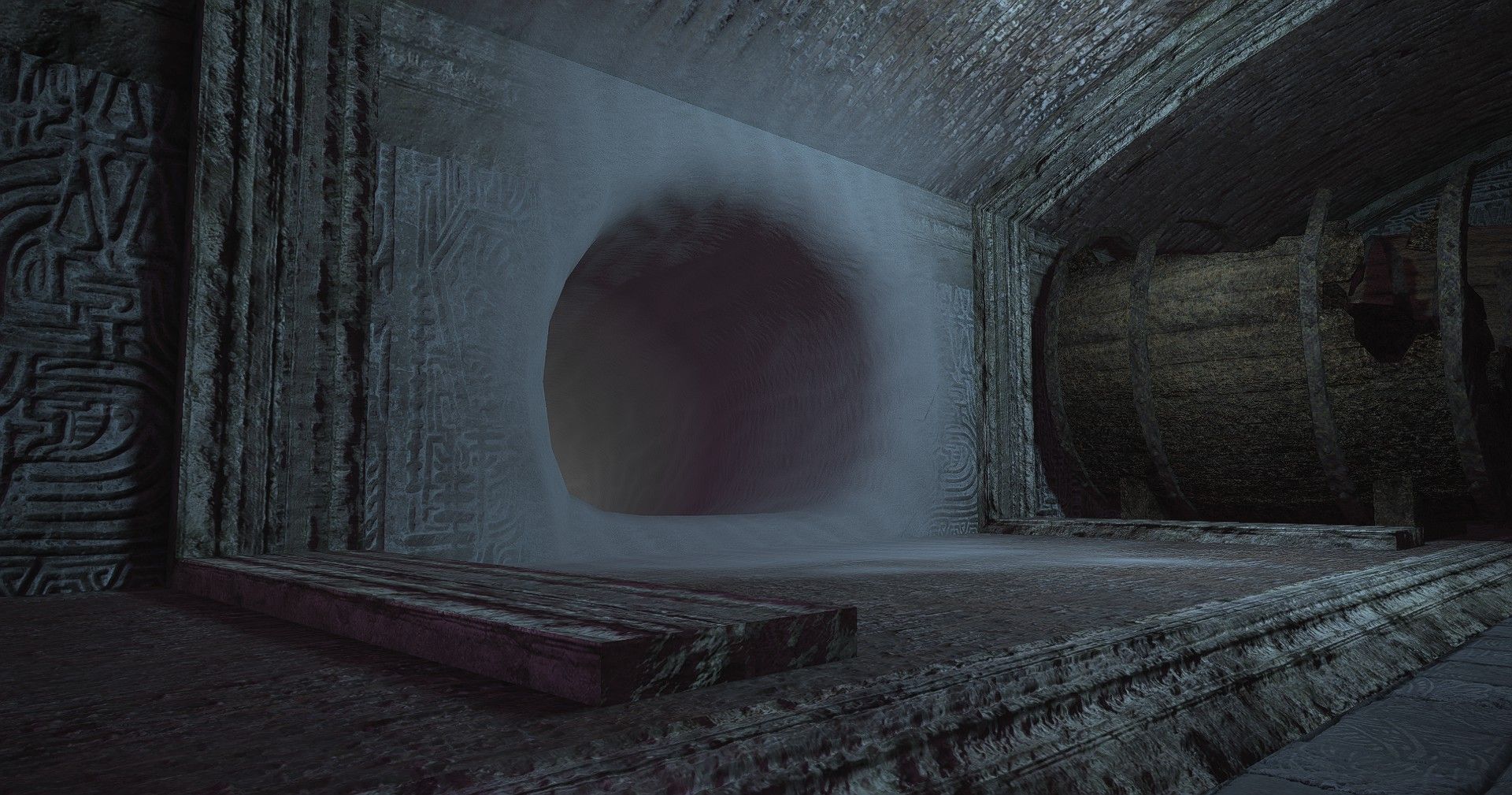
It's also got a horrifying milk dimension tucked under it. You know. A normal thing that FF14 zones usually have.
Tucked away in the center of the map, and only accessible through a series of winding, sloped tunnels guarded by high-level mobs (I had to use my Ninja's sneak ability to get in), the aptly-named "dark territory" is flush with enemies I'm nowhere near enough of a grinding freak to solo yet.
I was, however, able to get a few screenshots before I forgot I didn't have sneak on and was subsequently merked—and in the murky depths we can clearly see horrifying, arm-swarmed structures reaching out into the inky blackness.
Image credit: Square Enix
Image credit: Square Enix
Image credit: Square Enix
Image credit: Square Enix
Image credit: Square Enix
Image credit: Square Enix
The actual lore of the zone, shared here courtesy of ffxivcollect, is neat as heck, too: "Far beneath the unhallowed hamlet lies a space steeped in Darkness. Claimed as a domain by vicious voidsent, the area suffers from the corrupting influence of another realm, its structures and even the very ground eroded into an unknown substance.
"It should be noted that, for voidsent, the term 'domain' holds two meanings: either a tract of existing land treated as territory, or—in the case of more powerful entities—a dimension entirely of their own making. The latter is believed to share fundamental characteristics with magical barriers, yet despite years of extensive research, their inner workings remain a mystery."
As some on the game's subreddit have noted, the zone bares a striking resemblance to Promyvion, a zone from Final Fantasy 11 that has a similar aesthetic of inky-black nothingness grounded only by ruined, dilapidated structures clinging to a lonely few rocks in the void.
Keep up to date with the most important stories and the best deals, as picked by the PC Gamer team.
It's a strikingly creepy little secret, and something I'd love to see more of from Square Enix going forward—while Dawntrail's improved outdoor zones' sense of scope and scale, especially thanks to the shiny new graphical update, Square hasn't always done the best job encouraging people to go out and explore it. But if there are cool little secrets like this tucked away, I might be more inclined to hoof it and see what's out there.
Harvey's history with games started when he first begged his parents for a World of Warcraft subscription aged 12, though he's since been cursed with Final Fantasy 14-brain and a huge crush on G'raha Tia. He made his start as a freelancer, writing for websites like Techradar, The Escapist, Dicebreaker, The Gamer, Into the Spine—and of course, PC Gamer. He'll sink his teeth into anything that looks interesting, though he has a soft spot for RPGs, soulslikes, roguelikes, deckbuilders, MMOs, and weird indie titles. He also plays a shelf load of TTRPGs in his offline time. Don't ask him what his favourite system is, he has too many. %!s()