The top stories and transfer rumours from Friday's newspapers...
Transfer news
Liverpool could rival Arsenal for the signing of Aston Villa defender Ezri Konsa as Andoni Iraola desperately seeks a solution to his injury crisis - Daily Mirror
…%!s()
Manchester United and Arsenal sent scouts to watch summer target Kaua Elias score a perfect hat-trick for Shakhtar Donetsk - The Sun
Mo Salah will earn €17m (around £14.5m) a season after signing a two-year deal at Trabzonspor, a record for the Turkish league. He will will also receive a 20 per cent share of revenue from sales of shirts and merchandise bearing his name - The Times
Manchester United duo Joshua Zirkzee and Altay Bayindir are set to join Juventus and Celta Vigo respectivelyin the coming days - Daily Express
Ethan Nwaneri is being tracked by RB Leipzig with the Arsenal midfielder facing an uncertain future this summer after spending the second half of last season on loan at Marseille - The Sun
Marcus Rashford is set to pocket an extra £4m if he stays at Manchester United due to a clause in his contract which has been activated because the club is back in the Champions League - Daily Mirror
Chris Smalling wants to see out the rest of his career back in England after his release by Saudi Arabian side Al-Fayha - Daily Mail
Captivate
This content is provided by Captivate, which may be using cookies and other technologies.
To show you this content, we need your permission to use cookies.
You can use the buttons below to amend your preferences to enable Captivate cookies or to allow those cookies just once.
You can change your settings at any time via the Privacy Options.
Unfortunately we have been unable to verify if you have consented to Captivate cookies.
To view this content you can use the button below to allow Captivate cookies for this session only.
FIFA fallout
UEFA plans to commission an independent valuation of FIFA's World Cup sale plans after concerns that Gianni Infantino agreed to sell the tournament's future profits to a private equity firm at below the market rate - The Guardian
Women's Super League
Brazil forward Kerolin failed to report back for pre-season training at Manchester City in July before her transfer to Barcelona had been agreed - The Guardian
Athletics
London has submitted its bid for the World Athletics Championships in September 2029, having resolved issues with West Ham United over stadium access and the possible disruption of fixtures - The Times
Watch Back Pages on Sky Sports News
Back Pages is a review of the sports headlines from the national newspapers, every Monday to Friday, live on Sky Sports News from 10.30pm.
Missed the show? Catch up on the latest news with the Back Pages podcast. %!s()
A Sikandar Raza masterclass inspired MI London to come away with the spoils to jump up to second in the table and condemn London Spirit to an early departure from The Hundred.
… %!s()
Nothing less than a win would do for Spirit in the local derby and after their mauling at the hands of SunRisers Leeds on Tuesday, they made three changes but still came up short in front of a record group stage crowd of 27,721 at Lord's.
MI London called on Raza to replace their star leg-spinner Rashid Khan, who was away on international duty with Afghanistan. The Zimbabwean all-rounder played his part in a disciplined bowling display, with the visitors expertly keeping the ball away from the shorter boundary side. As a result, Spirit's innings struggled to gather momentum, flickering rather than igniting despite a composed half-century from Lhuan-Dre Pretorius.
Instagram
This content is provided by Instagram, which may be using cookies and other technologies.
To show you this content, we need your permission to use cookies.
You can use the buttons below to amend your preferences to enable Instagram cookies or to allow those cookies just once.
You can change your settings at any time via the Privacy Options.
Unfortunately we have been unable to verify if you have consented to Instagram cookies.
To view this content you can use the button below to allow Instagram cookies for this session only.
Scorecard: London Spirit vs MI London
The Hundred - latest men's and women's tables for 2026
Please use Chrome browser for a more accessible video player
Will Jacks made an unbelievable catch during London Spirit's match against MI London
The South African's innings was ended by an outrageous boundary catch from Will Jacks, who overbalanced on the edge, threw the ball up and then dived full length to complete the dismissal one-handed.
Raza said: "Four days ago I was in Sri Lanka and I'm not really sure what day or date it is but it's nice to be part of The Hundred and have a debut like that. I couldn't have asked for a better start - really I just closed my eyes and swung as hard as I could!
"It was nice to get a few out of the middle and you need to remember the complexion of a game can completely change in 10 balls."
David Willey bristled and muscled his way to 31 but the earlier dismissals of power-hitters Liam Livingstone and Dewald Brevis meant that Spirit were always struggling to post the kind of score they would have liked.
Also See:
Latest tables in The Hundred
The Hundred squads for 2026
Stream The Hundred and more with NOW
Latest Hundred news and video
Only the late resistance of Jamie Overton and James Coles prevented Spirit from falling short of a competitive total, with Coles producing his first innings of real substance for the side. Their aggressive hitting in the closing stages lifted Spirit to a serviceable 160-5, leaving MI London needing to complete the highest successful run chase in The Hundred men's competition at Lord's to secure victory.
Matt Fisher, earlier in the day picked in England's Test squad, saw his first ever ball for Spirit disappear back over his head for six from the bat of Jacks but he had his Surrey team-mate's wicket next ball, Adam Milne pouching the skier.
Please use Chrome browser for a more accessible video player
Tom Curran appeared to clash with a few former England team-mates after hitting the match winning runs for MI London
Nicholas Pooran, making his first appearance at Lord's, wasted little time finding his rhythm, but Mason Crane - brought in for Adam Zampa - delivered a superb opening spell. The leg-spinner dismissed former skipper James Vince with his very first ball and conceded just three runs from his first ten deliveries.
Pooran and captain Sam Curran began to accelerate the chase, but in an increasingly heated contest, Willey provided a moment of brilliance, completing a stunning run-out after releasing the ball mid-air while diving. The dismissal of the Trinidadian, however, only brought Zimbabwean all-rounder Raza to the crease and handed MI London a dangerous left-right combination.
Raza wasted no time making an impact, launching his first, fourth and seventh deliveries for six as he transformed the chase. His explosive 41-run stand with Curran, coming from just 18 balls, left MI London needing 29 from the final 20 deliveries.
The momentum shifted again when Curran picked out deep point off Overton for 33 and Sherfane Rutherford fell for a golden duck. But James Coles then conceded 18 from his only five balls, including a colossal 105-metre six from Raza that nearly cleared the ground. Although Raza departed with 10 balls remaining, Ollie Pope calmly finished the job to seal victory.
The two London sides exchanged words as they left the field after a fiery and occasionally fractious encounter. For Spirit, however, the defeat ended their hopes of progressing further in the competition.
What is happening in The Hundred on Friday?
Friday sees a single double-header as Birmingham Phoenix women's team host SunRisers Leeds from 3pm before the men's sides square off from 6.30pm. Catch both fixtures live on Sky Sports.
There are now three Magic: The Gathering cards for Sting, the magic sword Bilbo claims from the troll hoard. To be fair, they're all mechanically distinct. In The Lord of the Rings set there was an artifact card called Sting, the Glinting Dagger, and an instant called Hobbit's Sting that did more damage the more food you had. Several the hobbit-themed cards are empowered the more food tokens you have piled up, which is a flavorsome idea.
… %!s()
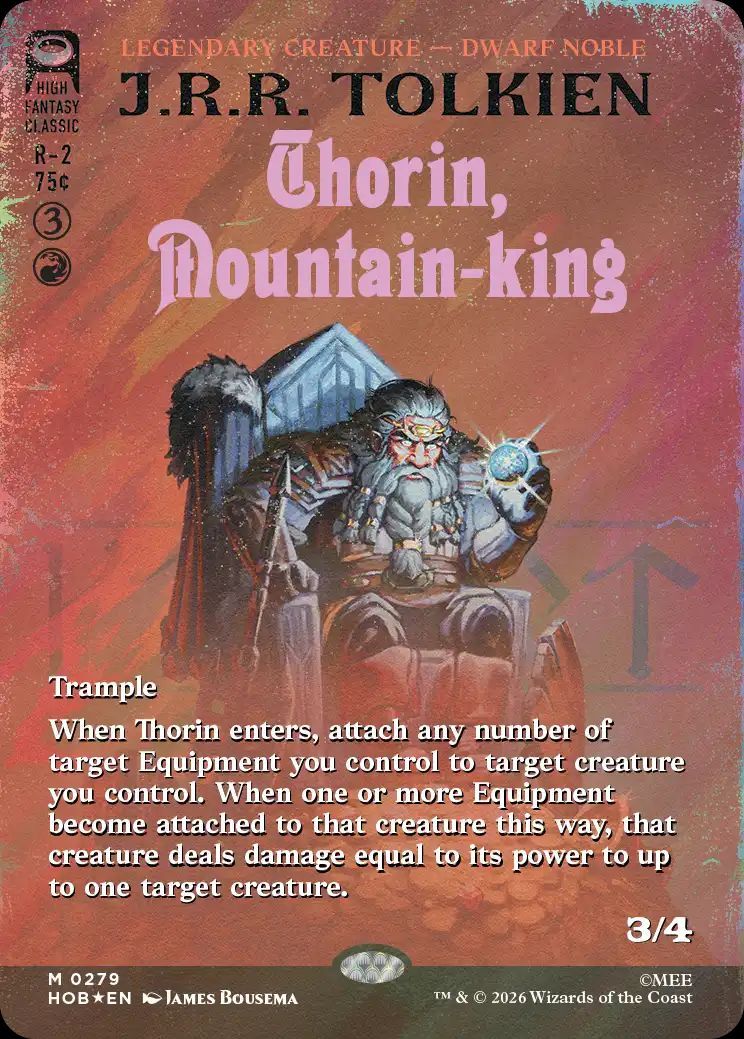
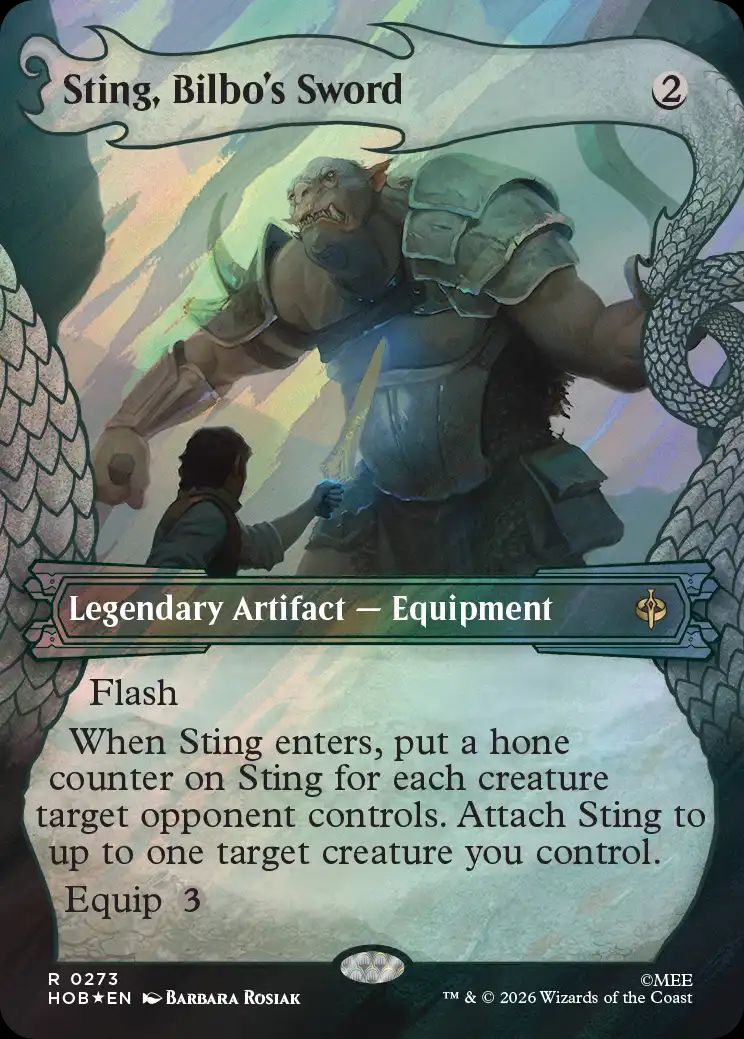
The upcoming Hobbit set adds a card called Sting, Bilbo's Sword, which uses the new mechanic hone, which lets you add +1/+0 to a creature with equipment—a mechanic that mostly shows up on dwarf cards. As you may remember, there are a lot of dwarves in The Hobbit.
Image credit: Wizards of the Coast
Image credit: Wizards of the Coast
Image credit: Wizards of the Coast
Image credit: Wizards of the Coast
Image credit: Wizards of the Coast
Image credit: Wizards of the Coast
Image credit: Wizards of the Coast
Image credit: Wizards of the Coast
Image credit: Wizards of the Coast
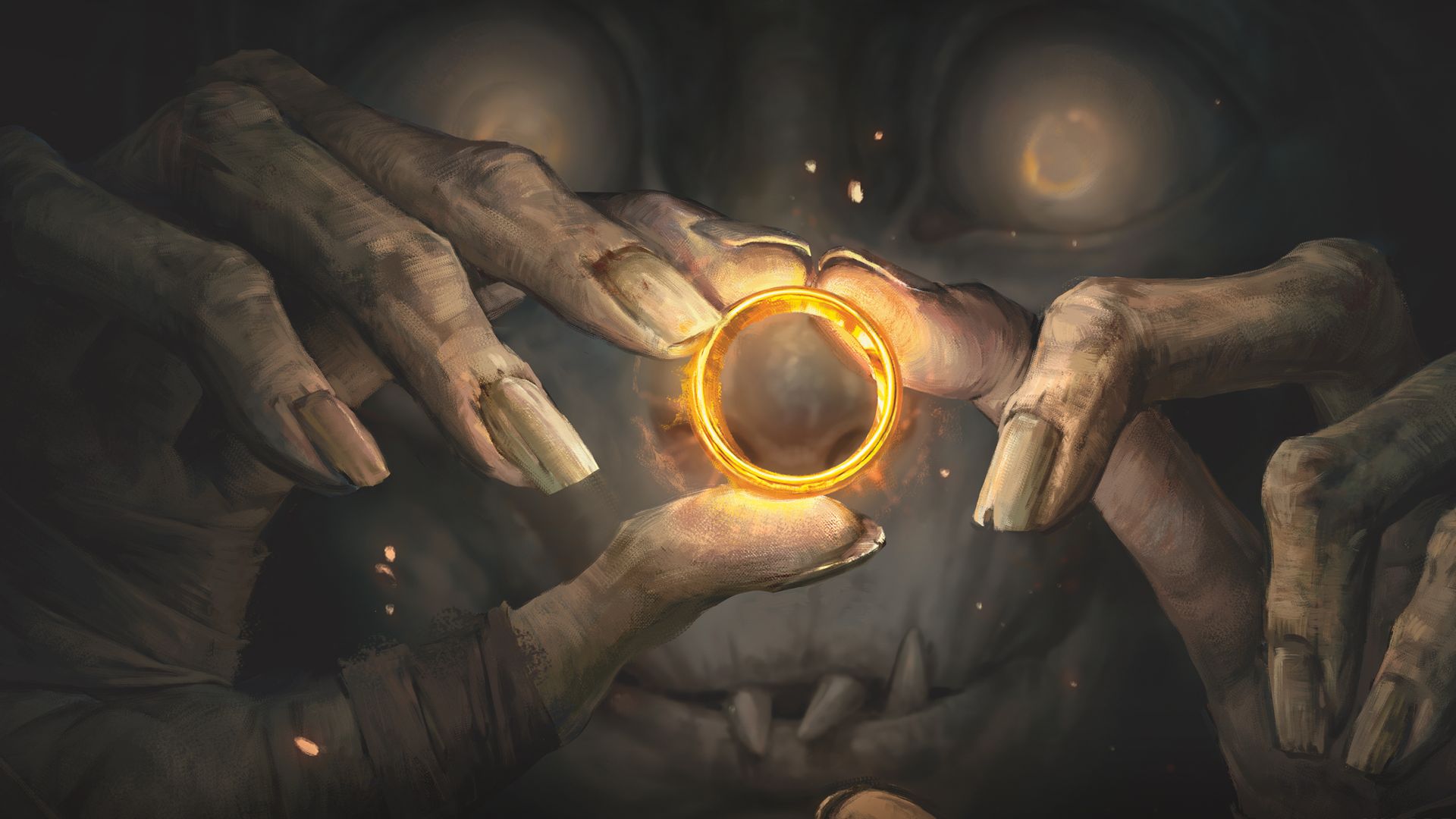
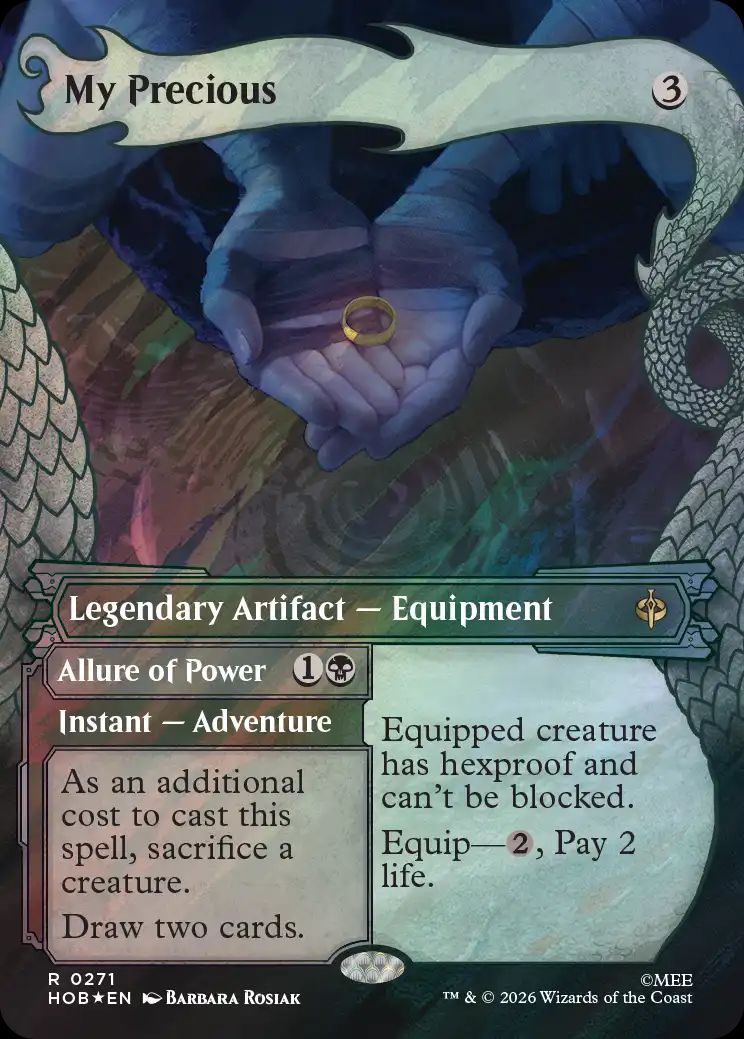
There are also now three cards for the One Ring. The Hobbit set adds My Precious, representing the Ring as Gollum's, whereas The Lord of the Rings set had it as both Bilbo's Ring and in its final form as The One Ring. (There was also an instant called Slip on the Ring to represent the act of using it.) Again, the cards are all mechanically distinct and depict a different aspect of Tolkien's story. But at the same time, it's tough to see the slight differences between the 2023 Middle-earth set and the 2026 one as demanding a whole separate release.
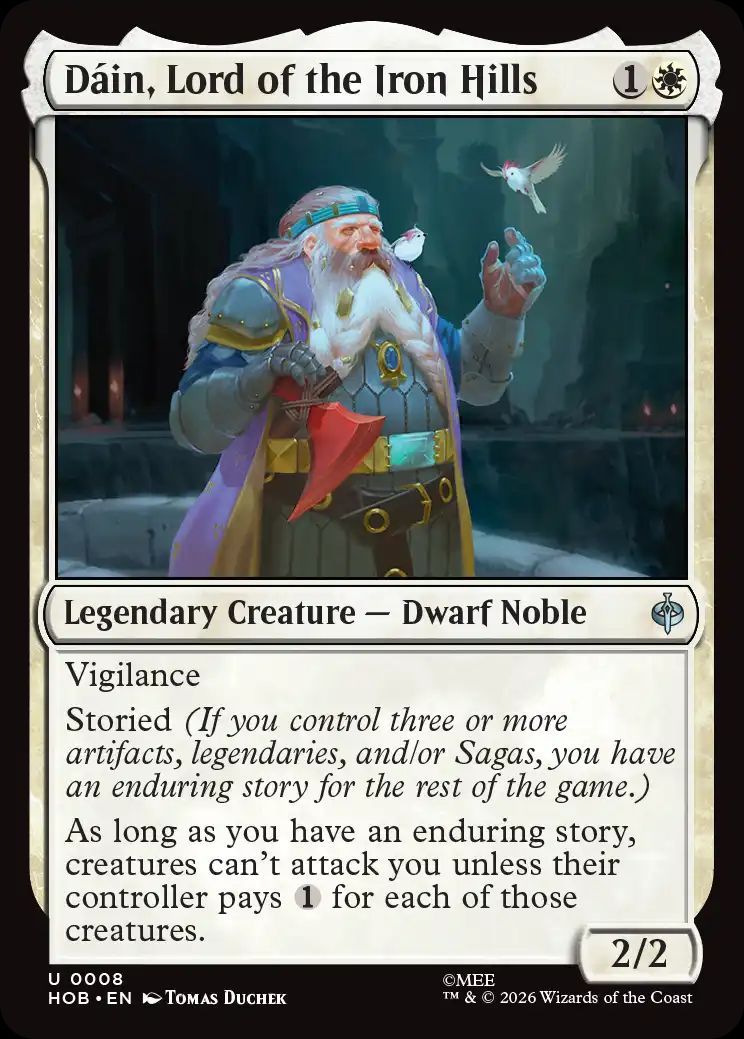
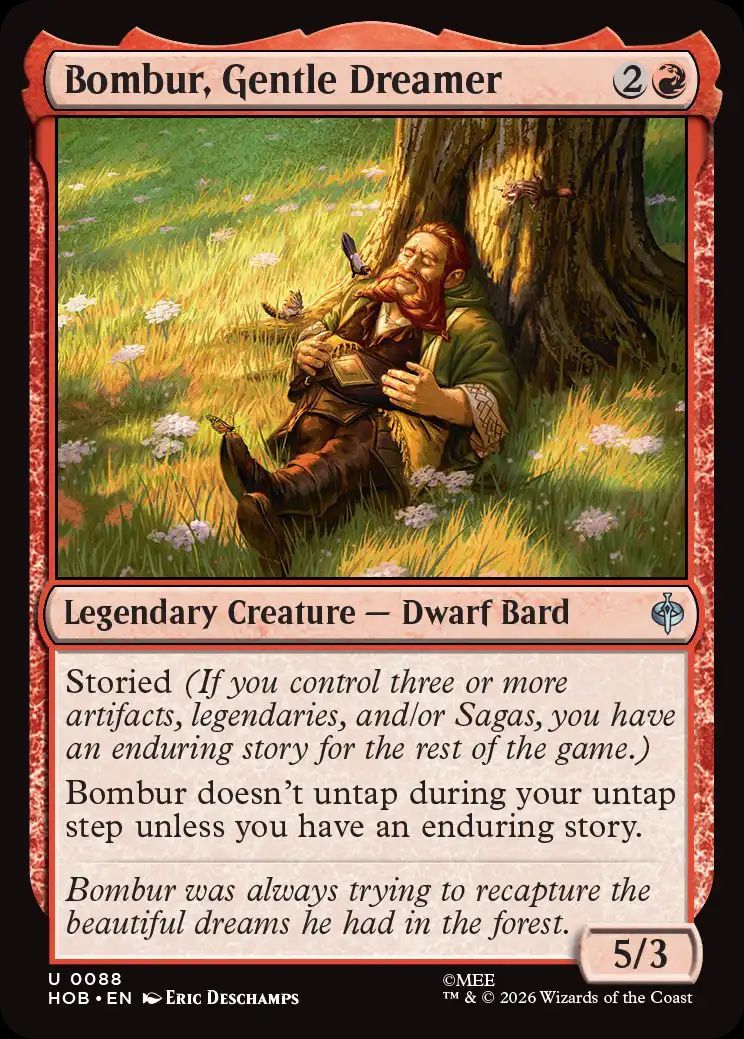
There are a couple of other brand new mechanics alongside hone. The dwarves get storied, a condition that activates when they have "three or more artifacts, legendaries, and/or Sagas" and has different consequences based on the dwarf. Dáin, Lord of the Iron Hills, for instance, makes your opponent pay a point of mana for each creature they want to attack you with if you're storied enough to deserve it.
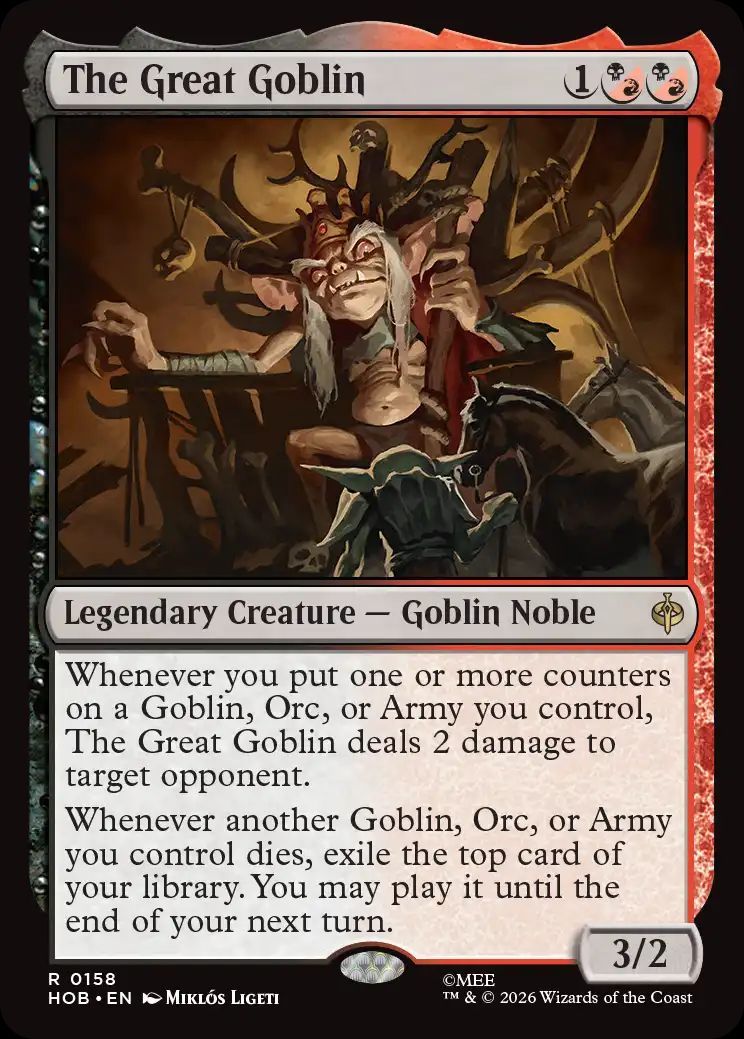
The humans of Laketown get recruit, which lets them draw a card and discard one, giving them a 1/1 human soldier if that discard was a nonland card. Meanwhile, amass, which was used to build armies of orcs in The Lord of the Rings, can here be used for armies of goblins—only fair since The Hobbit doesn't use the word orc for its equivalent monsters.
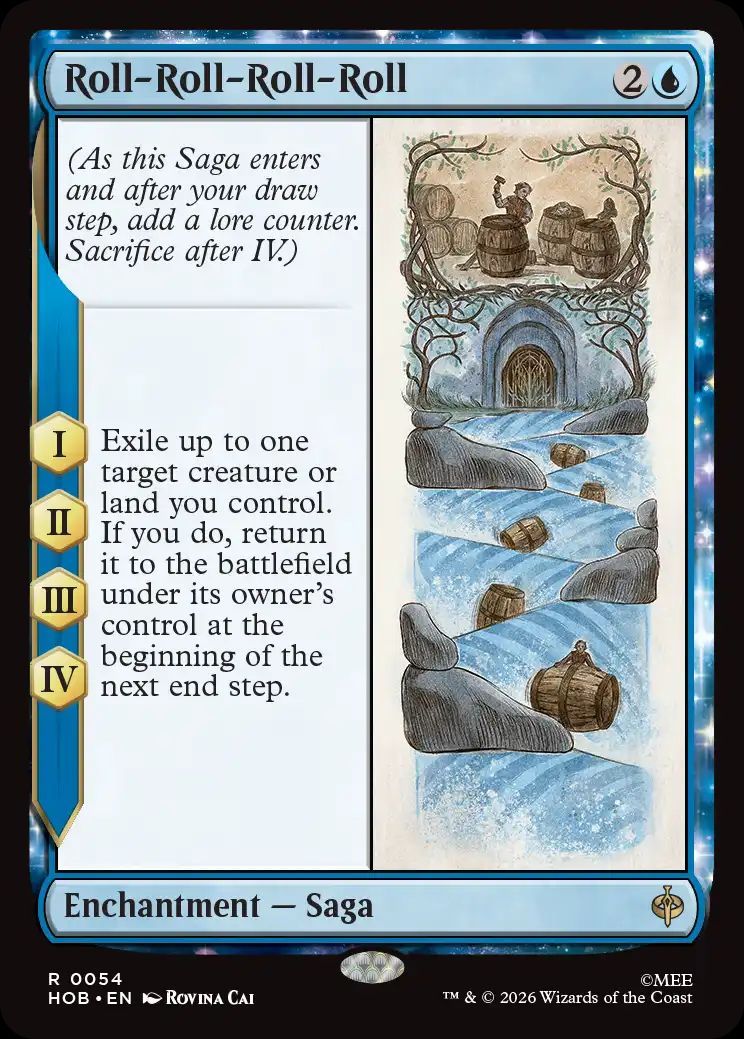
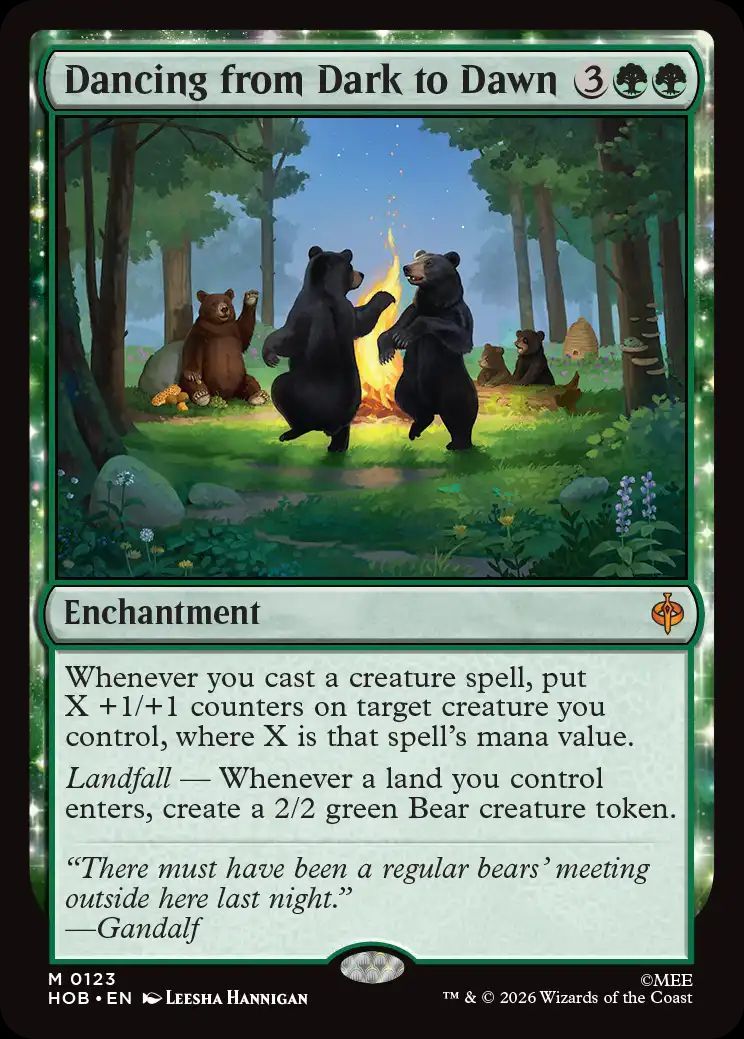
Each of these additions is fine, and I'm pleased to see several new adventure cards in this set, and the return of saga cards based on Tolkien's songs, because The Hobbit includes such bangers as Roll-Roll-Roll-Roll and the goblin singalong classic Burn, Burn, Tree and Fern. There's definitely a more whimsical edge to this set, with dancing bears and trolls turning to stone, making it feel more like the charming talking-animal set Bloomburrow, which is no bad thing.
But I'm glad it's a smaller release than the deluxe-sized Lord of the Rings: Tales of Middle-earth was. Nobody in their right mind would try to stretch something based on The Hobbit to be the same size as The Lord of the Rings, would they? Surely not.
Keep up to date with the most important stories and the best deals, as picked by the PC Gamer team.
Magic: The Gathering The Hobbit will be in prerelease from August 7–13, with a digital release in Arena on August 11, and its full tabletop release on August 14.
Jody's first computer was a Commodore 64, so he remembers having to use a code wheel to play Pool of Radiance. A former music journalist who interviewed everyone from Giorgio Moroder to Trent Reznor, Jody also co-hosted Australia's first radio show about videogames, Zed Games. He's written for Rock Paper Shotgun, The Big Issue, GamesRadar, Zam, Glixel, Five Out of Ten Magazine, and Playboy.com, whose cheques with the bunny logo made for fun conversations at the bank. Jody's first article for PC Gamer was about the audio of Alien Isolation, published in 2015. Jody edited PC Gamer Indie from 2017 to 2018, and he eventually lived up to his promise to play every Warhammer videogame. %!s()
Last year, Eli Roth decided to take matters into his own hands.
After his experience on Lionsgate’s $120 million video game adaptation, Borderlands (2024), went awry, the filmmaker launched his own soup-to-nuts company, The Horror Section, to bypass the studio system entirely. Together with his partners, Roth aims to shepherd genre films from development through release without forcing filmmakers to navigate layers of studio oversight and executive mandates that so often shape creative decisions.
… %!s()
The Horror Section’s inaugural release is Roth’s unrated splatterfest known as Ice Cream Man, which opens wide through Iconic Events Releasing on Aug. 7. Throughout his career, Roth has had to pull some of his punches in response to MPA-driven studio notes and exhibitors’ longstanding preference to avoid anything that exceeds an R-rating. But one recent horror franchise shattered that convention, opening the floodgates for more unrated theatrical releases like Ice Cream Man.
“There is a [theatrical] audience for the fully unhinged unrated movie with full-on gore,” Roth tells The Hollywood Reporter. “Once Terrifier 3 opened to around $20 million, all of a sudden, AMC, Regal, Cinemark and all the chains said, ‘Yeah, we will play an unrated movie.’”
Following the success of his feature directorial debut, Cabin Fever (2002), Eli Roth enlisted his childhood friend Noah Belson to co-write a screenplay about a creepy ice cream man whose frozen treats transform children into bloodthirsty, maniacal killers. But its risqué premise in which kids brutally murder their parents and teachers made financing nearly impossible to secure, leaving the project to languish on a shelf for more than two decades. Roth ultimately dusted it off to kick-start The Horror Section, viewing it as the perfect calling card for the company’s slate of unapologetically offbeat genre films.
Drawing inspiration from Steven Spielberg’s 24-minute Omaha Beach battle in Saving Private Ryan, Roth’s Ice Cream Man stages a 30-minute school-set sequence that unleashes nonstop mayhem involving roughly 100 child actors. Despite the set piece’s over-the-top bloodshed, the young cast and their parents joyously embraced the gory chaos.
“The parents had to have visual eye contact with their children at all times, and they were coming up to me at the monitor. Mothers were like, ‘My daughter would love a fake head. Can you give my son a leg?’” Roth recalls mid-laugh. “Once we laid out the blood and guts, the kids just started playing tetherball with a head or jump-roping with guts. The parents came up to me after to say, ‘This is the most fun day my kid has ever had.’”
After Curry Barker’s Obsession and Kane Parsons’ Backrooms combined to gross nearly $900 million at the global box office this past summer, Roth is weighing in on the two horror phenomenons. Obsession followed a path reminiscent of Roth’s own Cabin Fever, premiering at TIFF before igniting a bidding war and later becoming a highly profitable theatrical release. Roth believes the film should earn Barker and star Inde Navarrette the industry’s highest honors. He also reveals that he attempted to recruit Parsons and Backrooms after catching wind of the filmmaker’s viral YouTube series in 2022.
“Obsession should win best [original] screenplay, and Inde Navarrette should win best actress. Everyone else should be nominated because it’s that good,” Roth says. “Four years ago, I reached out to Kane Parsons about how much I loved Backrooms, but I think Peter Chernin [North Road] already had it then.”
Roth cautions the town against hastily rushing to recruit more YouTubers in hopes of catching lightning in a bottle again. In his view, the success of both Barker and Parsons wasn’t simply the product of existing online followings. Each filmmaker was also surrounded by experienced producers and collaborators who served as mentors. Thus, Roth hopes the next YouTube creator to make the leap to features is afforded the same level of guidance and support.
“We’ve had an incredible run [of YouTubers succeeding on the big screen], but I don’t necessarily think that YouTube is the answer. It’s a component. If you’re going to get someone off of YouTube, don’t just throw them into the system,” Roth says. “Pair these younger filmmakers with an experienced filmmaker like Jason Blum, Osgood Perkins, James Wan or the Duplass brothers so they can help bring out the best in their work. That will set them up for success like all the smart producers who surrounded Curry Barker and Kane Parsons.”
Below, during a conversation with THR, Roth also discusses his personal note network on Ice Cream Man considering he no longer had to entertain studio notes.
***
In the past, you’ve been beholden to studio notes because they were beholden to the MPA in order to get the movie into theaters with an R rating. But now you’re beholden to no one thanks to the Terrifier franchise’s introduction of unrated screenings?
Well, beholden is probably the wrong word. The MPA adjusts with the tastes of the times, so I’ve had an amazing experience, and a really good open dialogue, with them. It was never a fight with the studios, but there were always disagreements that were impossible to prove. Someone would say, “Take this out. It’s going to offend audiences.” And I’d say, “No, when you go to see this movie, you want to be shocked and offended.” Sometimes, it’d be gore, and sometimes it’d be language.
For Ice Cream Man, I didn’t want to have to deal with that. I wanted to make something that’s pure and raw and from my head. I wrote this movie with Noah Belson in 2003, and for years, people would read it and go, “You can’t do this. You can’t ask children to even perform these scenes. This is too insane.” And I’d say, “No, kids love gore. They love Halloween. I want to make this the craziest movie I’ve ever done.”
Then I saw what Terrifier 3 did. There is an audience for the fully unhinged unrated movie with full-on gore, and the theater chains learned that people will come to see it in a theater. So once Terrifier 3 opened to around $20 million, all of a sudden, AMC, Regal, Cinemark and all the chains said, “Yeah, we will play an unrated movie.”
Iconic Releasing and I went to CinemaCon, and I sat down with every theater chain. I said, “I’m starting this company called The Horror Section. If I make unrated movies, will you put them in your theaters?” And they said, “Absolutely. Anything you want to do, we can help tell the horror fans.”
I also said, “You can get comedy on your phone. You can get drama on TV. But you can only get the true adrenaline rush of seeing a horror movie in the theaters. It’s like Coachella. You can watch a Coachella performance on your phone, but it’s not the same as being there. You can pirate a movie, but you cannot pirate the experience and adrenaline rush. All respect to streamers, but I’m not making horror movies for streamers. I am making horror movies that are theatrical events with the longest window possible.” And the theater chains said, “We will fully support you.”
Then I put together the company, and I raised the money [a production budget of $5.5 million, plus a few million for P&A]. After 20 years, I know how to [make a movie]. I know how to write it, produce it, release it and publicize it. Now, between The Horror Section and Iconic, we have an incredible team, and we’ll see what happens when we put Ice Cream Man out on Aug. 7.
Eli Roth on the set of Ice Cream Man.
The Horror Section
Now that you don’t have studio execs looking over your shoulder, who do you ask for notes on a draft or a cut?
I’ve always gone to my writer-director friends. I’ve always been very thankful that I can go to Quentin Tarantino or Edgar Wright or Sam Levinson or Sean Baker or Ti West. If I had a cut of a movie that was ready before I showed it to the studio or released it, I’d go to different people that I really trust and know that they aren’t going to lie to me. They’re going to go, “Okay, this works, this doesn’t work.” Sometimes you want to save them till later in the process, but sometimes it’s earlier in the process. So there’s a group of filmmakers friends that I really trust to not lie to me and not let me fall on my face.
This time, I went to Bob Murawski, one of the best editors; Michel Aller, who cut Thanksgiving; and [Tarantino’s editor] Fred Raskin. They didn’t cut the movie; Matt Lyons did. But I trust Fred, Bob and Michel. They’re all friends. So I showed them the movie, and all three of them had such strong notes for me and my editor.
I knew Bob would get it. He said, “This is Devil Times Five times 50.” Devil Times Five [aka People Toys] is such an obscure pull. And then Quentin was like, “Yeah, Bob Murawski said it’s Devil Times 50.” It’s a very specific language.
Fred Raskin, who I’ve known since film school, is a friend. He watched it on a weekend and gave me really great notes. So I’ve always had a team of really, really smart filmmakers that I trust that will give me honest feedback.
Charlie Storer as Piper in Ice Cream Man
The Horror Section
How did you shoot Ice Cream Man with 100 kids? And how did you get 100 kids’ parents to sign off on all the bloody mayhem?
You cannot believe how many horror fans are out there. I was a camp counselor for three summers, so I love kids and love working with kids. When we were shooting the playground attack, I was super upfront because I knew people were going to Google my name. I was like, “We’re making a horror movie. I want this to be The Birds, but with kids going crazy and full-on gore.” So we were pretty clear about it, and anyone who didn’t want to be involved is generally not going to sign up.
Once you put the kids in monster makeup, they get it. They love it. These kids have seen every episode of The Walking Dead. They may not have seen the Terrifier movies, but they have Art Crispies backpacks. Their parents were also younger than me, so they’ve watched my movies. The parents had to have visual eye contact with their children at all times, and they were coming up to me at the monitor. Mothers were like, “My daughter would love a fake head. Can you give my son a leg? My son wants an arm. My daughter needs more blood.” So they’re all huge horror fans.
I made it a team exercise. I said, “I brought you here for a reason because I want everyone to have their moment. We’re all scene partners. We’re all going to make this great, but only if we all listen and work together. The more you listen to me, the more I’ll be able to put the camera on all of you.” It’s the same way I approached the riot scene in Thanksgiving.
We had to break the kids every 45 minutes. By the time you bring them out and set them up and have the 20 stunt people get them in fake blood, you have one or two minutes to get the shot. It was the craziest day of shooting in my life. But once we laid out the blood and guts, the kids just started playing tetherball with a head or jump-roping with guts. They were all laughing, and the parents came up to me after to say, “This is the most fun day my kid has ever had. You were so sweet.” I’m very even tempered. I have good energy. I don’t yell.
But they’re kids, and sometimes, you have to just roll with it. We were about to shoot a scene, and I was like, “Action.” Stunt people were hanging and ready to be pulled down, but no one was moving. There was a kid in the middle with his hand up, and I went, “Yes?” And he said, “My shoe’s untied.” And I said, “Okay, we’ll wait.” Then he put his hand up again, and I said, “Yes?” And he said, “But where’s my mommy?” And I realized he does not know how to tie his shoes because he’s too young. And I was like, “Can someone help him tie his shoes?”
They generally also had no fear whatsoever, but when we lined up 100 kids to get the ice cream, we had one minute to get the shot. I started rolling the camera, and a bee came along. And one kid was like, “A bee!” Then they all ran, and that was it. So the bee was now directing my movie. But at the same time, they gave us moments that we could have never predicted. The energy they brought to the set was so wonderful.
There were kids that were crying at the end of the shoot because they didn’t want to get out of the makeup. They were sad that it was over. It was this beautifully wild experience. They did arts and crafts with the brains. Overall, they know the difference [between reality and make-believe]. They know what pretend is. So it was a mix of Halloween and Christmas.
You know what it’s like to have a low-budget indie horror movie premiere at TIFF to great fanfare before having a highly profitable theatrical run. So what lessons do you hope the town learns from the Obsession craze?
Obsession should win best [original] screenplay, and Inde Navarrette should win best actress. Everyone else should be nominated because it’s that good. It’s just an incredible film. Everyone is realizing that there are YouTube creators who can bring their audience to the theater, which is amazing. If I was a teenager, I would’ve started on YouTube. But it’s not like Curry Barker was the biggest YouTuber. He brought in an audience, but the movie itself is what carried the word of mouth. Everyone was saying, “Have you seen Obsession?”
Four years ago, I reached out to Kane Parsons about how much I loved Backrooms, but I think Peter Chernin [North Road] already had it then. I remember going to a barbecue years ago, and all these nine-year-olds were talking about was Backrooms. So I went down a rabbit hole watching it all, and it was really scary. I thought, This kid [Parsons] is a genius. So Kane Parsons and Curry Barker have been at it for years, and they’re so talented.
We’ve had an incredible run [of YouTubers succeeding on the big screen], but I don’t necessarily think that YouTube is the answer. It’s a component. If you’re going to get someone off of YouTube, don’t just throw them into the system. Pair these younger filmmakers with an experienced filmmaker like Jason Blum, Osgood Perkins, James Wan or the Duplass brothers so they can help bring out the best in their work. That will set them up for success like all the smart producers who surrounded Curry Barker and Kane Parsons.
We want to raise that next generation for success. You don’t want a bunch of YouTubers to be given a shot and fall on their face to where people go, “No, that doesn’t work.” It’s about pairing them with veteran filmmakers so they can help grow their careers by making the best movies possible.
*** Ice Cream Man opens in movie theaters nationwide on Aug 7. %!s()
The rivalry between NFL superstars Tom Brady and Peyton Manning is set to be the focus of a feature documentary.
Winter State Entertainment is developing Brady vs. Manning, a documentary film based on author Gary Myers’ 2015 New York Times best-selling book of the same name, The Hollywood Reporter has learned. Hamid Torabpour and Camille Torabpour are attached to direct the project that will adapt the work that Myers wrote after decades of covering the two elite athletes as a sports journalist.
… %!s()
Brady vs. Manning will include exclusive interviews, archival footage and detailed storytelling to examine the fierce competition and friendship between the two athletes. Among those participating in interviews for the film are teammates, coaches, executives, journalists and other prominent figures who witnessed the epic rivalry firsthand. Additional casting and distribution announcements are expected at a later date.
Producers for Brady vs. Manning include Myers, Chris Cooney, Sam Sokolow, Alec Sokolow, Nic Levis, Willie Roaf, Angela Roaf, Dr. Mark Smith, Nick Hagen and Leroy Butler.
Inducted into the NFL Hall of Fame in 2021, Manning won Super Bowl XLI as quarterback of the Indianapolis Colts, and he later won Super Bowl 50 with the Denver Broncos. Brady is not yet eligible for the Hall of Fame but is considered a shoo-in, having won six Super Bowls with the New England Patriots and a seventh with the Tampa Bay Buccaneers before retiring in 2023. With Manning having been named NFL MVP five times, while Brady landed the honor three times, both are universally regarded as among the best quarterbacks in the history of the sport.
“We’ve always believed that the greatest sports stories are ultimately human stories,” Winter State Entertainment founders Hamid and Camille Torabpour say in a joint statement. “Brady and Manning gave fans unforgettable moments on the field, but what inspired us most is the mutual respect, relentless preparation and pursuit of greatness that defined their rivalry. Gary’s book captures those qualities brilliantly, and we’re honored to bring his extraordinary work to the screen alongside such an accomplished producing team.”
Adds Myers, “Tom Brady vs. Peyton Manning is the greatest individual rivalry in the 106-year history of the NFL. The careers of the two of the best QBs to ever do it! And Brady and Manning ran side by side. They faced each other an astounding 17 times — 14 more than [John] Elway vs. [Dan] Marino — and were always in each other’s way to get to the Super Bowl. Their games against each other were must-watch and defined an era. Pro football will never see a rivalry like this again! This documentary by Winter State Entertainment will be compelling.” %!s()