There may never be an “Entourage” revival, but fans can get a little taste of Ari and Vince in a new ad.
Jeremy Piven and Adrian Grenier, who played super agent Ari Gold and movie star Vinny Chase on the long-running HBO comedy, have reunited for a three-minute spot from gambling app Betr, founded by Jake Paul and Joey Levy. They’re not reprising their “Entourage” roles — series creator Doug Ellin was not involved in the ad — but Piven and Grenier’s on-screen dynamic is all too familiar.
… %!s()
The ad marks the first time Piven and Grenier have shared the screen since the 2015 “Entourage” movie, which arrived four years after the series wrapped its eight-season run on HBO.
In the ad, Piven pulls up to a Miami mansion party in a sports car and is hassled by a bouncer. In typical Ari Gold motormouth fashion, he says his name is “Ted Lass-hole” and mocks the security guard’s “tiny little meat bubble” of a brain. When he finally gets in, he asks, “Where’s my pretty boy?” and spends a couple minutes wandering through the party in search of Grenier. On the way, he runs into Lonzo Ball, LiAngelo Ball and Paul, who tells Piven, “Don’t touch me,” as he touts his digital casino.
Finally, Piven makes it to the waterfront backyard, where Grenier is posted up on a yacht. Piven immediately goes into agent mode: “I got something for you: International thriller … you are the good-looking jewel thief — of course you are — and I am the dirty cop hunting you down.” Grenier says he’s done with movies and wants something “better,” which leads Piven to pitch him to Paul as the new face of the Betr app. As Paul celebrates, Piven tells Grenier, “Now we negotiate … we’re going to take all his money.”
Courtesy of Betr
After nearly 10 years apart, the “Entourage” stars reunited earlier this year when Grenier attended one of Piven’s comedy shows in Austin. Piven posted a photo of him and Grenier on Instagram and wrote, “Haven’t seen this guy in almost a decade, so imagine my surprise when I’m standing on stage and I see him supporting in the audience.”
In a joint statement about their reunion on the Betr ad, Piven and Grenier said in part, “It’s been a long time since the two of us have shared a screen, and the second we got back together, it felt like no time had passed. There’s a chemistry and shorthand that comes from everything we experienced together, and it was great to tap back into that and have some fun with it again.”
While a reboot of “Entourage” has never legitimately been in development, the creator and stars have talked about being open to extending the hit comedy. Grenier said earlier this year that if there was a spinoff, he and Piven would be “ready to work.” And Piven has said that, based on the number of “Entourage” fans at his stand-up shows, he believes there is a “hunger” for more of the show.
This month, Ellin threw cold water on the possibility, saying on the “Joe Vulpis Podcast” that a reboot or spinoff is unlikely, and “I don’t spend one second thinking about ideas unless somebody’s paying me.”
The closest Ellin got to a revival was a 2022 pilot titled “Ramble On,” which starred “Entourage” favorites including Kevin Connolly and Kevin Dillon playing themselves alongside Charlie Sheen. The project was a dramedy about established stars looking to reinvent their careers. Ellin released the trailer for “Ramble On,” but the series ultimately failed to sell to a distributor.
The ad introduces the Betr 2.0 super app, which includes several real-money gaming products under one umbrella. “Betr today is a fundamentally different company than the one we launched, and Predictions going live is an important milestone that allows us to introduce Betr 2.0 and the Super App we’ve been building towards,” said Levy in a statement.
Settler terrorists supported by Benjamin Netanyahu’s government are committing ethnic cleansing in the West Bank, Ed Miliband has said, in the UK’s starkest condemnation since the foundation of the Israeli state.
… %!s()
Andy Burnham, the prime minister, said he would “not stand by” as horrific suffering continued, writing in the Guardian that for too long the UK had been hesitant to act, “fearful of being accused of being anti-Israel”.
In the Commons, the foreign secretary said the government would now take the official position that Israel’s occupation of the West Bank was unlawful in its entirety, as he announced sweeping sanctions on trade with Israeli settlements.
The dramatic shift in the UK’s position comes after a summer of intense diplomacy against a backdrop of increasing settler violence in the West Bank, which has resulted in 12 nations – including France and Canada – announcing they would impose sanctions.
In a joint statement Burnham, Emmanuel Macron and Mark Carney said: “The time has come to take further action to uphold our commitment to protect the two-state solution, our interests and to stand up for our values, before it is too late.”
In response, the Israeli foreign minister, Gideon Saar, announced the closure of the UK consulate in Jerusalem and that 12 British MPs and activists – including Jeremy Corbyn and Labour MP Diane Abbott – would be banned from entering Israel.
Saar accused Miliband of “outrageous lies” and said the UK government was “systematically working against the state of Israel”. Washington’s ambassador to Israel, Mike Huckabee, warned that the US could take retaliatory action over trade.
However, the US secretary of state, Marco Rubio, said Washington would “obviously” not follow the UK’s course of action, and did not want to see the West Bank destabilised, but declined to comment further. Burnham had briefed Donald Trump on the plan in advance.
In his statement to parliament, Miliband said the UK government would enact:
An import ban on goods from illegal settlements in the occupied territories and a new ban for arms licences and other exports that “materially contribute to the occupation”.
A comprehensive sanctions regime against providing services such as construction or financing for Israeli settlements and a ban on advertising them in the UK.
Personal sanctions against key individuals accused of promoting settler violence.
A new ban for arms licences and other exports that “materially contribute to the occupation”.
UK foreign secretary announces sanctions on trade with Israeli West Bank settlements – video
The foreign secretary said the UK’s actions would show that “Britain is not silent in the face of deep injustice, and nor is it powerless”. In an emotional statement, he described the agony he had heard from Palestinians in the West Bank whose homes had been destroyed and from doctors in Gaza who had seen children dying waiting for medical treatment.
The UK’s actions have been made increasingly urgent by Israel’s plans to expand the E1 settlement project east of Jerusalem, which could in effect cut off the north from the south of the West Bank, threatening the viability of any future Palestinian state.
Ministers expect the legislation to enforce the trade ban and sanctions to be in place within nine months, although they could be subject to legal challenge, which would result in a delay.
Miliband stopped short of describing Israel’s actions in Gaza as a genocide, as some on the left have demanded, saying the UK would wait for the determination of the international courts, but that there was evidence of “war crimes”.
Speaking in the Commons, he said: “The British government agrees that there is ethnic cleansing of Palestinians in areas of the West Bank, perpetrated by settler terrorists.
“All too often the Israeli government has turned a blind eye to this and worse, members of it have made statements and taken actions to support the forced displacement of Palestinians.
“I recognise the gravity of saying this, but the truth is the least the people who face such suffering deserve. And it should be the prelude to justice.”
Miliband suggested that Keir Starmer had been reluctant to take action against West Bank settlers during his time as prime minister. “I’ll say very bluntly we should have acted earlier. And it has taken the new prime minister to come in and recognise the gravity of the situation,” he told MPs.
Burnham, who apologised for Labour’s stance on Gaza when he became prime minister, attempting to shore up votes on the party’s progressive flank, also said the previous government had been too slow to act.
Writing in the Guardian , he said: “We have called for years for a two-state solution in the Middle East, but we must recognise that those words are meaningless unless we back them up with action. For too long, we have been hesitant to act, fearful of being accused of being anti-Israel.”
Miliband said he was taking the action as foreign secretary but also as a “proud British Jew” with relatives who had found safety in Israel after the Holocaust. “I am proud of my Jewishness and unwavering in my support for the state of Israel,” he said.
“And there is absolutely no contradiction between this and my support for the state of Palestine. Indeed, quite the opposite. The two-state solution is based on an explicit belief that the only route to security for both peoples is to live side by side in peaceful coexistence with freedom, security and self-determination.”
The foreign secretary said that to respond to threats against Jews around the world, the UK would also impose sanctions on Lebanese Hezbollah’s financing arm, Al-Qard al-Hassan, and reimpose major economic sanctions on Iran in line with the EU and US.
The action marked the beginning of a new approach towards Israel and Palestine, he said, one that not only condemned but took action. “Our argument is not with the people of Israel, with whom the UK has unshakeable bonds. Our argument is with the conduct of its government.”
Burnham wrote that the British Jewish community must not be blamed for the actions of the Israeli government. “[It] is wrong, plain and simple. And it is antisemitism, plain and simple,” he said.
“I met with the representatives of the Jewish community just last week. I know the fear they live with day by day. My government will stop at nothing to ensure they are safe and to stamp out antisemitism in every part of our society.”
The shadow foreign secretary, Tom Tugendhat, said “illegal settlements are wrong” but suggested that Miliband was introducing policies the Foreign Office did not believe would work. Whitehall insiders denied this was the case.
The senior Conservative MP also said there was a risk of harming Palestinians who worked in the West Bank and that “the economies of Palestine and Israel were too interconnected” for a ban on goods for illegal settlements to work.
But the veteran Tory MP Edward Leigh gave full backing to the sanctions. “I am proud to say as the longest serving member of the Conservative Friends of Israel that I absolutely and fully support what he is doing today because it is about standing up for freedom, for morality and justice for all people in this world,” he said.
The move forms part of a broader attempt by Burnham’s government to reset British policy towards Israel, in part to regain the trust among Muslim and progressive voters in the UK they lost in the early days of the conflict.
It was overwhelmingly welcomed by Labour MPs, many of whom have been struggling with the issue in their constituencies, although some sounded a note of caution about the potential impact on local Jewish communities.
Emily Thornberry, the Labour chair of the foreign affairs select committee, said: “At last! I am so very happy to see a British government – a Labour British government – finally doing the right thing and taking a strong stance … no longer a bystander wringing their hands.” %!s()
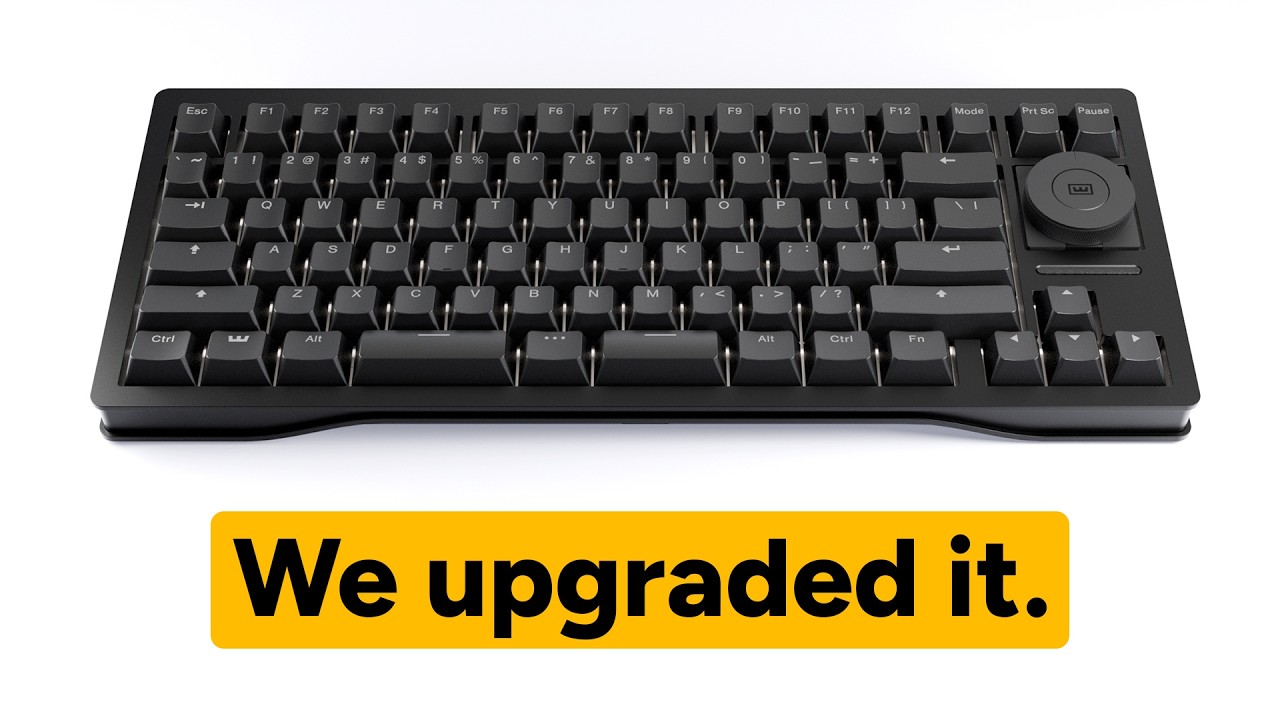
The Wooting 80HE has been out for a while, but we reckon it's still the best gaming keyboard on the market. It looks great, isn't too diminutively sized, has fantastic and very customisable software, and, of course, Hall effect switches for adjustable actuation and rapid trigger. All for a pretty reasonable price, mind you. And now it's getting an upgrade
… %!s()
Wooting has just announced the Wooting 80HE+, available for pre-order on September 17. That's a week on Thursday.
There are a number of changes coming to the new 'Plus' version, including of course the addition of a BIG KNOB, but also some less visible but arguably more important changes.
Specifically, I'm talking about the inclusion of the same Lekker Tikken switches that you'll find in the Wooting 60HE V2. Our Jacob Ridley has really taken to this keyboard and its switches, as it's much more stable and generally pleasant-sounding and -feeling than the Lekker60 V2 switches in the original 80HE. Combine this with the new FR4 plate inside the 80HE+ and you can almost certainly expect a wonderful typing experience.
The best just became better 🌟The Wooting 80HE+ is joining the Wooting roster soon!Wanna be up to date and the first to snap a pre-order on September 17?Be sure to sign up for the newsletter & news here: https://t.co/30XHJD72f2 pic.twitter.com/UpmLIO6NlwSeptember 8, 2026
The other addition is another of our Ridley's faves: a split spacebar module. this gives you extra keys by splitting the spacebar into three.
With the original 80HE costing about $200, I'll be expecting similar for the 80HE+, And Wooting does say the pre-assembled versions will be "almost the same price". It's an expensive keyboard, for sure, but if you want the competitive benefits of Hall effect, despite the prevalence of cheaper options, we've not found a better overall choice the original 80HE. Hopefully we'll be able to say the same about the 80HE+ before long.
The PC Gamer Circuit Breaker newsletter breaks down the latest PC gaming tech, and finds you the best deals on the best products
Jacob got his hands on a gaming PC for the first time when he was about 12 years old. He swiftly realised the local PC repair store had ripped him off with his build and vowed never to let another soul build his rig again. With this vow, Jacob the hardware junkie was born. Since then, Jacob's led a double-life as part-hardware geek, part-philosophy nerd, first working as a Hardware Writer for PCGamesN in 2020, then working towards a PhD in Philosophy for a few years while freelancing on the side for sites such as TechRadar, Pocket-lint, and yours truly, PC Gamer. Eventually, he gave up the ruthless mercenary life to join the world's #1 PC Gaming site full-time. It's definitely not an ego thing, he assures us. %!s()
Tim Cook and Warren Buffett are showing what former CEOs can do for their companies
By
Theron Mohamed
You're currently following this author!
Want to unfollow? Unsubscribe via the link in your email.
…
Buffett has long been a fan of Apple and Cook's leadership.
VALERIE MACON/AFP via Getty Images; Daniel Zuchnik/WireImage
Two iconic business leaders are showing that stepping down as CEO doesn't have to mean stepping away from a company.
Tim Cook resigned as Apple's CEO this month after 15 years in the job, while Warren Buffett ended his six-decade run as Berkshire Hathaway's CEO at the turn of this year.
Yet Cook is set to become Apple's executive chair, earning a CEO-sized paycheck and playing an ambassador-like role. As Berkshire's chair, Buffett continues to pick stocks and help make key decisions.
There are clear parallels between the two men's approaches to post-CEO life, Kevin Carpenter, who writes an investing Substack named Kingswell and "The Berkshire Beat" newsletter, told Business Insider.
"They each passed the torch to the next generation, while still staying heavily involved behind the scenes," Carpenter said, noting that Cook has said Apple will remain his main focus.
Apple and Berkshire didn't immediately respond to requests for comment.
Keeping busy
Buffett told CNBC in March that Cook "somehow gets along with everybody in the world." Carpenter said that this ability could allow Cook to be a "diplomat of sorts" for Apple and "leverage the relationships" he has with governments, regulators, suppliers, and other parties.
Apple has said that as chair, Cook will help with "engaging with policymakers around the world."
Cook has been described as a "Trump whisperer" for his close relationship with the president. During his tenure as CEO, Apple gave gifts to Trump, donated toward the construction of the White House ballroom, and pledged to invest in US manufacturing.
After news broke of Cook's departure, Trump posted on Truth Social that he had "always been a big fan" of the executive, and praised Apple's success under Cook's leadership.
Cook, who succeeded Apple cofounder Steve Jobs, took the company to new highs by scaling and strengthening its global supply chain and catering to China's mushrooming middle class.
Apple clearly expects Cook to continue generating value, as his target compensation for fiscal 2027 is $45 million before cash bonuses, not far off the $58 million figure for new CEO John Ternus.
As for Buffett, he's responsible for building an Alphabet stake from scratch into the third-biggest position in Berkshire's stock portfolio in under 12 months. The holding was worth around $38 billion at the end of June.
Berkshire's new CEO, Greg Abel, has said he frequently speaks with Buffett and consults with him on major decisions, including the acquisition of housebuilder Taylor Morrison and Alphabet's private placement earlier this year.
"Just like Buffett is making Abel's job easier by staying so involved with Berkshire's stock portfolio, I think Cook will do similar for Ternus by handling stickier issues in the political, antitrust, trade realm that might be too much for a brand new CEO," Carpenter said.
Finding the right balance
Having Cook and Buffett remain so central to their companies could yield benefits but also poses risks, Larry Cunningham told Business Insider.
"Keeping an iconic predecessor as chairman can give a new CEO both continuity and counsel — but only if the predecessor resists becoming a shadow CEO," said the director of the University of Delaware's Weinberg Center for Corporate Governance and the author of several books about Berkshire.
"The key is 'wisdom without command,'" Cunningham said.
If Cook and Buffett allow their successors to run the show, they may be able to avoid pitfalls such as leadership confusion and power struggles, while adding value by taking on responsibilities that suit their skill sets, namely diplomacy and picking stocks.
Read next
Theron Mohamed
You're currently following this author!
Want to unfollow? Unsubscribe via the link in your email.
Theron Mohamed is a London-based correspondent on the International team at Business Insider. His coverage spans finance, investing, wealth, markets, and the economy.Theron joined BI in 2019 as a reporter at Markets Insider and rose to the rank of correspondent before moving to the Trending team then the broader International team. He previously covered tech, media, and telecom stocks for Investors Chronicle magazine and had a brief stint on the Financial Times' Data team. He interned at the Wall Street Journal in New York where he primarily wrote for Heard on the Street.Theron has freelanced for The Independent, The Telegraph, WIRED, and several smaller publications. He holds an undergraduate degree in geography from the London School of Economics, and a master's degree in journalism from Columbia University.Theron often covers Warren Buffett, Michael Burry, and other elite investors. He also writes about the world's wealthiest people and shares financial advice from all manner of rich and successful people.Email Theron at [email protected] and follow him on X @theron_mohamed.
%!s()
This review is based on a screening from the Venice Film Festival. Musk will be released in theaters on October 16.
I like a long movie. Give me five hours of Russian journalists talking and I’ll gladly take six more, but if someone balks at the idea of spending 225 minutes (plus intermission) with Elon Musk — one of the world’s most off-putting celebrities — I couldn’t blame them. Directed by Alex Gibney, the documentary Musk is a wide-spanning exposé of things already known about the South African business magnate, who casts a long shadow on American politics. The film is certainly watchable; Gibney is a pop filmmaker after all, and this would make for great distraction when viewed in several parts, after scrolling through your streaming service of choice.
… %!s()
If you’re aware enough of global power players (or really, just online enough), then little in Musk will surprise you. However, the effects of seeing this much about the man laid end-to-end can be quite unsettling. So, Gibney and editor Michael J. Palmer deserve kudos for assembling a documentary epic that is — despite its lack of novelty — never boring. Although it eventually takes its subject to task over his troubling views and ventures, the film is surprisingly balanced, and gives Elon his flowers for achievements in electric cars and space exploration, up to a point. This helps answer a question Gibney poses in the opening minutes, about how so many people could become ensnared by his cult of personality, especially for someone with the charisma of a damp towel.
Elon himself declined to be interviewed; in fact, an early moment depicts a Twitter exchange where he turns Gibney down, but the director is not deterred. To retain his subject’s presence in a thematically fitting way — given Elon’s involvement in A.I. and his proclivity for wondering if we live in a simulation — Gibney’s team creates a hand-crafted digital avatar of the SpaceX CEO, with all the uncanny ugliness of an A.I. generated monstrosity (even though it isn’t one). This digital golem, who appears as though Musk had entered an arcade game and got trapped there, speaks lines from a database of everything the man has ever publicly said.
This flourish is not dissimilar to Rodney Ascher’s A Glitch in the Matrix, which builds digital representations of interviewees who believe they’re living in a computer — only in Musk, Gibney spends far less time on this and other individual conspiracies. Beginning with Elon’s early successes (as an investor, rather than an inventor), the film makes clear how he usurps companies before claiming them as his own, often stripping them for parts. Its initial hour is surprisingly nuanced for a figure either reviled or worshipped, with a fair amount of paternal backstory that explains at least some things about him. However, it soon gets into the weeds of why Elon is so downright weird, by way of interviews with several exes, and women with whom he’s fathered children.
To retain his subject’s presence in a thematically fitting way, Gibney’s team creates a hand-crafted digital avatar of the SpaceX CEO.“
Gibney is usually adept at deconstructing both famous figures and fanaticism. His works like Going Clear and The Inventor get to the root of how Scientology leaders and Silicon Valley swindler Elizabeth Holmes could ensnare so many, while his other film from this year, the Sundance premiere Knife, carefully peels back the zealotry that led to the stabbing of Salman Rushdie. Each of these films is incredibly accessible. Although the same is technically true of Musk — which treads subject matter similar to all three — it doesn’t feel nearly as exacting or comprehensive, despite its nearly four-hour runtime.
Chapter by chapter, the movie re-constructs Elon’s journey en route to billions in his pocket, dozens dead from self-driving automobile incidents, and eventually, a seat at the table next to U.S. President Donald Trump, with whom we see him cut hundreds of thousands of government jobs. Numerous interviews with loved ones, former colleagues and tech reporters stand-in adequately for the lack of Elon himself, whose digital avatar doesn’t add all that much beyond peripheral texture, despite being central to the movie.
It’s also unfortunate to see the movie flail when Gibney tries to re-create video game aesthetics in order to heighten and cheekily dramatize major decisions in Elon’s life. These go on a little too long and don’t have much modulation, which holds the movie back from being too provocative or subversive.
Gibney is highly aware of the radioactive personality at the center of his film, so there’s enough by way of absurd humor to counteract the unpleasantness. However, as a tale of one of the architects of our modern world, the movie’s emotional and intellectual foundation is seldom sturdy enough to stand on its own. It tends to lean on existing footage (Elon’s cameos on The Simpsons and in Iron Man 2; segments about him by comedian John Oliver and streamer Hasan Piker) to detail conflicting or evolving views in a punchy manner. It’s by no means a bad thing to pull from various sources, but each of these makes it clear that the story of Elon Musk has been told more coherently and more completely elsewhere.
Much like Elon himself, Gibney simply re-assembles existing ideas into something marketable — even though selling people on four hours on someone who comes across as a vapid, awkward huckster (with a white supremacist streak) is an uphill battle. Rare are the moments where Musk digs deep into the issues it broaches, remaining content to weave a fabric about how Elon is perceived, and will be perceived for years to come, without getting to the cultural or psychological root of why. It’s painfully ironic that Gibney’s wide-spanning documentary is unlikely to contribute to the man’s legacy in meaningful ways.
Verdict
At a mammoth four hours in length, Alex Gibney’s Musk meanders through its reconstruction of a man whose controversies are all largely known. With a saga built step-by-step, its story spans a mile in width, but digs only inches deep, delivering infamous factoids about the famous CEO without illuminating their layers.