Chelsea made a thrilling start to the season under Xabi Alonso but after being beaten at Arsenal, blows against Hull and Brentford have set them back.
The new Blues boss will need to solve two key issues to turn that narrative around in a key run of games coming up.
… %!s()
That was the verdict from the latest Sky Sports Premier League podcast assessing Chelsea's start to the season under their new boss.
Captivate
This content is provided by Captivate, which may be using cookies and other technologies.
To show you this content, we need your permission to use cookies.
You can use the buttons below to amend your preferences to enable Captivate cookies or to allow those cookies just once.
You can change your settings at any time via the Privacy Options.
Unfortunately we have been unable to verify if you have consented to Captivate cookies.
To view this content you can use the button below to allow Captivate cookies for this session only.
Chelsea's defence - which has conceded more goals than any other side so far - and their midfield - struggling to control games without injury-hit Moises Caicedo - were two areas in the spotlight.
Ahead of Chelsea's return to action against Bournemouth - and with Everton (a), Spurs (h), Liverpool in the Carabao Cup (a), Man Utd (h), and Sunderland (a) before the next international break - Sky Sports News reporter James Savundra outlined the issues. And how Alonso could solve them…
A defensive solution and midfield audition?
Please use Chrome browser for a more accessible video player
Sky Sports' Peter Smith and James Savundra discuss Chelsea's defensive problems under Xabi Alonso after their shaky start to the Premier League season.
Sky Sports News' James Savundra:
"The defensive issues that Chelsea have had pre-date Alonso's arrival. It is now 21 Premier League matches since they last kept a clean sheet which is remarkable - even though Chelsea have had a huge amount of change and there's been a huge amount of transition in 2026. For a club the size of Chelsea that simply isn't good enough.
Transfer Centre LIVE! | Chelsea news & transfers🔵
Chelsea fixtures & scores | FREE Chelsea highlights▶️
"Emi Martinez, it felt like a no-brainer when they signed him, because of the issues they've had over the course of the last year few years when it comes to that goalkeeper situation but also there was an acceptance I think from most football fans that Emi Martinez isn't at the level that he was two or three years ago. Now clearly there's a period of adaptation which is taking longer than he and Chelsea would have hoped and perhaps he'll get back to that level which we've seen over the course of the last year. This is a World Cup winner he played in the World Cup final only a few months.
"Maxence Lacroix made a huge amount of sense as well in terms of bringing in an experienced defender who has still got the ability to get better but what has not helped Xabi Alonso is the number of injuries he's had. He's chopped and changed a little bit when it comes to that back line. I think the favoured backline, the favoured back three will be Wesley Fofana, Levi Colwill and Lacroix. But already Colwill, who I thought was really impressive in the FA Cup final when he came back from injury, he has struggled somewhat on the left-hand side of defence with Lacroix playing deeper in terms of that back three.
Please use Chrome browser for a more accessible video player
Highlights from the Premier League match between Brentford and Chelsea.
"Josh Acheampong there needs to be a role for him as well. Chelsea fans want to see him in the starting XI. But you can't win anything if you don't have a strong core and the goalkeeper has struggled a little bit at the start of the season the backline isn't quite where it needs to be and the midfield is nowhere near right now.
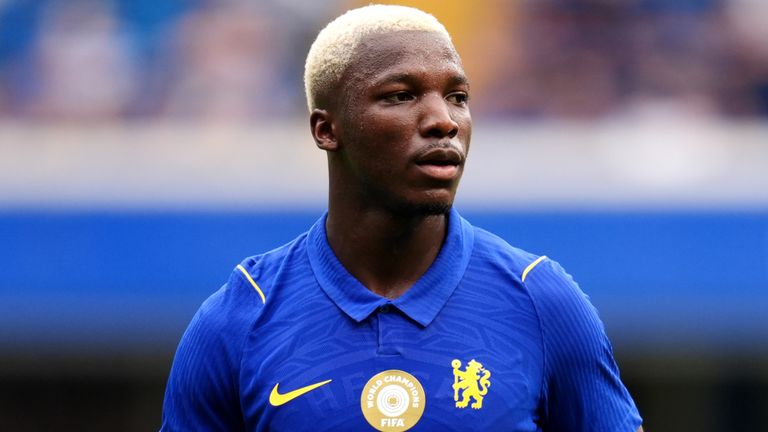
"Moises Caicedo has only played 14 minutes in the Premier League this season and the midfield has changed every single week, culminating in what we saw on Friday Night Football - nobody would have predicted this - Jordan Henderson's first appearance in a Chelsea shirt, starting in a Premier League match against Brentford alongside Valentin Barco.
Image:
Moises Caicedo has played just 14 minutes for Chelsea this season due to injury
"I think Chelsea will look very different moving forward when you have Marco Palestra fit - he was really impressive in pre-season playing as one of the wing backs - and Caicedo alongside a midfielder.
"You feel like between now and January it's going to be a case of which midfielder can audition the best and prove to the Chelsea ownership group and to Xabi Alonso that they don't need to sign a midfielder in this transfer window.
"Romeo Lavia you could say that has been a real pro, the fact that he's remained fit and he has completed matches. But he didn't feature in that game against Brentford, so can you rely on him? Reece James, unfit once again. The dream scenario would probably be Caicedo alongside James but saying that, James has shown already this season that he still needs to learn that role because the goal that Martin Odegaard scored for Arsenal was all about James not tracking the runner. There was another game against Leeds where he failed to track his runner as well. So he's still learning the role.
"But things will look much better when everybody's fit and there is a real patience from everyone at Chelsea, from Xabi Alonso, from the ownership group that this will take time." %!s()
Microsoft is finally sharing details about its first builder-class PC.
Microsoft
Earlier this year, Microsoft teased the Surface Laptop Ultra, describing it as "the most powerful thing we've ever made." And while we know some details about it including its super bright MiniLED display and NVIDIA RTX Spark chip, other specs have been hard to come by. But today at an event in San Francisco, Microsoft finally gave us a closer look at its upcoming flagship notebook.
… %!s()
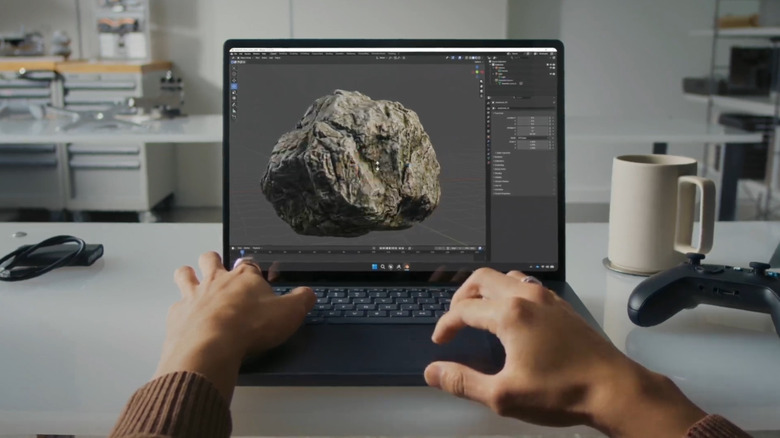
Now before we go any further, it's important to highlight that the Surface Laptop Ultra will be a very beefy system, so buying one simply to browse the web, edit videos or even game on it will be overkill. This machine is more for developers and AI researchers than your typical PC user and to help drive that point home, Microsoft describes the Surface Laptop Ultra as a "builder class PC."
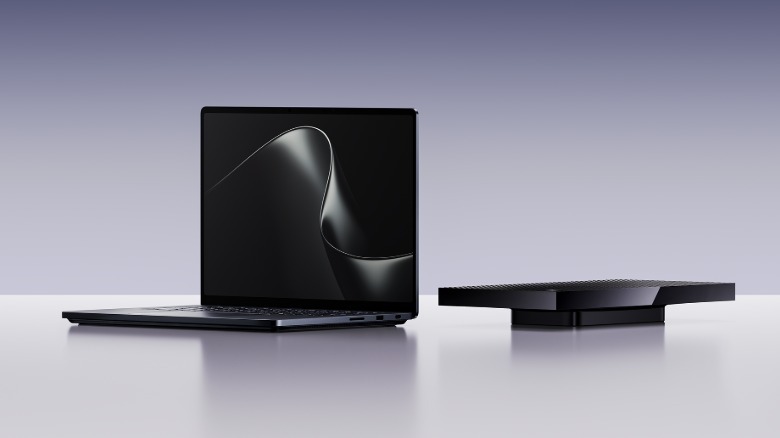
The Surface Laptop Ultra comes standard with a 15-inch Mini-LED PixelSense Ultra touchscreen with a 3:2 aspect ratio and up to a whopping 2,000 nits of peak brightness. It also has a huge haptic touchpad that Microsoft says is 30 percent larger than what you get on typical 15-inch Surface notebook along with a ton of ports including USB-C, USB-A, HDMI, 3.5mm audio and a full-size SD card reader. However, the most interesting new port is what Microsoft is calling Magnetic Connect, which combines the speed and convenience of magnetic charging with a traditional USB-C jack while still transmitting power, video and data.
Microsoft
When it comes to performance, the Surface Laptop Ultra is based around NVIDIA's RTX Spark chip and will support up to 128GB of unified memory and is capable of pushing up to one petaflop of FP4 AI compute. It also has 2.5 times more thermal capacity of any of Microsoft's previous notebooks and unlike most Windows PCs, the company says the Surface Laptop Ultra delivers 99 percent of its max performance even when it's not plugged into the wall. When compared to a MacBook Pro with an M5 Pro chip, Microsoft claims the Ultra delivers 6.2 times faster video generation, 4.3 times faster image creation and is 2.1 times faster to the first token.
As for the rest of its design, the Surface Laptop Ultra features an aluminum chassis that measures just 18mm thick (0.7 inches) and weighs 4.5 pounds. It also comes with user-removable storage, so it should be easy to upgrade or replace your SSD post-purchase. And finally, the Ultra will be available in two colors: platinum and nightfall.
The Surface Laptop Ultra is available for pre-order today starting at $2,599. Alternatively, if for some reason the Surface Laptop Ultra doesn't seem powerful enough for you needs, Microsoft also announced the Surface RTX Dev Box, which is also available for pre-order now starting at $5,999.
Arsenal are chasing back-to-back Premier League titles
ByChris Collinson
BBC Sport statistician
Just five games in, it might seem a bit early to pay much attention to the Premier League table - but it's probably more settled than you think.
… %!s()
While it would be no surprise if Manchester City and Arsenal finish as the top two -outside of any points deductions or sanctions directed City's way - will Brentford really qualify for Europe, Hull stay up and Tottenham be involved in yet another relegation battle? Recent history certainly suggests it's likely.
It has to be mentioned there is a huge asterisk hanging over the Premier League table at the moment after Man City were found guilty of the majority of the Premier League charges levelled at them.
The Premier League leaders have appealed but, if the guilty verdict remains, potential sanctions could have a significant impact on the table. Until then, we can only deal with the table as it is now.
If we look at the Premier League after five games last season and where teams ultimately ended up, the final table was already starting to take shape as 13 of the 20 sides finished within four places of where they sat even at this early stage (65%).
Eventual champions Arsenal were second, Sunderland were already seventh ahead of finishing there eight months later, and two of the three sides that were relegated were already in the bottom three.
There were some notable exceptions. Aston Villa and Tottenham effectively swapped places at either end of the table, with Villa rising up from the bottom three to finish in the top four and Spurs dropping to 17th.
It's a similar story across the last 10 seasons of the Premier League. Over two-thirds of teams finished within four places of where they were after five games (138 out of 200), with 27 of those sitting in exactly the same position 33 games later.
Another 50 teams finished between five and nine places from where they were at this stage, meaning that just 12 teams in the last decade moved up or down the table by double digits after this point, with three of those coming last season.
However, one part of the table that doesn't settle quickly is the top spot. The side leading the Premier League after five games has gone on to win the title in just one of the last six seasons – Man City doing so in 2023-24 – and just three times in the last 11 seasons.
Even the fact that Man City have five wins out of five so far doesn't mean much. They also won their first five games under Manuel Pellegrini in 2015-16 and in Pep Guardiola's first season in 2016-17 but didn't go on to win the title on either occasion (although they did in 2023-24).
Chelsea in 2018-19, Arsenal in 2022-23 and Liverpool last season were also top with a 100% record at this stage but had little to show for it at the end of the season.
However, the eventual champions have been in the top two at this point in each of the last four campaigns, suggesting - potential punishments aside - it will be Man City or Arsenal that lifts the trophy. The last team to be outside the top two after five games and win the title were Man City in 2021-22, who were fifth with just 10 points.
The top end of the table overall has sometimes settled surprisingly quickly in recent years. The top eight after five games in 2024-25 finished as the top eight at the end of that season (although not in the same order), while the top six in 2019-20 and top seven in 2016-17 were also in place at this early stage.
While being top after five games hasn't meant much in recent seasons, being bottom certainly has.
After finishing just one place above the drop in the last two campaigns, Tottenham could well be in trouble once again as the side bottom of the Premier League after five games has been relegated in six of the last seven seasons.
Being bottom this early didn't used to be such a bad omen. Between 2013-14 and 2018-19, only one of the six sides that were propping up the table after five games ended up going down – Newcastle in 2015-16 – while Crystal Palace finished as high as 11th in 2017-18.
In fact, the good news for Tottenham fans is that the last time they were in this situation, they finished eighth. The club were bottom with just two points after five games in 2008-09 but, after replacing manager Juande Ramos with Harry Redknapp three games later, still finished in the top half.
Looking at the relegation battle more broadly, at least one of the teams in the bottom three at this stage has been relegated in the last eight seasons - so one of Tottenham, Fulham and Coventry will very likely be heading to the Championship in May.
The pool of contestants for this season's relegation battle may already be decided too as the three sides that ultimately went down in the last three seasons were all in the bottom six after five games, which would add Bournemouth, Aston Villa and Crystal Palace to the mix.
The last sides to be outside the bottom six at this point but relegated were Leeds and Southampton in 2022-23, who were both in the top half (7th and 9th). With their teams currently sat in 8th and 11th place, Hull and Ipswich fans will hope that's still the case at the end of this campaign.
While the season may well have barely begun, the Premier League table is already starting to take shape. %!s()
Implicitly and explicitly, that was the message from the Tories' annual conference, which has wrapped up in Birmingham.
It is a party very much united around her, with no murmurings of dissent about her leadership, which is quite the contrast from a year ago.
… %!s()
The pivot point in her time as Conservative leader so far came in her address to this same gathering 12 months back, when, amid constant chatter about the prospect of Robert Jenrick seeking to topple her, she won over the party faithful with an address that oozed confidence.
Not just that. Us reporters were given her speech script, allowing us to follow it line-by-line to help us report what she has said quickly and accurately. But there was a page missing towards the end. On that page was the Conservative crowd pleaser of a plan to scrap stamp duty in England and Northern Ireland.
Fast forward to now and there was a familiar drill. There was plenty of chat throughout the conference and beforehand of a new policy coming on inheritance tax, and, sure enough, another page was missing towards the end of her speech with her plan on that.
Why so? Advocates of cutting or scrapping it say it is because plenty aspire to one day being rich enough to end up having to pay it, plus it is a second tax on already taxed income.
But the Conservatives' opponents, even before this speech, were already looking forward to the argument they anticipated after it.
Reform UK, for instance, claim it is a "tax cut for multi-millionaires" and that their plan to cut income tax for millions by raising the threshold at which most people start paying it will benefit far more people.
Policy announcements aside, what stood out in this speech for me was a broader point. The veteran Conservative elections strategist Sir Lynton Crosby once suggested the party ought to "scrape the barnacles off the boat" as he put it, in reference to unpopular policies that could cause the Tories a headache during an election campaign.
This speech felt like Badenoch revelling in pointing at the clean hull of the Conservative ship, what she sees as those barnacles removed, not least the high-profile defections of Jenrick and Suella Braverman.
There was a striking glee and anger in her reflections about Reform UK. She sought to portray them as sleazy and pointedly decided to lean into an argument of recent months about Englishness.
Braverman has argued that, given her Asian heritage, "I'm not English".
"I'm proud to be British. My family and ancestors have a link to Britain which spans centuries. But in no way are we English," she wrote on social media last month, external, adding: "Englishness is an ethnicity."
Badenoch expressed her personal fury at this, saying that as the mother of mixed-race children "I don't want to explain to my son, when we're watching our brilliant England team play football, that some people don't think our black players are English".
The recurring message, today and over the last few days, is Badenoch cannot stand Reform and won't work with them before or after the next general election.
But what she said amounted to an attack on Reform's character and the judgement of their prominent figures, rather than a significant focus on the policies we hear talked about most often by Nigel Farage.
Badenoch did talk about immigration, but not at length. She largely left the issue – and the Conservative policy to withdraw from the European Convention on Human Rights, as Reform also advocates - to her shadow home secretary Chris Philp who spoke before her.
Instead, Badenoch grounded this speech in the big picture tussle to be trusted between Labour and the Conservatives – and in particular who was better placed to deliver a growing economy.
In tone, language and public enthusiasm for the argument, Badenoch and Andy Burnham are quite the contrast with their immediate predecessors Rishi Sunak and Sir Keir Starmer.
Badenoch and Burnham both look like they are enjoying themselves on the stage, and are both enthusiastic purveyors of the core of what are their very different worldviews.
Badenoch acknowledged this with what she called the "battle for the soul of this nation" in the opening minute or so of her address. It is a trailer for the debate to come this autumn and beyond.
The Conservatives feel chipper and are united. But while both of these things are better than the alternative for any party leader, they are not the same as being popular.
And, as Kemi Badenoch acknowledged, they are not there on that score yet, by a long chalk, with opinion polls suggesting they are more unpopular than when they were annihilated at the last general election.
The numbers, for them, are dire. Just not as bad, relatively speaking, as they were.
But they hope things are looking up for them: Reform has had a bruising few months, and Labour, they believe, are leaning to the Left, trying to lure Green and Liberal Democrat supporters towards them.
Can the Conservatives also lure recent Lib Dem supporters in the south of England with talk of help with childcare costs whatever your income, not hiking the council tax of very expensive homes and this inheritance tax plan?
This, Tories hope, there are now gaps in the political market they can exploit.
They crave catching and overtaking Reform in the polls, in the hope that after that there is a tipping point allowing them to credibly claim they are the most viable alternative to a Labour or Labour-led future government. Let's see. %!s()
Residents of Kfar Aza attended a memorial ceremony on Wednesday for those killed on 7 October 2023
ByLucy Williamson
Middle East correspondentReporting fromJerusalem and Kfar Aza
As the sky began to lighten over Israel's border with Gaza on Wednesday, the people of Kfar Aza moved silently towards the armoury at the centre of the kibbutz.
It was there, shortly after 07:00 on 7 October 2023, that Hamas-led attackers killed half the community's 14-member civil defence squad. They were among 64 killed and 19 kidnapped from the community that day.
The pain of those attacks is still fresh here. But three years on, there are questions about who else should pay the price for Israel's security failure.
"I need my country to take responsibility," said Inbar Goldstein, whose brother and niece were killed, and four other relatives kidnapped from Kfar Aza.
The 7 October attack was the deadliest Israel had suffered since its creation in 1948. About 1,200 people were killed across southern Israel by gunmen who broke through the border fence and attacked communities there. Another 251 people were taken back to Gaza as hostages.
Three years on from Israel's biggest security failure, there is still no independent state inquiry into how it was allowed to happen.
And the man in charge at the time of that failure - Prime Minister Benjamin Netanyahu - is running for election again, with the same campaign promise: to be stronger and tougher than anyone else in protecting Israel from its enemies.
"Nobody investigated the roots [of the attack]. It didn't start or end on October 7th - it's a long process of abandonment," Goldstein said.
Image source, Reuters
Image caption,
More than 60 residents of Kfar Aza were killed by Hamas-led gunmen and 19 were taken hostage three years ago
Aside from Hamas's responsibility for the attack itself, there are growing questions in Israel around what caused the country's intelligence failure, what information was passed to military and political leaders in the run-up to the attacks, and what Netanyahu himself knew.
For months beforehand, young female soldiers posted at bases along the Gaza border to watch for suspicious activity had warned their superiors about possible preparations for an attack.
Among them was Roni Eshel. She was killed with 14 other members of her unit when gunmen overran their base at Nahal Oz, just next to Kfar Aza.
"There are so many questions," her uncle Elad Levy told me. "Were the Egyptians warning the prime minister? The Emiratis? Were there no other warnings Netanyahu ignored? We need to find out what happened – not just on the day, but the year before, and five years before that."
"The truth should be clear," he continued. "If we don't inquire into this, it will happen again and again."
Image source, EPA
Image caption,
Benjamin Netanyahu has rejected any personal responsibility for security failures three years ago
Over the past three years, there have been mounting reports of warnings being given to Netanyahu - by his own security chief, as well as by regional neighbours – which he denies.
Last month, Israel's Haaretz newspaper published extracts from a new book, alleging that the leader of the United Arab Emirates had called Netanyahu 10 days before the attack to warn of Hamas plans for a major operation.
Netanyahu's office has dismissed the report as "an absolute lie" and has said he will sue the newspaper.
Amir Ohana, a member of Netanyahu's Likud party, said in a social media video last month that it was "preposterous and absurd" to suggest that Netanyahu could have known about the attack when the former Hamas leader in Gaza, Yahya Sinwar, had only told a handful of people.
Israel's prime minister, he said, had since reshaped the Middle East and did not give up, "even when voices inside and outside Israel called on him to stop".
Netanyahu has blamed his own security chiefs for the failures that led to the 7 October attacks, accusing them of deliberately choosing not to wake him in the hours beforehand, for fear that he would order a massive deployment of the Israel Defense Forces (IDF) and escalate the situation.
"God forbid we wake up the prime minister and he says, 'Wake up the entire IDF immediately, scramble the air force!'" he told Israel's right-wing Channel 14 television network.
"What would have happened if they had woken me? This would not have happened," he said, suggesting that his response would have better protected Israel from the attacks.
Image source, Reuters
Image caption,
Netanyahu denied reports that he was warned by the UAE's president days before Hamas attacked
Yaacov Katz, a journalist and author of several books on Israel's defence, has written about the growing concerns over Hamas activity that emerged in the hours leading up to the assault.
In his book, While Israel Slept, he describes calls between senior military figures and intelligence chiefs in the early hours of the morning, the sudden recall of commanders from leave, and the dispatch of an elite intelligence unit to the border.
He told me their expectation was, at worst, a small, limited incursion by Hamas fighters.
"So why would [Netanyahu] order a massive pre-emptive strike by the IDF, if every security chief is telling him this is not what this is going to be? Waking him would not have made a difference."
But he said Netanyahu faced other questions about his failure to spot what was happening.
"You were the prime minister, you set the policy," he said. "You created a doctrine and a policy of containment that trickled down to the last soldier manning the watchtower on the border with Gaza: contain Hamas, separate the Palestinians, and keep Hamas in power to prevent the establishment of a Palestinian state."
Image source, Reuters
Image caption,
Israelis have held protests to demand the establishment of a state commission of inquiry
For years, Netanyahu oversaw a policy of containing - not confronting - Hamas in Gaza, during which Israeli governments allowed Qatar to provide hundreds of millions of dollars of aid for Gaza.
A month after the 7 October attacks, he told a German newspaper that claims he wanted to strengthen Hamas were "an absolute lie".
"On the contrary we wanted to continue to weaken Hamas as much as we could," he told Die Welt. "But the money was meant to avoid a civilian catastrophe - that is the only reason."
Months after the attack, the IDF's then-chief of staff, Lt Gen Herzi Halevi, publicly apologised for the failure to defend civilians, saying he carried that weight on his shoulders and in his heart.
He resigned. A raft of military commanders were later fired, and Israel's domestic intelligence chief left his position.
Netanyahu has so far rejected any personal responsibility for the attacks.
Col Richard Hecht was the IDF's international spokesman on 7 October. He told me the refusal of political leaders - including Netanyahu - to accept responsibility was part of the reason he resigned six months later.
"It's a disgrace," he told me. "When you look at accountability, within the IDF I don't think there's a problem. And that's the pain. That's one of the main causes of bad blood between the political echelon and the military."
At a memorial ceremony in Jerusalem on Monday, the father of one of those killed on 7 October stood up to challenge the prime minister.
"You didn't protect my son, you didn't protect all those who were murdered," he said, before security guards led him away. "Shame! Disgrace!"
Image source, EPA
Image caption,
"Netanyahu does not surrender" is a slogan of his right-wing Likud party
Three years on from the attacks, calls for accountability are growing. Campaigners have asked Israel's highest court to force the government into establishing a state commission of inquiry.
Yizhar Shai, a former minister and opposition politician whose youngest son Yaron, a soldier, was killed on 7 October, is part of that campaign.
"We are going into these elections almost blindfolded as it relates to October 7th," he told me during a protest in Tel Aviv last week. "Our prime minister has never given a detailed, thorough explanation under oath, where he would be asked all the tough questions and have to explain everything."
Netanyahu has consistently refused a state inquiry led by Israel's Supreme Court, arguing recently that the country's judiciary would be biased against him.
Before calling an election, his government proposed an alternative "national commission of inquiry", whose members would be appointed by political parties.
But despite passing a raft of other legislation before parliament ended its session in July, Israel's government said it ran out of time to pass a bill setting out its plans for the inquiry.
We approached several members of his Likud party for an interview, without success. We also requested that the party respond to their critics, and are waiting for their response.
Image source, Reuters
Image caption,
Gadi Eisenkot and other opposition leaders have backed calls for a state commission of inquiry
Netanyahu's denial of responsibility has now become an election issue, as he prepares to run for re-election later this month.
A video game called Sleepy Bibi, released by the team of his main opponent, Gadi Eisenkot, asks players to help the prime minister avoid responsibility by dodging warnings of an attack and "making it to bed safely".
Netanyahu has styled himself for decades as Israel's "Mr Security", and despite presiding over the worst security failure in Israel's history, is running on the same security platform again.
For the past three years, he focused on waging new wars against Israel's enemies - Hamas, Hezbollah and Iran.
Polls suggest a close race, and that the 7 October attacks are central to many voters' decisions.
Yaacov Katz says the legacy of 7 October is a coin with two sides.
"There are the failures, the mistakes that led to the Hamas invasion," he told me. "But there's the other side, which is Netanyahu's argument; that [he] has re-engineered the Middle East and made Israel a safer place today. And that is an argument Israelis take with them to the polls."
The shadow of the attacks hangs over this election, dividing Israel once again along political lines.
For supporters, it confirms that Benjamin Netanyahu is still needed to keep Israel safe.
Critics say his political survival puts Israel at risk. %!s()
 Microsoft
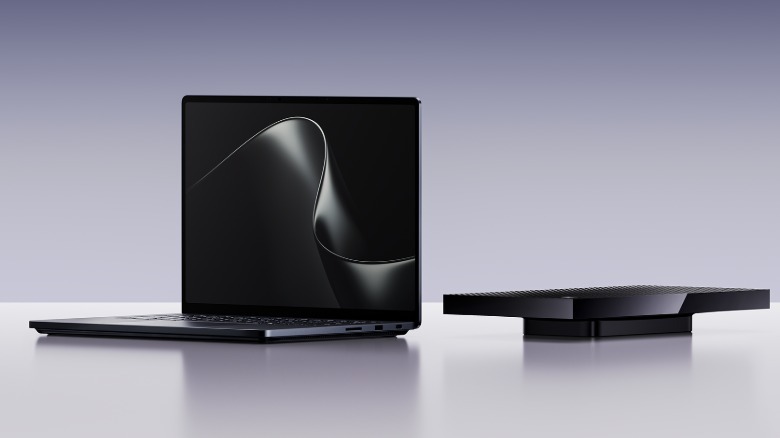
 Image source, Getty Images
 Image source, Reuters
 Image source, Reuters
 Image source, EPA
 Image source, Reuters
 Image source, Reuters
 Image source, EPA
 Image source, Reuters