The football gag as animated in It's the Great Pumpkin, Charlie Brown! (1966)Source: Charles M. Schulz/Bill Melendez
In the early days of Charles Schulz’s Peanuts comics, the characters looked quite a bit different. They were smaller, rounder, and a bit more “cutesy.” The comic strip debuted on Oct. 2, 1950 and over the first decade of drawing the characters, Schulz found their distinct look, which was still cute, but with far more personality for each character, allowing you to tell them apart more easily.
… %!s()
But while Schulz was still figuring out the look and feel of Peanuts back in the 1950s, the early years contained sparks of absolute genius that would inform the strip’s 50-year run. Here are five such comics that show Schulz was always a genius, even when Charlie Brown didn’t quite look like the Charlie Brown we all know and love nowadays.
5
October 2, 1950
Image: Charles Schulz
The very first Peanuts comic contains the now-forgotten characters of Shermy and Patty (not Peppermint Patty, another girl named just Patty). The two of them are sitting while Shermy goes on about Charlie Brown. “Well! Here comes ol’ Charlie Brown!” he says in the first strip as Charlie Brown approaches in the distance. “Good ol’ Charlie Brown… Yes, sir!” says Shermy as Charlie Brown passes by. “Good ol’ Charlie Brown…” Shermy trails off as Charlie Brown is still in earshot. Then, once Charlie Brown is far enough away, Shermy lets his true feelings be known by saying “How I hate him!”
While Shermy and Patty would be characters who would eventually be phased out in favor of others, this comic is still brilliantly funny. The slow-burn sweetness leading to a harsh punchline is still effective 70 years later, as Shermy seems like he’s fond of Charlie Brown until he reveals he isn’t. While it might be too much to say this was “edgy” for the time, it certainly was surprising. The contrast of such a cute character saying such a nasty, entirely unexplained thing about another child is still really funny, and it set the tone for who Charlie Brown is: a chump who other kids aren’t very nice to.
4
November 9, 1950
Image: Charles Schulz
Charlie Brown isn’t just a kid who other kids poke fun at, he’s also kind of a sad sack. While it’s an unusual quality for a main character to have, it made Charlie Brown relatable. Schulz seemed to grasp that from the very start, as this comic strip is from just one month into his legendary run. In it, Charlie Brown tells Patty, “The future frightens me!” She tries to reassure him by saying, “I don’t see why.. You’re young and full of life… You’ll probably live for another sixty years!” In reply, Charlie Brown says the most Charlie Brown things he can say, "That's what frightens me!”
While Charlie Brown didn’t quite look like himself yet, he sure did sound like himself.
3
November 14, 1951
Image: Charles Schulz
This is the very first strip featuring Charlie Brown missing the football, and while the elements aren’t all here yet, there’s that initial spark of genius that would make this the best recurring gag in Peanuts history. It does feature Charlie Brown about to hit the ball and missing when it's pulled away at the last second, causing him to fall flat on his back. However, this isn’t Lucy holding the football here, it’s the similar-looking Violet, another character that would fade over the decades.
Also the intent is different. Lucy would end up pulling the football away out of cruelty. She wanted Charlie Brown to look stupid and she knew he was a big enough blockhead to fall for the same trick over and over again. Violet, however, drops the football out of fear she will be kicked, which is funny, but not nearly as funny as Lucy’s sadism.
2
December 25, 1955
Image: Charles Schulz
Thanks primarily to the 1965 TV special A Charlie Brown Christmas, the Peanuts characters would eventually become synonymous with Christmas, but Charles Schulz featured Christmas as a major theme well before that. In this Christmas day Sunday strip from 1955, Charlie Brown is asking for donations to buy his pal Snoopy a gift. He approaches Patty and Violet and they each give him a nickel; they also praise his idea of buying a gift for his dog. However, when Charlie Brown walks away, they express their real feelings, with Patty saying “Boy, what a dope that Charlie Brown is!” and Violet replying “You can say that again!”
Even on Christmas, Charlie Brown can’t catch a break.
1
December 31, 1959
Image: Charles Schulz
By the end of the decade, Charles Schulz’s characters began to look more like the Peanuts characters we all know and love. You can see it in his very last strip from the 1950s, which ran on New Year’s Eve, 1959. In it, Lucy insults Charlie Brown repeatedly, and he complains that it’s only 8:00 in the morning. “I can’t help it, Charlie Brown…” replies Lucy, “You have so many faults it takes a whole day to list them!” — a funny, ingenious little joke by a man who changed American culture. %!s()
It is all change at Newcastle Red Bulls as they prepare for the new Prem season, but they plan to tackle it with the sort of fearless approach for which their owners are renowned.
… %!s()
With Red Bull taking over at Kingston Park in August 2025, it was a scramble to get things in place for last season.
As a result, Newcastle could not bridge the gap to the other nine teams and finished bottom for a fourth successive campaign, with just two wins in 18 games.
But, after a huge influx of players in the summer, 'Red Bulls 2.0' under new head coach Dan McFarland are ready to embrace the challenge as they begin with a daunting trip to champions Northampton Saints on Friday night.
"It couldn't be set up any better for a spectacle for us," McFarland said. "The team starting at the back of the grid against the team on pole position.
"For us, it's a massive challenge and exactly the sort of thing a Red Bull team would relish going after, something that's hugely tough but really exciting to be involved in."
Englishman McFarland has returned home to head up that challenge after a successful spell in Japan as forwards coach at Kobelco Kobe Steelers.
The Red Bulls had three different head coaches last season with Steve Diamond, Alan Dickens and then Stephen Jones in charge but McFarland feels like the first proper appointment by the new ownership for this role.
"One of the reasons this was so attractive was trying to pull something together from scratch, basically being a start-up," he said.
Previously head coach at Ulster, the 54-year-old has got used to big business and rugby working together and he has tapped into the Red Bull organisation in his first few months on Tyneside.
Newcastle have recruited no fewer than 25 new players for this season so gelling that number of people together in a few weeks presents a significant obstacle.
But he reveals they benefited from a trip to the organisation's headquarters in Salzburg in Austria in pre-season to help a new playing squad gel and feel part of a wider family.
"Outside of Japan, big corporations don't get involved in rugby clubs," said McFarland.
"It's very rare, to have that backing but it's also the way Red Bull go into these kinds of ventures. It's not a feeling of 'let's see how it goes'. It's in with two feet and 'we've deliberately chosen you, Newcastle, because we believe we can do special things with you'.
"That is pretty special and they back it up with the support, the opportunities they offer for collaboration at different levels within the organisation - it could be for athlete performance teams, elite athletes and definitely in marketing." %!s()
Susan Collins, president and chief executive officer of the Federal Reserve Bank of Boston, during a Bloomberg Television interview at the Kansas City Federal Reserve's Jackson Hole Economic Policy Symposium in Moran, Wyoming, US, on Friday, Aug. 22, 2025.
… %!s()
David Paul Morris | Bloomberg | Getty Images
Boston Federal Reserve President Susan Collins has warned that there is "an increased likelihood" that inflation will stay "notably" above the Federal Reserve's 2% target.
Explaining her reasoning for backing the Fed's quarter-point interest rate hike last week, Collins wrote in a LinkedIn post that a "somewhat more restrictive federal funds rate will help ensure that inflation durably returns to target."
Collins takes part in FOMC meetings and helps shape the discussion, but is not currently a voting member. In 2025 — when it was the Boston Fed's turn to vote on the annual rotation — she voted with the majority at all eight FOMC meetings, backing a hold in July, and then quarter-point cuts in September, October and December.
"Given all the available information, I now see an increased likelihood of future scenarios in which inflation remains notably above 2 percent," Collins wrote.
"While the upside risks to inflation have increased, labor market conditions seem a bit stronger overall, and the unemployment rate remains low."
"With the labor market on a better footing, monetary policy can focus on a timely return to price stability, especially after five and a half years of too high inflation."
watch now
Markets are broadly split on the likelihood of another Fed rate hike at the FOMC meeting in October, with 53.1% currently expecting another 25-basis-point increase, according to CME Group's FedWatch tool.
Collin's comments chime with those of European Central Bank executive board member Philip R. Lane, who said on Tuesday that a "second wave of rising energy prices" is likely to keep inflation "higher for longer."
Lane told Swiss French-language daily newspaper Le Temps that the ECB is forecasting "upward pressure on food, energy more broadly – including electricity – and goods in general."
"If the shock does turn out to be larger and more persistent this autumn, that will hold back the [eurozone] economy," he added.
"Our baseline reflects the market view as captured in the price of oil and gas. The future curve for oil and gas basically points to a resolution later this year."
"The situation won't go back to normal, but there will be some improvement compared with the current situation. That said, there's a lot of uncertainty around that baseline." %!s()
Islamabad, Pakistan – On September 16, a delegation from Powerus, a year-old United States drone company backed by two sons of President Donald Trump, was received by Pakistan’s military chief, Field Marshal Asim Munir, at military headquarters in Rawalpindi.
… %!s()
A day later, the company announced it had received a “limited procurement order” from Pakistan’s Ministry of Defence for unmanned aerial systems. It also said it had signed a separate memorandum of understanding (MoU) with senior Pakistani defence officials.
Recommended Stories
list of 4 items
list 1 of 4Why India is sharing missile secrets with its private sector
list 2 of 4Pakistan wins Indus waters battle at The Hague, but India threat remains
list 3 of 4Why Pakistan overhauled its military command structure after five decades
list 4 of 4India-Pakistan navy ship collision sparks alarm over unintended escalation
end of list
Neither the value of the order nor the systems involved have been disclosed. But for analysts studying Pakistan’s venture in drone technology, even bigger concerns have arisen from information that has since emerged.
Less than three months earlier, the same company had given an Indian defence manufacturer the exclusive right to make and sell its drone interceptor technology in India. And one of the cofounders of Powerus is an Israeli military veteran. Pakistan does not recognise Israel and accuses it of carrying out a genocide in Gaza.
Analysts are questioning why a country that already builds its own drones and buys others from China and Turkiye would turn to a company that was founded only last year – and has links to Israel and sells drones to India too.
“Pakistan technically already makes or is capable of making each of the drones shown by Powerus,” Bilal Khan, founder of the Quwa Group, a Toronto-based defence news and market intelligence platform, told Al Jazeera. “It’s unclear where Powerus fits in the long term [from Pakistan’s perspective].”
What did Pakistan sign?
In its statement on the meeting, Inter-Services Public Relations (ISPR), the Pakistani military’s media wing, said the two sides discussed cooperation in defence procurement, production and capacity building.
The statement did not mention the MoU.
But Powerus told Al Jazeera which institutions were involved. “The MoU was signed with the Pakistan army. The related procurement order was placed by Pakistan’s Ministry of Defence,” a company spokesperson said.
In its own statement, Powerus said the memorandum was not a definitive agreement, created no purchase obligation and would be subject to US laws and government approvals.
“We are proud to support Pakistan’s Ministry of Defence, and the memorandum gives both sides a strategic framework to build upon,” Brett Velicovich, the company’s cofounder, said in the statement.
According to media reports, Velicovich has also said the company is exploring ways to build technology in Pakistan.
The ISPR, the Ministry of Foreign Affairs and the Ministry of Information and Broadcasting did not respond to Al Jazeera’s requests for comment.
Founded in 2025 and based in Florida, Powerus is set to merge with Aureus Greenway Holdings, a Nasdaq-listed company that owns golf courses in the US state, in a deal expected to close in the final quarter of this year.
Powerus’s Guardian Interceptor is a drone interceptor [Handout/Powerus]
Donald Trump Jr and Eric Trump, President Trump’s oldest sons, are investors in Powerus through a vehicle called American Ventures, which is expected to hold a 9.9 percent beneficial stake in the combined company, according to US regulatory filings.
A spokesperson for Donald Trump Jr has told media outlets that he is a passive investor with no role in the company’s operations or contracts and had no prior knowledge of the Pakistan deals.
The White House has said there are no conflicts of interest.
The company makes about 3,000 interceptor drones a month, according to media reports, and last month won a US Air Force contract with a ceiling of up to $90m.
Asked how it addresses conflict of interest questions while pursuing government defence work in the US and abroad, Powerus said the Trump brothers played no part in its operations.
“Trump’s sons are not advisers to Powerus and have no involvement in how the company runs its business or structures its defence relationships, domestically or internationally. They hold no corporate-governance role. Our government relationships are pursued on their own merits,” the company told Al Jazeera.
The India question
Powerus’s first deal in South Asia, however, was not in Pakistan.
It was in India, Pakistan’s archrival, with which Pakistan fought a brief but intense conflict in May last year, one in which drones were used by both sides.
In a June 30 filing to India’s stock exchanges, Paras Defence and Space Technologies said Powerus had granted it an exclusive licence to manufacture and sell its Guardian-1 interceptor technology in India.
Mansoor Ahmed, an honorary lecturer at the Australian National University’s Strategic and Defence Studies Centre, said Washington has long armed rival states.
“The US has previously sold F-16s to Greece and Turkiye and Egypt and Israel and is now selling F-35s to Saudi Arabia, which Israel already operates,” he told Al Jazeera.
A former Pakistani government defence analyst who spoke on condition of anonymity said Pakistani planners had probably known about the Indian deal.
“Pakistan’s defence planners were likely aware of Powerus’s engagement with India,” he told Al Jazeera.
This isn’t the first time that Pakistan and India have ended up buying military equipment from the same company, the defence analyst pointed out. He cited the build-up to the conflict over the Siachen Glacier, where India launched Operation Meghdoot in April 1984 to take control of the heights.
“In 1983, Pakistan ordered high-altitude warfare gear from a London supplier, unaware that the same firm also provided gear to the Indian army, and subsequently, India learnt of it and planned Operation Meghdoot in 1984,” he said.
The analyst said the burden now lies with the company.
“In the present case, the challenge is more for Powerus than Pakistan or India as Powerus’s management must ensure it can manage and meet the requirements of two adversaries without jeopardising either side’s operational security.”
A retired Pakistan air force air marshal who spoke on condition of anonymity because he was not authorised to speak publicly said the arrangement carries risks for Pakistan.
“Two adversary countries procuring from the same source has its pitfalls, especially when one of the adversaries has taken the lead as well as has a larger financial capacity,” he told Al Jazeera.
An Israeli link
The company’s leadership also has links to Israel, a country Pakistan does not recognise.
Powerus’s website described one of its cofounders, Ziv Marom, as a veteran of the Israeli military and said he founded Kaizen Aerospace, now a Powerus subsidiary.
Another senior executive, Justin Gans, the company’s vice president for mergers and acquisitions and a former member of the US Navy SEAL special forces, served as a vice president at Elbit Systems of America, the US arm of the Israeli defence company Elbit Systems, from 2018 to 2019.
A retired three-star army Pakistani general who served in senior roles before retiring in 2019 and requested anonymity because of the sensitivity of the subject said such a background would normally draw attention during vetting.
“So under normal circumstances, a cofounder’s service in the Israeli military would be flagged as a sensitivity marker, even if the company itself is American,” he told Al Jazeera.
“In other words, for a serious acquisition, this background would be scrutinised carefully. For a political MoU, it may not have been a decisive factor.”
Quwa’s Khan, however, said Pakistan has long accepted Israeli components inside US or European systems.
“We can see that, generally, as long as there’s a country in the middle, Pakistan does not have qualms being in close proximity to Israel,” he said. “However, the two sides very, very rarely talk to each other.”
What drone technology does Pakistan already have?
Beyond questions over who else Powerus works with, analysts said the more fundamental issue is what Pakistan actually needs from the company.
Pakistan’s air force has publicly displayed Turkish-made Bayraktar TB2 and Akinci drones, Chinese-made Wing Loong II drones and the domestically developed Shahpar-II.
Shahpar drones, made by the Pakistani state-owned defence company Global Industrial & Defence Solutions, are displayed at the 2024 International Defence Exhibition and Seminar in Karachi, Pakistan [File Akhtar Soomro/Reuters]
China supplied 80 percent of Pakistan’s arms imports from 2021 to 2025, according to the Stockholm International Peace Research Institute.
This month, the Pakistan air force revealed in a video that it had incorporated into its forces China’s HQ-17AE air defence missile system and Turkiye’s Korkut anti-aircraft gun and Sahin counterdrone system, all built to take on drones and other low-flying threats.
Khan said the state-owned Heavy Industries Taxila was also working with private firms to develop interceptor drones.
“So as it stands, Pakistan is following all the right best practices to build its C-UAS posture,” he said, referring to counterdrone systems.
“For Pakistan, the challenge isn’t whether it can get the designs but whether it can produce or induct these in large enough numbers fast enough.”
An official at a private drone manufacturer in Rawalpindi who requested anonymity because he is not authorised to speak to the media said Pakistan’s drone market has grown well beyond state-run firms.
Dozens of private companies and more than half a dozen state-owned enterprises now make drones besides the army’s own production facilities, he said. According to him, Powerus would have to compete with all of them on the quality of its products.
The retired general offered a different reading of why Pakistan might be interested in a tie-up with a US firm.
“The gap is not drone manufacturing. It is electronics, integration and systems-level capability, which is where American firms traditionally dominate,” he said. “How far this particular company can help in this regard is a million-dollar question.”
Powerus’s Guardian interceptors are small, low-cost drones designed to knock down incoming drones. They are a weapon widely used by both sides in the war in Ukraine.
Hammad Waleed, a research associate at the Islamabad-based Strategic Vision Institute, said such systems fill a cost gap that conventional air defences cannot.
“Traditional air defences use costly missiles against incoming cheaper drones,” he told Al Jazeera. “Interceptor drones are way cheaper and easier to operate than traditional air defences.”
Capability or signalling?
The retired Pakistani general, who has experience with defence production, said a supplier of this kind would normally face financial, technical and security checks as well as a review of its track record.
“A company less than a year old, not yet listed and without a delivery record would not usually clear these checks for a strategic defence partnership,” he said.
“Such firms are typically considered too immature unless the MoU is political signalling rather than a procurement decision.”
Khan agreed that the process has been unusual.
“Yes, the way this deal came about is not generally in line with how the procurement heads of the tri-services typically operate,” he said, referring to the three branches of Pakistan’s military.
The Powerus agreements were made as Munir has built close ties with President Trump, who has called him “my favourite field marshal” and praised him on several occasions during the past 15 months.
In September last year, weeks after Pakistan signed a $500m critical minerals agreement with a US company, Munir and Prime Minister Shehbaz Sharif met President Trump at the White House, where the Pakistani leaders presented him with samples of Pakistani minerals.
In January, Pakistan also signed an MoU with an affiliate of World Liberty Financial, the Trump family’s main cryptocurrency business.
From left, US President Donald Trump examines a box of rare earth minerals and gemstones presented by Pakistani Prime Minister Shehbaz Sharif and Field Marshal Asim Munir in September last year at the White House [File: Handout/White House]
Khan said Pakistan’s security establishment needs to ask what it is getting in return for that closeness.
“There was a time when such gains were measured in F-16s and the billions in US financial assistance, yet today, we are seeing more photo ops and supposed pacts that obligate the armed forces, but are they helping the armed forces as a fighting force?”
He also offered what he called a “less cynical take”.
Pakistan has a growing number of drone start-ups that lack the capital to build production facilities, he said, and ties with Powerus could draw US investment into them.
“So there is an argument that building rapport with Powerus and its backers can lead to that capital,” Khan said.
Ahmed said Pakistan is looking beyond a single purchase.
“Pakistan’s primary interest appears to be the acquisition of state-of-the-art drone technologies that also allow for local production and indigenisation,” he said.
What about China and Turkiye?
The retired Pakistani general said bringing in a foreign private company could overlap with Pakistan’s existing Chinese and Turkish partnerships.
“It has the potential of being seen by Turkiye and China as Pakistan hedging politically,” he said.
Khan, however, disagreed.
“There’d be no issue with the Turks as they work with US companies all the time and the drones on offer by Powerus don’t overlap with the ones NASTP is designing with Turkiye,” he said, referring to Pakistan’s National Aerospace Science and Technology Park.
He added that any Powerus designs built cheaply in Pakistan would still rely on Chinese parts.
“With the Chinese, it’d be less of an issue because, ultimately, the only way to make these Powerus designs at a low enough cost for the Pakistani armed forces to induct is to literally import the upstream subassemblies from China.”
Drones are displayed during the International Defence Exhibition and Seminar in Karachi on November 21, 2024 [Akhtar Soomro/Reuters]
Waleed said the deal would not dent Pakistan’s defence ties with Beijing and Ankara.
“Pakistan is prioritising China and Turkiye for the sophisticated and modern combat systems in the drone and counterdrone domain. That relationship is not only unaffected and is going upwards in trajectory,” he said.
For now, Khan said, the real test of the Powerus deal would be what follows it.
“I would not pass judgement on the Powerus deal yet, but we can track whether it’s serious by seeing if the MoD [Ministry of Defence] signs similar deals with other foreign and local vendors in the coming months,” he said.
“Basically, will we see a consistent pattern moving forward, or will this be a one-off?” %!s()
It has been quite the ride since Jurgen Klopp was announced as Germany's head coach in July.
In his first news conference, Klopp admonished the media, urging them to treat him fairly and refrain from any attacks against his family.
… %!s()
Last Thursday, during another media conference, Klopp called for "positive patriotism" amid political turmoil in the country.
When asked whether he considers himself an ambassador for Germany in his new role, Klopp's answer was a serious one.
"From my perspective as a sportsman, I can say that I would very much like to reclaim the flag for myself, for all of us," said Klopp.
"I want it so that when someone waves it, no-one thinks: 'What is wrong with you?' Instead, I want people to understand: You are happy and realise how lucky you were to be born, grow up, or move to this wonderful country."
His statement was made in light of the success of the Alternative for Germany (AfD) in the state election in Saxony-Anhalt. The anti-immigration party has since scored another win in Mecklenburg-Western Pomerania.
Klopp's remarks were widely and positively discussed in the media - the German national team represents a diverse Germany, as several players come from a migrant background.
KIopp also remarked about the recent success of Alexander Zverev at the US Open, the women's basketball team at the European Championship and German athletes at the European Athletics Championships, saying sport can ensure "a sense of community".
He added: "This is our mission: we need to create a good atmosphere."
Klopp knows, intentionally or not, how to make headlines.
However, the German Football Association (DFB) didn't hire the former Liverpool boss on an annual salary of £6m to become a commentator on the state of Germany - but to transform a floundering national team.
Between the two news conferences, Klopp looked like the busiest national team boss on the planet, making countless visits to league games and training facilities.
One day fans could see Klopp sitting in the stands of Dortmund's Signal Iduna Park, his old stomping ground and, not long after, they may have caught a picture of him in the VIP lounge of Mainz's stadium or somewhere near Eintracht Frankfurt's training pitch talking to players.
Klopp has approached this new job with open eyes. Initially, the charismatic 59-year-old drew up a list of 57 players who could have been selected for this first international break.
"Players will receive chances who don't even expect it yet," Klopp said in July.
His first selection wasn't short of surprises. In the flavour of a trial-and-error principle, Klopp and his staff decided to select two almost completely different squads for the upcoming four games.
The first squad, including Joshua Kimmich, Kai Havertz and Jamal Musiala, will face arch-rivals the Netherlands at Johan Cruyff Arena on Thursday (19:45 BST) and host Greece on Sunday.
The second squad, with Florian Wirtz and Aleksandar Pavlovic, face Serbia at home and Greece on the road in the second half of this international break. The only player who was selected for both is back-up goalkeeper Finn Dahmen.
The selection process means we will not see Germany's best starting XI this time around. Instead, Klopp clearly intends to try out new players, some of whom played in Germany's second tier only a few months ago.
Take, for example, Felix Keidel, a 23-year-old full-back-midfielder hybrid from recently promoted SV Elversberg.
A year ago, Keidel was as far away from the national team as the Oktoberfest from Rio Carnival.
Now Keidel - just like Mika Baur, Bambase Conte, Max Rosenfelder, Philipp Treu, and Vitaly Janelt - has the chance to show he could be a valuable cog in the machine.
Klopp has never built his success merely on star names - he has always taken a liking to undervalued and overlooked players.
He once signed an little-known Polish winger by the name of Lukasz Piszczek and moulded him into one of the best right-backs in Europe who would go toe-to-toe with Cristiano Ronaldo in his prime. And he helped transform Andy Robertson into a force on Liverpool's left side.
Klopp's style helps to elevate all the members of his squad - not just the most talented.
Fitness and mental readiness are highly important, and some newcomers might just have that to impress the new manager.
But man-marking is prevalent in Germany's top flight, while Klopp prefers his teams to close down the player in possession to create superior numbers around the ball. So some of the Bundesliga players will have to adapt quickly.
"It is not important who plays but how someone plays," Klopp said last week. "I expect a lot from the beginning. It could be a bit wild, but I accept that. It just has to be lively."
Klopp has chosen younger squads compared to the ones we saw in the past couple of years. Manuel Neuer, Antonio Rudiger and Pascal Gross have retired from international football, and other 30-somethings might just not receive a chance to get into the team again.
"I think it is about time to wish the new generation best of luck," Gross said after Brighton's win over Arsenal on Saturday. "I still enjoy playing football here in the club, but there's a change in Germany and rightfully so."
Both squads for this international break have an average age between 24 and 25. Youth and energy seem to be preferred.
"I have the desire to work with guys who cannot wait to wear this jersey, who want to play the kind of football everybody enjoys and who perform even better wearing the national team jersey," Klopp said.
We can expect from him to simplify Germany's approach to ball possession. Predecessor Julian Nagelsmann bent over backwards to hide some of the flaws he detected in his squad and thus created highly complex tactical systems.
On the contrary, Klopp intends to put an emphasis on the wings and break defences there. We saw what he was able to achieve with the likes of Mohamed Salah, Trent Alexander-Arnold and Sadio Mane from wide areas.
While underwhelming at the past couple of international tournaments, Germany still possess a deep talent pool. Cologne's rising star Said El Mala and 18-year-old Bayern Munich talent Lennart Karl will get chances to show their skills on the wings.
Freiburg's Derry Scherhant and Barcelona's Karim Adeyemi provide plenty of speed, just like Brentford's Kevin Schade who has returned to the squad after being left out for the World Cup. There is potential for an exciting Germany side we have not seen in quite a while.
Finally, the emotional component plays a role in Klopp's entire approach. He works towards a fresh start for the national team and a new spirit in the country.
Last Thursday, he wore a cap that read "One of 83 million". It was a clear indication he wants to unite all 83 million Germans behind this team and they are all in it together.
Klopp has spent plenty of time thus far attempting to shape narratives off the field - but now the spotlight turns to his ability to get the best out of his group of players on the pitch. %!s()


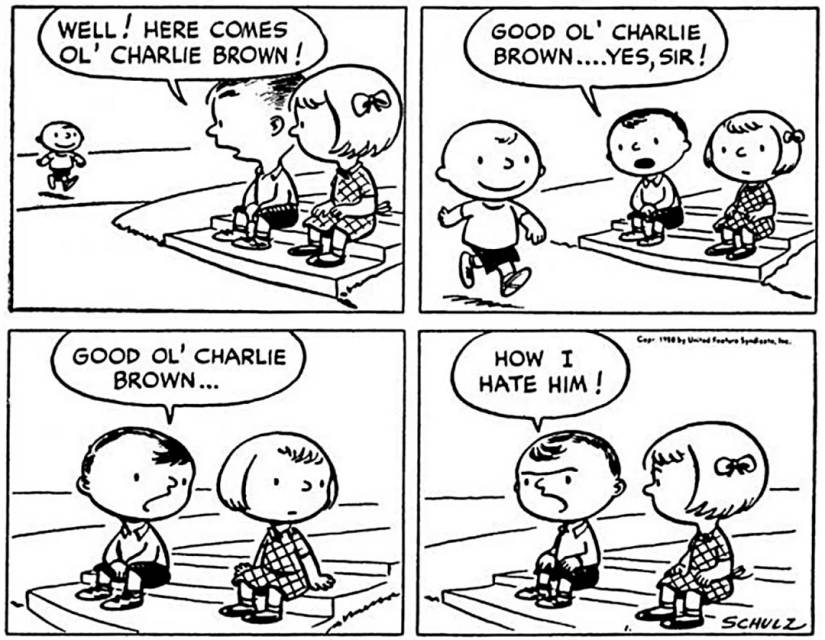 Image: Charles Schulz
 Image: Charles Schulz
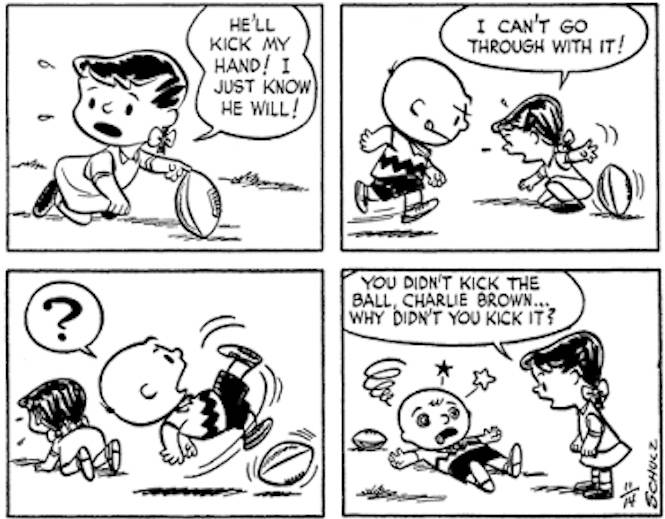 Image: Charles Schulz
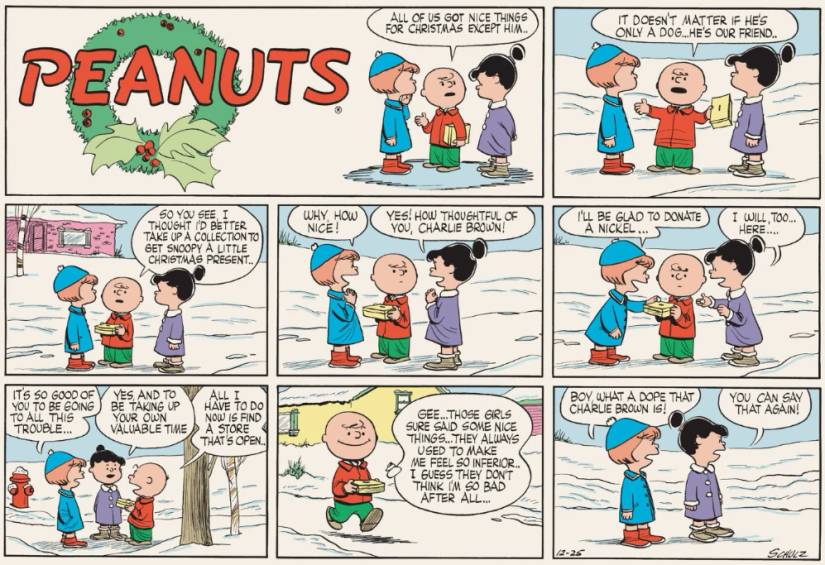 Image: Charles Schulz
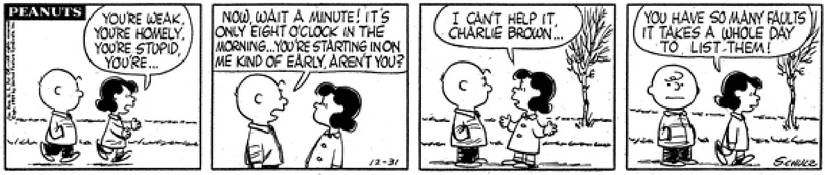 Image: Charles Schulz


