Governor Gavin Newsom attends the 94th Annual Meeting of the United States Conference of Mayors in Long Beach, California, June 4, 2026.
Myraneli Fabian | Anadolu | Getty Images
California Gov. Gavin Newsom on Friday issued an executive order aimed at addressing the potential dangers related to artificial intelligence.
… %!s()
Newsom is part of a group of 2028 Democratic presidential hopefuls who have urged a more aggressive regulatory approach to the rapidly evolving technology, after a researcher at Anthropic resigned and warned of AI's potentially humanity-ending capabilities in a social media post earlier this month.
The post set off a frenzy in Washington, D.C., as lawmakers grapple with how to establish guardrails for AI. But Congress appears unlikely to take any meaningful legislative action on AI fears before the 2026 midterm elections, and President Donald Trump has so far resisted calls for regulation.
“The federal government’s abject failure to create any form of meaningful AI oversight or accountability should alarm every American, especially when AI CEOs themselves are begging for regulation," Newsom said in a statement on Friday.
“We're not waiting to act – we’re going to speed up our work on substantial and responsible AI oversight before it's too late. We’re going to do this thoughtfully but with urgent velocity; the stakes are too high to wait or delay action," Newsom continued.
The order calls on a group of experts to meet and create, within two months, a guide for the state to strengthen its AI safety and security laws. Those enhanced laws may include a requirement for independent third parties to write safety plans for frontier AI companies, or mandating that companies develop a "kill switch" to shut down their models in case of emergency, according to an announcement from Newsom's office.
While Trump has called fears of AI safety a "hoax," Democrats have largely rallied around calls for stricter regulations. And those with presidential ambitions have been among the loudest voices in recent weeks.
Pennsylvania Gov. Josh Shapiro has similarly called for "third-party" oversight of frontier models and stricter guardrails. Sen. Mark Kelly, D-Ariz., told Politico he's introducing legislation to crate a fund paid for by AI companies that would support workers displaced by the technology. And Sen. Cory Booker, D-N.J., urged Trump to convene a special session of Congress to address AI risks.
Newsom, whose term as California governor ends on Jan. 4, has not announced a presidential campaign, though he has said he is mulling the possibility.
In his announcement of the executive order, Newsom touted laws already in effect in the state, including one he signed earlier this month that creates a framework for third-party AI auditors.
"While Washington abdicates its responsibility to protect Americans, California is building on the strongest AI regulatory framework in the nation," Newsom said. "California has already built a national model, and our policy should be the national baseline." %!s()
Candidates contesting the Victorian state election for One Nation include a former Liberal who has won support from alleged underworld figures, a naturopath who has endorsed Donald Trump’s unfounded claim that paracetamol is linked to autism and a former shire councillor who lost his licence for drink-driving.
… %!s()
Pauline Hanson announced who would be her party’s upper house candidates and Victorian leader, Warren Pickering, at a press conference last month. Since then One Nation has used social media to unveil a steady stream of candidates, with 51 of the 88 lower house spots now filled.
Among them is Michael Piastrino, who launched his campaign on Sunday for the outer-suburban seat of Berwick, held by the Liberal Brad Battin on a 4.7% margin.
A selfie from Michael Piastrino’s Instagram account that shows Malaki Salesui standing behind him
The launch was attended by Malaki Salesui, who was convicted in 2021 for his role in an organised car-theft ring.
Mick Mantzaris commented on photographs of the event on Instagram, writing: “great day great people” and “time for a change”. Mantzaris pleaded guilty in 2012 to possessing testosterone, disclosing restricted information and misleading the office of police integrity. The following year he was targeted in a drive-by shooting. Police described him at the time as “an associate of some outlaw motorcycle gang members”.
Anthony Younan, the nephew of the slain underworld figure Nabil Maghnie, also commented on Piastrino’s Instagram posts, saying he would vote for One Nation because of him: “I can’t believe I am going to vote for a red headed woman who hate Arabs. My mother is going to disown me Michael. But I am doing this for you bro!”
Anthony Younan’s comment on a Piastrino post
Piastrino, a hairdresser, ran for the Liberals at the 2022 election. He was forced to apologise during that campaign after declaring that Daniel Andrews would be “brought to justice for the murder of 800 people” under a Liberal government.
He told the Cranbourne Star News last month that he had met Mantzaris and Salesui through church. “I’m not here to judge people,” he said. “I’m here to help people.”
Sources have told Guardian Australia that One Nation has strengthened its candidate vetting process in the lead-up to the November election, with more stringent background checks and lengthy interviews.
In an interview in June, Kelvin Morton, One Nation’s general manager, said the party had also employed technology that did a “very comprehensive deep dive” into potential candidates’ social media accounts and provided a “thorough assessment” of their characters.
One Nation also shown a willingness to accept candidates with controversial histories, including Pickering, who this month acknowledged past drug use and drink-driving.
Ben Lucas, the party’s candidate for the Liberal-held seat of Narracan, resigned from Baw Baw shire council in 2021 after being convicted of drink-driving and dangerous driving.
Court records seen by Guardian Australia show he was fined $2,000 and had his licence suspended for two years.
This month he pleaded guilty to operating a category-one aquatic facility without registering it with the council and was ordered to pay $3,000 in costs.
Lucas described the charges, which related to the operation of ice baths at his gym, on Facebook as a “storm in a teacup” that had been “blown out of proportion”. He said they arose from an “administrative oversight” involving the registration of his business after it moved.
“If I wasn’t involved with One Nation, would this have still been pursued in the same way?” he wrote.
skip past newsletter promotion
after newsletter promotion
Several One Nation candidates have deleted or scrubbed their social media accounts since announcing their candidacies, including Elita Dabrowski, who is contesting Sunbury, a seat Labor fears it could lose.
A deleted tweet, seen by Guardian Australia, shows Dabrowski backed Trump’s claim that paracetamol is linked to autism.
“This morning I watched Trump’s announcement on autism, vaccination schedules & paracetamol,” she wrote on 23 September 2025. “As a naturopath & functional health practitioner, I felt proud – it reflects what I see in clinic every day.”
Trump had said pregnant women should limit their use of the medication, claiming it heightens the risk of autism in children – an assertion disputed by scientists.
Meanwhile, Tammy Lindrum, One Nation’s candidate for the historically safe Labor seat of Albert Park, has left a trail of comments on Meta’s Threads about Muslim and First Nations people.
Comments posted by Tam Lindrum on Threads
Under the handle “Lindrum Legends” and the username Tam Lindrum, she responded in April 2025 to a since-deleted post, saying there was “Black and Muslim supremacy in Australia” and that “the Whitman [sic] can’t say anything as they risk being accused of being racist”. Three months later, responding to another post, she wrote: “If you don’t like Bacon go back to a Muslim country.”
Responding to a post about plans to make the First Peoples’ Assembly of Victoria permanent, she wrote: “For a minority group I think we are going a little too far.
“We have paid their housing, welfare, education, health, for many years. When does that stop?”
Among candidates announced this week is Bruce Whalley, who blamed children for the climate crisis in tweet posted during the 2019 student strikes for climate action.
“Climate change is the fault of kids,” he wrote. “Stop asking for a car lift to school. WALK! RIDE a BIKE! or CATCH PUBLIC TRANSPORT. Gosh! Start to be a generation of doers Not talkers and complainers.”
Whalley, who is running in Labor-held Bundoora, also describes himself on Instagram as an “ABC2 TV Think Tank tragic” – despite One Nation’s plan to defund the broadcaster, and its ban on its journalists attending the party’s media events. %!s()
Wishlister is a weekly newsletter bringing you a curated list of upcoming Steam games worth adding to your wishlist, sent on Tuesdays and published on the site on Fridays. You can subscribe here.
We’re in the midst of a bountiful season for new games, and that’s not going to slow down anytime soon. Recent showcases like Sony State of Play and Nintendo Direct have only made the 2026 and 2027 release calendar even more packed. That trend extends to PC players too. Here are six games worth adding to your Steam wishlist this week, including a few games featured in our 2026 Fall Preview.
Free sign-up
Get Polygon’s Wishlister newsletter
A weekly cheat sheet to what you’ll eventually love to play. No buying, no
commitment — just saving for later.
Sign up free
Free. Unsubscribe anytime.
1
Usual June
It’s never too early to start thinking about what game you’ll play ahead of Halloween. Usual June might just be a perfect pick when it launches on Oct. 28. The action-adventure game tasks you with saving the town of Fen Harbor by fighting crystal monsters and communing with ghosts. It’s a coming-of-age story with a spooky flavor and some seriously stylish action to boot.
Dreadline Express has one of the darkest premises I’ve ever heard for a puzzle game: it all takes place on a train containing the last surviving humans on a post-apocalyptic Earth. It’s one part card-based deduction game and one part psychological horror game. A recent demo we played ended with us having to pick a passenger to sacrifice, so that should give you an idea of how pitch black Dreadline Express is bound to get.
We got a packed Nintendo Direct last week, and a few of the exciting games announced on it are also coming to Steam. Stage Fright is on that list, and that’s great news for PC players. The latest multiplayer game from the team behind Overcooked is all about solving escape rooms. It all has a creepy-cute vibe too, and a bit of co-op chaos that we’ve come to expect from Ghost Town Games.
It’s a good time to be a retro RPG fan thanks to upcoming games like Final Fantasy Resonance. If you’re looking for more games like that, keep an eye on Eternal Anima. The latest game from Marvelous is an era-spanning ode to classic RPGs fueled by a job system that promises a lot of combat customization.
There sure are a lot of games about eating things coming out, and that includes Ondeh Ondeh Kaya's Tasty Tale. Inspired by Southeast Asian culture, the rhythm-adventure game seems to be as much about cooking as it is about solving puzzles. Based on its debut trailer, it's looking like a tasty treat served with a spoonful of whimsy.
Chronoscript: The Endless Endhas been on our radar ever since it was first revealed last year, and for good reason. The stylish Metroidvania has impressed us with its perspective-shifting gameplay that bounces between 2D and 3D. Its hand-drawn art alone should be reason enough to keep an eye on it in 2027.
I completed Roman Sands RE:Build late last night, and haven't had nearly enough time to digest it, but I'm keen to help get the word out and energise whatever algorithmic chicanery might contribute to this gorgeous, ugly thing making money. So! Roman Sands RE:Build is two exquisitely grim games locked in a collapsing binary orbit. You should play it, preferably before reading the rest of this review, which is only going to spoil and dilute its squalid magic.
… %!s()
Each of those component games is a short masterpiece, executed with huge prowess at every level of the art, sound, design and writing. They might seem totally dissimilar, at first. One game is a hyperactive, time-looping hotel job simulator in which you tend to some cartoonishly awful older guests, shifting incrementally between times of day as you hurry between parts of a garish and phantasmagorical resort that is being menaced by an approaching sun. It's a place without memory, in which activities reset when you stroll back into the sea at moonrise - a lovely spectacle of swirling stars and blissfully solid darkness.
Image credit: Serenity Forge / Beep Japan Inc
The other component game is a meticulous, but rapidly deteriorating ocean base exploration sim, stewed in sexy cybernetic horror and good old-fashioned thanatophobia. It might remind you of Frictional's Soma, if Frictional's Soma had more toxic yuri. Here, you'll lumber about in a helmet with PDA and spanner, attempting to purge a radioactive, honeycomb-like infestation by repurposing chunks of machinery. Between descents, you'll listen to the denizen of another base enthuse over the radio about the sensuality of decay.
In practice, many things connect these diverging experiences. Aesthetics, for starters: Game 1 is luxuriant, spacious and frenzied, while Game 2 is dense, mulish and murky, but they are both broadly an exercise in getting relentlessly brainjacked by the colours pink through purple. I've heard the art and musical direction described as "breakcore meets vaporwave". Even if, like me, you're not very expert in these precedents, I'm sure you'll notice how careful Roman Sands is as a work of partial pastiche, how specific in its borrowings and allusions.
Image credit: Serenity Forge / Beep Japan Inc
The games further share a love of baroque and strange interface design, spanning two HUD setups and a number of in-world devices. There's a more ominous, connecting thread of alchemy and arithmancy: each environment is rife with planetary symbols, magic circles, and a fascination with the number three. There are places where the worlds echo each other almost directly: for example, a growing heap of discarded, meat-clogged pipes that recalls a mounting pile of luggage in the hotel lobby. As each setting fragments beneath your curiosity, it becomes easier to peer across the divide. Sometimes, you can even stick a hand through and fondle the other game's bowels.
While there's a connecting plot, of sorts, each half of the game is sort of a retelling or refiguring of the other. The shared conceptual binary is maintenance, in the janitorial sense, versus transcendence. In each game you are a ground-down worker, subjected to a rigid and imbalanced, palpably doomed structure that is contemptuous or careless of you, but which depends absolutely on you to exist. You shore each realm up through your labour, while searching for your Exit.
The resort absorbs the bulk of the 10-hour playtime (it did in my first runthrough, anyway), and is the most openly hateful of the two environments. The guests – represented by spaghetti noodle caricatures and anime dialogue portraits - are immediately atrocious. There's Betty and Harold, a hectoring hag paired with a suffocatingly pleasant old gimmer. There's Bunk, a lecherous middle-aged drunk who is constantly throwing up on himself, and Sylvia, a more sophisticated predator, who receives your efforts at Good Service with seductive scorn.
Each guest has demands that vary depending on the time of day and location: fetch my hair curlers! Mix me a drink! Get me a book! Get me a better book! DO IT DO IT DO IT. Why are you still here? "All I want is for things to get done," Sylvia says at one point. The implied overall objective is to meet all these requests within a single loop, which is impossible at first. Completing tasks earns you XP that unlocks more options and features from run to run. Sounds like an entertaining puzzlebox, maybe, but if you embrace the progression rush you are giving into the game's undisguised efforts to characterise you as a spineless toady.
The hotel portion of Roman Sands is an entertaining, knowing test of how ruined you are by videogames, how ravaged you are by gacha jingle and level-up chime, how willing you are to debase yourself for an incremental unlock. Each day begins with the text "Work harder!" and the garbled afterthought "...motherfucker". The HUD is a softly clawed mask of quest tabs, interaction counters and scrolling objective reminders, nibbling away at your efforts to actually look at things and consider their purpose. Every action, every transition is stretched out into a crude bombardment of SFX, tuned to be as obnoxious as possible... without being entirely resistible. Are you collecting six garbage bags? Get ready for six hyperkinetic "YOU COLLECTED THE GARBAGE BAG" screens, one after the other.
Save for when you haven't unlocked an item you need, the requests are insultingly easy to fulfil. The game generally lays down a path of fizzy quicksilver triangles to the item in question. As you repeat the days, you unlock a melodic speed-boost when following the triangle trail – an aleatoric caffeine jolt I often succumbed to despite my better judgement, glomming onto the trail while trying to do things the simulation didn't 'want' me to do.
Image credit: Serenity Forge / Beep Japan Inc
I think it's possible to spend the entirety of a Roman Sands playthrough just living the dream of being a hypnotised thrall. There's a catalogue of cocktail recipes to master, randomised plushies of different rarities to entice from the casino machine in the basement, timer-based XP bonuses and other mood-juicers to keep you engaged and pliant. One of the higher-level unlocks is simply the status of "NPC". Another is acquiring the means to finally check the guests into the hotel, which feels like the basis for an alternative endgame I don't really want to experience.
In practice, you'll probably want to split from the program, as soon as possible - identifying ways to 'hack' the scenery, exploiting its symbology to bypass the time mechanics, and getting to grips with an underlying, occult mystery that involves some enjoyably esoteric room puzzles. This journey will eventually lead you into the other half of Roman Sands, which applies the theme of exploited and patronised labour very differently.
In Act 2, your bosses are become chunky handheld terminals and sweeping control room displays that flash technojargon and talk of "sublimation". You have to stop whatever it is that's devouring your base reactor. There's still the suggestion of a timeloop, here. You'll restart again and again from your dorm, slipping into your void suit by means of an "elevator" that looks worryingly like a hollowed-out Vitruvian Man – an airlock that imposes a form. But the splenetic and jabbing design of the hotel simulation has disappeared. In its place, you get a more elegant, diegetic range of prompts and interactions, firmly rooted in the technology of this realm.
Image credit: Serenity Forge / Beep Japan Inc
The base's areas are separated by pneumatic doors: to open them, you might need to redirect oxygen by twisting a valve, or pump a handle to pressurise the mechanism. There are screws to unscrew, blueprints to download, spent fuses to yank free and source replacements for. As dangerous and decrepit as the base can be, the tactile manual implements give you a feeling of mastery, where the hectic F2P reward systems of the hotel served to infantilise you. This space is the work of your own two hands.
Still, you remain a worker and the unseen, possibly automated managers who issue your instructions clearly don't care much for your survival. You could argue that the base chapter is more predatory than the hotel layer, for being couched in the unpretentious vernacular of an engineering sim. In each half of the game, videogamey devices contrive to make you preserve something that should have turned long ago to sludge and dust. The base just puts the hook in more subtly. Meanwhile, redacted terminal docs paint a picture of some larger, apocalyptic landscape of biological experiments. The girl cooing about rigor mortis over the commslink doesn't do much to fill in the history; the "world building" here is half-fleshed, soon rotting down into symbols as you repeatedly strive to rid your habitat of infection.
Having read through that last paragraph again, I don't think the base is just a repetition of the hotel's febrile exploitation themes by way of another genre. If Act 1 is about shattering a pocket universe of delusion and privilege, Act 2 is about reckoning with the fact that your own life is at stake in this simulation. Making your exit involves raw terror and a leap of faith, discussed perhaps a little too straightforwardly in a closing monologue. At one point, you are told not to trust the complaining of the facility's life support systems, and it's hard to know in the moment whether this is the system fighting your efforts at self-preservation, or a healthy encouragement to let go.
Image credit: Serenity Forge / Beep Japan Inc
I find it hard to let go of Roman Sands. There is so much else to notice and discuss. I've skipped over the quality of the writing, for instance - one thing I really liked was that the hotel guests slowly become more sympathetic as you satisfy their demands, and force them to realise that all they have are demands. They gradually lapse into confusion and forgetfulness in a way that makes me want to go back and save them. Maybe except Sylvia, she's terrible.
If I had the proper terminology for it, I'd also talk about how the audio component develops over the course of the game, from the woozy spinning-up of the percussion when you approach the gacha machine, to how the soundscape dulls as you slowly deplete the ocean base of oxygen. I haven't even touched on the climate crisis parallels, which are hopefully unambiguous enough, or mentioned all the references to cows both in alchemy and in laboratory experimentation.
For the moment, though, I just want to stress that there's nothing out there like Roman Sands. Certainly, I've yet to play a two-parter that is quite so compelling and devious in its asymmetry. It's more ritual than game, at times, a sacrificial dagger wielded against both itself and against other videogames that are more at ease with their age. It is witty and expressive, doom-ridden and cathartic. It's a hideous thing, a total nightmare, absolutely no fun whatsoever. You must play it at once and tell me what you think.
%!s()
The author (right) has started working with a business partner (left) to run her small business.
Courtesy of East End Taste
…
I have always known how to get an idea off the ground.
As the founder of East End Taste, a Hamptons-based events company, I had built my career through relationships, creativity, instinct, and determination.
For a long time, I believed those strengths were enough to move my small business forward, but then I wanted to expand my company. We had already been in operation for eight years, and I saw an opportunity to work with more clients.
As a single mom, I also hoped to be an example for my kids. I liked the idea that growing my business would teach them to be proud of what you have built while remaining willing to learn something new.
I knew it wouldn't be easy to expand, but then I met my business partner. He approached nearly everything differently, but he helped take the small business to the next level.
My new business partner operates differently from me
Born in Venezuela, my business partner, Edberg Espinoza, has worked across project development, technology, and visual production.
Where I instinctively see relationships, possibilities, and creative opportunities, he looks for the structure required to support them.
I have often evaluated opportunities according to their potential. Could an introduction lead to a client? Could an event strengthen our reputation? Could a creative idea develop into a larger partnership?
Edberg understood that, but he wanted to know what happened after the introduction: Which relationships required follow-up? Which conversations had led to proposals? Which opportunities had become paid work? Which services were clients requesting repeatedly?
Those questions were more difficult for me to answer than I expected. The information existed, but it did not exist in one place. Parts of it were in my memory. Other parts were scattered among notebooks, business cards, text messages, email threads, and informal lists.
Edberg helped establish a centralized method for tracking contacts, conversations, potential opportunities, follow-ups, and responsibilities. Information that had previously existed primarily in my head became accessible within the company.
My relationships gave the company access. His systems helped us turn that access into consistent action.
My business partner then helped expand my business
As we reviewed client inquiries, project notes, and production requests, we began to notice the same combination of needs recurring. Brands were not necessarily looking for one isolated deliverable. They increasingly wanted connected support: event production, photography, video, editorial exposure, social content, and partner coordination managed through one trusted team.
I had seen each request as an individual opportunity. Edberg saw the operating model hidden inside those requests.
Instead of asking, "What else could East End Taste offer?" we began asking, "What are clients already asking East End Taste to become?"
Before investing in a new capability, we began asking more disciplined questions: Would this resource solve a problem that clients repeatedly brought to us? What personnel, training, and technology would be required? How would we price the service?
That shift allowed us to present clients with a clearer production model, rather than rebuilding the process from the beginning for every project.
Our differences were not always comfortable
I was accustomed to believing that if I said yes, I would somehow find a way to deliver. That determination has helped me build my career. It also meant that I occasionally accepted difficult timelines and relied on stamina to solve problems.
But that's not how Edberg works. "No sugarcoating," he would tell me.
At first, I sometimes experienced his directness as intensity. Over time, I came to understand that clarity was not pessimism. It was a form of responsibility.
The lesson for me is not that every founder needs an opposite. It is that we need someone who can recognize what our strengths leave unaddressed, and we need to be willing to listen. My instincts helped create opportunities. Edberg helped build the structure to follow through on them.
Start with the opportunities already in front of you
Now, when we consider a service, client, partnership, or investment, we ask three questions: What could it create? What will it require? Does it support the company we are deliberately building?
Today, our work extends across event production, staffing, photography, video, wellness, and hospitality activations. We have expanded our network of private chefs and other production partners. The systems we developed help us manage that broader scope with clearer responsibilities and deliverables.
My business partner did not replace the instincts that helped me establish my career. He gave me another perspective through which to test and strengthen them.
That is a lesson I want my children to carry into whatever they choose to do: You can trust your abilities and still have something to learn from someone who sees things differently.
Read next
Vanessa Gordon is the CEO and publisher of East End Taste, a digital sustainable travel and lifestyle publication based in the Hamptons. She also founded the annual summer event series, the Hamptons Interactive Brunch. She lives in East Hampton with her family.


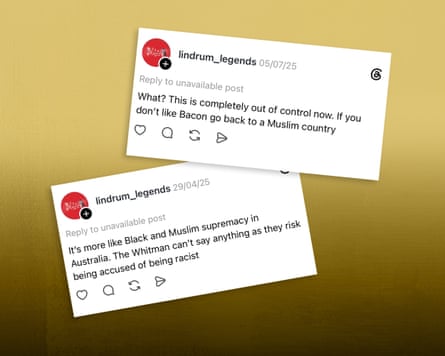

 Image: Ghost Town Games/Hello Games
 Free sign-up


